
What Maintenance Does A Car Need Regularly
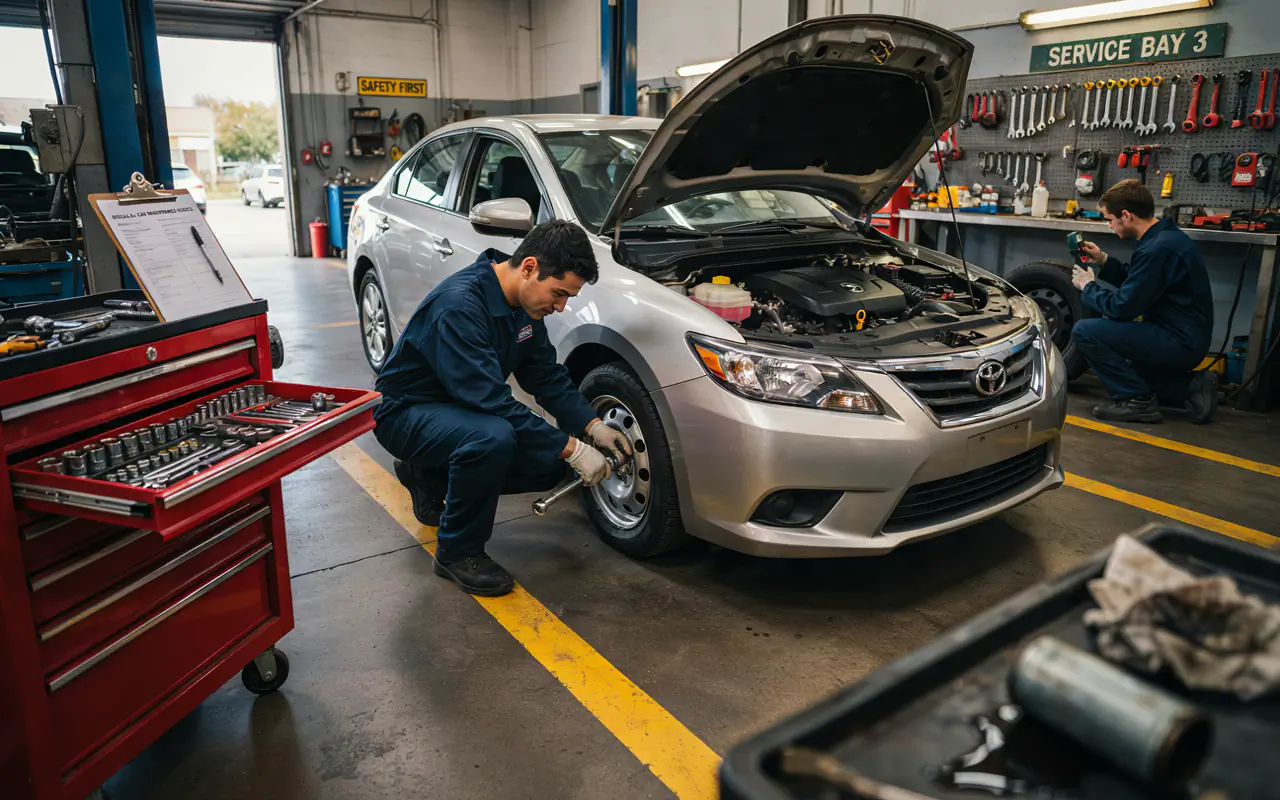
Knowing what maintenance does a car need regularly is key to avoiding breakdowns. This guide covers oil changes, tire rotations, brake checks, and more to keep your car safe.
Owning a car brings freedom, but it also brings responsibility. You depend on your vehicle to start every morning, get you to work, take your kids to school, and carry you on weekend adventures. In return, your car depends on you for care and attention. The question that every car owner asks at some point is simple: what maintenance does a car need regularly?
The answer is not as complicated as you might think. Regular car maintenance follows a predictable pattern based on time and mileage. The secret is consistency. When you stay on top of routine checks and services, your car rewards you with reliability, better fuel economy, and a longer life. Neglect those same tasks, and you could face expensive repairs or even a breakdown on the side of the road.
Think of your car like your own body. You visit the doctor for checkups, you brush your teeth daily, and you eat well to stay healthy. Your car needs the same kind of preventive care. Routine maintenance does not have to be expensive or time consuming. Many tasks take just a few minutes and can save you hundreds, even thousands, of dollars in the long run.
According to Carfax data, a well-maintained car can be worth an extra $2,000 in resale value compared to one that has been neglected. That is a significant amount of money for simply following a schedule. Beyond the financial benefit, regular maintenance keeps you safe. Brakes, tires, and fluid systems are critical to safe driving. Checking these regularly reduces your risk of accidents.
So let us break down exactly what maintenance does a car need regularly. We will cover everything from weekly checks to major milestone services. By the end of this guide, you will have a clear picture of how to keep your car in top shape for years to come.
Why Regular Car Maintenance Matters
Before we get into the checklist, let us talk about why this stuff actually matters. Cars are complex machines with thousands of moving parts. Those parts rub together, create friction, generate heat, and wear down over time. Fluids break down. Filters get clogged. Rubber hoses crack and dry out.
When you perform regular maintenance, you catch small problems before they become big ones. A tiny coolant leak left unchecked can lead to an overheated engine and a repair bill running into thousands of dollars. Worn brake pads can damage rotors, turning a simple pad replacement into a much more expensive job.
“An ounce of prevention is worth a pound of cure. This old saying holds very true for car maintenance. Spending a little time and money on regular service will always cost less than fixing a major breakdown.” – John Nielsen, AAA Director of Automotive Engineering
Regular maintenance also improves your car’s performance. Clean oil reduces engine friction. Proper tire pressure improves handling and fuel efficiency. Fresh air filters help your engine breathe better. All these small things add up to a smoother, more enjoyable driving experience.
Daily and Weekly Checks: The Bare Minimum
You do not need to be a mechanic to keep your car healthy. Some of the most important checks take less than five minutes and can be done right in your driveway.
Visual Walkaround Inspection
Get into the habit of walking around your car once a week. Look for anything unusual. Check for puddles under the car, which could indicate a leak. Look at your tires to see if any look low on air. Check that all your lights are working properly. This simple habit can alert you to problems before they become serious.
Check Your Fluids
Your car runs on several different fluids, and each one has a specific job. Pop the hood and check the following levels regularly:
- Engine oil: Use the dipstick to check the oil level. The oil should be between the minimum and maximum marks. It should also look clean and golden or amber in color. Dark, gritty oil means it is time for a change.
- Coolant: Check the coolant reservoir. The level should be between the minimum and maximum marks. Low coolant can cause your engine to overheat.
- Windshield washer fluid: This one is easy to forget, but you will remember it quickly when you run out on a muddy road. Keep it topped up.
- Brake fluid: Check the brake fluid reservoir. Low brake fluid could indicate worn brake pads or a leak in the system.
Check Tire Pressure
Proper tire pressure is essential for safety, fuel efficiency, and tire life. Check your tire pressure at least once a month using a simple gauge. The correct pressure for your car is listed on a sticker inside the driver’s door jamb or in your owner’s manual.
Underinflated tires create more rolling resistance, which wastes fuel. They also wear out faster and can overheat at highway speeds. Overinflated tires reduce traction and make the ride harsh.
Monthly Maintenance Tasks
Once a month, set aside a little time for a more thorough inspection. These checks help you stay ahead of wear and tear.
Check Your Battery
Your battery is the heart of your car’s electrical system. Look for corrosion, which appears as a greenish or bluish powdery buildup on the terminals. Clean it off with a wire brush and a mixture of baking soda and water if you see any.
If your battery is more than three years old, consider having it tested. Batteries lose their ability to hold a charge over time, and a weak battery can leave you stranded on a cold morning.
Inspect Windshield Wipers
Wiper blades wear out and crack over time. When they do, they leave streaks on your windshield and reduce visibility in rain or snow. Inspect your wipers monthly and replace them if they show signs of wear. Most wiper blades need replacement every six to twelve months.
Check All Lights
Walk around your car and check every light. Turn on your headlights, high beams, turn signals, brake lights, and reverse lights. Have someone help you or park near a reflective surface. Faulty lights are a safety hazard and can also get you a ticket.
Clean Your Car Inside and Out
Dirt and grime can damage your car’s paint over time. Washing your car every three to five weeks protects the finish and helps you spot any minor damage like chips or scratches. A clean car also feels better to drive and holds its value longer.
Oil Changes: The Most Important Regular Service
If there is one answer to the question of what maintenance does a car need regularly, oil changes are at the top of the list. Engine oil is the lifeblood of your car. It lubricates moving parts, reduces friction, carries away heat, and keeps your engine clean.
How Often Should You Change Your Oil?
The old rule of every 3,000 miles or three months is outdated for most modern cars. Today, the recommended interval varies widely depending on your vehicle and your driving habits.
Most manufacturers recommend oil changes every 5,000 to 7,500 miles. Some newer cars with synthetic oil can go 10,000 miles or more. However, if you drive in severe conditions, you may need to change your oil more frequently.
Severe driving conditions include:
- Frequent short trips (less than four miles)
- Driving in extreme heat or cold
- Towing a trailer
- Driving on dusty roads
- Stop-and-go city traffic
“Your owner’s manual is the best guide for oil change intervals. The engineers who designed your engine know exactly what it needs. Trust their advice over the old 3,000-mile myth.” – Mike Allen, Senior Automotive Editor, Popular Mechanics
Conventional vs. Synthetic Oil
Conventional oil is made from refined crude oil. Synthetic oil is manufactured from chemical compounds and offers better performance in extreme temperatures. Synthetic oil flows more easily in cold weather and resists breakdown at high temperatures.
Some cars require synthetic oil. For others, it is optional. If your car does not require synthetic, you can choose either. Just remember that using synthetic oil does not mean you can skip oil changes. You still need to follow the recommended interval.
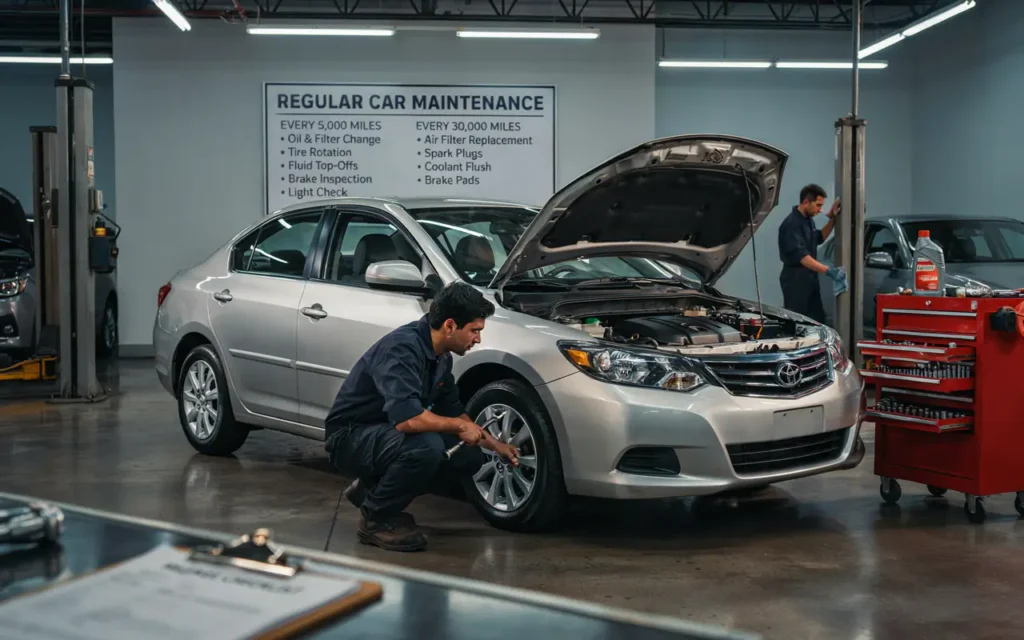
Tire Maintenance: Keeping You Connected to the Road
Your tires are the only part of your car that touches the road. Their condition directly affects your safety, handling, and fuel economy.
Tire Rotation
Front and rear tires wear differently because they carry different loads and handle different forces during turning and braking. Rotating your tires regularly ensures even wear and extends their life.
Most experts recommend rotating your tires every 5,000 to 8,000 miles. Many people combine tire rotation with oil changes for convenience.
Tire Alignment and Balancing
If your car pulls to one side or your tires show uneven wear, you may need a wheel alignment. Alignment ensures your tires meet the road at the correct angle. Misalignment causes excessive tire wear and puts strain on your suspension.
Balancing your tires eliminates vibrations that can affect ride quality and cause uneven tread wear.
Checking Tread Depth
Worn tires have less grip, especially on wet roads. Check your tread depth monthly. A simple way to do this is the coin test. Insert a coin into the tread grooves. If you can see the top of the coin, your tires are worn and need replacement.
Brake Inspections: Stopping Safely
Your brakes are your car’s most important safety system. Regular brake maintenance is non-negotiable.
When to Check Your Brakes
Most manufacturers recommend a brake inspection every 12,000 miles or at least once a year. However, you should pay attention to signs that your brakes need attention sooner.
Warning signs include:
- Squealing or squeaking when you brake
- Grinding noises
- A soft or spongy brake pedal
- The car pulling to one side when braking
- Vibrations through the brake pedal
Squealing often means your brake pads are worn and need replacement. Grinding is more serious and means the pads are completely worn down, and metal is rubbing against metal. This can damage your rotors and make repairs much more expensive.
Brake Fluid
Brake fluid transfers the force from your foot on the pedal to the brake pads. Over time, brake fluid absorbs moisture, which can reduce braking efficiency and cause corrosion in the system. Most manufacturers recommend changing brake fluid every two to three years or around 30,000 miles.
Fluid Checks and Changes
Your car uses several fluids beyond engine oil and brake fluid. Each one plays a critical role.
Transmission Fluid
Transmission fluid lubricates and cools your transmission. Check the level and condition regularly. Healthy transmission fluid is pink or red. Dark or burnt fluid indicates a problem.
Most manufacturers recommend changing transmission fluid every 30,000 to 60,000 miles. However, some newer cars have sealed transmissions that do not require fluid changes. Check your owner’s manual for specific advice.
Coolant (Antifreeze)
Coolant keeps your engine from overheating and protects it from freezing in cold weather. Check the coolant level in the reservoir and top it up if needed.
Most cars need a coolant flush every 30,000 to 50,000 miles, though some newer coolants can last up to 100,000 miles.
Power Steering Fluid
Power steering fluid makes turning your steering wheel easy. Low fluid can make steering feel heavy or cause whining noises. Check the level regularly and top up as needed.
Differential and Transfer Case Fluid
If you have a four-wheel-drive or all-wheel-drive vehicle, you have additional fluids in the differential and transfer case. These should be checked and changed according to your manufacturer’s schedule.
Air Filters: Helping Your Engine Breathe
Your engine needs clean air to run efficiently. The engine air filter traps dust, dirt, and debris before they enter the engine. A clogged filter reduces airflow, which hurts performance and fuel economy.
Engine Air Filter
Most manufacturers recommend replacing the engine air filter every 12,000 to 15,000 miles. If you drive on dusty roads, you may need to change it more often.
Cabin Air Filter
The cabin air filter cleans the air that comes through your car’s ventilation system. A dirty filter can reduce airflow and allow allergens into the cabin. Replace it according to your owner’s manual, typically every 12,000 to 15,000 miles.
Battery Care: Keeping the Power On
Your car battery does more than start the engine. It powers your lights, radio, air conditioning, and all your car’s electronics.
Regular Battery Checks
Check your battery terminals for corrosion regularly. Clean them if you see buildup. Make sure the battery is securely mounted so it does not bounce around while you drive.
Most car batteries last three to five years. Have your battery tested twice a year, preferably before winter and before summer. Replace it before it fails to avoid being stranded.
Belts and Hoses: The Rubber Components
Your engine has several belts and hoses that wear out over time. Rubber cracks, dries out, and hardens with age and heat.
Serpentine Belt
The serpentine belt drives multiple components, including the alternator, power steering pump, and air conditioning compressor. A worn belt can snap and leave you stranded.
Inspect your belts for cracks, fraying, or glazing. Most belts last 60,000 to 100,000 miles, but check your owner’s manual for the recommended replacement interval.
Hoses
Coolant hoses carry fluid to and from your radiator. They can develop leaks or burst over time. Inspect hoses for cracks, swelling, or soft spots. Replace them if they show signs of wear.
The 30-60-90 Maintenance Schedule
Many car manufacturers recommend major services at 30,000, 60,000, and 90,000 miles. This is often called the 30-60-90 schedule.
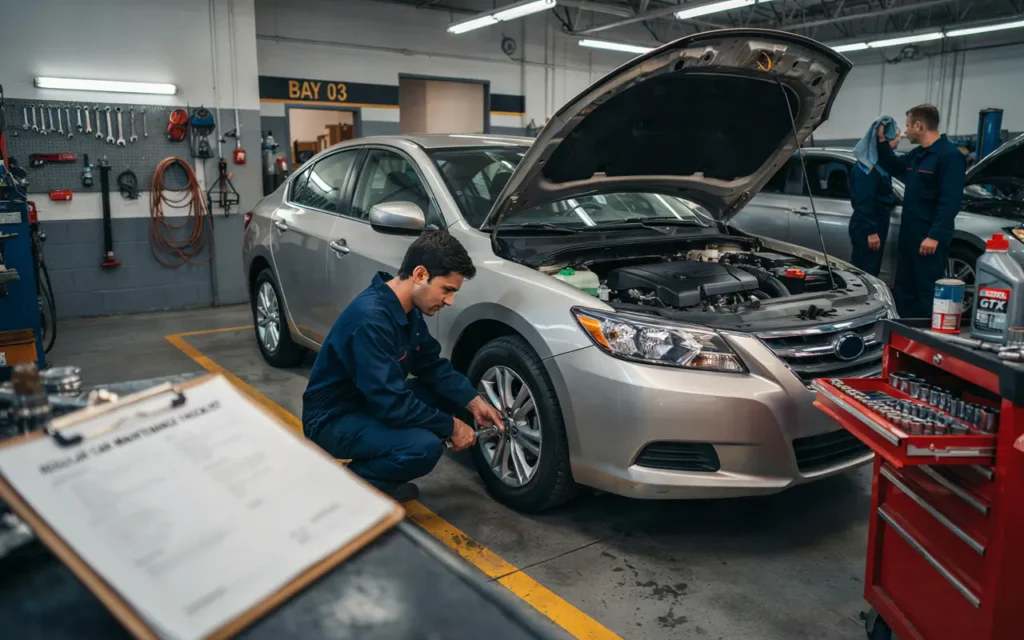
30,000-Mile Service
At 30,000 miles, your car typically needs:
- Oil and filter change
- Tire rotation
- Replacement of engine air filter and cabin air filter
- Inspection of belts, hoses, and brakes
- Fluid checks and top-offs
60,000-Mile Service
At 60,000 miles, you can expect:
- All 30,000-mile services
- Transmission fluid change (if applicable)
- Brake fluid replacement
- Coolant flush (depending on your car)
- Inspection of suspension components
- Timing belt inspection (if your car has one)
90,000-Mile Service
At 90,000 miles, your car needs:
- All 60,000-mile services
- Spark plug replacement (if not done earlier)
- Fuel filter replacement
- Thorough inspection of all systems
Quick Reference Maintenance Schedule
| Service | Frequency | Notes |
|---|---|---|
| Oil and filter change | Every 5,000-7,500 miles | Check owner’s manual; severe driving may require shorter intervals |
| Tire rotation | Every 5,000-8,000 miles | Often combined with oil change |
| Tire pressure check | Monthly | Check when tires are cold |
| Brake inspection | Every 12,000 miles or annually | Replace pads if worn; check rotors |
| Engine air filter | Every 12,000-15,000 miles | Replace more often in dusty conditions |
| Cabin air filter | Every 12,000-15,000 miles | Improve cabin air quality |
| Battery test | Twice per year | Before winter and summer |
| Coolant flush | Every 30,000-50,000 miles | Some newer coolants last longer |
| Transmission fluid | Every 30,000-60,000 miles | Check owner’s manual for specific interval |
| Brake fluid | Every 30,000 miles or 2-3 years | Moisture absorption reduces effectiveness |
| Spark plugs | Every 30,000-100,000 miles | Depends on type (copper, platinum, iridium) |
| Serpentine belt | Every 60,000-100,000 miles | Inspect regularly for cracks |
Monthly Visual Inspection Checklist
| Item | What to Look For | Action |
|---|---|---|
| Engine oil | Level between marks; clean amber color | Top up or change if dirty |
| Coolant | Level between min/max marks | Top up with correct mixture |
| Brake fluid | Level between marks; clear color | Top up; check for leaks if low |
| Windshield washer fluid | Enough fluid for cleaning | Top up |
| Tire pressure | Matches door sticker recommendation | Inflate or deflate as needed |
| Tire tread | Sufficient depth; no uneven wear | Rotate tires; replace if worn |
| Battery terminals | No corrosion; secure mounting | Clean terminals; test battery if old |
| All lights | Headlights, brake lights, turn signals work | Replace any burnt bulbs |
| Wiper blades | No cracks or streaks | Replace if worn |
| Belts and hoses | No cracks, fraying, or swelling | Replace if damaged |
Listening to Your Car
Your car often tells you when something is wrong. Pay attention to unusual sounds, smells, and sensations.
Unusual Sounds
- Squealing when braking: Worn brake pads
- Grinding: Brake pads completely worn; rotors may be damaged
- Knocking from engine: Possible internal engine issue
- Whining when turning: Low power steering fluid
- Rumbling or humming from wheels: Worn wheel bearings or tires
Dashboard Warning Lights
Your dashboard warning lights are your car’s way of communicating with you. Do not ignore them.
- Check engine light: Could be anything from a loose gas cap to a serious engine problem. If it is flashing, pull over immediately.
- Oil pressure light: Low oil pressure. Stop driving and check your oil level.
- Brake warning light: Brake system issue. Have it checked immediately.
- Battery light: Charging system problem. Your battery may not be getting charged.
Leaks and Smells
- Puddle under the car: Could be oil, coolant, transmission fluid, or brake fluid. Each has a different color and smell. Have it checked.
- Burning smell: Could indicate an oil leak dripping on a hot engine or an electrical problem.
- Sweet smell: Coolant leak.
Seasonal Maintenance Considerations
Different seasons bring different challenges for your car.
Winter Preparation
- Check your battery. Cold weather is hard on batteries.
- Use winter-grade windshield washer fluid that will not freeze.
- Check your antifreeze concentration.
- Consider winter tires if you live in a snowy area.
- Keep an emergency kit in your car.
Summer Preparation
- Check your cooling system. Overheating is more common in hot weather.
- Check your air conditioning.
- Monitor tire pressure, as heat increases pressure.
- Check your battery, as heat can damage batteries too.
“Your car faces different challenges in summer and winter. A little seasonal preparation can prevent a lot of roadside frustration.” – Lauren Fix, The Car Coach
Keeping Records
One of the smartest things you can do is keep records of all your maintenance. Write down the date, mileage, and service performed for every oil change, tire rotation, and repair.
Good records help you:
- Know when your next service is due
- Spot patterns or recurring problems
- Prove maintenance history when selling your car
- Maintain your warranty coverage
Many cars have a maintenance reminder system that tracks mileage and tells you when service is due. However, these systems are not always perfect. Keep your own records as a backup.
Frequently Asked Questions
1. What maintenance does a car need regularly at 5,000 miles?
At 5,000 miles, the main services are an oil and filter change, tire rotation, and a general inspection of fluids, belts, and hoses.
2. How often should I change my car’s oil?
Most cars need an oil change every 5,000 to 7,500 miles. Check your owner’s manual for the specific interval for your vehicle.
3. How often should tires be rotated?
Tires should be rotated every 5,000 to 8,000 miles to ensure even wear.
4. When should brake pads be replaced?
Brake pads typically last 30,000 to 70,000 miles, but this depends on driving habits. Replace them when you hear squealing or notice reduced braking performance.
5. How often should I check my tire pressure?
Check tire pressure at least once a month and before long trips.
6. When should I replace my car battery?
Most car batteries last three to five years. Have it tested twice a year and replace it if it is weak.
7. How often should I change my transmission fluid?
Most manufacturers recommend changing transmission fluid every 30,000 to 60,000 miles. Check your owner’s manual.
8. What does the check engine light mean?
The check engine light can indicate many things, from a loose gas cap to a serious engine problem. If it is steady, have it checked soon. If it is flashing, pull over immediately.
9. How often should I replace my air filter?
Replace your engine air filter and cabin air filter every 12,000 to 15,000 miles.
10. Is regular maintenance really that important?
Yes. Regular maintenance prevents breakdowns, saves money on repairs, improves fuel economy, and extends the life of your car.
Conclusion
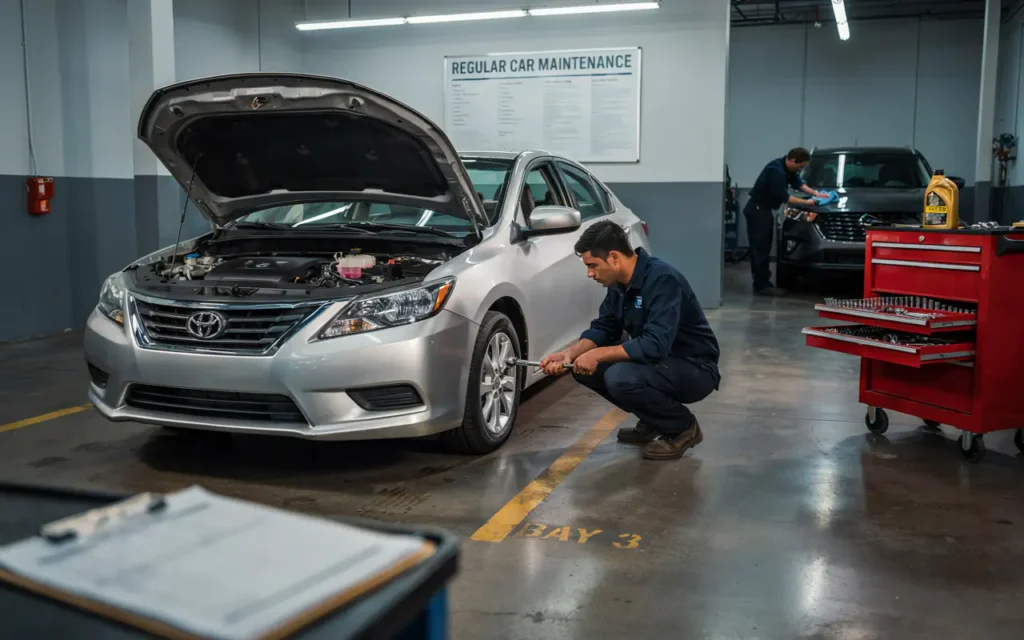
So what maintenance does a car need regularly? The answer is a combination of daily habits, monthly checks, and scheduled services. Oil changes, tire rotations, brake inspections, fluid checks, filter replacements, and battery care all play a part in keeping your car healthy.
The good news is that you do not need to be a mechanic to take care of your car. Many of these tasks take just a few minutes and can be done in your own driveway. For the more complex services, find a trustworthy mechanic who will follow your manufacturer’s recommendations.
Remember, your car is a significant investment. It gets you where you need to go safely and reliably. In return, it deserves regular care and attention. When you stay on top of maintenance, you enjoy peace of mind on every drive. You also save money by avoiding major repairs and getting better fuel economy.
Start today. Check your oil. Check your tire pressure. Look at your owner’s manual and find out when your next service is due. Your car will thank you with years of reliable service.
Take care of your car, and it will take care of you. That is the simple truth of car ownership.
Related posts
 How to Strengthen Weak Nails: A Practical Guide to Daily Care
Learn how to strengthen weak nails with simple daily habits, protective care, and targeted hydration. Restore your natural nail strength today. Weak, peeling, or brittle nails…
 What Sounds Do Cats Dislike? 7 Noises That Stress Your Pet
Discover what sounds do cats dislike and why. Learn how to protect your cat’s sensitive hearing from stressful household noises and high-frequency hums. Cats dislike sounds…
 Restoring Faded Black Clothing: Practical Methods and Reality Checks
Can you restore faded black clothing? Learn the difference between temporary color revival and permanent redyeing, plus how to prevent future fading. You can restore the…