
Restoring Faded Black Clothing: Practical Methods and Reality Checks
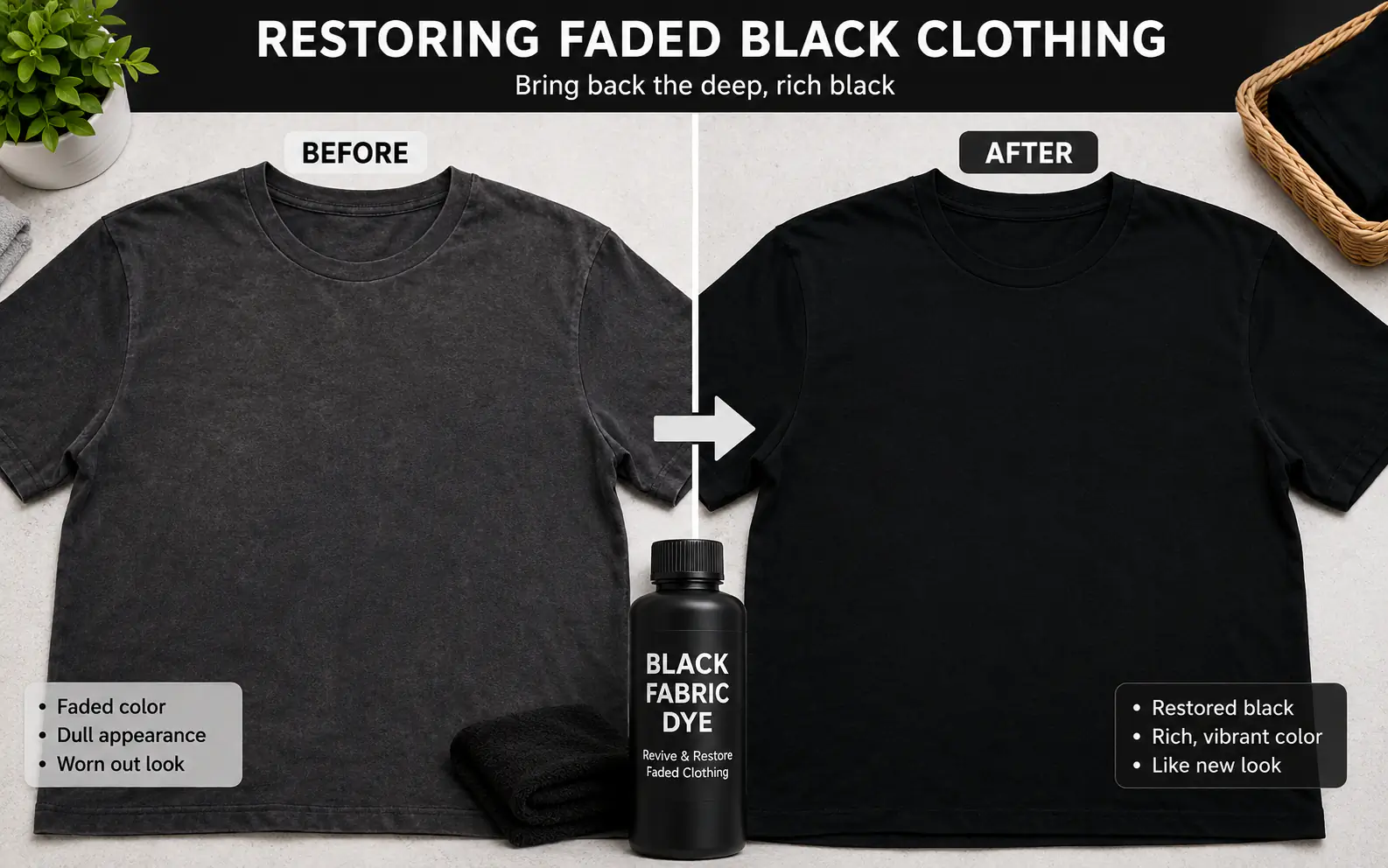
You can restore the appearance of faded black clothing, but the effectiveness depends on the cause of the fading and the fabric type. If the color loss is due to surface wear or minor dye leaching, you can often revive the garment using fabric dyes or specialized color-refreshing treatments.
However, if the fabric is physically worn, thinning, or damaged by sun exposure, the color may not hold evenly. Before starting, assess whether the garment is worth the effort by checking the material composition and the extent of the damage.
Distinction between surface revival and
- True restoration usually requires re-dyeing, not just washing.
- Natural fibers like cotton take dye better than synthetic blends.
- Cold water and specialized detergents are the best defense against future fading.
- Always check the care label before attempting any chemical treatment.
| Topic | When it helps | What to keep in mind |
|---|---|---|
| Method 1: Fabric Dyeing | Natural fibers like cotton, linen, and rayon. | Synthetic fibers like polyester often do not absorb standard dyes well, leading to uneven results. |
| Method 2: Enzyme Treatments | Slightly faded cotton garments that still have structural integrity. | This does not add new pigment; it only cleans the surface. |
Choosing the Right Restoration Method
Restoring Faded Black Clothing. Not all faded black clothes are candidates for restoration. If the fabric is pilling, thinning, or has holes, the dye will likely settle unevenly, highlighting the damage rather than hiding it.
For high-quality garments made of natural fibers, a professional-grade dye is usually the best investment. For everyday items, simpler enzyme washes or color-refreshing detergents may be sufficient.
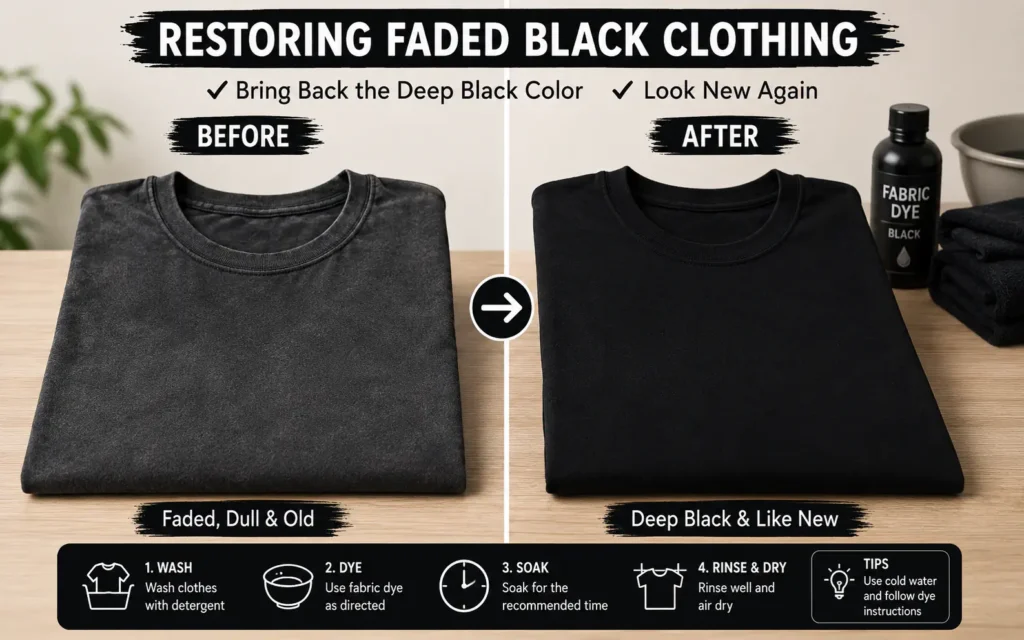
If your black jeans are turning gray because the fibers are physically thinning, dyeing will only provide a temporary fix.
Attempting to dye a garment that is already falling apart at the seams.
| Condition | Recommended Action | Success Probability |
|---|---|---|
| Slightly faded, good structure | Enzyme wash or color-safe detergent | High |
| Noticeably gray, natural fiber | Hot water fabric dye | High |
| Thinning, pilling, synthetic | None (consider retiring) | Low |

Preventing Future Fading
Once you have restored your clothing, your goal should be to maintain that depth of color. The way you wash and dry your clothes has a massive impact on how long they stay black.
Avoid high-heat drying whenever possible, as heat can degrade both the fabric and the dye. Air drying in the shade is the safest method for preserving dark colors.
Turning your black shirts inside out before washing reduces friction against other clothes, which is a primary cause of surface fading.
Using hot water, which accelerates dye leaching and fiber breakdown.
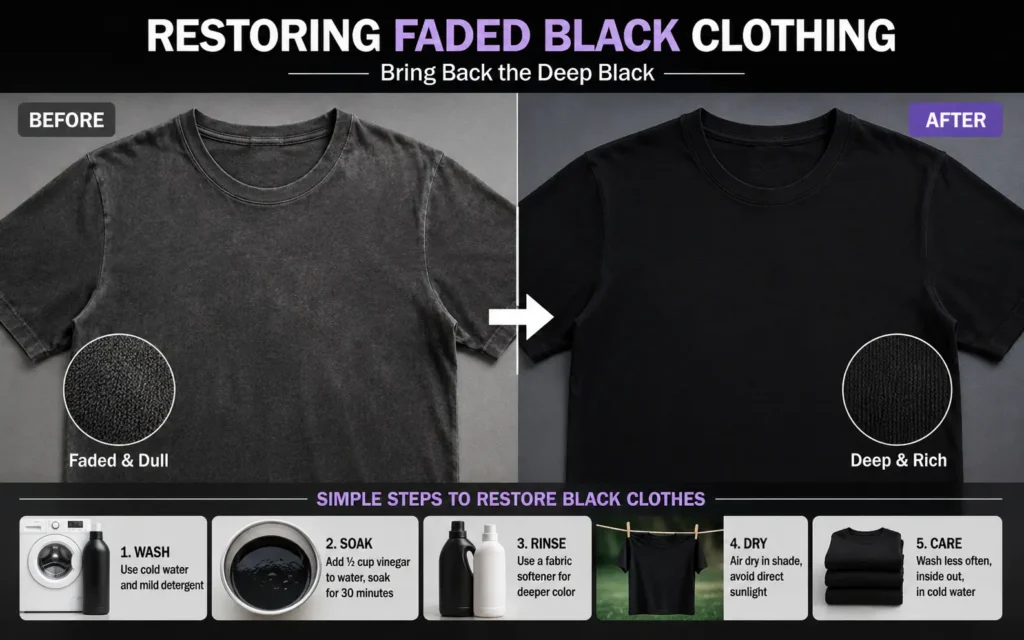
- Always wash black clothes in cold water.
- Turn garments inside out to minimize surface friction.
- Use a detergent specifically formulated for dark colors.
- Avoid over-crowding the washing machine.
- Dry clothes in the shade to prevent sun-bleaching.
Focus on fabric-safe restoration methods
Method 1: Fabric Dyeing. Permanent Color Restoration
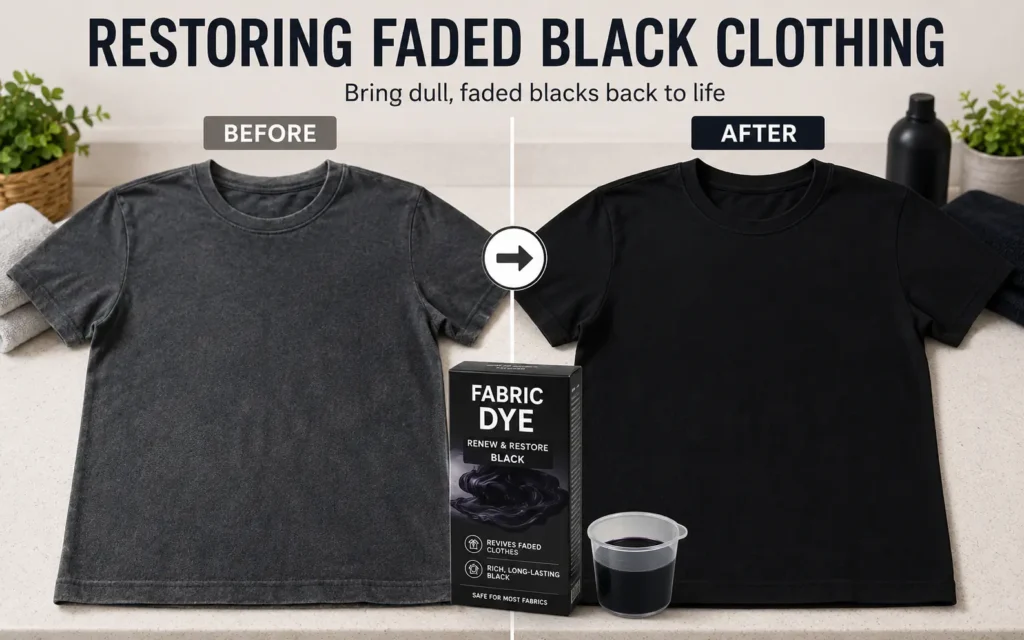
Using a liquid or powder fabric dye is the most effective way to restore deep black tones. This process involves submerging the garment in a hot dye bath.
- Natural fibers like cotton, linen, and rayon.
- Synthetic fibers like polyester often do not absorb standard dyes well, leading to uneven results.
- Check the garment label for fiber content before buying dye.
Method 2: Enzyme Treatments. Surface Exfoliation
Some products use enzymes to remove micro-fuzz from the surface of cotton fibers, which can make the fabric appear darker and smoother.
- Slightly faded cotton garments that still have structural integrity.
- This does not add new pigment; it only cleans the surface.
- Use this for maintenance rather than a total color overhaul.
FAQs
Can you reverse sun fading on clothes?
Sun fading often causes permanent chemical damage to the dye molecules. While you can re-dye the garment to cover the fade, the underlying fiber damage may remain, which can affect how the fabric feels.
Why do black clothes get faded?
Fading is caused by a combination of friction during washing, exposure to sunlight, and the breakdown of dye molecules over time. Natural fibers like cotton are particularly prone to losing color as the surface fibers wear down.
Is it safe to use dye in a front-loading machine?
Most modern fabric dyes are safe for front-loading machines, but you must follow the manufacturer’s instructions carefully. Always run a cleaning cycle with bleach or a dedicated machine cleaner immediately after dyeing to prevent staining future loads.
Does salt help keep black clothes from fading?
Some people add salt to the wash to help ‘set’ dye, but this is generally more effective during the initial dyeing process rather than as a regular laundry habit. It is not a substitute for proper washing techniques.
Conclusion
Restoring faded black clothing is a practical way to extend the life of your wardrobe, provided you choose the right method for your fabric type. Whether you opt for a full dye bath or a gentle enzyme treatment, the key is to manage your expectations based on the garment’s current condition.
Once you have revived your clothes, commit to cold-water washes and air drying to keep them looking their best for as long as possible. If a garment is physically worn out, it may be time to replace it rather than attempting a repair.
Related posts
 How to Strengthen Weak Nails: A Practical Guide to Daily Care
Learn how to strengthen weak nails with simple daily habits, protective care, and targeted hydration. Restore your natural nail strength today. Weak, peeling, or brittle nails…
 What Sounds Do Cats Dislike? 7 Noises That Stress Your Pet
Discover what sounds do cats dislike and why. Learn how to protect your cat’s sensitive hearing from stressful household noises and high-frequency hums. Cats dislike sounds…
 Can Dogs Understand Human Emotions? The Science Behind Your Pet’s Empathy
Discover can dogs understand human emotions through facial expressions, vocal tones, and scent. Learn how your mood directly shapes your dog’s behavior. Yes, dogs can understand…