
What Sounds Do Cats Dislike? 7 Noises That Stress Your Pet

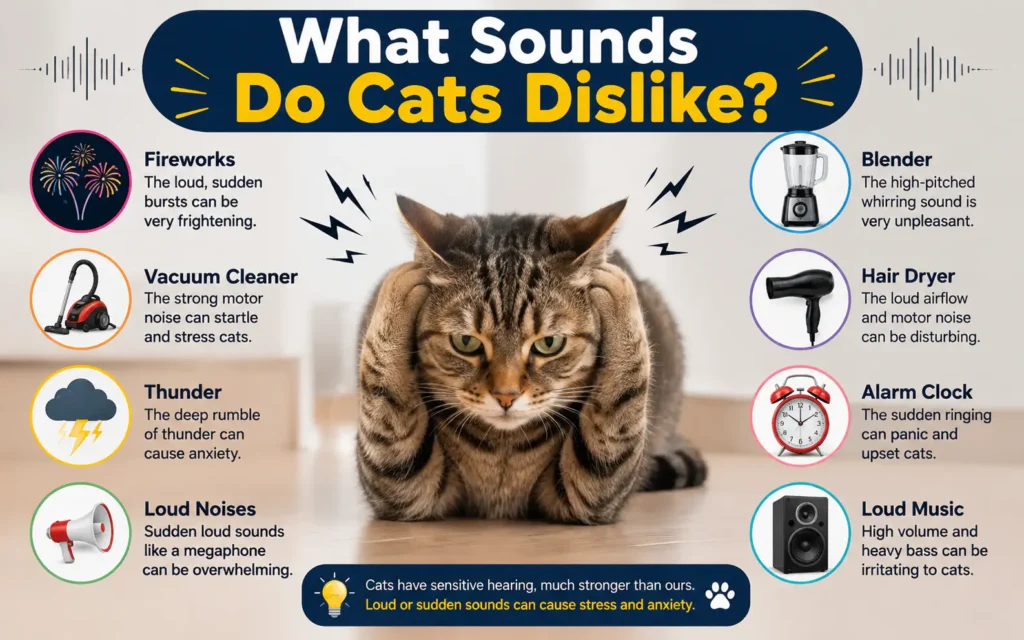
Cats dislike sounds that are loud, sudden, high-pitched, or mimic natural warning signals. Because a cat’s hearing is incredibly sensitive-capable of detecting frequencies far beyond human limits-everyday household noises can sound deafening or physically painful to them.
To keep your cat comfortable, you should identify these common acoustic triggers and take steps to minimize them in your home. Providing a quiet, secure retreat where your pet can escape unavoidable noises is essential for their mental and physical well-being.
Safety checks
- Cats hear frequencies up to 64,000 Hz, making many everyday electronic hums painful to them.
- Sudden, sharp sounds like crinkling foil or popping plastic mimic predatory or warning signals.
- Chronic exposure to loud household appliances can lead to long-term feline anxiety and behavioral issues.
- Creating a designated quiet retreat space is the most effective way to help a cat cope with unavoidable noises.
| Topic | When it helps | What to keep in mind |
|---|---|---|
| 1 | Switch to pump sprays or apply products in a separate room away from your pet. | Avoid using aerosol hairsprays, deodorants, or cleaning sprays directly near your cat. |
| 2 | Unplug chargers when not in use and replace flickering fluorescent bulbs promptly. | Cheap or degrading power adapters often emit louder high-frequency hums. |
| 3 | Keep windows closed and play soft background music to mask sudden outdoor noises. | Never force a cat out of hiding during a thunderstorm or fireworks display. |
| 4 | Move your cat to a closed, quiet room before turning on loud kitchen appliances or vacuums. | Do not chase or corner your cat with a vacuum cleaner, even in play. |
| 5 | Unfold trash bags slowly and gently rather than shaking them open aggressively. | Using aluminum foil to keep cats off furniture can cause chronic stress if overused. |
| 6 | Choose alarm clocks with gradual, lower-frequency wake-up tones rather than harsh beeping. | Ensure your smoke detectors are in good working order so they do not chirp constantly due to low batteries. |
| 7 | Speak to your cat in calm, quiet, reassuring tones to build a sense of security. | Avoid shouting or clapping loudly to discipline your cat, as this damages the bond of trust. |
Focus on common household and
1. Hissing and Sizzling Noises
What Sounds Do Cats Dislike. Sounds that mimic a hiss-such as aerosol sprays, frying food, or steam irons-are deeply unsettling to cats. In the feline world, a hiss is a direct warning of aggression or danger.
- Avoid using aerosol hairsprays, deodorants, or cleaning sprays directly near your cat.
- Switch to pump sprays or apply products in a separate room away from your pet.
- Source – Aerosol cans, steam irons, soda cans opening.
- Instinctive Reaction – Defensive posture or immediate flight.
2. High-Frequency Electronic Hums
Many electronic devices emit high-frequency sounds that are completely silent to human ears but highly irritating to cats. Computer monitors, phone chargers, fluorescent light bulbs, and older television sets often produce a constant, high-pitched whine that can drive a sensitive cat out of a room.
- Cheap or degrading power adapters often emit louder high-frequency hums.
- Unplug chargers when not in use and replace flickering fluorescent bulbs promptly.
- Source – Power adapters, older screens, fluorescent lights.
- Instinctive Reaction – Restlessness, leaving the room without obvious cause.
3. Sudden Loud Bangs
Thunderstorms, fireworks, popping balloons, and slamming doors trigger a cat’s natural startle response. Because cats are both predators and prey in the wild, sudden loud noises suggest an immediate physical threat, causing them to seek cover instantly.
- Never force a cat out of hiding during a thunderstorm or fireworks display.
- Keep windows closed and play soft background music to mask sudden outdoor noises.
- Source – Fireworks, thunder, slamming doors, dropped items.
- Instinctive Reaction – Bolting, hiding, dilated pupils.
4. Low-Frequency Motor Vibrations
Vacuum cleaners, blenders, food processors, and lawnmowers combine loud volume with intense physical vibrations. The combination of a roaring motor and a vibrating floor makes appliances like vacuums feel like giant, unpredictable predators to a small cat.
- Do not chase or corner your cat with a vacuum cleaner, even in play.
- Move your cat to a closed, quiet room before turning on loud kitchen appliances or vacuums.
- Source – Vacuum cleaners, blenders, hair dryers.
- Instinctive Reaction – Hissing, running away, puffed-up fur.
5. Sharp Crinkling and Popping
The sound of aluminum foil, plastic garbage bags, or bubble wrap being manipulated is incredibly sharp and high-pitched. These sounds register as intense, jarring spikes in a cat’s sensitive ears, often causing them to flinch or run away.
- Using aluminum foil to keep cats off furniture can cause chronic stress if overused.
- Unfold trash bags slowly and gently rather than shaking them open aggressively.
- Source – Aluminum foil, plastic bags, bubble wrap.
- Instinctive Reaction – Flinching, head shaking, running away.
6. High-Pitched Alarms and Sirens
Smoke detectors, alarm clocks, and passing emergency sirens are designed to be piercing and impossible to ignore. For a cat, these sounds are not just loud; they can be physically painful to their delicate eardrums.
- Ensure your smoke detectors are in good working order so they do not chirp constantly due to low batteries.
- Choose alarm clocks with gradual, lower-frequency wake-up tones rather than harsh beeping.
- Source – Smoke alarms, sirens, digital beeps.
- Instinctive Reaction – Panic, disorientation, seeking deep cover.
7. Loud Human Voices
Yelling, shouting, or intense arguments can deeply stress a cat. Cats are highly sensitive to human emotions and vocal tones.
- Avoid shouting or clapping loudly to discipline your cat, as this damages the bond of trust.
- Speak to your cat in calm, quiet, reassuring tones to build a sense of security.
- Source – Shouting, cheering, loud television audio.
- Instinctive Reaction – Cowering, low crawling, avoidance.
The Science of Feline Hearing: Why Cats Are So Sensitive
To understand why cats dislike certain sounds, we have to look at their remarkable evolutionary design. A cat’s ears are finely tuned hunting instruments.
Additionally, a cat’s outer ears (pinnae) are controlled by 32 individual muscles. This allows them to rotate their ears 180 degrees independently to pinpoint the exact source of a sound.
A cat can hear the tiny, high-pitched squeaks of mice behind drywall that are completely silent to a human sitting in the same room.
Assuming that if a sound does not bother you, it must not be bothering your cat.
- Feline hearing is roughly four times more acute than human hearing.
- The funnel shape of a cat’s ear naturally amplifies sound waves.
- High-frequency sounds cause physical vibration in their delicate inner ear structures, which can be painful.
| Species | Approximate Hearing Range (Hz) | Sensitivity to High Frequencies |
|---|---|---|
| Human. | 20 – 20,000. | Low. |
| Dog. | 67 – 45,000. | Medium. |
| Cat. | 48 – 64,000. | Very High. |
How to Recognize Noise Stress in Your Cat
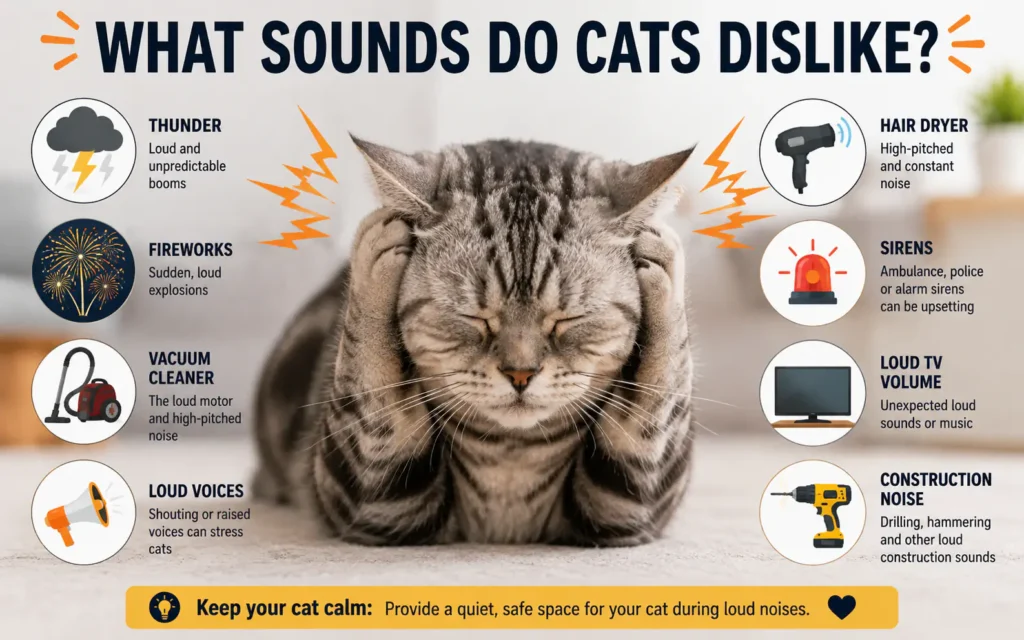
Cats are masters at hiding discomfort, but they display clear physical cues when a sound is distressing them. Recognizing these signs early allows you to eliminate the noise source or move your cat to a safer space before they become overwhelmed.
Chronic exposure to stressful sounds can manifest as long-term behavioral changes. If your cat is constantly on edge, they may become withdrawn, aggressive, or start avoiding certain rooms altogether.
Your cat’s ears suddenly flatten backward like airplane wings, and their pupils dilate when you turn on the kitchen blender.
Ignoring subtle signs of stress, which can lead to chronic anxiety, inappropriate urination, or hiding behavior.
- Flattened ears pointing backward or outward.
- Rapidly twitching or flicking tail.
- Dilated pupils and wide, staring eyes.
- Cowering close to the ground or running to hide under furniture.
- Excessive grooming, particularly focusing on one spot, after a loud event.
Practical Ways to Protect Your Cat from Harsh Noises
While you cannot control every sound outside your home, you can take simple steps to make your indoor environment much friendlier for your cat’s ears. Creating a quiet sanctuary is one of the most effective ways to help your cat feel secure.
If your cat is terrified of unavoidable noises like the vacuum cleaner, you can work on slow desensitization. Keep the vacuum turned off and let your cat sniff it while offering high-value treats.
Setting up a cozy cardboard box lined with blankets in a quiet closet where your cat can retreat during a summer thunderstorm.
Using loud, ultrasonic pest repellents in the home, which can cause constant, unseen distress to your pets.
- Designate a ‘quiet zone’ in an interior room or closet with plenty of soft bedding to absorb sound.
- Close windows during high-noise events like construction, lawn mowing, or fireworks.
- Use heavy curtains and rugs to help dampen echoes and soften sharp household sounds.
- Consider playing soft classical music or white noise designed specifically for cats to mask sudden outdoor sounds.
FAQs
What noise scares cats the most?
Sudden, unpredictable loud bangs like fireworks, thunder, or popping balloons scare cats the most. Because these sounds are loud and occur without warning, they trigger an immediate survival instinct to flee and hide.
What noise will keep cats away?
High-frequency ultrasonic deterrents or sharp hissing sounds (like compressed air) can keep cats away from specific areas. However, these should be used with caution, as constant exposure to high-frequency noise can cause chronic stress and anxiety.
Can cats hear sounds that humans cannot?
Yes, cats can hear ultrasonic frequencies up to 64,000 Hz, whereas the human hearing limit stops around 20,000 Hz. This means cats can hear the high-pitched hums of electronic chargers, appliances, and light bulbs that are completely silent to us.
How can I calm my cat during loud fireworks?
To calm your cat, keep them indoors in a secure, quiet room with closed windows and curtains. Provide a cozy hiding spot, play soft background music or white noise to mask the bangs, and avoid forcing them out of their hiding place.
Conclusion
Understanding what sounds cats dislike is a vital part of being a responsible and compassionate pet owner. Because of their highly evolved, sensitive hearing, cats experience the acoustic world in a much more intense way than we do.
Creating a quiet, predictable home not only protects your cat’s delicate ears but also strengthens the bond of trust between you. Pay close attention to your cat’s body language, provide safe hiding spots, and always prioritize a calm, quiet sanctuary for your feline companion.
Related posts
 How to Strengthen Weak Nails: A Practical Guide to Daily Care
Learn how to strengthen weak nails with simple daily habits, protective care, and targeted hydration. Restore your natural nail strength today. Weak, peeling, or brittle nails…
 Restoring Faded Black Clothing: Practical Methods and Reality Checks
Can you restore faded black clothing? Learn the difference between temporary color revival and permanent redyeing, plus how to prevent future fading. You can restore the…
 Can Dogs Understand Human Emotions? The Science Behind Your Pet’s Empathy
Discover can dogs understand human emotions through facial expressions, vocal tones, and scent. Learn how your mood directly shapes your dog’s behavior. Yes, dogs can understand…