
Why Does My Dog Stare At Walls
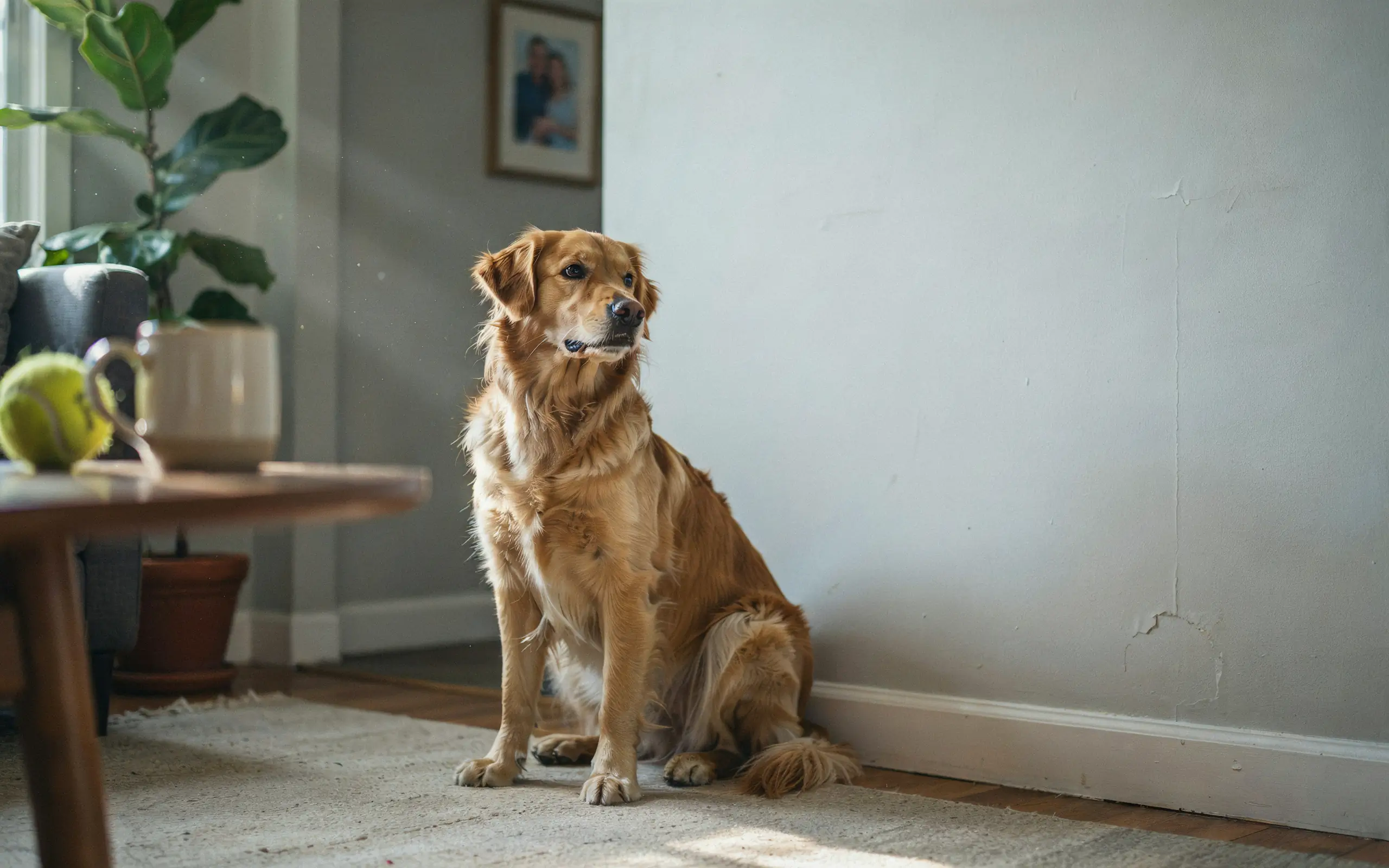
If you have ever asked yourself, “why does my dog stare at walls?” you are not alone. This common behavior can be harmless curiosity or a sign of medical issues like cognitive decline, focal seizures, or vision problems. Learn when to see a vet.
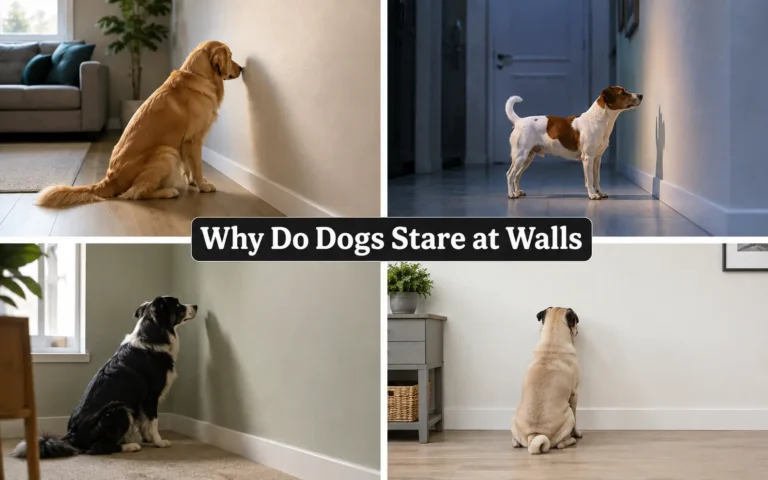
Have you ever walked into your living room and found your dog standing perfectly still, eyes locked on a blank wall? It can feel a little unsettling, even a bit creepy. You might call their name, but they do not respond. They just keep staring, as if they are watching something invisible.
If this sounds familiar, you are probably wondering what is going on. Is your dog seeing ghosts? Are they sick? Or is this just another one of those strange things dogs do?
The truth is, there is no single answer. A dog staring at a wall can mean many different things. Sometimes it is completely harmless. Other times, it can be a sign of a health problem that needs attention.
In this article, we will look at the most common reasons behind this behavior. We will also help you figure out when to relax and when to call your vet.
Quick Overview of Reasons Why Your Dog Stares at Walls
| Possible Reason | Main Cause | Common in |
|---|---|---|
| Hearing Something | Rodents, pipes, or noises you cannot hear | All dogs |
| Vision Issues | Cataracts, poor eyesight, trouble with shadows | Senior dogs |
| Cognitive Decline | Dog dementia or confusion | Older dogs (11+ years) |
| Focal Seizures | Abnormal brain activity | Any age |
| Boredom | Lack of mental or physical stimulation | High-energy breeds |
| Compulsive Behavior | Stress, anxiety, or OCD-like traits | Any dog |
| Pain or Nausea | Physical discomfort | Any dog |
| Attention Seeking | Learned behavior for treats or pets | All dogs |
1. They Hear Something You Cannot
This is one of the most common and harmless reasons for a dog staring at a wall. Dogs have incredible hearing. They can pick up sounds at much higher frequencies than humans can. Your dog might be hearing mice scurrying inside the wall, water moving through pipes, or even the faint hum of electrical wiring.
Jenn Stanley, a certified canine behavior consultant, explains: “In general, dogs have significantly better hearing than humans at higher pitches. So, it’s very common for dogs to hear road or neighborhood noise and pause to think about what it is and if it warrants a reaction.”
If your dog is staring at a wall because of a sound, you will often notice other signs. They might tilt their head from side to side. Their ears might perk up or move around. They may even sniff the wall or scratch at it.
You can test this yourself. Sit quietly next to your dog and press your ear against the wall. See if you can hear anything unusual. If you suspect pests, it might be worth calling an exterminator to check things out.
2. They See Shadows or Movement
Dogs see the world differently than we do. Their eyes are better at detecting motion, especially in low light. A tiny spider crawling on the wall, a beam of light from a window, or a dust particle floating in the air can all catch your dog’s attention.
What looks like a plain, boring wall to you might look like a moving picture show to your dog. They might stare because they are trying to figure out what that little shadow is. If the movement stops, they might keep staring, waiting for it to happen again.
This is usually nothing to worry about. It is just your dog being curious and using their natural hunting instincts.
3. They Are Bored or Seeking Attention
Sometimes, a dog staring at the wall is simply bored. Dogs need mental and physical activity every day. If they do not get enough exercise or playtime, they will find their own ways to entertain themselves. Staring at a wall might be their way of zoning out or passing the time.
Dogs are also very smart. They learn quickly what gets your attention. If you react to their wall-staring with petting, treats, or concern, they might do it again on purpose. They know that staring at the wall makes you come over and interact with them. Even if you are just saying “stop that,” it is still attention.
If you think boredom is the reason, try adding more activities to your dog’s day. A longer walk, a puzzle toy, or a game of fetch can make a big difference.
4. Vision Problems
As dogs get older, their eyesight often gets worse. Conditions like cataracts, glaucoma, or retinal disease can make it hard for them to see clearly. A dog with poor vision might stare at a wall because they are confused by what they are seeing.
They might be trying to focus on something that is just out of reach. Shadows and changes in light can be especially confusing for a dog with vision loss. They might stare because they cannot quite figure out what is in front of them.
If your dog is also bumping into furniture, hesitating on stairs, or seeming unsure in dim light, vision problems could be the cause. A visit to the vet for an eye checkup is a good idea.
5. Canine Cognitive Dysfunction (Dog Dementia)
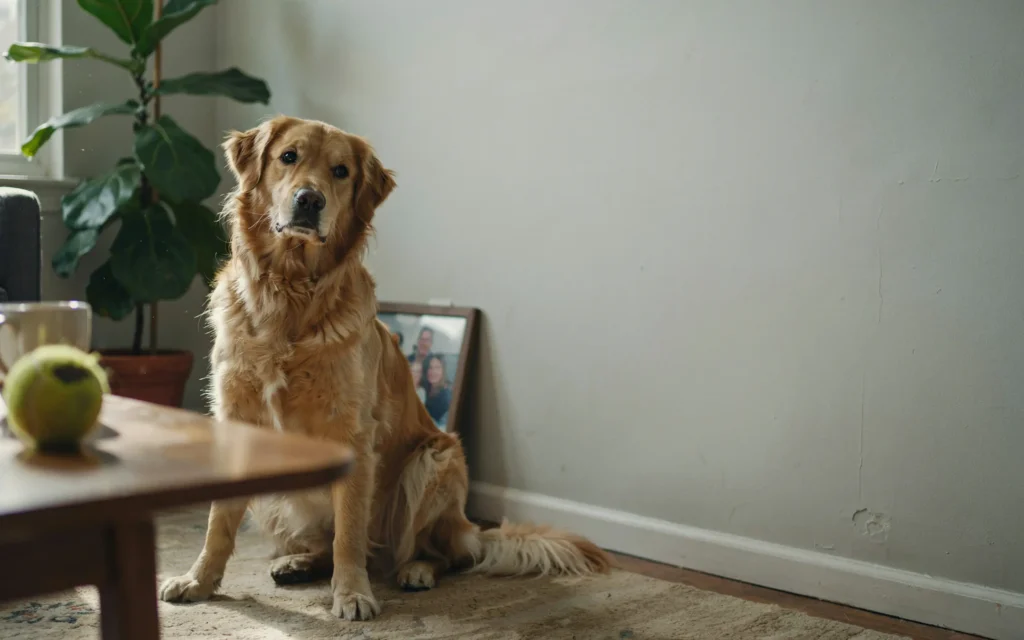
This is one of the more serious reasons for a dog staring at a wall, especially in older dogs. Canine Cognitive Dysfunction (CCD) is similar to Alzheimer’s disease in humans. It causes a decline in brain function as dogs age.
Staring blankly at walls or into space is a classic sign of this condition. Dogs with CCD often seem disoriented or confused. They might get stuck in corners, pace back and forth, or forget their usual routines.
According to the Dog Aging Project, about 28% of dogs aged 11 to 12 show signs of cognitive decline. This number goes up to 68% for dogs aged 15 to 16. That means this is a very real issue for many senior dogs.
Dr. Brian Gray Barnett, a veterinary researcher, says: “Their veterinarian will have the best plan to identify the underlying cause of the behavioral changes and find the best intervention. This can include treating a contributing medical condition, maintaining a consistent routine, reducing environmental stress factors, introducing enrichment activities, changing diet, and recommending specific supplements and medications when appropriate.”
If your senior dog is staring at walls and showing other signs of confusion, talk to your vet. There are treatments and diets that can help manage the symptoms.
6. Focal Seizures
Seizures do not always look like the dramatic, full-body convulsions we often picture. Some seizures are much milder. These are called focal seizures or partial seizures. They affect only a small part of the brain.
During a focal seizure, a dog might stare blankly at a wall or into space. They might not respond to your voice or touch. Their eyes might look glassy or unfocused. This trance-like state can last for a few seconds or several minutes.
Focal seizures can be caused by many things, including brain tumors, head injuries, or epilepsy. If you notice your dog staring at a wall and not responding, and this happens more than once, you should see a vet as soon as possible.
7. Compulsive Behavior (Canine OCD)
Just like humans, dogs can develop compulsive behaviors. This is sometimes called Canine Compulsive Disorder (OCD). It is a mental health condition where a dog repeats the same action over and over again.
For some dogs, this repetitive action is tail-chasing. For others, it is licking their paws constantly. And for some, it is staring at walls.
This kind of behavior is often linked to stress or anxiety. It can also be triggered by boredom or frustration. If your dog seems to stare at walls obsessively, and it is interfering with their normal life, it is time to get help. A vet or a dog behaviorist can work with you to find ways to reduce your dog’s stress and break the cycle.
8. Pain or Physical Discomfort
Dogs are very good at hiding pain. They do not always whine or cry when something hurts. Sometimes, they just freeze and stare.
Pain in the back, neck, or belly can make a dog stand still and look like they are zoning out. Nausea can also cause this behavior. A dog that feels sick might stand in one spot, stare at the wall, and lick their lips or swallow repeatedly.
If your dog is staring at the wall and also seems restless, is panting for no reason, or has a hunched posture, they might be in pain. This is a sign that you need to take them to the vet.
Signs That Require a Vet Visit
| Symptom to Watch For | What It Could Mean |
|---|---|
| Staring lasts for long periods (over 5 minutes) | Possible focal seizure or cognitive issue |
| Dog does not respond to name or touch | Disorientation, seizure, or hearing loss |
| Pacing, circling, or getting stuck in corners | Cognitive decline or neurological problem |
| Loss of house training | Cognitive decline or physical illness |
| Changes in appetite or sleep patterns | Pain, illness, or cognitive decline |
| Bumping into furniture or hesitating on stairs | Vision problems |
9. They Smell Something Interesting
We all know that dogs have an amazing sense of smell. It is estimated to be 10,000 to 100,000 times more sensitive than ours. Your dog might be staring at a wall because they smell something on the other side of it.
There could be a dead mouse in the wall. There could be mold or old food. There could even be a new scent coming from outside through a crack. Their nose tells them something is there, and their eyes are trying to find it.
This is usually harmless. But if you notice a bad smell or if your dog keeps scratching at the same spot, it is worth investigating.
What to Do When Your Dog Stares at a Wall
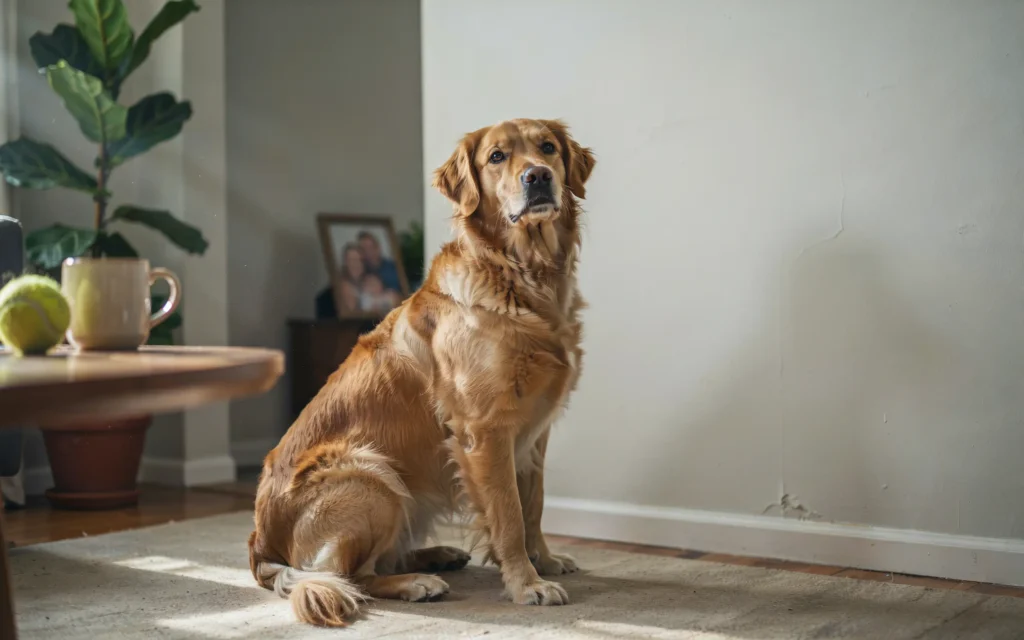
If you catch your dog staring at a wall, do not panic. Take a moment to observe them closely.
First, check the wall itself. Is there a bug, a shadow, or a reflection? If you see something obvious, that is probably the answer.
Next, watch your dog’s body language. Are their ears perked up? Are they tilting their head? Are they sniffing? These signs suggest they are reacting to a sound or smell.
If your dog seems relaxed and the staring only lasts a short time, it is probably nothing to worry about. But if the staring happens often, lasts a long time, or is paired with other strange behaviors, it is time to call your vet.
Dr. Christine Senneca, a veterinary neurologist, notes: “This is a vague and non-specific clinical sign that can be caused by many problems, both inside and outside of the brain.” Because the cause can be so varied, a vet is the best person to help you figure it out.
Frequently Asked Questions
1. Is it normal for my dog to stare at walls?
Occasional staring is normal. Dogs are curious creatures. They hear, see, and smell things we do not. But frequent or prolonged staring, especially in older dogs, can be a sign of a medical problem.
2. Why does my old dog stare at walls?
In senior dogs, the most common cause is Canine Cognitive Dysfunction (dog dementia). Vision loss and hearing loss are also very common in older dogs and can cause this behavior.
3. Can staring at walls be a sign of a seizure?
Yes. Focal seizures can cause a dog to stare blankly into space or at a wall. During this time, they may not respond to you.
4. Should I take my dog to the vet for staring at walls?
Yes, if the staring is new, frequent, or lasts for more than a few minutes. You should also see a vet if your dog shows other signs like confusion, pacing, loss of balance, or changes in appetite.
5. How can I stop my dog from staring at the wall?
First, find out why they are doing it. If it is boredom, give them more exercise and play. If it is attention-seeking, do not reward the behavior with attention. If you suspect a medical cause, work with your vet.
6. Can dogs see ghosts?
There is no scientific evidence that dogs can see ghosts. Their behavior is usually explained by their stronger senses or a medical condition.
7. Could my dog be staring at a pest in the wall?
Yes. Dogs can hear and smell rodents, insects, and other pests inside walls. If you suspect this, listen carefully and consider calling an exterminator.
8. Does anxiety cause dogs to stare at walls?
Yes. Stress and anxiety can lead to compulsive behaviors, including staring at walls. Changes in routine or environment can trigger this.
9. What is the treatment for dog dementia?
There is no cure for CCD, but treatments can help manage the symptoms. These include special diets, medications, and supplements. Keeping a consistent routine also helps.
10. When is wall-staring an emergency?
If your dog suddenly starts staring at walls and also collapses, has a seizure, cannot walk, or seems to be in severe pain, get to an emergency vet right away.
Conclusion
A dog staring at a wall can be a puzzling and sometimes worrying sight. But as we have seen, there are many possible explanations. Your dog might be hearing a tiny mouse in the wall. They might be bored and looking for something to do. Or they might be showing you that something is wrong with their health.
The key is to pay attention. Notice how often it happens. Look for other signs like confusion, pacing, or changes in eating and sleeping. Trust your gut. If something feels off, do not wait. A visit to the vet can give you peace of mind and help your dog get the care they need.
Your dog relies on you to be their voice. By learning what their behaviors mean, you are being a better, more caring pet parent. So the next time you see your furry friend staring at a blank wall, you will have a much better idea of what might be going on in that furry head of theirs. And that knowledge is the best tool you have to keep them happy and healthy for years to come.
Related posts
 Why Do Dogs Stare at Walls? Common Causes and When to Worry
Wondering why do dogs stare at walls? Discover the sensory, behavioral, and medical reasons behind this behavior, and learn when to contact your veterinarian. When you…
 How to Test Car Wiring for Continuity Using a Multimeter
Learn how to test car wiring for continuity safely. Find broken automotive wires, check connector ports, and diagnose electrical issues with a multimeter. Testing car wiring…
 Why Organizing Space Reduces Stress: The Mental Clarity Connection
Discover why organizing space reduces stress. Learn how a tidy environment lowers cortisol, improves focus, and creates a sense of calm in your daily life. Organizing…