
Why Organizing Space Reduces Stress: The Mental Clarity Connection
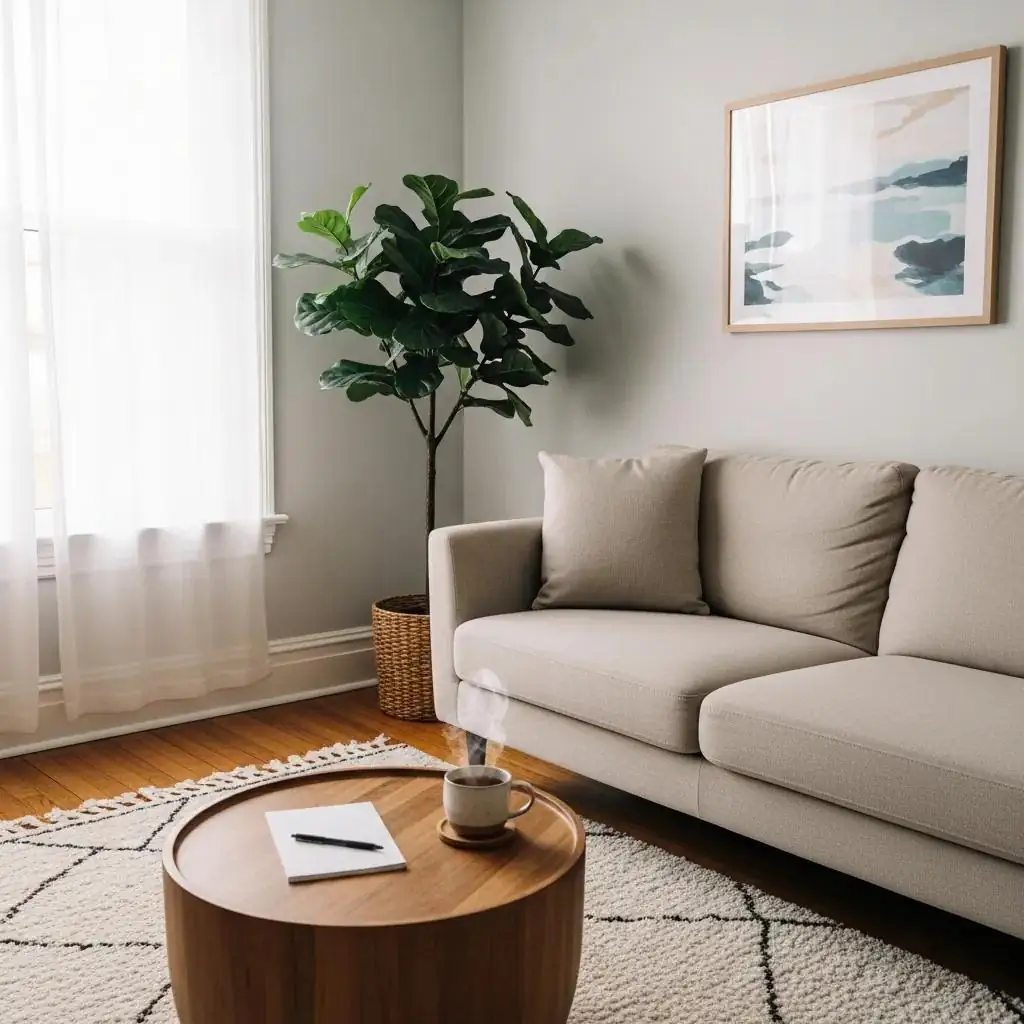
Organizing your space reduces stress because it lowers the amount of visual information your brain has to process at any given moment. When your environment is cluttered, your brain perceives these items as unfinished tasks or distractions, which can keep your stress levels elevated.
By creating an orderly space, you effectively reduce this ‘visual noise.’ This allows your mind to shift from a state of constant scanning and reaction to a state of rest and focus. Taking even small steps to organize your immediate surroundings can provide an immediate sense of control and calm.
The impact of visual stimuli
- Clutter competes for your attention, which increases cognitive load.
- Organizing provides a sense of agency and control over your environment.
- Small, consistent efforts are more effective for stress reduction than one-time massive cleanups.
- A tidy space acts as a visual cue for your brain to relax.
| Topic | When it helps | What to keep in mind |
|---|---|---|
| 1 | People who feel ‘drained’ after spending time in their home office or living room. | Don’t try to organize everything at once; focus on one surface at a time. |
| 2 | Those feeling overwhelmed by life circumstances outside of their control. | Avoid setting unrealistic standards for how ‘perfect’ a space should look. |
The Science of Visual Noise
Your brain is designed to scan your environment for information. When that environment is filled with excess items, your brain struggles to distinguish between what is important and what is just ‘stuff.’ This creates a state of low-level, chronic stress.
This phenomenon is often called ‘visual noise.’ Just as loud, chaotic sounds can make it hard to think, a chaotic visual field makes it hard to relax. By clearing surfaces, you give your brain permission to stop scanning and start resting.
Imagine trying to read a book in a room filled with piles of laundry and scattered papers; your eyes keep darting to the mess, breaking your concentration.
Assuming that ‘hidden’ clutter (like inside a closet) doesn’t affect you; while less visible, it still creates a background sense of unease.
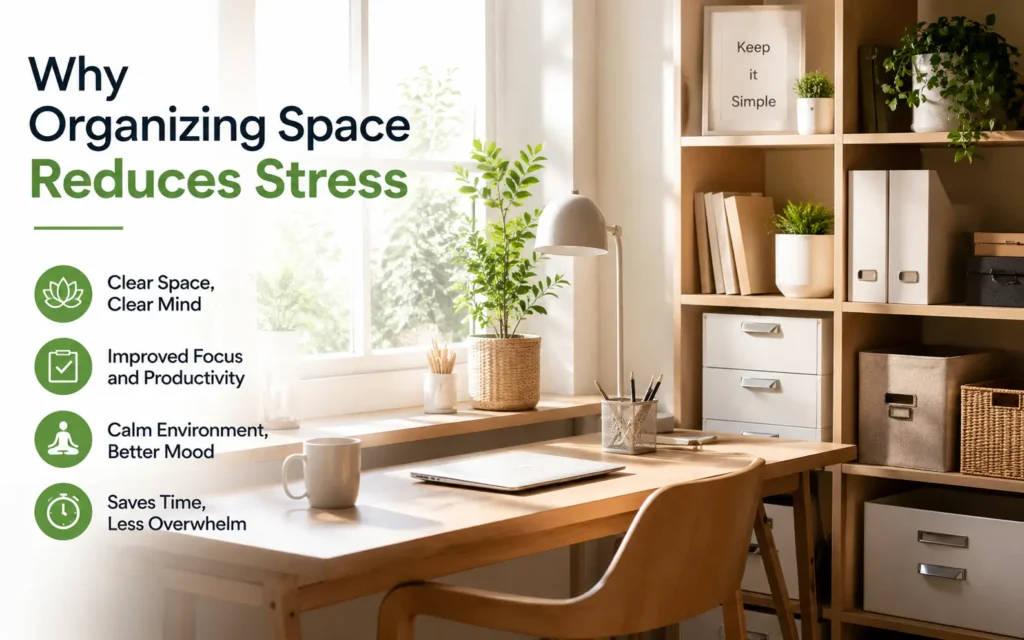
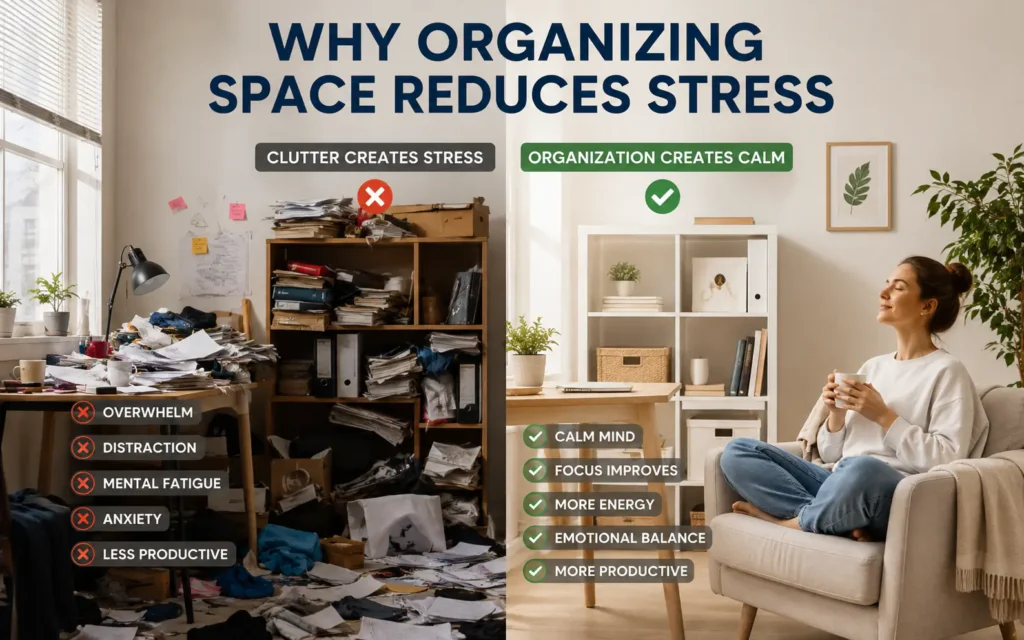
| Cluttered Space | Organized Space |
|---|---|
| High visual stimuli | Low visual stimuli |
| Constant distraction | Improved focus |
| Feeling of chaos | Feeling of calm |
Simple Strategies for Low-Stress Organizing
The goal of organizing for stress reduction is not to create a showroom-ready home, but to create a functional space that supports your well-being. Start small to keep your stress levels low during the process.
Focus on ‘high-traffic’ areas first. These are the spaces you interact with most, such as your bedside table, your kitchen counter, or your workspace. When these areas are clear, the impact on your daily stress levels is immediate.
The ’10-minute reset’-set a timer for 10 minutes each evening to put away items that have migrated from their homes.
Buying expensive storage bins before you have decluttered; this often leads to storing ‘clutter’ rather than organizing ‘essentials’.
- Use the ‘one-in, one-out’ rule to prevent accumulation.
- Keep surfaces clear of non-essential items.
- Group similar items together so they are easy to find.
- Use containers you already own before buying new ones.
Focus on the mental health
1. Reduced Cognitive Load
Your brain constantly processes the items in your field of vision. Clutter forces the brain to work harder to filter out irrelevant information, leading to fatigue.
- People who feel ‘drained’ after spending time in their home office or living room.
- Don’t try to organize everything at once; focus on one surface at a time.
- Clear one desk or table surface today to see if your focus improves.
- Benefit – Mental clarity
- Mechanism – Lowered visual stimuli
2. Increased Sense of Agency
Stress often stems from feeling out of control. Organizing your space is a tangible, manageable action that proves you have the power to influence your environment.
- Those feeling overwhelmed by life circumstances outside of their control.
- Avoid setting unrealistic standards for how ‘perfect’ a space should look.
- Start with a single drawer or shelf that you use every day.
- Benefit – Empowerment
- Mechanism – Active problem solving
FAQs
Does decluttering really help with anxiety?
Yes, for many people, reducing physical clutter helps lower the background noise of anxiety by creating a predictable, calm environment that feels easier to manage.
What is the 3-3-3 rule for decluttering?
The 3-3-3 rule suggests picking 3 items to throw away, 3 items to donate, and 3 items to put back in their proper place. It is a simple way to start without feeling overwhelmed.
Why do I feel stressed even when my room is clean?
Stress can come from many sources. If your room is clean but you still feel stressed, the issue may be related to your schedule, sleep, or other life factors rather than your physical environment.
How do I start if I feel paralyzed by the mess?
Start with the smallest possible area, like a single drawer or a small corner of a desk. Success in a tiny area provides the momentum needed to continue.
Conclusion
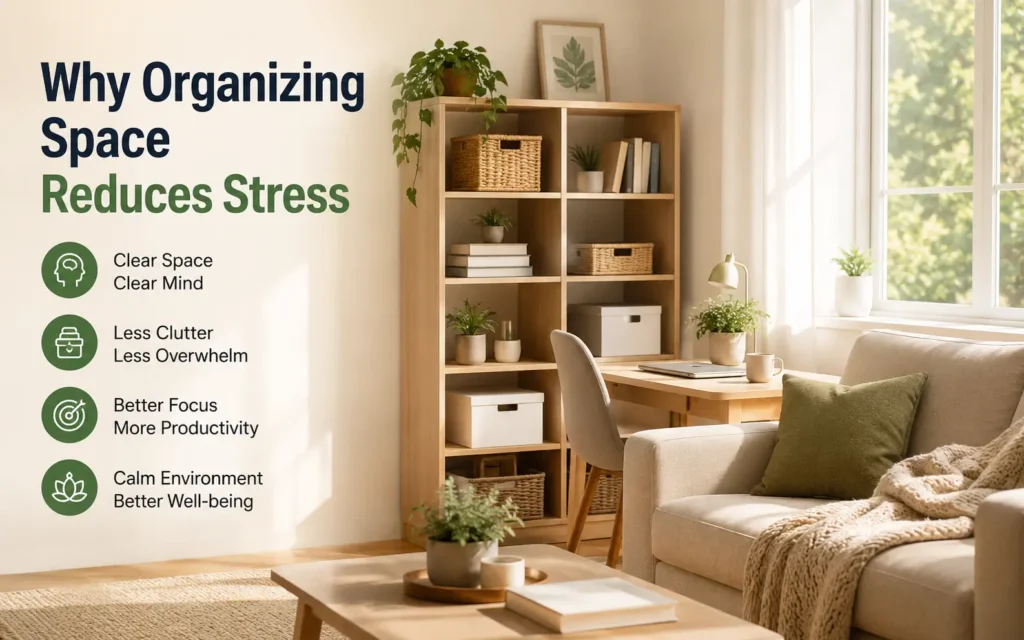
Organizing your space is a powerful tool for stress reduction because it directly addresses the visual stimuli that keep your brain in a state of high alert. By simplifying your surroundings, you create a sanctuary that allows for genuine rest and improved focus.
Remember that the goal is progress, not perfection. Start with small, manageable tasks, and focus on how much lighter you feel when your environment supports your peace of mind rather than competing for your attention.
Related posts
 How to Test Car Wiring for Continuity Using a Multimeter
Learn how to test car wiring for continuity safely. Find broken automotive wires, check connector ports, and diagnose electrical issues with a multimeter. Testing car wiring…
 Why Fresh Air Is Important in Your Home: Health and Comfort Benefits
Discover why fresh air is important in your home. Learn how proper ventilation dilutes indoor pollutants, controls humidity, and improves your daily health. Bringing fresh outdoor…
 How Do Pets Recognize Their Names? The Science of Sound Association
Discover how do pets recognize their names through sound association and positive reinforcement. Learn why your pet responds to specific cues and how to strengthen it.…