
What Causes Acne In Women
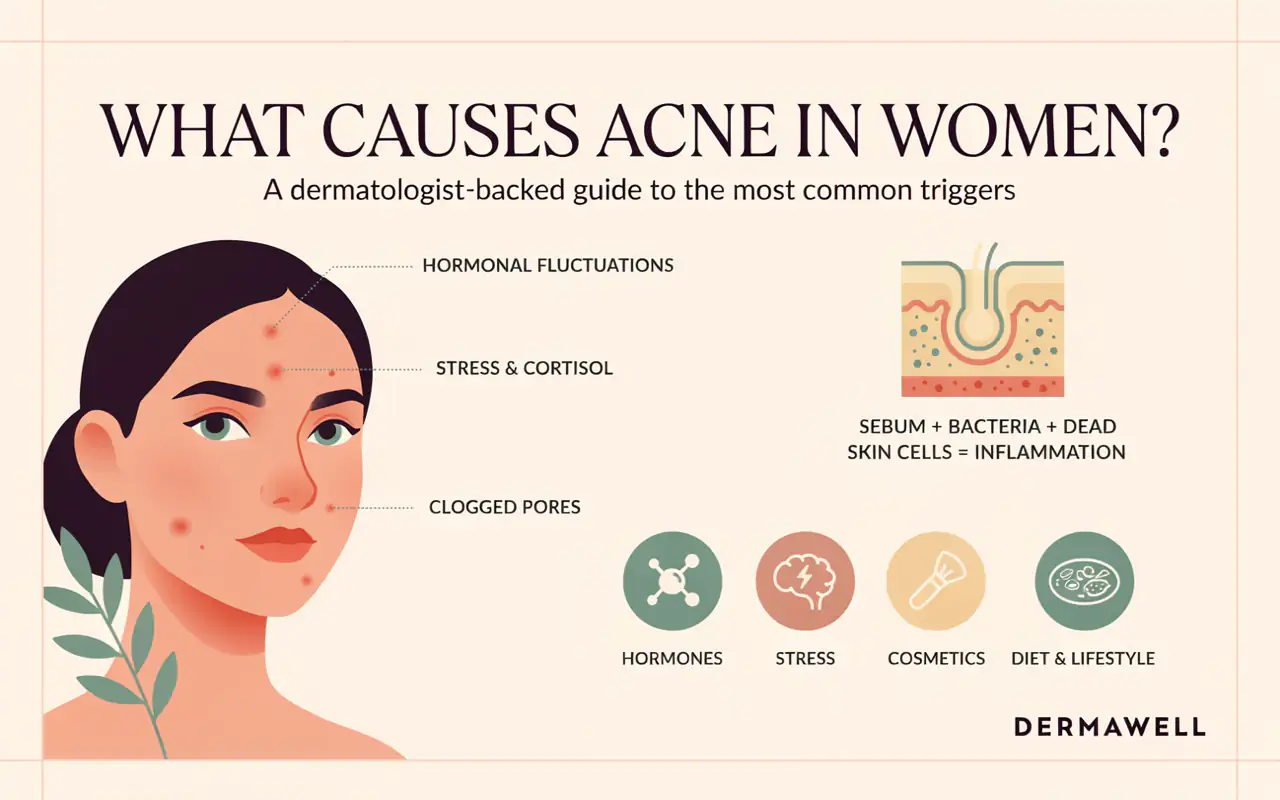
This article explains what causes acne in women, from hormonal shifts and stress to diet and skincare products. If you want clear answers about causes acne in women and how to manage it, keep reading for science-backed insights and practical tips.
Acne is something many of us think we leave behind in our teenage years. But for a huge number of women, breakouts continue well into their 20s, 30s, and even beyond. If you are reading this, you might be one of them. You wash your face, you try different creams, and yet those stubborn bumps keep showing up, especially along your jawline or chin. It can feel frustrating and confusing.
You are not alone in this. Research shows that about 21.95% of women have acne, compared to 16.3% of men. The prevalence is highest in women in their 20s, at around 50.9%, and it remains a concern for many well into their 40s and 50s.
The truth is, adult acne in women is not simple. It is not just about being “unclean” or eating the wrong thing occasionally. The factors that cause acne in women are deeply tied to biology, hormones, lifestyle, and even the products you use every day. To get clear skin, you first need to understand what is really going on beneath the surface.
Let’s break down the real reasons behind those breakouts. This guide will walk you through the main causes, explain how each one works, and give you a practical path forward.
What Really Causes Acne in Women?
Before we look at specific triggers, let’s quickly understand the basic process of a pimple. Your skin has tiny holes called pores. Inside each pore is a hair follicle and a sebaceous gland, which produces an oily substance called sebum. Sebum is not bad. It keeps your skin lubricated and protected.
Problems start when your body produces too much sebum. At the same time, dead skin cells that should shed naturally get trapped inside the pore. This mix of excess oil and dead cells forms a plug. This plug creates a perfect environment for bacteria called Cutibacterium acnes to grow. The bacteria triggers inflammation, which leads to redness, swelling, and the formation of pimples, blackheads, or cysts.
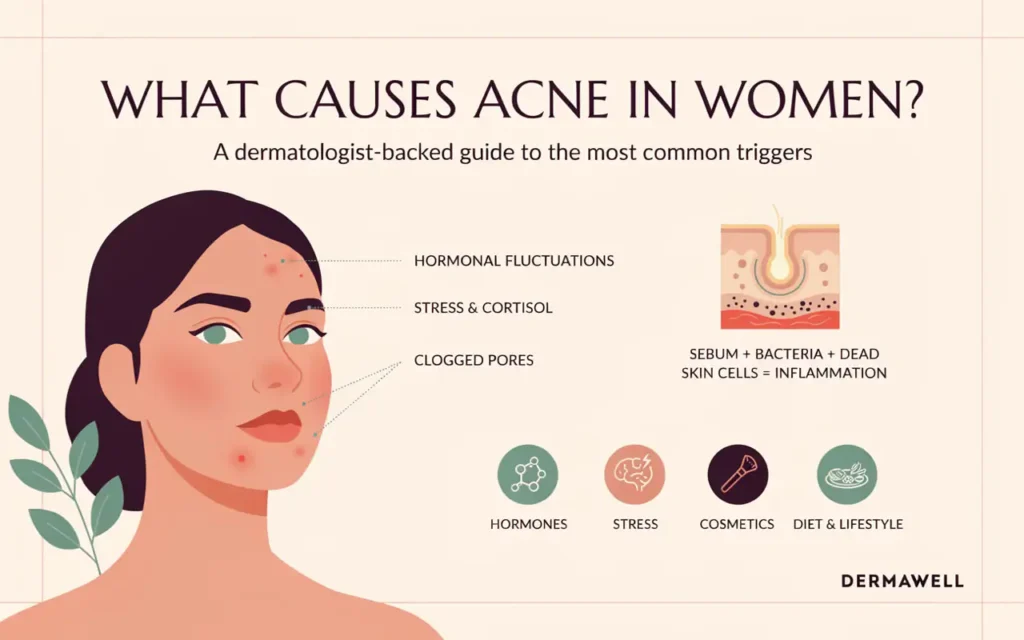
So, what causes this chain reaction in adult women? The answer is rarely one single thing. It is usually a combination of factors. The primary driver for what causes acne in women is hormonal fluctuation, but other elements like stress, diet, genetics, and cosmetics also play significant roles.
Hormones Are the Main Driver
If there is one key answer to what causes acne in women, it is hormones. The skin is actually an endocrine organ. This means it responds directly to the hormonal signals your body sends out.
Women naturally produce hormones like estrogen and progesterone. But women also produce androgens, which are often called “male hormones,” including testosterone. This is completely normal. The trouble arises when these hormones become imbalanced.
Androgens directly stimulate the sebaceous glands to produce more sebum. As we get older, our estrogen levels often decline. At the same time, our androgen levels can stay the same or even increase relative to estrogen. Because there is less estrogen to balance the effects of androgens, the oil-producing effects of testosterone become more noticeable.
This imbalance is why many women see breakouts appear around their chin and jawline. These areas have a higher concentration of oil glands that are sensitive to androgens.
The Menstrual Cycle and Breakouts
Many women experience premenstrual acne flare-ups. This happens because of the natural hormonal shifts during the menstrual cycle. During the luteal phase, which is the time after ovulation and before your period, estrogen drops and progesterone rises. This shift can increase oil production and inflammation, leading to those familiar monthly breakouts.
Life Stages that Trigger Hormonal Acne
Certain life stages are particularly challenging for women’s skin.
- Pregnancy and Postpartum: Pregnancy causes massive hormonal surges. While some women get a “pregnancy glow,” others experience significant breakouts. After giving birth, hormone levels drop rapidly, which can also trigger acne.
- Perimenopause and Menopause: As women approach menopause, estrogen levels fluctuate and then permanently decline. This can cause a surge in androgens relative to estrogen, leading to late-onset acne for many women in their 40s and 50s.
- PCOS: Polycystic ovary syndrome is a condition that causes higher than normal levels of androgens. This excess androgen stimulates the oil glands, making acne a very common and often severe symptom for women with PCOS.
Dr. Mary Sheu, a dermatologist at Johns Hopkins, explains, “As we get older, our estrogen levels often decline. At the same time, male hormones, like testosterone and dihydrotestosterone, which we all have, increase. This can lead to clogged pores and more acne”.
Stress and the Cortisol Connection
Life can be stressful, and your skin often shows it. When you are stressed, your body releases a hormone called cortisol from the adrenal glands. This is part of the “fight or flight” response.
Cortisol has several effects on the skin. It can increase inflammation and, like androgens, it stimulates the sebaceous glands to produce more oil. This extra oil clogs pores and creates the perfect conditions for a breakout. Chronic stress can keep your cortisol levels elevated, leading to persistent and worsening acne.
“Stress can increase certain hormones, such as cortisol,” says Dr. Mary Sheu. “This can lead to more inflammation, which can trigger and worsen acne”.
Diet and Blood Sugar Spikes
What you eat can influence your skin. The link between diet and what causes acne in women has been a topic of research for years, and the evidence is becoming clearer. It is not about eating a greasy pizza. The real culprit appears to be high-glycemic foods and dairy.
A systematic review on adult female acne found that a high-glycemic diet is a key factor. High-glycemic foods are those that cause a rapid spike in your blood sugar. Examples include white bread, sugary drinks, pastries, white rice, and processed snacks.
When you eat these foods, your blood sugar rises quickly. This triggers a surge of insulin. High insulin levels then increase another hormone called insulin-like growth factor 1 (IGF-1). IGF-1 stimulates the sebaceous glands to produce more sebum and also promotes the growth of skin cells that can clog pores.
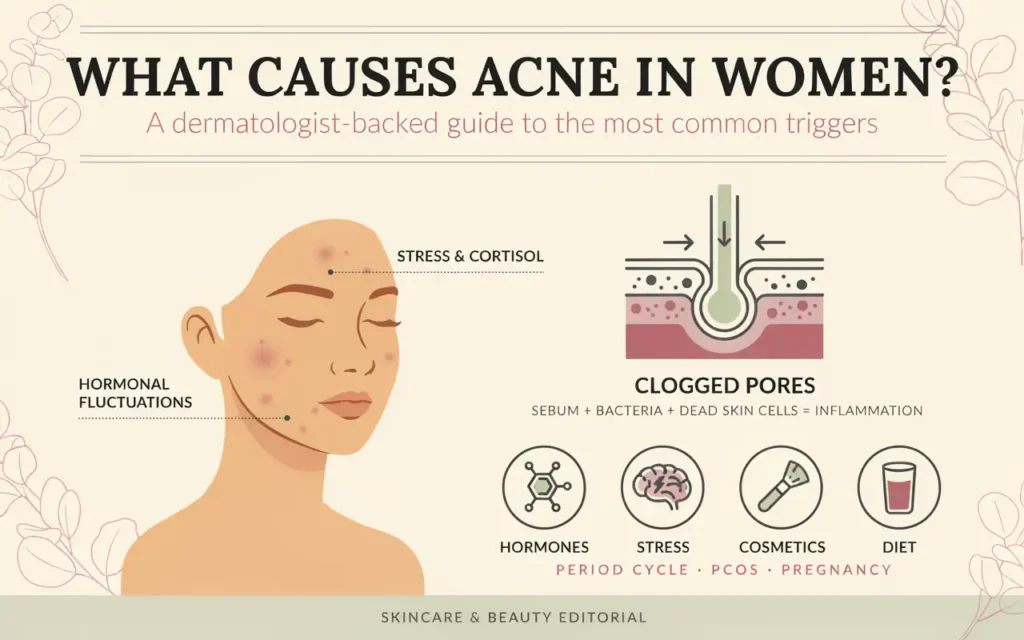
A study published in 2024 found that a low-glycemic-load diet could significantly improve acne severity in women. Another research review pointed to red meat, chocolate, and milk as foods that may impact acne severity.
So, while diet might not be the sole cause, it is certainly a contributing factor for many women.
Hormonal vs. Lifestyle Causes of Acne in Women
| Hormonal Causes | Lifestyle & Environmental Causes |
|---|---|
| Menstrual cycle fluctuations | High-glycemic diet (sugar, white bread) |
| Pregnancy and postpartum changes | Dairy consumption (especially milk) |
| Perimenopause and menopause | Chronic stress and high cortisol |
| Polycystic Ovary Syndrome (PCOS) | Use of comedogenic cosmetics |
| High androgen levels (testosterone) | Medications (e.g., certain contraceptives) |
| Genetic predisposition | Environmental pollutants and humidity |
Cosmetics and Skincare Products
It may seem unfair, but the very products you use to look and feel your best could be causing breakouts. This condition is so common it has a name: acne cosmetica.
Acne cosmetica is a mild, persistent form of acne caused by the regular use of cosmetic products. It is characterized by small bumps and occasional pustules. Certain ingredients in makeup, moisturizers, and cleansers are known to be comedogenic, meaning they clog pores.
Substances like lanolin, petrolatum, certain vegetable oils, and chemicals like butyl stearate can block hair follicles. Daily use of these products for years can cause low-grade breakouts in susceptible women. Even some facial cleansers and powders have been linked to an increased risk of acne.
If you are struggling with persistent acne, it is worth examining your skincare and makeup routine. Look for products labeled “non-comedogenic,” which are specifically formulated to not clog pores.
Genetics and Family History
Sometimes, the answer to what causes acne in women is written in your DNA. If your parents or siblings had acne, you are more likely to have it too. The systematic review on adult female acne noted that adults with acne have a positive family history more often than healthy individuals.
Genetics can influence several factors: how much oil your skin produces, how your skin sheds dead cells, and how your body responds to hormonal changes. You cannot change your genetics, but knowing that it runs in your family can help you understand that it is not your fault and that you may need a more proactive approach to management.
Medications and Underlying Conditions
Certain medications can trigger acne as a side effect. This includes some hormonal contraceptives, like the hormonal intrauterine device or oral levonorgestrel. Other drugs, such as corticosteroids, lithium, and some anti-epileptics, are also known to cause acneiform eruptions.
Underlying medical conditions are another piece of the puzzle. As mentioned, PCOS is a primary example. Other conditions that affect hormone levels, like hyperprolactinemia (high prolactin), can also contribute. If you suspect your acne is linked to a medication or an underlying health issue, it is essential to speak with a healthcare professional.
Common Misconceptions About Acne in Women
There are many myths about acne, and believing them can prevent you from finding the right solutions.
- Myth: Acne is a teen problem. As we have seen, adult female acne is incredibly common. The misconception that it is only for teenagers leaves many women feeling isolated and embarrassed.
- Myth: Poor hygiene causes acne. Acne is not caused by dirt. Over-washing or scrubbing your face harshly can actually irritate your skin and make acne worse. It is a condition of the oil glands and hair follicles, not a cleanliness issue.
- Myth: Only oily skin gets acne. While excess oil is a factor, people with dry or combination skin can also get acne. Over-drying your skin can damage the skin barrier and lead to more inflammation.
- Myth: Acne will go away on its own. Adult acne often does not resolve without intervention. Because it is frequently driven by hormonal factors, it can persist for years and may require targeted treatment.
Triggers and How They Affect Your Skin
| Trigger | How It Causes Acne |
|---|---|
| Androgens | Stimulate oil glands to produce excess sebum |
| Cortisol | Increases inflammation and oil production |
| High-Glycemic Diet | Raises insulin and IGF-1, which boost sebum and skin cell growth |
| Comedogenic Cosmetics | Block pores with heavy oils and waxes |
| Stress | Triggers cortisol release, leading to a cycle of inflammation and oil |
| Genetics | Determines skin type, oil production, and inflammatory response |
Managing and Treating Acne in Women
Once you understand what causes acne in women, you can start to address it effectively. The best approach is often multi-pronged.
Skincare and Lifestyle Adjustments
Start with the basics. Cleanse your face twice a day with a gentle, non-comedogenic cleanser. Avoid harsh scrubbing. Look for products with salicylic acid to unclog pores or benzoyl peroxide to fight bacteria.
Moisturizing is also important, even for oily skin. Using a lightweight, oil-free moisturizer helps protect your skin barrier.
On the lifestyle side, consider your diet. Try reducing your intake of high-glycemic foods and see if it makes a difference. Managing stress through activities like walking, yoga, or meditation can also help lower cortisol levels.
Over-the-Counter and Prescription Treatments
Many effective treatments are available.
- Topical Retinoids: These are vitamin A derivatives that help unclog pores and increase skin cell turnover. They are a first-line treatment for many types of acne.
- Benzoyl Peroxide: This kills the acne-causing bacteria and helps reduce inflammation.
- Spironolactone: This is an oral medication that is particularly helpful for hormonal acne. It works by blocking the effects of androgens on the skin.
- Oral Contraceptives: Certain birth control pills can be used to regulate hormones and reduce acne.
Olivia Heysek, a board-certified dermatology Physician Assistant, states, “Acne in adults is often influenced by lifestyle, environment, and biology… It’s important to understand the causes first, and then work with your dermatologist to get a targeted professional treatment”.
When to See a Dermatologist
If over-the-counter products are not working after a few months, or if your acne is painful, cystic, or leaving scars, it is time to see a dermatologist. A professional can accurately diagnose the underlying causes, which may include PCOS or other hormonal conditions, and prescribe stronger, more effective treatments.
Frequently Asked Questions (FAQs)
1. What causes acne in women that starts in their 30s or 40s?
Late-onset acne is usually driven by hormonal changes, particularly the decline of estrogen relative to androgens during perimenopause. Stress, diet, and genetics also contribute.
2. Can stress really cause acne?
Yes. Stress leads to the release of cortisol, which increases oil production and inflammation, both of which can trigger breakouts.
3. Is diet directly linked to acne?
Research shows a connection. High-glycemic foods and dairy may worsen acne by spiking insulin and IGF-1 levels, which stimulate oil production.
4. What is the difference between hormonal acne and regular acne?
Hormonal acne is typically triggered by fluctuations in hormones and often appears on the lower face, jawline, and chin. It is usually more inflammatory and cystic than typical teenage acne.
5. Can makeup cause acne?
Yes. Some cosmetics contain comedogenic ingredients that can clog pores, leading to a condition called acne cosmetica. Look for non-comedogenic products.
6. How is PCOS related to acne?
PCOS causes higher levels of androgens (male hormones), which overstimulate oil glands and lead to acne. It is a very common cause of persistent acne in women.
7. Should I stop using all skincare products if I have acne?
No. You should use gentle, non-comedogenic products. A simple routine with a cleanser, moisturizer, and sunscreen is recommended. Avoid harsh scrubs and heavy oils.
8. What is the best treatment for hormonal acne?
Effective treatments include topical retinoids, spironolactone, and certain oral contraceptives. A dermatologist can help you choose the best option.
Conclusion
Dealing with acne as an adult woman can be a long and frustrating road. But understanding what causes acne in women is the first and most important step toward finding relief. This condition is not a reflection of poor hygiene or a character flaw. It is a complex interplay of biology and environment.
The main answer to what causes acne in women lies in hormonal imbalances. The effects of androgens, the fluctuations of the menstrual cycle, and life stages like pregnancy and perimenopause are powerful drivers. These internal shifts are often compounded by external factors like stress, diet, and the products we put on our skin.
Instead of feeling defeated, use this knowledge to empower yourself. Start by looking at your skincare routine and making sure you are using non-comedogenic products. Consider if your diet might be a trigger and try reducing high-glycemic foods. Find ways to manage your stress. And most importantly, do not be afraid to seek professional help.
A dermatologist can look at your specific situation, identify the unique combination of factors that cause acne in women for you, and create a targeted treatment plan. You deserve to feel confident in your skin, and with the right approach, you can get there.
Related posts
 How to Strengthen Weak Nails: A Practical Guide to Daily Care
Learn how to strengthen weak nails with simple daily habits, protective care, and targeted hydration. Restore your natural nail strength today. Weak, peeling, or brittle nails…
 What Sounds Do Cats Dislike? 7 Noises That Stress Your Pet
Discover what sounds do cats dislike and why. Learn how to protect your cat’s sensitive hearing from stressful household noises and high-frequency hums. Cats dislike sounds…
 Restoring Faded Black Clothing: Practical Methods and Reality Checks
Can you restore faded black clothing? Learn the difference between temporary color revival and permanent redyeing, plus how to prevent future fading. You can restore the…