
How Often Should Women Exfoliate Their Skin

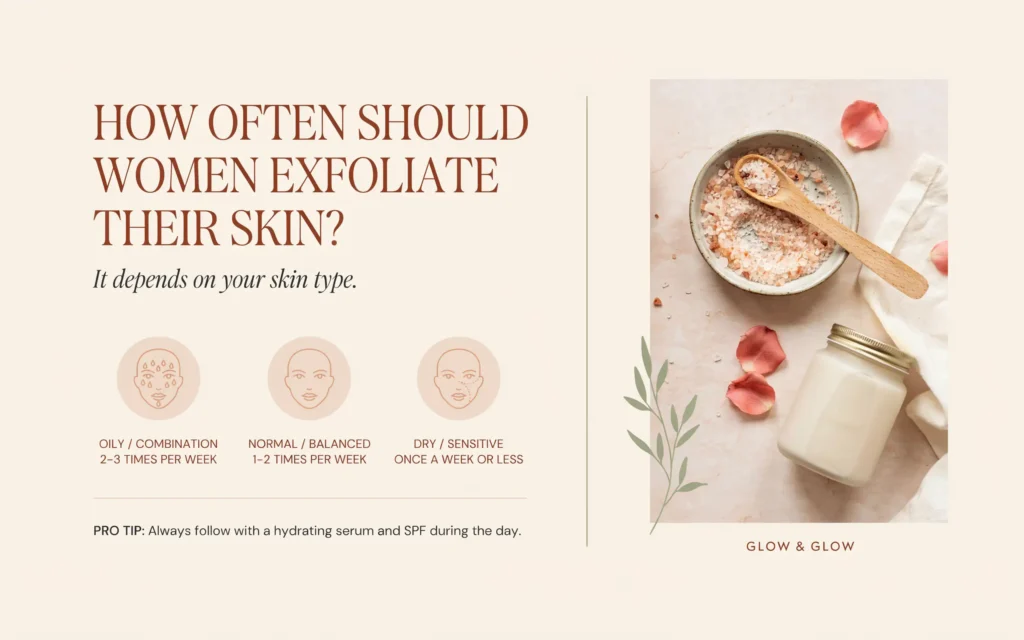
Finding the right answer to how often women exfoliate their skin depends on their unique skin type. Dermatologists generally recommend exfoliating one to three times weekly. Oily skin may handle more frequent exfoliation, while sensitive skin requires a gentler approach, typically once a week or less.
Exfoliation is one of those skincare steps that can feel confusing. You know you should do it. Your favorite beauty influencers talk about it all the time. But when you actually stand in front of the bathroom mirror with a scrub in your hand, you might wonder: am I doing this too much or not enough?
The honest answer is that how often women exfoliate their skin varies from person to person. There is no single number that works for everyone. Your skin type, the products you use, your age, and even the season can change what your skin needs.
Let me walk you through everything you need to know about exfoliation frequency. I will share what dermatologists recommend, break down the best approach for each skin type, and help you figure out the routine that keeps your skin glowing without causing irritation.
What Exactly Is Exfoliation and Why Does It Matter?
Before we talk about frequency, let us clarify what exfoliation actually does. Your skin naturally sheds dead skin cells every day. In fact, your body loses around 500 million skin cells daily. But sometimes those dead cells do not fully fall off. They pile up on the surface, making your complexion look dull, rough, and tired.
Exfoliation helps remove that buildup. It sweeps away the old cells so fresh, new ones can come through. This process is called cell turnover. As we get older, cell turnover slows down. That is why exfoliation becomes even more helpful with age.
Board-certified dermatologist Alexander Witkowski, M.D., Ph.D., explains that removing dead skin cells can revive skin texture, unclog pores, and help your other skincare products absorb better.
When you exfoliate regularly, you may notice your skin looks brighter, feels smoother, and has a more even tone. It can also help reduce breakouts because dead skin cells are less likely to clog your pores.
But here is the catch. Exfoliation is helpful only when you do it the right way. Too much exfoliation can damage your skin barrier. That protective outer layer keeps moisture in and irritants out. When you overdo it, you strip away natural oils and leave your skin vulnerable.

The Golden Rule: Start Slow and Listen to Your Skin
Dermatologists generally recommend exfoliating your face between one and three times a week. That range gives you a good starting point. But the exact number depends on your skin type.
If you are new to exfoliation, start with once a week. See how your skin responds. If it feels comfortable and looks healthy, you can slowly increase to two or even three times weekly.
Tiffany Jow Libby, MD, a board-certified dermatologist, advises starting with one to two times a week and working up to three if your skin can handle it. She also recommends adding one product at a time so you can track how each one affects your skin.
The most important thing is to pay attention to your skin. It will tell you when something is wrong. Redness, stinging, tightness, or unusual breakouts are signs that you need to slow down.
How Often Should Women Exfoliate Their Skin by Skin Type?
Your skin type is the biggest factor in determining the right exfoliation frequency. Let us break it down by category.
Dry or Sensitive Skin
If your skin feels tight, flaky, or easily irritated, you need to be extra careful with exfoliation. Dry and sensitive skin types are more prone to irritation from both physical scrubs and chemical acids.
For dry or sensitive skin, dermatologists recommend exfoliating once or twice a week at most. Some women with very sensitive skin may even need to exfoliate every other week.
When you do exfoliate, choose gentle products. A mild chemical exfoliant like lactic acid or an enzyme-based product is often better than a scrub. Physical exfoliation can be too abrasive for this skin type.
Oily or Acne-Prone Skin
Oily skin can typically handle more frequent exfoliation. The extra oil and buildup mean dead skin cells can easily trap oil and bacteria in your pores, leading to breakouts.
Women with oily or acne-prone skin may exfoliate three to four times a week. Some can even exfoliate daily with mild products.
Beta hydroxy acids (BHAs) like salicylic acid are especially good for oily skin. They are oil-soluble, which means they can penetrate deep into pores to clear out oil and debris.
Normal or Combination Skin
Normal skin is clear and not particularly sensitive. Combination skin has both oily areas (usually the T-zone) and dry areas (typically the cheeks).
For normal and combination skin, exfoliating two to three times a week is a safe starting point. You can adjust based on how your skin feels. If your T-zone gets oily but your cheeks feel dry, you might use a BHA on your forehead and nose while using a gentler product on your cheeks.
Mature Skin
As we age, cell turnover naturally slows down. That is why mature skin often benefits from regular exfoliation. It helps keep the skin looking fresh and reduces the appearance of fine lines.
However, mature skin can also become drier and more sensitive over time. You may want to exfoliate two to three times a week, but choose gentle products. Avoid harsh physical scrubs and opt for mild chemical exfoliants instead.
Recommended Exfoliation Frequency by Skin Type
| Skin Type | Recommended Frequency | Best Exfoliant Type |
|---|---|---|
| Dry or sensitive | 1–2 times per week (or less) | Gentle chemical (lactic acid, enzymes) |
| Oily or acne-prone | 3–4 times per week (up to daily with mild products) | BHA (salicylic acid) |
| Normal | 2–3 times per week | AHA or BHA, depending on goals |
| Combination | 2–3 times per week | Multi-exfoliate (BHA on T-zone, gentler on cheeks) |
| Mature | 2–3 times per week | Gentle AHA (glycolic or lactic acid) |
Physical vs. Chemical Exfoliation: Which One Should You Choose?
The type of exfoliation you use affects how often women exfoliate their skin. There are two main methods, and each has its own strengths and weaknesses.
Physical Exfoliation
Physical exfoliation uses friction to manually remove dead skin cells. This includes scrubs with granules, cleansing brushes, sponges, and even washcloths.
Physical exfoliants can be effective, but they are also more likely to cause irritation. The friction can create micro-tears in the skin, especially if you press too hard or use a product with rough particles.
If you prefer physical exfoliation, choose products with fine, smooth particles. Avoid anything with large, jagged granules like crushed walnut shells. And always use a light touch.
Physical exfoliation is generally safe to use two to three times a week, but many dermatologists recommend using it less often or avoiding it entirely if you have sensitive skin.
Chemical Exfoliation
Chemical exfoliation uses acids or enzymes to dissolve dead skin cells. The most common types are alpha hydroxy acids (AHAs) and beta hydroxy acids (BHAs).
AHAs like glycolic acid and lactic acid work on the skin’s surface. They are great for improving texture, brightening, and reducing fine lines. BHAs like salicylic acid are oil-soluble, so they can penetrate pores and are excellent for oily or acne-prone skin.
Chemical exfoliants tend to be gentler and more even than physical scrubs. Many dermatologists prefer them because they are less likely to cause micro-tears or uneven exfoliation.
You can use chemical exfoliants more frequently than physical ones, especially if you choose lower-concentration products. Some mild chemical exfoliants can be used daily.
However, stronger chemical peels should only be used once a week or less. Always follow the instructions on the product label.
Signs You Are Over-Exfoliating
One of the most common mistakes women make is exfoliating too often. It is easy to fall into the trap of thinking more is better. But when you over-exfoliate, you damage your skin barrier, and that can cause a host of problems.
Here are the signs that you might be overdoing it:
- Redness and irritation. Your skin looks flushed or feels warm to the touch.
- Tightness and dryness. Your skin feels uncomfortably tight after washing, even when you use moisturizer.
- Stinging or burning. Products that used to feel fine now cause a burning sensation.
- Flaking or peeling. This might seem like exfoliation is working, but it is actually a sign of damage.
- Breakouts. Over-exfoliation can actually cause more acne because a damaged barrier lets bacteria penetrate more easily.
- Shiny, waxy skin. Your skin may look unnaturally shiny and feel tight, like plastic.
If you notice any of these signs, stop exfoliating immediately. Give your skin time to heal. Focus on gentle cleansing, hydration, and barrier repair. Once your skin feels normal again, you can reintroduce exfoliation at a lower frequency.
Purvisha Patel, MD, a double board-certified dermatologist, says overdoing it is one of the most common mistakes people make with exfoliation. When you exfoliate too often or use harsh products, your face can feel dry, tight, and itchy.
How to Build a Safe Exfoliation Routine
Building a routine that works for you takes a little trial and error. Here is a step-by-step approach to help you find your sweet spot.
Step 1: Identify Your Skin Type
Before you pick any product, figure out your skin type. Wash your face with a gentle cleanser and wait an hour without applying anything. Then observe your skin.
- If your skin feels tight and looks flaky, you have dry skin.
- If your skin looks shiny all over, you have oily skin.
- If your T-zone is oily but your cheeks are dry, you have combination skin.
- If your skin feels comfortable and looks balanced, you have normal skin.
- If your skin stings easily or reacts to many products, you have sensitive skin.
Step 2: Choose Your Exfoliant
Based on your skin type, pick a product that suits you. Sensitive and dry skin types do best with gentle chemical exfoliants. Oily skin types can use BHAs or gentle physical scrubs. Normal and combination skin have more flexibility.
Step 3: Start Slow
Begin with exfoliating once a week. Use the product as directed. Do not scrub hard or leave chemical exfoliants on longer than the instructions say.
Step 4: Observe and Adjust
Pay attention to how your skin feels over the next few days. If it looks brighter and feels smooth without any irritation, you can try increasing to twice a week the following week.
Continue this pattern until you find the frequency that gives you results without causing redness or dryness.
Step 5: Always Follow with Moisturizer and Sunscreen
Exfoliation makes your skin more vulnerable to the sun. Always apply a moisturizer after exfoliating to lock in hydration. And never skip sunscreen during the day. Freshly exfoliated skin needs extra protection from UV damage.
Special Considerations for Body Exfoliation
Most of the advice so far has focused on the face. But what about the rest of your body?
Your body skin is generally less sensitive than your facial skin. You can exfoliate your body more often without causing irritation.
For the body, exfoliating two to three times a week is a good target. You can use a body scrub, a dry brush, or a chemical exfoliant like a glycolic acid body lotion.
Pay extra attention to rough areas like elbows, knees, and heels. These spots may benefit from more frequent exfoliation.
But remember, even body skin can be over-exfoliated. If you notice redness, irritation, or dryness, scale back your frequency.
Comparing Physical and Chemical Exfoliation
| Feature | Physical Exfoliation | Chemical Exfoliation |
|---|---|---|
| How it works | Friction removes dead cells | Acids dissolve dead cells |
| Best for | Normal, oily, thicker skin | Most skin types, especially sensitive |
| Risk level | Higher risk of irritation and micro-tears | Lower risk when used correctly |
| Frequency | 1–3 times per week | Can be daily with mild products |
| Examples | Scrubs, brushes, sponges | AHAs (glycolic, lactic), BHAs (salicylic) |
Can You Exfoliate Every Day?
This is a common question. The short answer is that most women should not exfoliate every day. Daily exfoliation is too harsh for many skin types.
However, there are exceptions. Some women with very oily or acne-prone skin can handle daily exfoliation, especially if they use mild products.
If you want to exfoliate daily, choose a gentle product with a low concentration of active ingredients. A daily exfoliating cleanser with a small amount of salicylic acid or lactic acid might work. But even then, pay close attention to how your skin reacts.
Dr. Anna Chacon, a board-certified dermatologist, notes that skin can become drier and more sensitive as you grow older. So what worked in your twenties may not work in your forties.
How Other Skincare Products Affect Exfoliation Frequency
Your exfoliation routine does not exist in a vacuum. The other products you use can change how often women exfoliate their skin.
If you use prescription retinoids or over-the-counter retinol, your skin is already experiencing increased cell turnover. These products can make your skin more sensitive. If you exfoliate while using retinol, you may need to reduce your exfoliation frequency or alternate days.
The same goes for products containing benzoyl peroxide or other active ingredients. They can dry out your skin and make it more prone to irritation.
Dr. Libby suggests using one active product at a time and alternating the days you use exfoliants and other active products like retinol. This prevents your skin from getting overwhelmed.
Seasonal Changes and Exfoliation
Your skin’s needs can change with the seasons. During warmer months, you might produce more oil and sweat. Exfoliating a little more often can help prevent buildup.
In colder months, the air is drier. Your skin may become more sensitive and prone to dryness. You might need to reduce your exfoliation frequency or switch to a gentler product.
Listen to your skin throughout the year. Adjust your routine as needed.
What to Do If You Have Over-Exfoliated
If you have gone too far and damaged your skin barrier, do not panic. Here is what to do.
Stop all exfoliation immediately. Put away your scrubs, acids, and cleansing brushes. Give your skin a break.
Focus on gentle cleansing. Use a mild, fragrance-free cleanser. Wash with lukewarm water, not hot water.
Use a barrier-repair moisturizer. Look for products with ceramides, niacinamide, or hyaluronic acid. These ingredients help restore your skin’s protective layer.
Apply sunscreen every day. Your skin is extra vulnerable right now, and sun exposure can make things worse.
Be patient. It can take a few weeks for your skin barrier to fully recover. Once your skin feels normal again, you can slowly reintroduce exfoliation at a lower frequency.
Frequently Asked Questions
1. How often should women exfoliate their skin if they have sensitive skin?
Women with sensitive skin should exfoliate once a week or even less. Some may need to exfoliate every other week. Always choose a gentle product and avoid physical scrubs.
2. Can I exfoliate my face and body with the same product?
You can, but body skin is generally thicker and less sensitive. A product made for the face may be too gentle for the body, and a body scrub may be too harsh for the face. It is better to use separate products.
3. Is it better to exfoliate in the morning or at night?
Either time can work. Many people prefer nighttime exfoliation because it gives the skin time to recover overnight. If you exfoliate in the morning, always follow with sunscreen.
4. What is the difference between AHA and BHA?
AHAs are water-soluble and work on the skin’s surface. They are good for dry skin, fine lines, and uneven tone. BHAs are oil-soluble and can penetrate pores. They are better for oily and acne-prone skin.
5. Can I exfoliate if I have acne?
Yes, exfoliation can help prevent and reduce acne by keeping pores clear. Choose a BHA like salicylic acid. Be gentle and do not overdo it, as over-exfoliation can actually make acne worse.
6. How do I know if I am exfoliating too much?
Signs of over-exfoliation include redness, stinging, tightness, flaking, and breakouts. If you notice any of these, reduce your frequency or stop temporarily.
7. Should I exfoliate before or after cleansing?
Exfoliate after cleansing. Cleanse your face first to remove dirt and oil, then apply your exfoliant. This allows the exfoliant to work more effectively.
8. Can I use a physical scrub and a chemical exfoliant in the same routine?
It is possible, but you need to be careful. Using both can increase the risk of irritation. If you want to use both, alternate them on different days rather than using them together.
9. Does exfoliation help with dark spots?
Yes, regular exfoliation can help fade dark spots over time by removing pigmented dead skin cells and encouraging new cell growth.
10. Is exfoliation safe during pregnancy?
Many exfoliants are safe during pregnancy, but it is always best to check with your doctor. Some ingredients like retinol should be avoided, but AHAs and BHAs are generally considered safe in low concentrations.
Conclusion
Finding the right answer to how often women exfoliate their skin does not have to be complicated. Start with the general guideline of one to three times per week. Then adjust based on your unique skin type, the products you use, and how your skin responds.
Dry and sensitive skin types need a gentler approach, usually once a week or less. Oily and acne-prone skin can handle more, sometimes up to four times a week or even daily with mild products. Normal and combination skin fall somewhere in the middle.
Remember that exfoliation is just one part of a healthy skincare routine. It works best when paired with proper cleansing, hydration, and sun protection. And always listen to your skin. It will tell you when you are doing too much.
As Dr. Murad puts it, “Over time, cell renewal can be seven times slower, resulting in dullness, deeper lines and uneven texture and tone. Exfoliation helps skin renew at a faster rate for smoother texture and increased radiance”.
But he also warns, “Exfoliation without replenishing leads to irritated, over-processed skin and signs of premature ageing”. That is why balance is so important.
Take your time finding the routine that works for you. Be patient with your skin. With a little attention and care, you will find the frequency that keeps your complexion looking its best.
Related posts
 Best Compact Powder for Women: 2026 Buyer Guide
Finding the best compact powder for women in 2026. We compare top-rated matte, mineral, and lightweight pressed powders to help you choose the right finish. Finding…
 Best Casual Wear for Women: 2026 Style and Comfort Essentials
Discover the best casual wear for women in 2026. We compare top-rated trousers and versatile tops to help you build a comfortable, stylish everyday wardrobe. Finding…
 Best Claw Clips for Thick Hair in 2026
Finding the best claw clips for thick hair requires a balance of grip and size. Explore our top 2026 recommendations for secure, stylish, and reliable styling.…