
How to Prevent Clothes from Losing Shape: A Practical Care Guide

Clothes lose their shape primarily due to heat, mechanical stress in the washing machine, and gravity during drying. To keep your garments fitting correctly, you must minimize the tension placed on fibers during every stage of the laundry process.
The most effective approach involves switching to cold water cycles, using mesh laundry bags to prevent tangling, and avoiding the dryer for delicate or heavy items. By shifting how you handle, wash, and store your clothes, you can significantly reduce sagging and stretching.
Cold water washing benefits
- Cold water is the safest choice for almost all fabrics.
- Gravity is the enemy of wet, heavy garments.
- Folding is superior to hanging for most knitwear.
- Overloading the washer creates friction that pulls fibers out of shape.
| Topic | When it helps | What to keep in mind |
|---|---|---|
| 1 | Sweaters, cardigans, and items with buttons or zippers. | Do not overstuff the bag; items need room to move to get clean. |
| 2 | All everyday clothing, especially cotton and synthetic blends. | Ensure your detergent is formulated for cold water use. |
| 3 | Heavy sweaters, knits, and delicate fabrics. | Ensure the drying rack is in a well-ventilated area to prevent musty odors. |
| 4 | Knitwear, heavy cottons, and anything that loses shape on a hanger. | Avoid stacking too many heavy items, which can cause creases. |
Focus on washing drying and
1. Use Mesh Laundry Bags
How to Prevent Clothes from Losing Shape. Place delicate or loose-knit items into mesh bags to prevent them from getting caught on other clothes or the agitator.
- Sweaters, cardigans, and items with buttons or zippers.
- Do not overstuff the bag; items need room to move to get clean.
- If an item feels heavy when wet, it belongs in a bag.
- Effort – Low
- Impact – High
2. Wash in Cold Water
Hot water relaxes fibers, making them prone to stretching and shrinking. Cold water keeps the fabric structure stable.
- All everyday clothing, especially cotton and synthetic blends.
- Ensure your detergent is formulated for cold water use.
- Check the care label; if it says ‘warm’, cold is usually a safe alternative.
- Effort – Minimal
- Impact – High
3. Dry Flat on a Rack
Hanging wet clothes pulls them downward, causing the fabric to stretch. Laying items flat preserves their original dimensions.
- Heavy sweaters, knits, and delicate fabrics.
- Ensure the drying rack is in a well-ventilated area to prevent musty odors.
- Use a clean towel under the garment to speed up moisture absorption.
- Effort – Moderate
- Impact – Very High
4. Fold Instead of Hanging
Heavy garments like hoodies and sweaters will eventually sag if left on hangers. Folding them keeps the weight distributed evenly.

- Knitwear, heavy cottons, and anything that loses shape on a hanger.
- Avoid stacking too many heavy items, which can cause creases.
- If you must hang, use padded hangers to support the shoulder area.
- Effort – Low
- Impact – Medium
Washing Habits for Shape Retention
The washing machine is often the primary culprit for misshapen clothes. High-speed spin cycles and heavy loads create significant tension on fibers. By reducing the load size, you allow clothes to move through the water without being pulled or twisted by heavier items.
Additionally, always zip up zippers and button buttons before washing. Open hardware can snag on other fabrics, pulling them out of their original shape during the agitation cycle.
If you wash a heavy sweatshirt with jeans, the weight of the wet jeans pulls on the sweatshirt during the spin cycle, causing the neck to stretch.
Overloading the washer; this prevents clothes from moving freely and causes them to stretch against each other.
- Sort laundry by weight to prevent heavy items from pulling on lighter ones.
- Use the gentle or delicate cycle for items prone to stretching.
- Turn garments inside out to protect the outer surface from friction.
- Avoid using high-heat settings, which can permanently alter fiber elasticity.
| Action | Why it helps |
|---|---|
| Cold Water | Prevents fiber relaxation and shrinkage |
| Mesh Bags | Reduces mechanical stress and snagging |
| Smaller Loads | Prevents pulling and twisting |
Drying and Storage Techniques
Drying is where most damage occurs due to gravity. When a garment is wet, it is at its heaviest. Hanging it allows gravity to pull the fabric downward, which is why sweaters often grow longer or lose their intended fit.
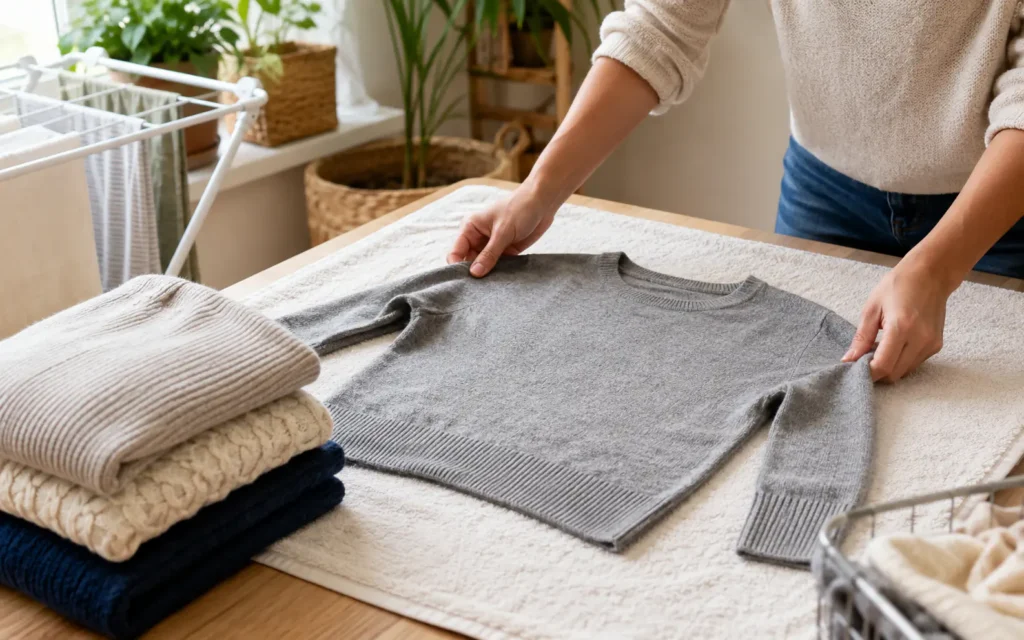
Storage is equally important. If you have limited drawer space, try to fold items neatly rather than cramming them. For items that must be hung, choose wide, contoured hangers that mimic the shape of your shoulders.
A wet wool sweater hung on a wire hanger will develop ‘shoulder bumps’ within hours because the hanger’s thin frame concentrates all the weight on two points.
Using wire hangers for heavy items; they lack the surface area to support the garment’s weight.
- Always lay heavy knits flat on a clean, dry surface.
- Use a drying rack with mesh netting to allow airflow from beneath.
- Avoid direct sunlight, which can make fibers brittle.
- Let clothes ‘rest’ for 24 hours after wearing to allow fibers to recover their shape.
FAQs
Can I reverse clothes that have already lost their shape?
In some cases, you can gently reshape items by soaking them in lukewarm water with a small amount of hair conditioner, then laying them flat and manually stretching them back to their original dimensions while damp.
Does fabric softener help prevent stretching?
No, fabric softener coats fibers and can actually make them heavier and more prone to stretching over time. It is better to avoid it for items that are already prone to losing their shape.
Why do my pants get looser throughout the day?
This is often due to the natural elasticity of the fabric fibers. If the fabric contains spandex or elastane, it may stretch with body heat and movement, but it should return to its original shape after a proper wash.
What is the 3-3-3 rule for clothes?
This is a minimalist wardrobe concept (3 tops, 3 bottoms, 3 pairs of shoes) rather than a laundry care rule. It helps you manage a smaller, higher-quality collection of clothes that are easier to maintain.

Conclusion
Preventing clothes from losing their shape is largely about managing the tension placed on fibers during the wash and dry cycles. By prioritizing cold water, flat drying, and proper storage, you can significantly extend the life and fit of your favorite garments.
Consistency is the most important factor. Even small changes, like using a mesh bag for your sweaters or folding instead of hanging, will make a noticeable difference in how your clothes look and feel over time.
Related posts
 How to Strengthen Weak Nails: A Practical Guide to Daily Care
Learn how to strengthen weak nails with simple daily habits, protective care, and targeted hydration. Restore your natural nail strength today. Weak, peeling, or brittle nails…
 What Sounds Do Cats Dislike? 7 Noises That Stress Your Pet
Discover what sounds do cats dislike and why. Learn how to protect your cat’s sensitive hearing from stressful household noises and high-frequency hums. Cats dislike sounds…
 Restoring Faded Black Clothing: Practical Methods and Reality Checks
Can you restore faded black clothing? Learn the difference between temporary color revival and permanent redyeing, plus how to prevent future fading. You can restore the…