
How To Organize Wardrobe Neatly
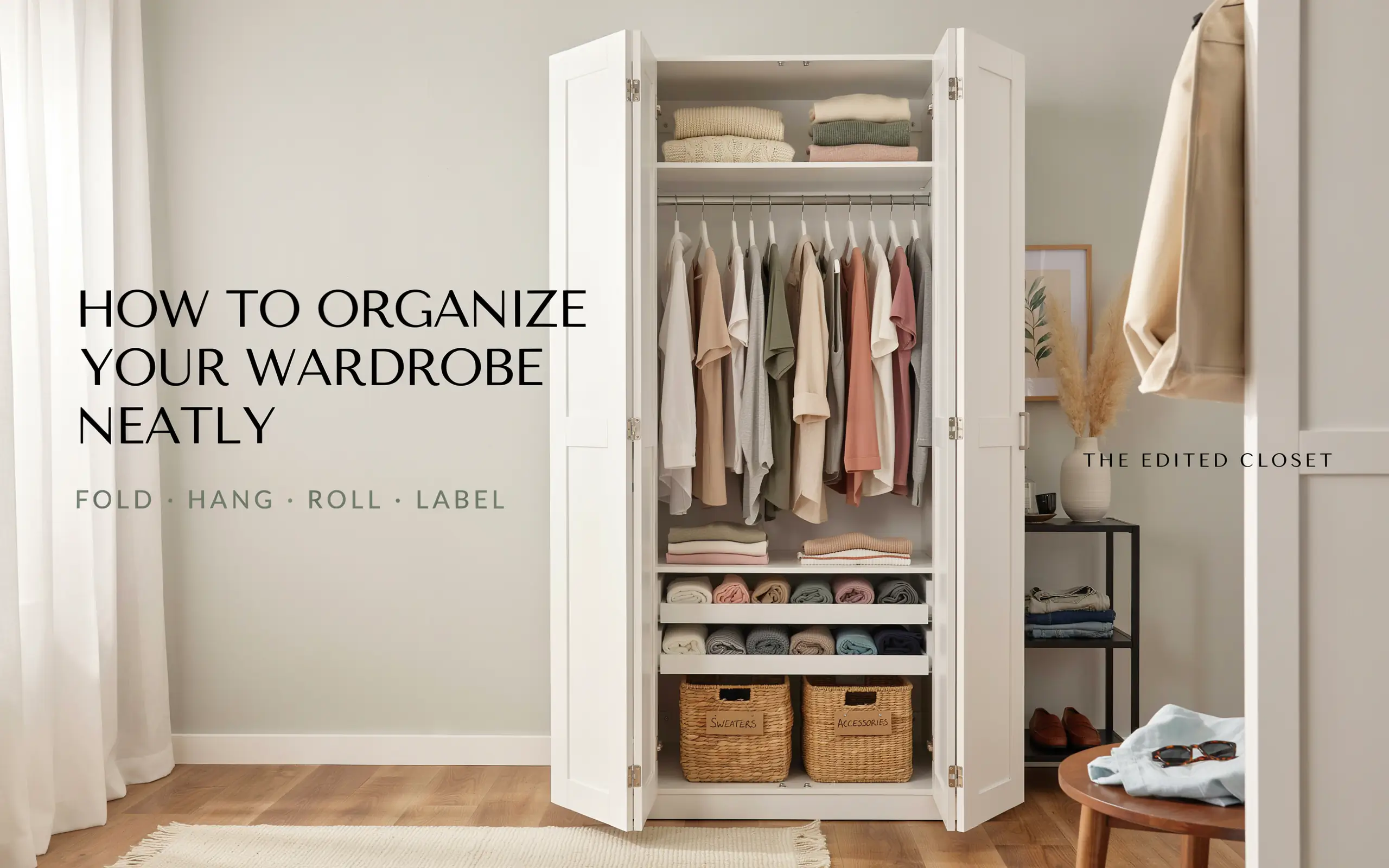
Learn how to organize wardrobe neatly using simple steps like sorting, folding, and using storage boxes. Keep your clothes tidy and find what you need fast.
Do you open your closet and feel a little lost? Clothes fall out. You cannot find your favorite shirt. This happens to many of us. A messy wardrobe makes mornings hard. You waste time looking for socks or a belt. But there is good news. You can fix this. You just need a plan.
This guide will show you how to organize wardrobe neatly without stress. You do not need special skills or costly items. You need some time and simple tools. I have helped friends and family clean their closets. I learned what works and what fails. Now I share these tips with you. Let us make your wardrobe a place you like to open.
Step 1. Empty Your Entire Wardrobe First
You cannot clean a messy closet by moving things around. You must take everything out. Yes, every single item. Put all clothes on your bed or a clean floor. This gives you a fresh start.
Why empty everything? Because you see what you own. Many people forget clothes hidden in the back. When you see all items together, you notice duplicates and old pieces. You also find things you never wear.
Quote 1: “Clutter is not just physical stuff. It is old energy, old memories, and old stories that hold you back.” – Peter Walsh
Now sort into three piles. Use the floor or chairs for each pile.
| Keep | Donate or Sell | Throw Away |
|---|---|---|
| Clothes you wear often | Good items that do not fit | Torn or stained clothes |
| Seasonal favorites | Pieces you did not wear for one year | Broken hangers |
| Sentimental but useful items | Gently used shoes | Old underwear or socks with holes |
Be honest. If you have not worn a dress for two years, let it go. Someone else will love it. When you keep less, it is easier to organize wardrobe neatly. You also make room for clothes you truly like.
After you finish sorting, put donate bags in your car. Throw trash away right now. Then you will not change your mind. Now you have only items you want to keep.
Step 2. Sort Remaining Clothes by Category
Your wardrobe now has fewer items. Great work. Next step is to group similar things together. This makes finding clothes simple. It also helps you see what you have.
Make these groups on your bed or table:
- Tops (shirts, blouses, tank tops)
- Bottoms (pants, shorts, skirts)
- Dresses and jumpsuits
- Outerwear (jackets, coats)
- Sweaters and hoodies
- Activewear
- Pajamas and loungewear
- Underwear and socks
- Accessories (belts, scarves, hats, bags)
This is how to organize wardrobe neatly by type. When you need a top, you look only at tops. No more digging through piles.
Quote 2: “A place for everything and everything in its place.” – Isabella Beeton
Now within each group, sort further by color. Light to dark works well. For example, white tops first, then cream, then light blue, then dark blue, then black. This looks pretty and helps you match outfits fast.
If you share a closet with someone, give each person their own section. Label shelves or use different colored hangers. This stops mix ups.
Here is a simple table for seasonal sorting. Use this if you live in a place with four seasons.
| Season | What to Keep Visible | What to Store Away |
|---|---|---|
| Summer | shorts, tank tops, sundresses | heavy coats, wool sweaters |
| Winter | jackets, long sleeves, thermal wear | swimsuits, linen pants |
| Spring/Fall | light jackets, jeans, cardigans | extreme weather items |
Store off season clothes in vacuum bags or plastic bins. Put them under your bed or on a high shelf. This trick helps you organize wardrobe neatly all year.
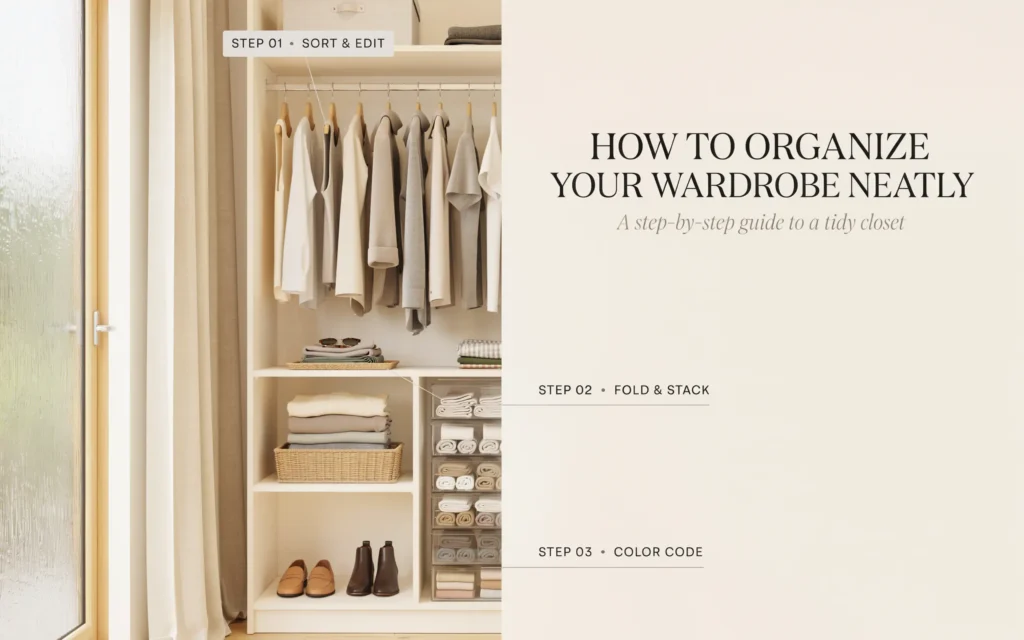
Step 3. Fold Clothes in a Way That Saves Space
Folding changes everything. Bad folding makes your drawers messy. Good folding lets you see every item. You also fit more clothes in less space.
The best method is the file fold. This is also called the KonMari fold. Here is how you do it for shirts and pants:
- Lay the shirt flat.
- Fold one side toward the middle.
- Fold the other side to overlap.
- Fold the bottom up to the middle.
- Fold in half or thirds until the shirt stands up.
When you finish, the shirt stands on its own like a file. Place these file folds in a drawer standing up. Not stacked flat. When you open the drawer, you see every shirt from the side. You can pull one out without messing up others.
For sweaters, do not hang them. Hanging stretches the shoulders. Fold sweaters and put them on a shelf. Stack them flat but keep stacks low. Two or three sweaters per stack is fine. Tall stacks fall over.
For socks and underwear, use drawer dividers. You can buy cheap ones or make from small boxes. Fold socks into pairs. Place them in one section. Put underwear in another section. This small change makes your morning routine faster.
Quote 3: “The first step in crafting the life you want is to get rid of everything you don’t.” – Joshua Becker
When you learn how to organize wardrobe neatly, folding becomes your best skill. It takes seconds to fold a shirt this way after some practice. Do it every time you do laundry. Then your drawers stay neat for weeks.
Step 4. Add Drawer Dividers and Small Storage Boxes
Empty drawers are messy. Clothes slide around. Things get lost. Dividers fix this problem. They create small sections for each type of item.
You can buy plastic or bamboo dividers online. They cost little money. Or you can make your own. Use old shoeboxes. Cut them to the right height. Cover with wrapping paper if you like pretty things. Small baskets also work well.
Here is how to set up a dresser drawer using dividers:
| Drawer Type | Use Dividers For |
|---|---|
| Top drawer | socks, underwear, bras, swimwear |
| Middle drawer | t-shirts, tank tops, shorts |
| Bottom drawer | jeans, sweatpants, heavier items |
Place small boxes inside big drawers too. For example, put a small box in your sock drawer for ankle socks. Put another box for long socks. A third box for tights. Then you grab the right pair fast.
Use clear plastic boxes for accessories. Belts roll up and fit in a small bin. Scarves fold and stand in a box. Hats stack inside a square bin. When everything has a home, you naturally put things back.
One more tip: label the boxes if you share the closet. A simple sticker says “Dad’s belts” or “Winter scarves”. This helps everyone follow your system. Then how to organize wardrobe neatly becomes a family habit, not just your job.
Step 5. Hang Clothes the Smart Way
Not all clothes should hang. But for items that do hang, you need a good method. Bad hangers ruin clothes and waste space.
First, use the right hangers. Thin velvet hangers are best. They are non slip. Your shirts will not fall off. They also take less space than plastic or wood hangers. If you have heavy coats, use sturdy wood hangers. For pants, use hangers with clips or roll them and put on a shelf.
Second, hang clothes in groups. Start with all tops together. Then all dresses. Then jackets. Within each group, sort by color. Light to dark from left to right. This looks clean and helps you pick outfits.
Third, face all hangers the same direction. Hook facing you. This small detail makes a big difference. You can see every item at once. No turning hangers around.
Do not overfill your hanging rod. Leave small gaps between each hanger. This stops wrinkles. You also see each piece. When the rod is too full, you forget what you own. Pull out extra clothes and move them to a drawer or donate them.
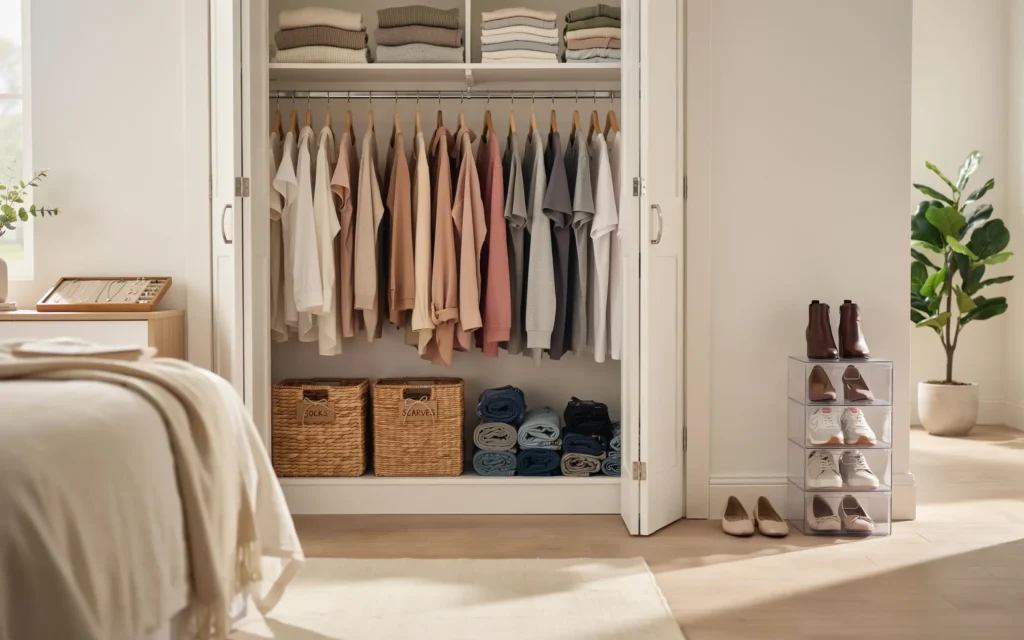
Here is a simple rule for what to hang:
| Hang These | Do Not Hang These |
|---|---|
| Button up shirts | T-shirts (fold them) |
| Blouses | Sweaters (they stretch) |
| Dresses | Jeans (fold on shelf) |
| Coats and jackets | Knitwear |
| Pants with creases | Loungewear |
If you want to organize wardrobe neatly, follow this hanging guide. Your clothes stay in good shape longer. And your closet looks like a store display.
Step 6. Use Vertical Space for Extra Storage
Most people waste the space above and below the hanging rod. You can double your storage by using vertical space. This is a secret that professional organizers use.
Look at the floor of your closet. Do you have empty space there? Add shoe racks or small bins. A simple shelf from a hardware store fits under hanging clothes. Put boots or sneakers there. Do not pile shoes in a heap. Line them up neatly.
Now look at the top shelf in your wardrobe. This is high up. Use it for things you do not need every day. Put folded sweaters there in clear bins. Store extra bedding or towels here. Keep your travel bag on this shelf. Use a step stool to reach it.
You can also add a second hanging rod. Many closets have one rod at shoulder height. You can install another rod below it. This works well for children’s clothes or short items like shirts. Double the hanging space without changing the closet.
Hang hooks on the inside of wardrobe doors. Use over the door hooks. Hang robes, bags, or hats there. You can also hang a jewelry organizer on the door. This keeps small items visible.
Another vertical trick: use stackable bins. These bins go on shelves. Each bin holds one type of clothes. For example, one bin for pajamas, one for gym clothes, one for scarves. Label each bin. Stack them up to the ceiling if needed.
When you learn how to organize wardrobe neatly, you see space where others see limits. Vertical storage is free space. Use it well.
Step 7. Build a Daily Habit to Stay Neat
You did all the steps. Your wardrobe looks wonderful. But will it last? Yes, if you build small habits. A neat closet takes two minutes a day to maintain. A messy closet takes hours to fix.
Here are five daily habits that keep your wardrobe neat:
- Hang clothes back right away. Do not drape them on a chair. Do not throw them on the floor. Take five seconds to put the hanger back.
- Fold laundry as soon as it is dry. Do not let clean clothes sit in a basket. Put them away within an hour. Use the file fold method we learned.
- Do the one in, one out rule. If you buy a new shirt, donate an old one. This keeps your number of clothes steady.
- Check your floor every night. Pick up any shoes, belts, or bags. Put them in their spot. This takes thirty seconds.
- Do a monthly five minute tidy. Open your wardrobe. Fix any crooked hangers. Neaten folded piles. Remove anything that does not belong.
“Simplicity is the ultimate sophistication.” – Clare Newton
Remember, how to organize wardrobe neatly is not a one time event. It is a way of treating your things with respect. When you respect your clothes, they last longer. You save money. You start each day with calm, not stress.
Involve your family. Teach kids to put away their own clothes. Use labels with pictures for young children. Make it a game. Who can hang three shirts the fastest? Small rewards work well. Soon everyone helps without being asked.
Frequently Asked Questions (FAQ)
Q1: How long does it take to organize wardrobe neatly?
It takes three to six hours for a full closet. Break it into two days. Day one: empty and sort. Day two: fold, hang, and arrange. If you have a small wardrobe, two hours might be enough.
Q2: How often should I clean my wardrobe?
Do a full clean twice per year. Once before summer and once before winter. This helps you switch seasonal clothes. Do a quick tidy every month. And do the daily habits we talked about.
Q3: What tools do I need to organize wardrobe neatly?
You need trash bags for donations, a step stool, thin hangers, drawer dividers or small boxes, and shelf bins. All of these cost less than a new shirt. You can start with just trash bags and your hands.
Q4: How do I keep my wardrobe neat with little space?
Use vertical space. Add a second hanging rod. Put bins on high shelves. Roll your t-shirts instead of folding flat. Use under bed storage for off season clothes. Every inch counts.
Q5: What should I do with clothes that do not fit now but might fit later?
Keep them only if you love them and they are in great shape. Put them in a labeled bin. Store the bin out of the way. Set a reminder to try them on in six months. If they still do not fit, donate them.
Q6: How to organize wardrobe neatly for a family with many people?
Give each person their own section. Use color coded hangers. Label shelves. Have a family rule to keep the door closed. Do a weekly five minute cleanup together. Assign one drawer to each person.
Q7: Can I organize wardrobe neatly without buying anything?
Yes. Use shoeboxes as dividers. Fold clothes carefully. Remove everything and sort. Use string or ribbon as drawer dividers. Hang a belt on a hook made from a bent hanger. Free methods work very well.
Conclusion
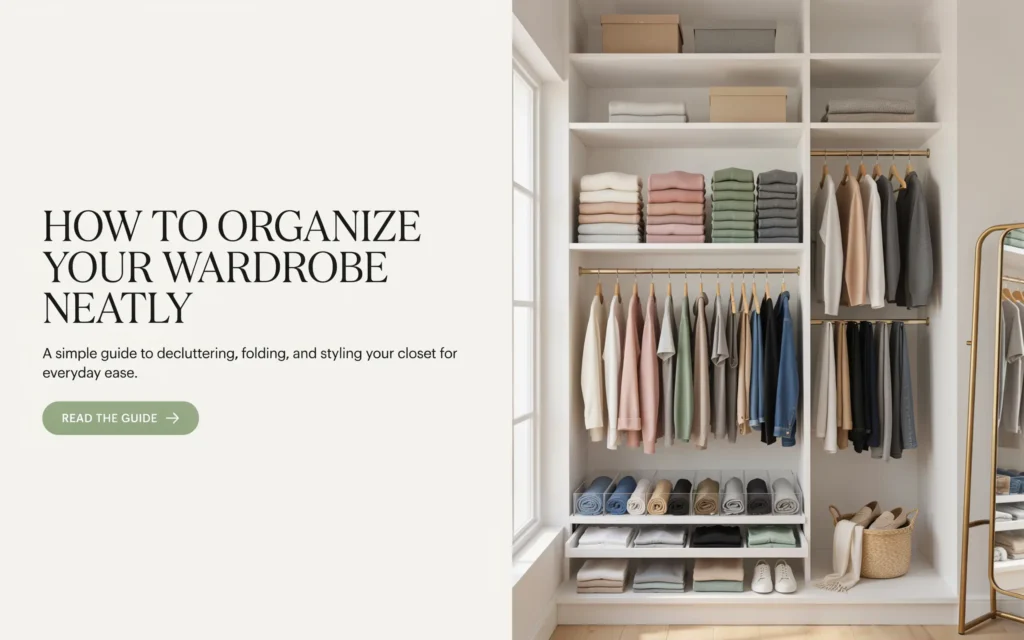
You now know exactly how to organize wardrobe neatly. Start by emptying everything. Sort into keep, donate, and trash. Then group by category. Fold using the file method. Hang clothes on good hangers. Use vertical space with bins and hooks. Finally, build daily habits to stay neat.
This process works for any closet. Small or large. Shared or solo. Cheap or expensive clothes. The steps stay the same. You do not need perfection. You just need to start.
Take the first action today. Pull out one drawer. Sort it. Fold it. Put it back. Feel the difference. Then do another drawer tomorrow. Within one week, your whole wardrobe will change.
A neat wardrobe saves you time every morning. It reduces stress. It helps you see clothes you love. And it makes getting dressed feel good. You deserve that feeling.
So go ahead. Open your closet. Take a deep breath. You can do this. And when you finish, share your success with a friend. Help someone else learn how to organize wardrobe neatly too. Small changes create big results.
Related posts
 Best Under Sink Organizers Kitchen 2026: Practical Storage Solutions
Find the best under sink organizers kitchen in 2026. Compare top-rated pull-out bins, L-shaped racks, and protective mats to maximize your cabinet space. The space under…
 Best Kitchen Cabinet Storage Solutions for 2026
Organize your kitchen efficiently with our Best Kitchen Cabinet Storage Solutions. Compare the best organizers for lids, pans, and spices to maximize your space. A cluttered…
 Top Rated Kitchen Shelf Organizers for 2026
Discover the top rated kitchen shelf organizers for 2026. Compare durable racks, magnetic shelves, and tiered storage to maximize your pantry and counter space. A cluttered…