
What Is The Best Way To Store Food
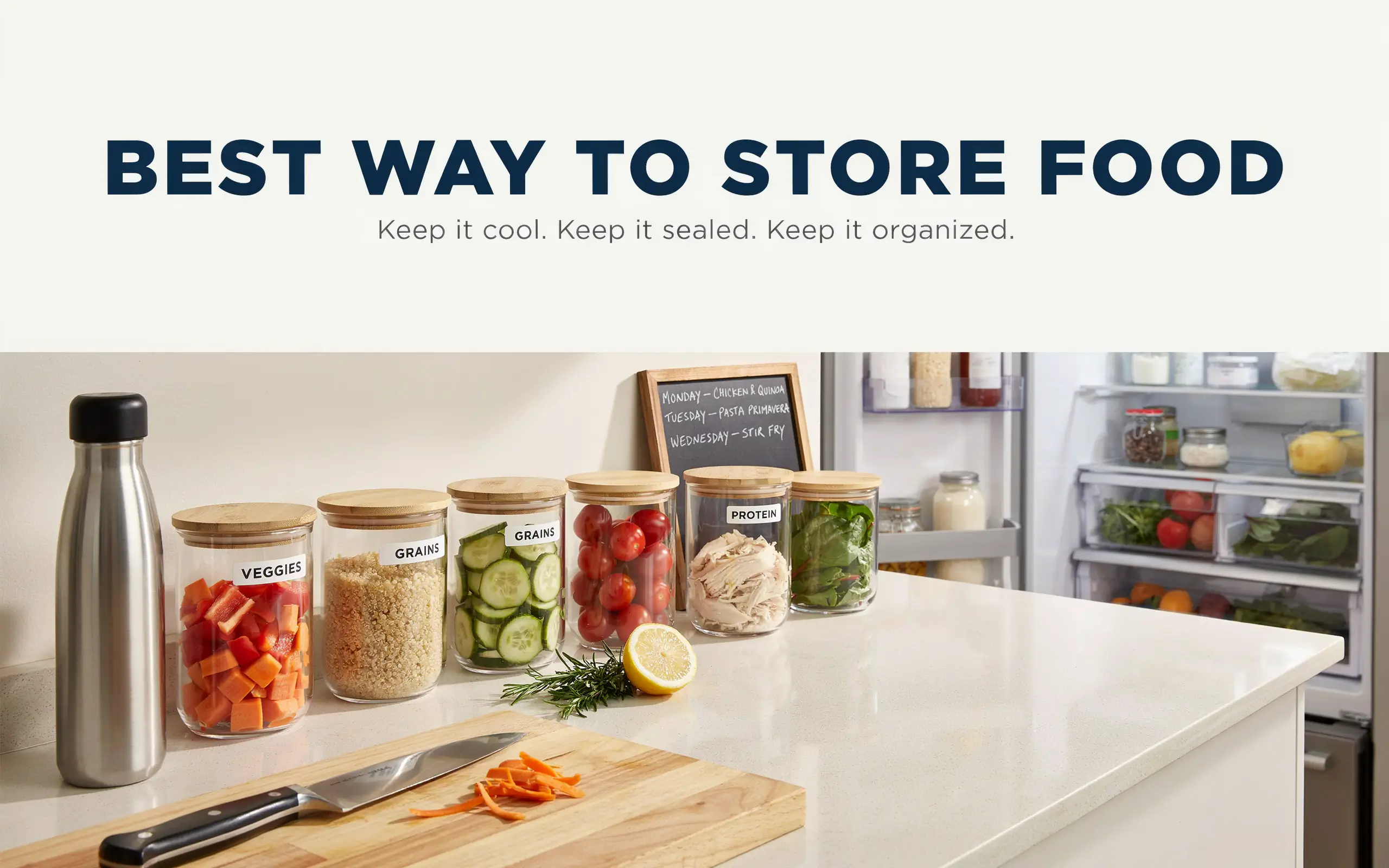
Learn the best way to store food to reduce waste and save money. This guide covers fridge, freezer, pantry tips for fruits, veggies, meats, and more.
Have you ever opened your fridge to find wilted lettuce, moldy cheese, or meat that smells off? You are not alone. Many of us buy fresh food with good plans, only to throw it away a few days later. The good news is that most of this waste is easy to stop. You just need to know the best way to store food for each type of item.
When you learn the best way to store food, you save money, eat better, and help the planet. Food waste is a big problem. The average family throws out a lot of food each year. But with a few simple changes, you can keep your food fresh for days or even weeks longer.
This guide will show you exactly what works. I will share tips for your fridge, freezer, and pantry. You will learn how to store fruits, vegetables, meat, dairy, leftovers, and dry goods. Let us get started.
“Good storage is the first step to good cooking. If your ingredients start fresh, your meals will taste fresh.” – Julia Child
Why Storing Food Right Matters
Before we talk about specific methods, let us think about why this matters. When you store food the wrong way, several bad things happen.
First, food goes bad faster. Bacteria and mold grow when food is too warm, too wet, or in the wrong container. Second, you lose nutrients. Fresh produce loses vitamins when left out or stored poorly. Third, you waste money. Throwing away spoiled food is like throwing away cash.
But there is a fourth reason that people often forget. Bad storage can make you sick. Foods like meat, eggs, and cooked rice can grow harmful germs if you do not keep them at safe temperatures.
So learning the best way to store food is not just about saving money. It is also about keeping your family safe and healthy. The good news is that it is not hard. You just need a few basic rules.
What Is the Best Way to Store Food in the Fridge?
Let us start with the fridge. Most of us put everything in the fridge without thinking. But different parts of the fridge have different temperatures. The top shelf is warmer than the bottom shelf. The door is the warmest part. The back is the coldest.
So the best way to store food in the fridge is to match each food to the right spot.
Fridge Zones and What Goes Where
Here is a simple guide:
- Top and middle shelves: Ready-to-eat foods like leftovers, drinks, yogurt, cheese, and deli meats. These areas have a steady, cool temperature.
- Bottom shelf: Raw meat, poultry, and fish. This is the coldest part of the fridge. Keeping raw meat low also stops any drips from touching other foods.
- Crisper drawers: Fruits and vegetables. Most fridges have two drawers. One for high humidity (leafy greens, broccoli, cucumbers) and one for low humidity (apples, oranges, peppers).
- Door: Condiments, butter, eggs (if your fridge has an egg tray), and juices. The door is the warmest spot, so do not put milk or raw meat there.
Quick Fridge Storage Guide
| Food Type | Best Location | Approximate Shelf Life |
|---|---|---|
| Cooked leftovers | Top or middle shelf | 3 to 4 days |
| Raw chicken | Bottom shelf | 1 to 2 days |
| Leafy greens | High-humidity drawer | 5 to 7 days |
| Milk | Middle shelf (not door) | 5 to 7 days after opening |
| Cheese | Middle shelf, wrapped | 2 to 4 weeks |
| Eggs | Middle shelf (original carton) | 3 to 5 weeks |
Notice that eggs do best on a middle shelf, not the door. The door’s temperature changes too much. Also, keep milk and eggs in their original containers. That is part of the best way to store food for dairy.
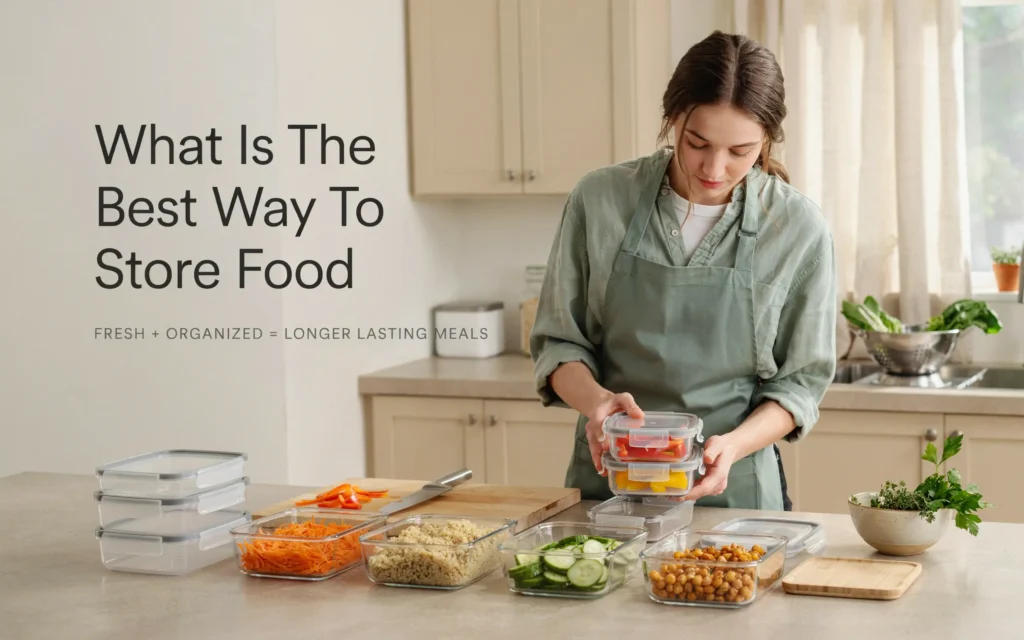
The Best Way to Store Food in the Freezer
Your freezer is a great tool. It can keep food safe for months. But you cannot just toss things in there. You need to pack them right.
The best way to store food in the freezer is to block air and moisture. Air causes freezer burn. That is when food gets dry, hard, and weird tasting. It is still safe to eat, but it does not taste good.
Here are simple steps:
- Use freezer-safe bags or containers. Regular plastic bags are too thin. They let air in. Use heavy-duty freezer bags or rigid plastic containers with tight lids.
- Squeeze out the air. For bags, push the air out before sealing. For containers, fill them almost full.
- Label everything. Write the food name and the date. Use a permanent marker. You will thank yourself later.
- Freeze in small portions. This lets you take out only what you need. For example, freeze ground meat in one-pound packs or soup in single servings.
- Do not overload. Cold air needs to move around the food to freeze it fast. Fast freezing makes smaller ice crystals, which keeps texture better.
Freezer Tips for Meat, Veggies, and Leftovers
- Raw meat: Take it out of the store wrap if it is not airtight. Wrap tightly in freezer paper or foil, then put in a freezer bag.
- Vegetables: Blanch most veggies before freezing. Blanching means boiling for one to two minutes, then putting in ice water. This stops enzymes that cause loss of flavor and color. You can skip blanching for peppers and onions.
- Leftovers: Cool them first, then freeze. Do not put hot food in the freezer. It will raise the temperature and risk other foods.
“The freezer is your friend, but only if you treat it right. Air is the enemy.” – Alton Brown, chef and food writer
The Best Way to Store Food in the Pantry
Not everything needs to be cold. Your pantry or cupboard is perfect for many foods. The best way to store food in the pantry is to keep it cool, dark, and dry.
Heat, light, and moisture are the three big problems for pantry foods. Heat speeds up spoilage. Light breaks down fats and vitamins. Moisture grows mold.
So choose a spot away from the stove, oven, or sunny window. A closed cabinet or a dark corner works well.
Dry Goods and Canned Foods
Here are common pantry items and how to store them:
- Flour and sugar: Keep in airtight containers. This stops bugs and moisture. White flour lasts up to a year. Whole wheat flour only lasts a few months because of the oils.
- Pasta and rice: Store in sealed jars or bins. Brown rice has oils that go rancid, so keep it in the fridge or freezer after opening. White rice lasts a long time.
- Oils: Keep in a dark, cool spot. Do not store oil above the stove. Heat makes oil go bad faster. Olive oil lasts about six months after opening.
- Canned goods: Keep cans in a cool, dry place. Rotate them. Use older cans first. Most canned foods last two to five years, but taste best within one year.
- Spices: Store in a dark cabinet away from heat. Whole spices last longer than ground spices. Ground spices lose flavor after six months.
Pantry Storage Dos and Don’ts
| Do This | Don’t Do This |
|---|---|
| Use glass, metal, or hard plastic containers | Keep food in original paper or thin plastic bags |
| Check for bugs or moisture every month | Store food near the stove or dishwasher |
| Write the date on containers | Buy more than you can use in a few months |
| Keep dry goods off the floor | Leave food open to the air |
Fruits and Vegetables: Separate Storage Rules
Many people think all produce goes in the fridge. But that is not true. Some fruits and vegetables do better on the counter. Others need the fridge. And some should never be stored together.
The best way to store food like fruits and veggies is to know which ones release a gas called ethylene. This gas makes other produce ripen faster. Apples, bananas, tomatoes, and avocados release a lot of ethylene. Potatoes, carrots, and leafy greens are sensitive to it.
So keep ethylene producers away from sensitive items. For example, do not store apples next to potatoes. The apples will make the potatoes sprout faster. Do not put bananas near lettuce. The bananas will turn the lettuce brown.
Here is a simple list:
Leave on the counter (not in the fridge):
- Bananas
- Tomatoes
- Potatoes (but in a dark, cool place)
- Onions (keep away from potatoes)
- Garlic
- Winter squash
Store in the fridge:
- Apples (they last weeks longer)
- Berries (do not wash until you eat them)
- Grapes
- Broccoli
- Carrots
- Leafy greens (in a bag with a paper towel to absorb moisture)
For herbs like cilantro and parsley, trim the stems and put them in a glass of water. Cover with a plastic bag and keep in the fridge. Change the water every few days.
“A ripe tomato loses its soul in the fridge. Keep it on the counter and use it within two days.” – Samin Nosrat, author of Salt, Fat, Acid, Heat
Leftovers: The Best Way to Store Food After Cooking
Cooking extra food is smart. It saves time later. But only if you store the leftovers correctly. Badly stored leftovers can cause food poisoning.
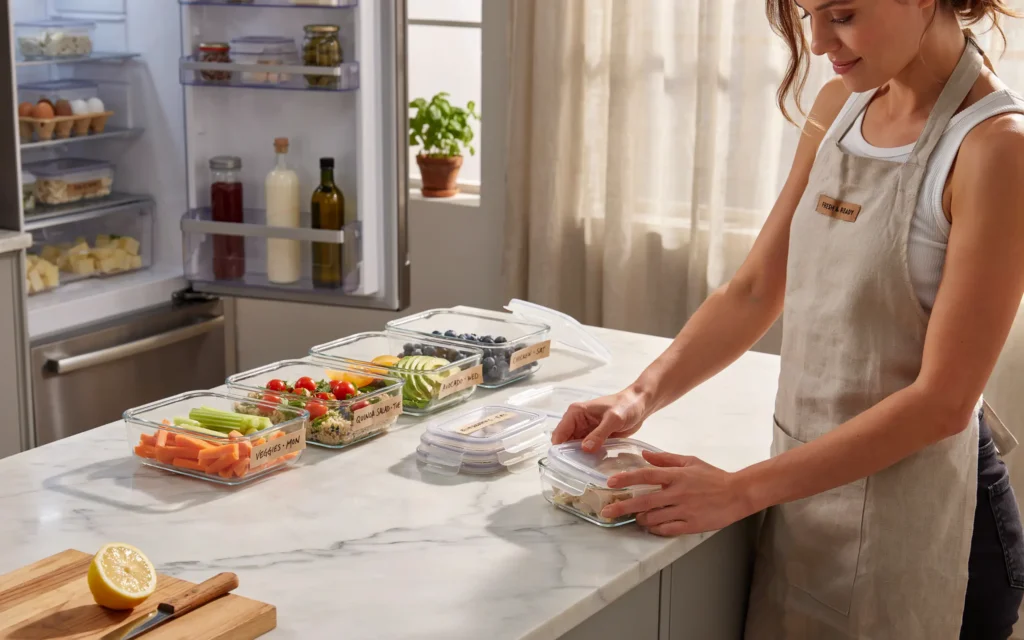
The best way to store food that you have already cooked is to cool it fast and get it in the fridge within two hours. Do not leave food out on the counter all day.
Here is the safe method:
- Put hot food in shallow containers. A shallow container cools faster than a deep pot.
- Do not put a giant pot of soup directly in the fridge. It will take too long to cool and will warm up the whole fridge.
- Split large amounts into smaller portions. For example, divide a big stew into several small containers.
- Cover the food once it has cooled a bit. Do not seal a hot container. Steam creates moisture that can make food soggy.
- Eat refrigerated leftovers within three to four days. If you will not eat them by then, freeze them.
When you reheat leftovers, make sure they are hot all the way through. A microwave is fine, but stir the food halfway. For soups and sauces, bring them to a boil.
How to Avoid Common Food Storage Mistakes
Even people who know the best way to store food sometimes make mistakes. Here are the most common errors and how to fix them.
Mistake 1: Overfilling the fridge. A packed fridge does not let cold air move. Air needs space to flow. Leave some room between items.
Mistake 2: Washing produce before storing. Wet produce rots faster. Wash berries, grapes, and leafy greens only right before you eat them. For root veggies like carrots, you can wash them, but dry them fully first.
Mistake 3: Storing bread in the fridge. Bread goes stale faster in the cold. Keep bread on the counter for a few days, or freeze it for longer storage. The fridge is the worst place for bread.
Mistake 4: Using the wrong wrap. Aluminum foil is not airtight. Plastic wrap can let air in over time. For long storage, use freezer bags or vacuum sealers.
Mistake 5: Ignoring your fridge temperature. Your fridge should be at or below 40°F (4°C). Your freezer should be at 0°F (-18°C). Buy a cheap appliance thermometer to check. Many fridges are not set correctly.
Frequently Asked Questions
Q: What is the best way to store food without plastic?
You can use glass containers with lids, beeswax wraps for covering bowls, silicone bags, or stainless steel tins. For the freezer, glass is fine if you leave room for expansion. Mason jars work well for pantry goods.
Q: How long can you keep food in the freezer?
Most foods stay safe in the freezer forever, but quality goes down after a few months. Ground meat is best within 4 months. Chicken pieces last up to 9 months. Vegetables last 8 to 12 months. Label everything with the date.
Q: Does storing food in the fridge door cause problems?
Yes, for some foods. The door is the warmest part of the fridge. Milk, eggs, and raw meat should not go in the door. Put those on shelves. The door is fine for condiments, juices, and butter.
Q: Can you store raw meat next to cooked food?
No, never. Raw meat can drip juices onto cooked food and spread bacteria. Always put raw meat on the bottom shelf, away from other foods. Keep cooked food on higher shelves.
Q: What is the best way to store food for a long time, like months?
For long term storage, your best options are freezing, canning, or dehydrating. Freezing is the easiest for home cooks. Canning requires special equipment and steps to stay safe. Dehydrating works well for fruits, herbs, and some vegetables.
Q: Why does my lettuce get soggy so fast?
Lettuce needs high humidity but not direct moisture. The best way to store lettuce is to wash and dry it well, then put it in a container or bag with a dry paper towel. The paper towel soaks up extra water. Change the towel every few days.
Q: Is it safe to store food in opened metal cans?
Once you open a can, take the food out and put it in a glass or plastic container. The metal can react with air and change the taste. This is especially true for acidic foods like tomatoes or fruit.
Conclusion
Learning the best way to store food is one of the easiest skills to learn, and it pays off every single week. You throw away less food, you spend less money at the store, and your meals taste better because your ingredients are fresh.
Remember these simple rules:
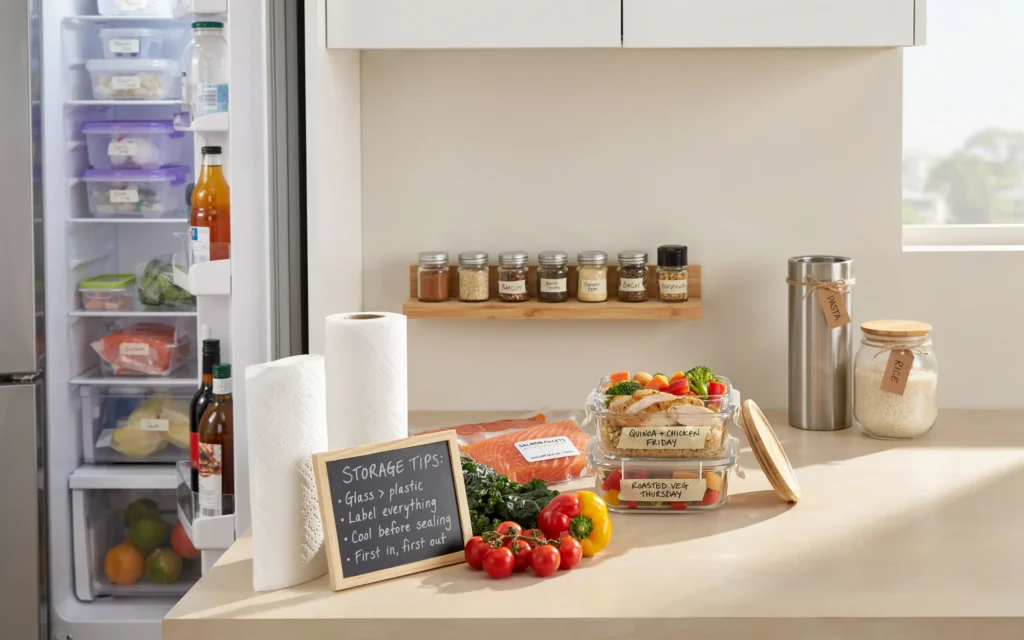
- Match the food to the right spot in the fridge. Bottom shelf for raw meat. Top shelves for leftovers. Door for condiments.
- Freeze food in airtight packages. Squeeze out the air. Label and date everything.
- Keep your pantry cool, dark, and dry. Use sealed containers for dry goods.
- Separate fruits and vegetables. Watch out for ethylene gas.
- Cool leftovers fast. Eat them within four days or freeze them.
- Avoid common mistakes like overfilling the fridge or washing produce too early.
You do not need fancy gadgets or expensive containers. You just need a few good habits. Start with one change this week. Maybe you move your milk to a shelf instead of the door. Or you label your freezer bags. Small steps add up to big savings.
Now go look in your fridge. See one thing you can store better today. Your future self, and your wallet, will thank you.
Related posts
 Best Gas Stove Safety Devices for 2026: Child and Pet Proofing Solutions
Keep your kitchen secure with our 2026 guide to the best gas stove safety devices. Compare top-rated knob covers for child and pet proofing your home.…
 Top Water Purifier for Kitchen Choices in 2026
Looking for the top water purifier for kitchen use? Explore our 2026 guide to the best faucet-mount, pitcher, and under-sink systems for cleaner drinking water. Finding…
 Top Kitchen Tissue for Daily Cleaning: 2026 Buyer Guide
Find the top kitchen tissue for daily cleaning in 2026. We compare five popular paper towel options to help you choose the right strength and value…