
Can Fitness Reduce Stress
Many people ask can fitness reduce stress. The answer is a clear yes. Regular exercise lowers stress hormones, boosts mood chemicals, and helps you feel more calm and in control. This article explains the science and gives you easy steps to start.
You have had one of those days. Your mind races. Your shoulders feel tight. You just want to lie down and do nothing. But a small voice inside you wonders: can fitness reduce stress? Maybe a short walk or a few jumping jacks could help.
I have asked myself this question many times. After long workdays or family chaos, I used to think exercise would just tire me out more. But then I tried it. A ten minute bike ride. A quick set of stretches. And something shifted. My breathing slowed. My thinking cleared. That is when I started to believe that yes, fitness can help with stress.
This article is for anyone who feels weighed down by daily pressure. You do not need to be an athlete. You do not need expensive gear. You just need a little curiosity and a willingness to move your body. Let me show you how working out can become one of your best tools for feeling better.
What Does Science Say About Stress and Exercise?
Stress is not just a feeling. It is a physical reaction inside your body. When you face a problem or a threat, your brain sends out alarm signals. These signals release hormones like cortisol and adrenaline. Your heart beats faster. Your muscles get ready to act. This is called the fight or flight response.
In small doses, this response helps you. It makes you alert and focused. But when stress stays on for days or weeks, those same hormones start to harm you. High cortisol can disturb your sleep, increase anxiety, and weaken your immune system.
So where does fitness come in? Physical activity changes how your body handles stress. When you exercise, you produce heat and use energy. Your body sees this as a positive kind of pressure. After you finish working out, your stress hormone levels drop. Your blood pressure goes down. Your muscles relax.
Researchers have studied this for decades. A 2021 review of many studies found that regular exercise reduces symptoms of stress and anxiety. The effect is strongest for moderate activities like brisk walking, cycling, or swimming.
Here is a simple table to show how different fitness activities affect stress markers:
| Type of Exercise | Effect on Cortisol | Effect on Mood |
|---|---|---|
| Aerobic (running, swimming) | Lowers after 20+ minutes | Increases endorphins |
| Strength training (weights, bands) | Temporary rise then drop | Builds confidence |
| Yoga and stretching | Directly reduces | Calms nervous system |
| Walking (brisk pace) | Gradually lowers | Clears mental fog |
“Exercise is the single best nonmedical treatment we have for stress and anxiety.” – Dr. John Ratey, Associate Professor of Psychiatry at Harvard Medical School
This quote from Dr. Ratey sums it up well. Fitness is not just about muscles or weight loss. It is a direct way to talk back to your stress response.
How Physical Activity Changes Your Brain Chemistry
Your brain is like a chemical factory. Every thought and feeling comes from tiny molecules moving around. Stress throws this factory off balance. Fitness helps restore order.
The Role of Endorphins and Dopamine
You have probably heard of the runner’s high. That happy, floaty feeling after a good workout comes from endorphins. These are natural painkillers made by your own body. They attach to the same brain receptors as morphine. But they are safe and free.
Endorphins do more than block pain. They also create a sense of well being. When you finish a workout, you might feel lighter and more optimistic. That is the endorphin effect.
Then there is dopamine. This chemical is about reward and motivation. When you complete a workout, your brain releases a small dose of dopamine. It is like a little pat on the back saying “good job.” Over time, regular fitness trains your brain to expect that reward. You start to look forward to exercise instead of dreading it.
Lowering Cortisol Naturally
Many people try to lower cortisol with pills or special diets. But one of the simplest ways is to move your body. Moderate exercise tells your brain that the danger has passed. Your body does not need to stay on high alert anymore.
A study from the University of California found that just 20 minutes of moderate exercise can lower cortisol levels for hours afterward. The key word here is moderate. Very intense workouts can actually raise cortisol in the short term. That is fine for athletes, but if your main goal is stress relief, stick with activities that let you breathe and talk at the same time.
Here is another quick table showing what happens inside your brain before and after exercise:
| Before Exercise (High Stress) | After Exercise (Low Stress) |
|---|---|
| High cortisol | Lower cortisol |
| Low endorphins | High endorphins |
| Racing thoughts | Slower, clearer thinking |
| Tense muscles | Relaxed muscles |
So when you ask yourself again, can fitness reduce stress, remember this brain chemistry shift. You are not just distracting yourself. You are changing your biology.
Simple Fitness Activities That Lower Stress
You do not need to run a marathon or lift heavy weights. Some of the best stress reducing exercises are simple and free. Let me share a few that work for almost anyone.
Walking is the most underrated stress tool. Put on comfortable shoes. Step outside. Walk at a pace where you can still talk but feel your heart beating a little faster. Ten minutes is enough to feel a difference. Thirty minutes is even better.
Yoga and slow stretching focus on breathing and holding poses. This directly activates your parasympathetic nervous system. That is the part of your body that rests and digests. It is the opposite of fight or flight. Even five minutes of deep breathing with simple stretches can lower your heart rate.
Dancing might feel silly at first. But put on a song you love and move your body without judgment. Dancing releases tension in your shoulders and hips. It also makes you smile, and smiling itself reduces stress.
Strength training with light weights or resistance bands gives you a sense of control. Lifting something heavy (even if heavy means five pounds) makes you feel capable. That feeling of strength carries over into the rest of your day.
“Movement is a medicine for creating change in a person’s physical, emotional, and mental states.” – Carol Welch, author and wellness advocate
Carol Welch got it right. The change happens on all three levels at once.
Creating a Stress Reducing Fitness Routine You Will Actually Stick With
Knowing that fitness helps with stress is one thing. Doing it regularly is another. Many people start with big plans and then quit after a week. Let us avoid that trap.
Start Small and Be Kind to Yourself
Do not try to exercise for one hour every day. That is too much pressure. Start with five minutes. Yes, five minutes. A short walk around your home. A few stretches while you wait for coffee. Five minutes of jumping jacks in your living room.
When you finish those five minutes, thank yourself. That is a win. After a few days, try ten minutes. After a week, try fifteen. Small steps build a habit. Big steps lead to burnout.
Also, let go of perfection. If you miss a day, do not worry. Just start again the next day. Stress already makes you feel bad. Do not add guilt about exercise on top of that.
Mix Cardio, Strength, and Mind Body Movements
A balanced routine gives you the best stress relief. Try to include three types of movement each week.
Cardio (walking, jogging, cycling, swimming) works best for lowering cortisol and boosting endorphins. Aim for 20 to 30 minutes, three times per week.
Strength work (pushups, squats, resistance bands) builds confidence. You do not need a gym. Bodyweight exercises are fine. Two times per week is plenty.
Mind body practices (yoga, tai chi, deep stretching) calm your nervous system directly. Even one short session per week makes a difference.
Here is a sample week for someone new to fitness:
- Monday: 15 minute brisk walk outside
- Tuesday: 10 minutes of stretching and deep breathing
- Wednesday: 15 minute walk again
- Thursday: Rest or gentle movement at home
- Friday: 10 minutes of bodyweight squats and pushups
- Saturday: 20 minute walk or bike ride
- Sunday: Rest and easy stretching
You can adjust this to fit your life. The key is consistency, not intensity.
Real Life Examples: How Fitness Helped People Manage Stress
I want to share two short stories. Names are changed, but the experiences are real.
Maria, a single mother of two. Maria worked full time and cared for her kids. Her stress was through the roof. She had trouble sleeping and often snapped at her children. A friend suggested she try walking for ten minutes each evening after putting the kids to bed. Maria did not believe it would help. But she tried. The first night, she cried during her walk. The second night, she felt a little lighter. After two weeks, she was sleeping better and felt more patient. She told me, “I never thought ten minutes could change so much.”
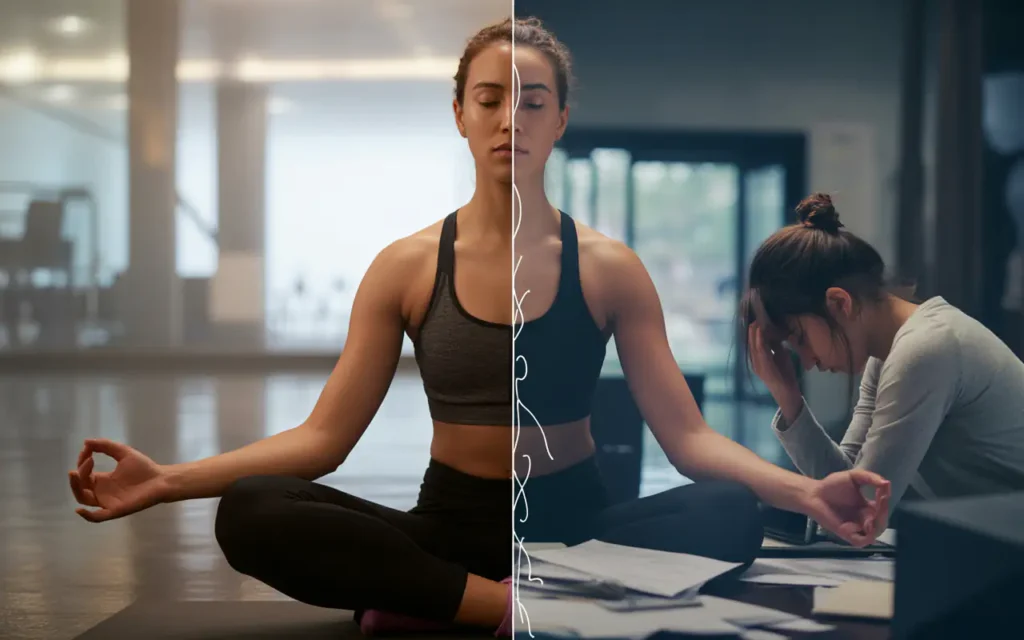
James, an office worker with back pain. James sat at a computer for nine hours a day. His stress showed up as tight shoulders and a short temper. He started doing five minutes of desk stretches every two hours. He also began walking during his lunch break. Within a month, his back pain decreased, and his coworkers noticed he seemed calmer. James said, “I used to think fitness was for young people. Now I see it is for anyone who wants to feel better.”
These are ordinary people. They did not run marathons or lift heavy weights. They just moved a little more each day. And their stress levels dropped.
“The body benefits from movement, and the mind benefits from stillness.” – Sakyong Mipham, Buddhist teacher and author
This quote reminds us that fitness and calm go hand in hand.
When to Be Careful: Listening to Your Body
Fitness reduces stress for most people. But there are times when you need to be gentle with yourself. If you are very sick, injured, or exhausted, rest is the better choice. Exercise should never make you feel worse.
Also, if you have a history of eating disorders or exercise addiction, be careful. For some people, fitness can become another source of pressure. In that case, talk to a doctor or therapist before starting a routine.
For everyone else, remember this: the goal is to feel better, not to earn a medal. If a workout leaves you exhausted and grumpy, you pushed too hard. Scale back. A gentle walk is still a win.
Listen to your body. It will tell you when to move and when to rest. Over time, you will learn the difference between good soreness and bad pain. Trust yourself.
Frequently Asked Questions
1. Can fitness reduce stress even if I am very out of shape?
Yes. You do not need to be fit to start. Walking, gentle stretching, and very light activities work well. Start with five minutes. Your body will adapt over time.
2. How long does it take to feel less stressed after exercise?
Many people feel a difference within 10 to 20 minutes. The stress hormone drop starts during exercise and continues for up to an hour afterward. Regular fitness builds lasting changes over weeks and months.
3. What is the best time of day to exercise for stress relief?
Any time that fits your schedule. Morning exercise can set a calm tone for the day. Afternoon workouts can break up work stress. Evening gentle movement helps some people sleep better. Experiment and see what works for you.
4. Can fitness reduce stress if I have anxiety or depression?
Yes, for many people. Exercise is often recommended alongside other treatments like therapy or medication. It is not a cure, but it is a helpful tool. Talk to your doctor about what is right for you.
5. Do I need to sweat a lot for fitness to help with stress?
No. Moderate activity that raises your heart rate slightly is enough. A brisk walk where you can still talk is perfect. You do not need to be drenched in sweat.
6. How many times a week should I exercise to manage stress?
Three to five times per week is a good goal. Even two times per week helps. The most important thing is consistency. Do a little often rather than a lot once in a while.
7. Can fitness reduce stress at work?
Yes, absolutely. Short movement breaks during the workday lower cortisol and clear mental fog. Try standing up and stretching for two minutes every hour. Walk to a coworker instead of emailing. Take a five minute walk outside at lunch.
8. What if I feel too tired to exercise?
Start with the smallest possible action. Put on your shoes. Stand up. Walk to the door. Often, just starting breaks the fatigue cycle. If you are truly exhausted, rest. But many people find that a little movement gives them more energy, not less.
Conclusion
Let us return to the question that started this article. Can fitness reduce stress? The answer is a clear and strong yes. Science shows it. Real people live it. And you can experience it too.
You do not need a gym membership or special clothes. You do not need to be young or athletic. You just need to move your body in ways that feel good. A short walk. A few stretches. A dance break in your kitchen. All of these count.
Fitness works because it speaks directly to your biology. It lowers cortisol. It raises endorphins. It gives you a sense of control when life feels chaotic. And unlike pills or quick fixes, exercise has no bad side effects when done reasonably.
So here is my invitation to you. Right now, stand up. Take three deep breaths. Walk around your room for one minute. Notice how you feel afterward. That small act is the beginning.
You have the power to reduce your own stress. It lives inside your body, waiting for you to move. Lace up your shoes. Step outside. Take a deep breath. Your calmer self is just a few steps away.
Related posts
 Understanding Fitness Checkup Consultation Cost and Professional Assessment Resources for 2026
Explore Understanding fitness checkup consultation cost factors and professional assessment resources to help you make informed decisions about your health and training goals. Navigating the world…
 Gym Membership Discount Price Alternatives for 2026 Home Fitness
Looking for a gym membership discount price Alternatives? Explore smart home fitness alternatives and equipment to save money and build your own workout space in 2026.…
 Buy Home Workout Sliders: 2026 Guide to Core Fitness Tools
Looking to buy home workout sliders? Compare top-rated gliding discs and core trainers to find the right equipment for your 2026 fitness routine. Adding core sliders…