
Can Beginners Lift Weights Safely
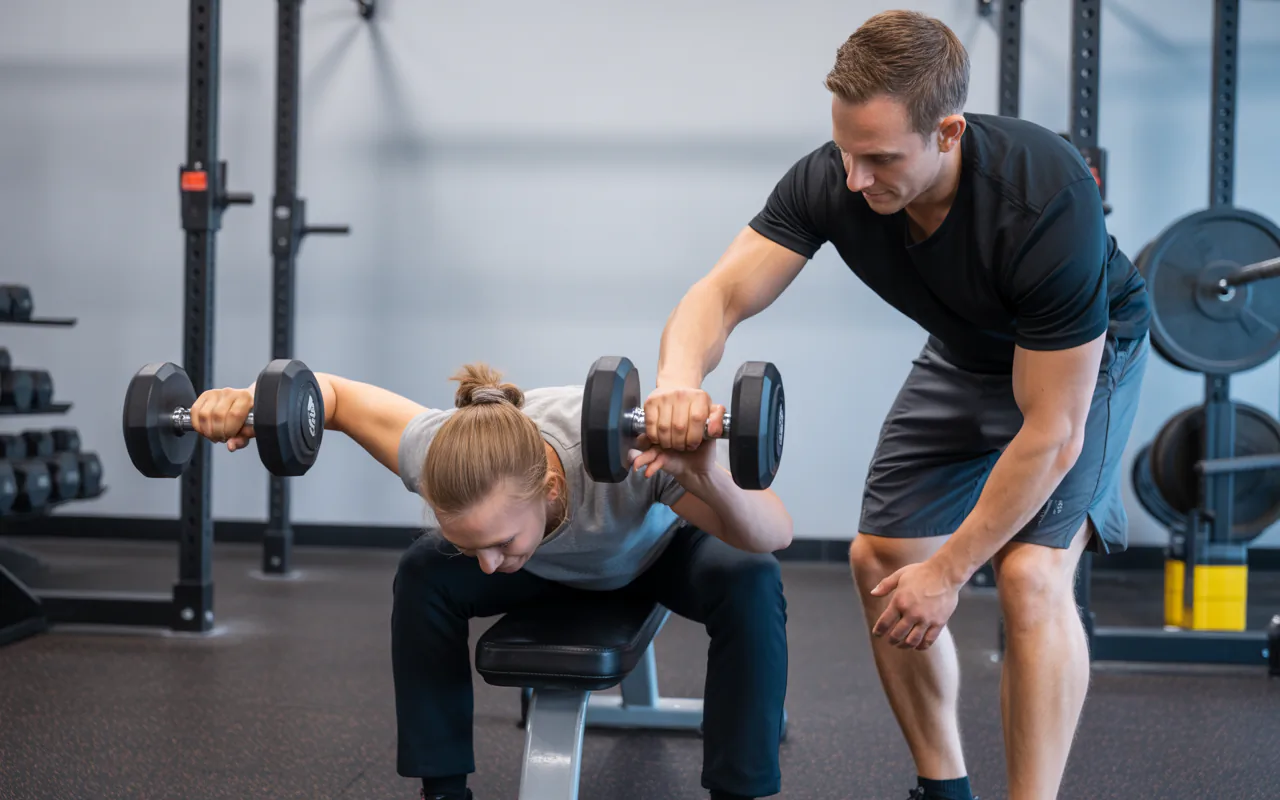
If you ask can beginners lift weights safely, the answer is yes. Start with light weights, focus on proper form, and rest between workouts. This guide gives you safety tips, a simple plan, and answers to common questions to help you lift without injury.
You walk into a gym. You see people lifting heavy iron. You think, “Can I do that?” The short answer: yes. The longer answer: you need to learn a few things first. This article answers the question: can beginners lift weights safely? I will show you how to start without getting hurt.
I remember my first time in a weight room. I was nervous. I picked up a 10 pound dumbbell and tried to curl it. My arm shook. My back hurt the next day. I learned the hard way. But you do not have to. With the right steps, you can lift safely from day one.
Why This Question Matters
Many new lifters worry about injury. That is smart. But fear should not stop you. Lifting weights offers many benefits. It builds muscle. It strengthens bones. It helps with weight loss. And it boosts your mood. The key is safety.
According to coach Mark Rippetoe, “Form is the foundation of all strength.” This is true for everyone, especially beginners. When you learn good form early, you avoid bad habits. Those bad habits can lead to pain later. So do not skip the basics.
So can beginners lift weights safely? Yes, but only if you respect the process. Lifting is not a race. It is a skill. You learn it step by step.
The Simple Answer: Yes, With a Few Rules
So can beginners lift weights safely? Yes, with a few basic rules. These rules keep your body safe. They also help you see progress faster. Here are the core rules:
- Start with bodyweight exercises.
- Use very light weights at first.
- Focus on how you move, not how much you lift.
- Rest between workout days.
- Stop if something hurts (not just tired muscles).
Let me explain each rule in more detail.
Start With Bodyweight First
Before you pick up a dumbbell, learn to move your own body. Squats, push ups, lunges, and planks teach your muscles to work together. These moves build a strong base. Once you can do 10 good squats with no weight, then add a light weight.
This step lowers your risk of injury a lot. It also helps you learn proper form without worrying about dropping a weight. I tell my friends who start lifting to spend two weeks on bodyweight only. They always thank me later.
Choose the Right Weight
How do you know if a weight is too heavy or too light? Use the “two rep rule.” Pick a weight. Do an exercise for 8 to 12 reps. If you cannot finish 8 reps with good form, the weight is too heavy. If you can easily do 12 reps and feel no fatigue, the weight is too light.
A good starting weight for most beginners: 2 to 5 pounds (1 to 2 kg) for arm exercises. For leg exercises, 5 to 10 pounds (2 to 4 kg). You can also use resistance bands. They are very safe for beginners. Many stores sell band sets for under 20 dollars.
5 Safety Tips for Beginner Lifters
Here is a table of five key safety tips every beginner should follow.
| Safety Tip | Why It Helps |
|---|---|
| Warm up for 5 to 10 minutes | Increases blood flow to muscles, reduces injury risk |
| Keep your back straight | Prevents spinal injuries during lifts |
| Breathe out during the hard part | Maintains blood pressure and core stability |
| Do not lock your joints | Protects elbows and knees from strain |
| Stop if you feel sharp pain | Sharp pain means injury, not muscle growth |
These tips are simple but very effective. Follow them every time you lift. Following these tips answers the question can beginners lift weights safely? Absolutely.
Common Mistakes Beginners Make (And How to Avoid Them)
Even with good intentions, beginners make mistakes. Here are the most common ones.
Mistake 1: Lifting too heavy too soon
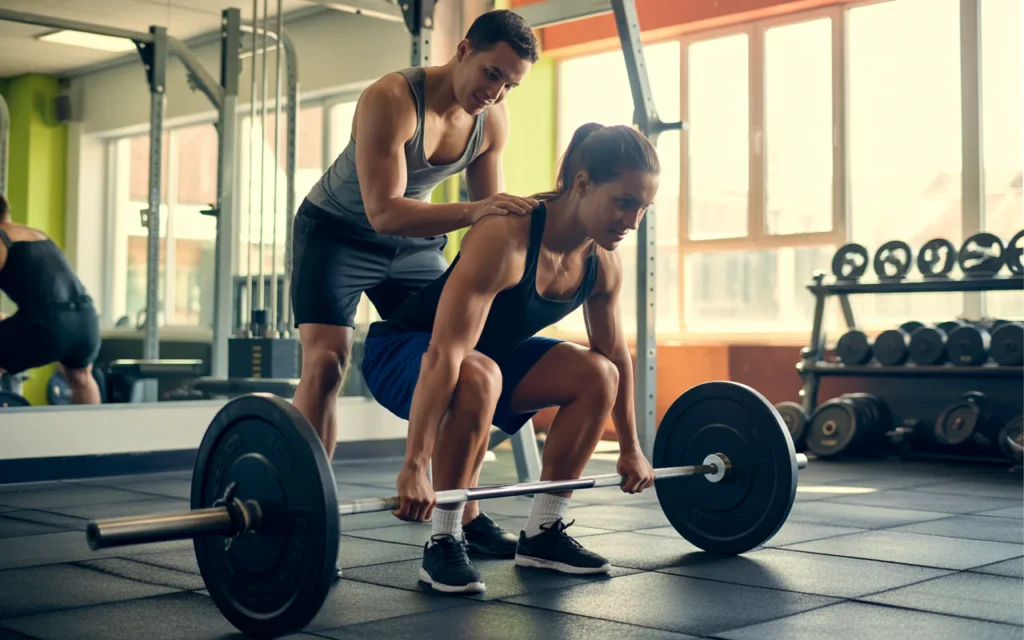
Many people want quick results. So they grab a heavy weight. This leads to bad form and injuries. Solution: Leave your ego at the door. Use light weights for the first month. No one cares how much you lift. They care if you are safe.
Mistake 2: Skipping the warm up
Cold muscles tear more easily. A 5 minute warm up saves you from weeks of pain. Do arm circles, leg swings, or a fast walk. You can also do jumping jacks or jog in place. Get your blood moving before you touch any weight.
Mistake 3: Holding your breath
Some people hold their breath when lifting hard. This can make you dizzy or even pass out. Solution: Breathe in on the easy part. Breathe out when you push or pull. For a squat, breathe in as you go down. Breathe out as you stand up.
Mistake 4: Not resting enough
Muscles grow when you rest, not when you lift. Lift weights every other day. Take at least one full rest day between sessions for the same muscle group. If you lift on Monday, lift again on Wednesday. Take Tuesday off.
Arthur Ashe once said, “Start where you are. Use what you have. Do what you can.” This is perfect advice for beginner lifters. Do not compare yourself to others in the gym. Remember, can beginners lift weights safely? Yes, as long as they avoid these mistakes.
A Sample Beginner Workout Plan
Now let’s put these ideas into action. Here is a full body workout you can do two or three times per week. Do this for 4 weeks before adding more weight or more exercises.
| Exercise | Reps | Sets | Rest |
|---|---|---|---|
| Bodyweight squat | 10 to 12 | 3 | 60 sec |
| Wall push up (or knee push up) | 8 to 10 | 3 | 60 sec |
| Seated dumbbell shoulder press (2 to 5 lbs) | 8 to 10 | 3 | 60 sec |
| Standing dumbbell row (light weight) | 8 to 10 per arm | 3 | 60 sec |
| Plank (hold) | 15 to 20 seconds | 3 | 60 sec |
| Glute bridge | 10 to 12 | 3 | 60 sec |
Start each workout with a 5 minute warm up. End with a 5 minute cool down and gentle stretching. Do this routine on non consecutive days, like Monday, Wednesday, Friday.
Following this plan shows that can beginners lift weights safely? The answer is a clear yes when you stick to these simple exercises.
How to Perform Each Exercise With Good Form
Let me break down the key moves from the plan above. Good form keeps you safe.
Bodyweight Squat
Stand with feet shoulder width apart. Keep your chest up. Lower your hips back like you are sitting in a chair. Go down until your thighs are parallel to the floor. Push through your heels to stand up. Do not let your knees cave inward.
Wall Push Up
Stand an arm’s length from a wall. Place your hands on the wall at shoulder height. Lean forward and bend your elbows. Bring your chest toward the wall. Push back to start. This is easier than floor push ups. Once you can do 15 easily, try knee push ups on the floor.
Seated Dumbbell Shoulder Press
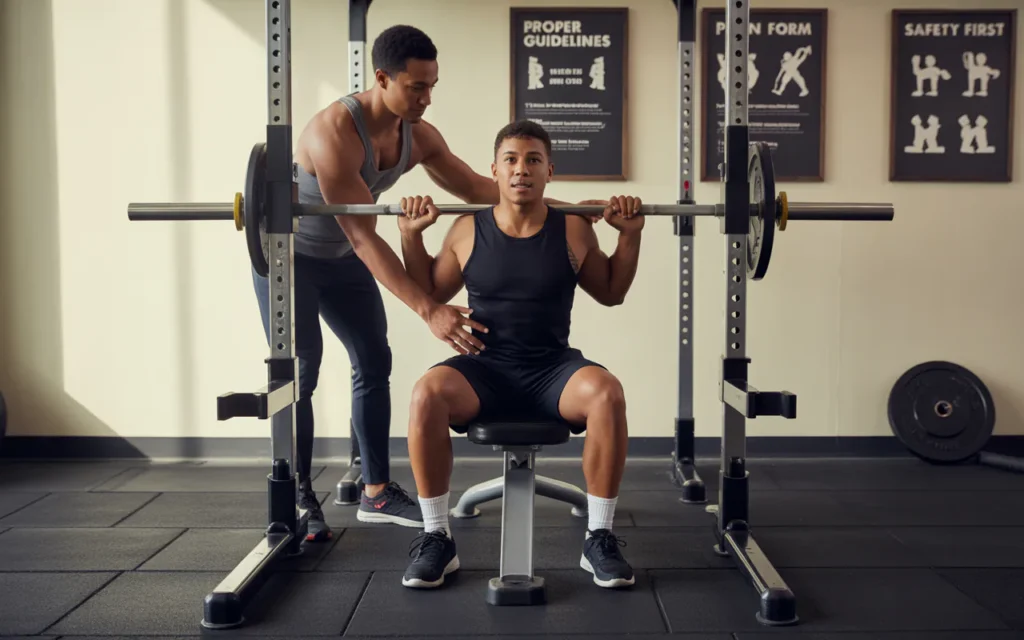
Sit on a bench or chair. Hold a light dumbbell in each hand at shoulder level. Palms face forward. Press the weights up until your arms are straight but not locked. Lower back down slowly. Keep your back straight the whole time.
Standing Dumbbell Row
Hold a dumbbell in your right hand. Place your left hand and left knee on a bench. Keep your back flat. Let the right arm hang straight down. Pull the dumbbell up toward your hip. Squeeze your shoulder blade. Lower slowly. Repeat on the other side.
Plank
Lie on your stomach. Prop yourself up on your forearms and toes. Keep your body in a straight line from head to heels. Squeeze your belly and glutes. Hold for time. If this is too hard, start with a knee plank. Rest on your knees instead of your toes.
Glute Bridge
Lie on your back with knees bent and feet flat on the floor. Arms at your sides. Press through your heels to lift your hips up. Squeeze your glutes at the top. Lower back down without letting your hips touch the floor between reps.
How Often Should Beginners Lift Weights?
A common question is about frequency. For a beginner, two to three sessions per week is perfect. Why? Your body needs time to adapt. Lifting weights breaks down muscle fibers. Rest days let them repair and grow stronger.
If you lift every day as a beginner, you risk overuse injuries. Tendons and ligaments also need time to get stronger. So take rest days seriously.
Also, listen to your body. Some muscle soreness is normal, especially the day after a workout. But if you feel sharp pain or joint pain, take extra rest. Or see a doctor.
Mark Twain said, “The secret of getting ahead is getting started.” So do not overthink it. Just start with one good workout this week. So can beginners lift weights safely with this frequency? Yes, because rest is part of safety.
What Equipment Do You Need?
You do not need a fancy gym to start. Here is a simple list of affordable gear.
- A pair of light dumbbells (2 to 5 pounds)
- A yoga mat or soft floor surface
- Comfortable clothes and flat shoes
- A water bottle
- Optional: resistance bands
You can even use household items. Canned soup or water bottles work as light weights. A towel can replace a yoga mat. Do not let lack of gear stop you. Many people start lifting at home with zero equipment.
Gym Etiquette for Beginners
If you go to a public gym, follow these simple rules. They keep everyone safe and happy.
- Put your weights back after use.
- Wipe down equipment with a spray and towel.
- Do not drop weights unless the gym allows it.
- Give people space. Do not stand too close.
- Ask before sharing a machine.
Most gym people are friendly. They were beginners once too. Do not be afraid to ask for a spot or advice. A simple “Can you check my form?” goes a long way.
When to Ask for Help
Sometimes you need another pair of eyes. If you are not sure about your form, ask a gym staff member. Many gyms offer one free session with a trainer. Use that offer.
You can also film yourself doing an exercise. Compare your form to videos from trusted sources. Or ask a friend who lifts to watch you.
Do not be shy. Everyone started as a beginner. Even professional bodybuilders once asked, “Can beginners lift weights safely?” They learned the same way you will.
If you have a health condition, talk to your doctor first. Conditions like high blood pressure, back problems, or joint issues need special care. A doctor or physical therapist can give you safe exercises.
Signs You Are Lifting Too Heavy
Your body gives you warning signs. Learn to read them. Here are signs that your weight is too heavy.
- You cannot keep your back straight.
- You feel sharp pain in a joint or muscle.
- You hold your breath or make grunting sounds.
- You swing the weight using momentum.
- You feel dizzy or lightheaded.
If you see any of these signs, go lighter. There is no shame in using small weights. Even strong people use light weights on some days. Lifting smart is better than lifting heavy.
How to Progress Safely Over Time
Once you can do 12 reps of an exercise with perfect form, you can make it harder. Here is a safe way to progress.
- Add one more rep. Go from 12 to 13 reps.
- Add one more set. Go from 3 sets to 4 sets.
- Slightly increase the weight. Add 1 or 2 pounds.
- Slow down the movement. Take 3 seconds to lower the weight.
Only change one thing at a time. Give your body a week to adjust. Then change another thing. This slow progress prevents injury and builds real strength.
Frequently Asked Questions
Q1: Can beginners lift weights safely without a trainer?
Yes. You can learn from good online videos and books. Start with bodyweight. Use light weights. Focus on form. A trainer helps, but you can do it alone if you are careful.
Q2: What if I feel sore the next day?
That is normal. It is called delayed onset muscle soreness (DOMS). It usually goes away in 2 to 3 days. Light movement, like walking, helps. But if the soreness is very sharp or in a joint, that could be an injury.
Q3: How heavy should my weights be?
Use the “two rep rule” I shared earlier. For most beginners, 2 to 5 pound dumbbells for upper body. 5 to 10 pounds for lower body. You can also start with soup cans or water bottles at home.
Q4: Can I lift weights every day?
No, not as a beginner. Your muscles need 48 hours to recover. Lift two or three times per week. On other days, do cardio or stretching.
Q5: What if I have a health condition?
Talk to your doctor first. Conditions like high blood pressure, back problems, or joint issues need special care. A doctor or physical therapist can give you safe exercises.
Q6: How long before I see results?
Most beginners see changes in 4 to 6 weeks. You will feel stronger first. Then you will see muscle tone. Be patient. Good things take time.
Q7: Should I feel pain during a lift?
No. You should feel muscle effort, not pain. Pain is different. Pain feels sharp or stabbing. Stop immediately if you feel pain. Rest and try a lighter weight next time.
Q8: Can lifting weights stunt my growth?
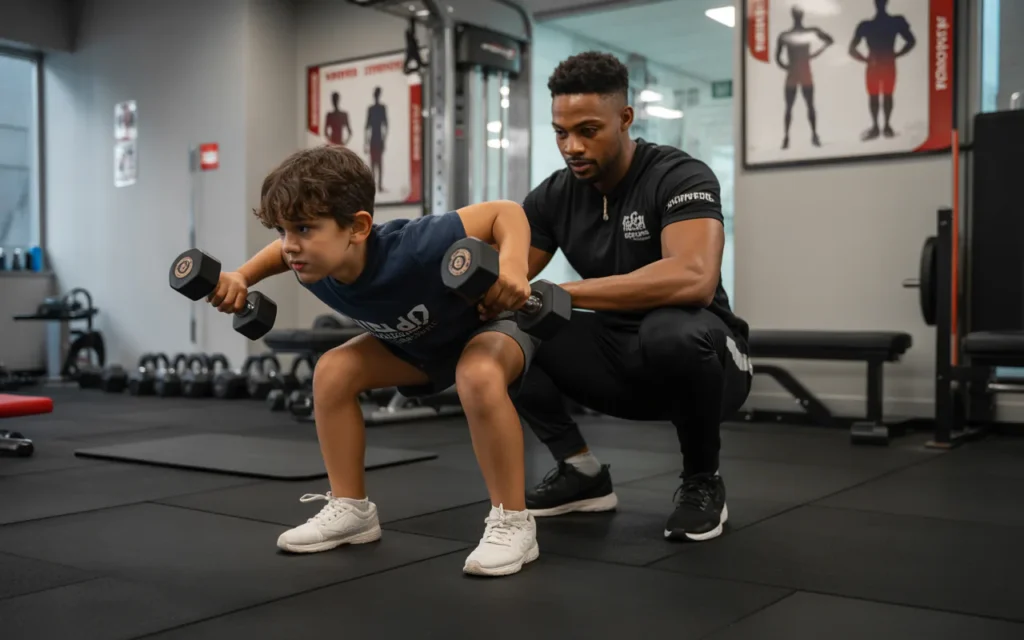
No. That is a myth. Many studies show that weight lifting does not affect height. Proper lifting is safe for teenagers and adults. Just use good form and light weights.
Q9: Do I need to take supplements?
No. Food is enough for beginners. Eat protein like eggs, chicken, beans, or tofu. Eat vegetables and whole grains. Drink water. Supplements are not needed until much later, if ever.
Q10: What is the best time of day to lift?
Any time you can be consistent. Morning, afternoon, or evening all work. Pick a time that fits your schedule. The best workout is the one you actually do.
A Simple Weekly Schedule for Beginners
Here is an example week for a new lifter.
- Monday: Full body workout (30 minutes)
- Tuesday: Rest or light walk (20 minutes)
- Wednesday: Full body workout (30 minutes)
- Thursday: Rest or gentle stretching
- Friday: Full body workout (30 minutes)
- Saturday: Active rest (hiking, biking, or swimming)
- Sunday: Complete rest
Adjust as needed. Two workouts per week is also fine. The key is to be consistent week after week.
Mindset Tips for Long Term Success
Lifting weights is a skill. Like learning to cook or play an instrument, it takes practice. Do not expect to be perfect on day one. Here are mindset tips to help you stick with it.
- Celebrate small wins. Did you finish your workout? That is a win.
- Do not compare your day one to someone else’s year ten.
- Track your workouts in a notebook or phone app.
- Remind yourself why you started. Write it down.
- Be kind to yourself on bad days. Everyone has them.
Arthur Ashe also said, “Success is a journey, not a destination.” Enjoy the process. Feel yourself getting a little stronger each week.
To sum up, the question can beginners lift weights safely has a positive answer. You just need patience and the right steps.
Conclusion
So yes, can beginners lift weights safely? 100% yes. The answer is clear when you follow the rules. Start with bodyweight. Use light weights. Focus on form. Rest between sessions. Listen to your body. Ask for help when you need it.
You do not need to be strong to start. You get strong by starting. The first step is the hardest. After that, it gets easier. Every lift you do safely is a win.
Take that first step today. Pick a light weight. Do one good squat. Then do another. Before you know it, you will be lifting with confidence. And you will wonder why you ever worried.
Related posts
 Understanding Fitness Checkup Consultation Cost and Professional Assessment Resources for 2026
Explore Understanding fitness checkup consultation cost factors and professional assessment resources to help you make informed decisions about your health and training goals. Navigating the world…
 Gym Membership Discount Price Alternatives for 2026 Home Fitness
Looking for a gym membership discount price Alternatives? Explore smart home fitness alternatives and equipment to save money and build your own workout space in 2026.…
 Buy Home Workout Sliders: 2026 Guide to Core Fitness Tools
Looking to buy home workout sliders? Compare top-rated gliding discs and core trainers to find the right equipment for your 2026 fitness routine. Adding core sliders…