
Is Fitness Affected By Age
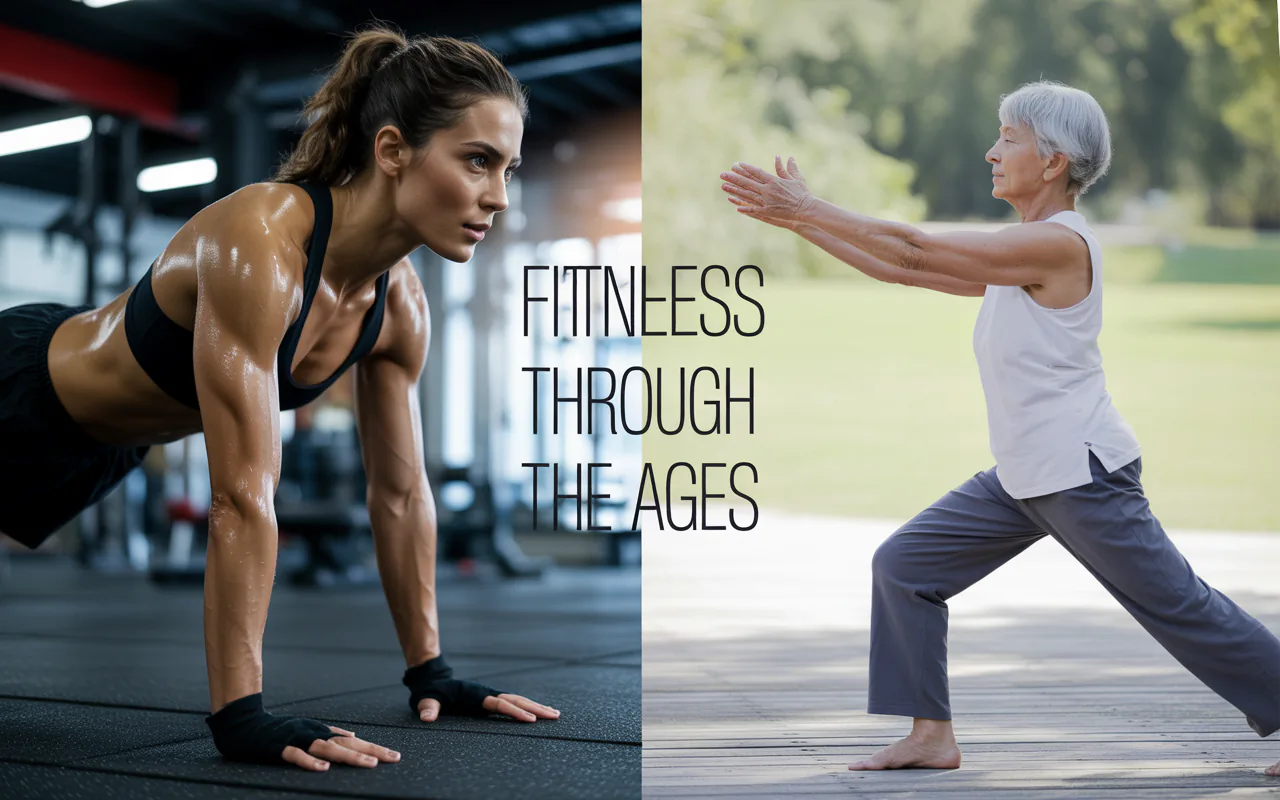
So, is fitness affected by age? Yes, directly. As you get older, your muscle mass, bone density, and heart function change. But the good news? You can maintain great fitness with the right workouts and lifestyle. This article gives you the facts and a clear plan.
Let me ask you something. Have you ever looked at a young athlete running a marathon or lifting heavy weights and thought, “I could never do that now”? Maybe you are in your 40s, 50s, or beyond, and you feel your body does not respond like it used to. You are not imagining things. The truth is that is fitness affected by age? Yes, it is. But here is the part most people do not tell you. Age changes your fitness, but it does not destroy it. You can still be strong, fast, and flexible. You just need to know how to work with your body, not against it.
Think of your body like a garden. A young garden grows fast with little effort. An older garden needs more care, water, and the right soil. But it can still bloom beautifully. This article will walk you through exactly what happens as you age, which parts of fitness change the most, and most importantly, what you can do about it. I will share simple tables, real life examples, and answers to common questions. No complicated science. No fancy words. Just honest help.
How Your Body Changes Over the Years
To understand the question “is fitness affected by age,” we first need to look at the basic changes inside you. These changes happen slowly. You might not notice them in your 30s. But by your 50s and 60s, they become real.
Your heart is a muscle. Like any muscle, it can get weaker or stronger. As you age, your maximum heart rate goes down. The formula is simple: 220 minus your age. So a 20 year old has a max heart rate around 200 beats per minute. A 70 year old has a max around 150. This means your heart cannot pump blood as fast during hard exercise. Your lungs also lose some elasticity. That is why you might get out of breath quicker.
Your muscles change too. After age 30, you start losing muscle mass. Doctors call this sarcopenia. You lose about 3% to 5% of your muscle every decade. By age 60, the loss can be faster. Less muscle means less strength. It also means a slower metabolism. That is why many people gain weight as they get older even if they eat the same.
Your bones become less dense. Your joints lose cartilage, the soft cushion between bones. Your tendons and ligaments get stiffer. All of this affects how you move, bend, and recover after exercise.
Here is a simple table to show the main changes:
| Age Range | Main Physical Changes | Effect on Fitness |
|---|---|---|
| 20-30 | Peak muscle mass and bone density | Best time for high intensity training |
| 30-40 | Slow muscle loss begins (1% per year) | Recovery takes slightly longer |
| 40-50 | Joint stiffness increases, metabolism drops | Need more warm up and mobility work |
| 50-60 | Bone density loss speeds up (women more) | Strength training becomes crucial |
| 60+ | Significant muscle loss possible, balance declines | Focus on safety, flexibility, and daily function |
Another important change is your nervous system. Your brain sends signals to your muscles to move. As you age, those signals slow down a little. This affects your reaction time and coordination. But here is the secret. Exercise keeps those signals fast. Active older people have much better reaction times than sedentary ones.
The Good News: Fitness Is Possible at Any Age
Now let me give you hope. I have seen people in their 70s lift weights that would make a 20 year old cry. I have seen 80 year old women do full push ups. Age is a number. Your fitness level depends more on what you do every day than on how many birthdays you have had.
“It is never too late to become what you might have been.” – George Eliot
This quote fits perfectly here. Many people stop trying because they think age has already decided their fate. That is wrong. Research from the American College of Sports Medicine shows that people who start exercising in their 50s and 60s can gain back up to 40% of their lost muscle strength within six months. The body wants to move. It wants to heal. You just need to give it the chance.
The real answer to “is fitness affected by age” is not just yes or no. It is: Age affects fitness, but consistent training affects it much more. A fit 70 year old who exercises three times a week will have better heart health, stronger bones, and more energy than an unfit 30 year old who sits on the couch all day. Think about that.
What Science Says About Aging and Exercise
Scientists have studied this topic for decades. They put older adults on exercise programs and measured everything. Here is what they found.
Your heart can get stronger at any age. Endurance training increases the size of your heart chambers. It improves blood flow. Even people in their 80s show measurable heart improvements after a few months of walking or cycling.
Your muscles can grow at any age. The idea that older people cannot build muscle is false. Yes, it takes longer. Yes, you need more protein. But muscle protein synthesis, the process of building new muscle, still works. Weight training two times per week can add pounds of lean muscle to a 70 year old.
Your brain benefits too. Exercise increases blood flow to your brain. It releases chemicals that protect nerve cells. Older adults who exercise regularly have a lower risk of dementia and memory loss.
So the science is clear. If you ask, “is fitness affected by age,” the scientific answer is that age creates challenges, but exercise overcomes most of them.
Key Areas of Fitness Affected by Age
Let me break down the five main parts of fitness. For each one, I will tell you exactly how age changes it and what you can do.
Cardiovascular Endurance
This is your heart and lung fitness. How long can you walk, run, bike, or swim without getting tired? Age lowers your maximum heart rate. It also makes your blood vessels a little stiffer. So your heart has to work harder to push blood around.
But here is the good part. Endurance training works very well for older adults. A 65 year old who does regular cardio can have the same aerobic capacity as an inactive 35 year old. That is amazing. You just need to be consistent. Aim for 150 minutes of moderate cardio each week. Walking, swimming, and cycling are perfect.
Muscle Strength and Mass
This area takes the biggest hit from aging. Remember sarcopenia? That muscle loss starts in your 30s. By your 70s, you could have half the muscle you had in your 20s if you do nothing. Weak muscles make everyday tasks hard. Getting up from a chair, carrying groceries, climbing stairs. All of it becomes difficult.
But weight training stops this loss. It can even reverse it. Lifting weights two or three times a week keeps your muscles strong. You do not need heavy weights. Body weight exercises, resistance bands, or light dumbbells work great. The key is to challenge your muscles. Make them work.
“Strength does not come from physical capacity. It comes from an indomitable will.” – Mahatma Gandhi
Your will to keep moving matters more than your age. I have trained people in their 80s who could do squats and push ups better than some young beginners. They simply refused to give up.
Flexibility and Mobility
Flexibility is how far your muscles can stretch. Mobility is how well your joints move through their full range. Both go down with age. Your tendons get stiffer. Your ligaments tighten. The soft cartilage in your joints wears thin.
This does not mean you have to become stiff. Stretching works at any age. Yoga and Pilates are wonderful for older bodies. Even five minutes of daily stretching keeps your hips, shoulders, and spine loose. The secret is to stretch gently. Never force a stretch. Breathe and relax into it.
Balance and Coordination
This is where age can be dangerous. Poor balance leads to falls. Falls lead to broken bones. Broken bones in older adults can lead to long hospital stays and loss of independence. But balance is a skill. You can improve it.
Standing on one foot while brushing your teeth. Walking heel to toe in a straight line. Simple balance exercises done every day make a huge difference. Also, exercises like tai chi have been proven to reduce fall risk in older adults by nearly 50%.
Here is a second table with practical tips for each decade:
| Your Age | Best Fitness Focus | Easy Starting Action |
|---|---|---|
| 20s and 30s | Build peak strength and cardio | Run, lift heavy, play sports |
| 40s | Maintain muscle, protect joints | Add stretching, reduce high impact |
| 50s | Bone health, balance training | Walk, swim, do light weights |
| 60s | Mobility, fall prevention | Tai chi, yoga, resistance bands |
| 70s and beyond | Daily function, safety | Chair exercises, walking, light stretching |
How to Stay Fit as You Get Older
So now you know that age affects fitness. But you also know you can fight back. Here is a simple plan. Anyone can follow this. No gym required. No expensive equipment.
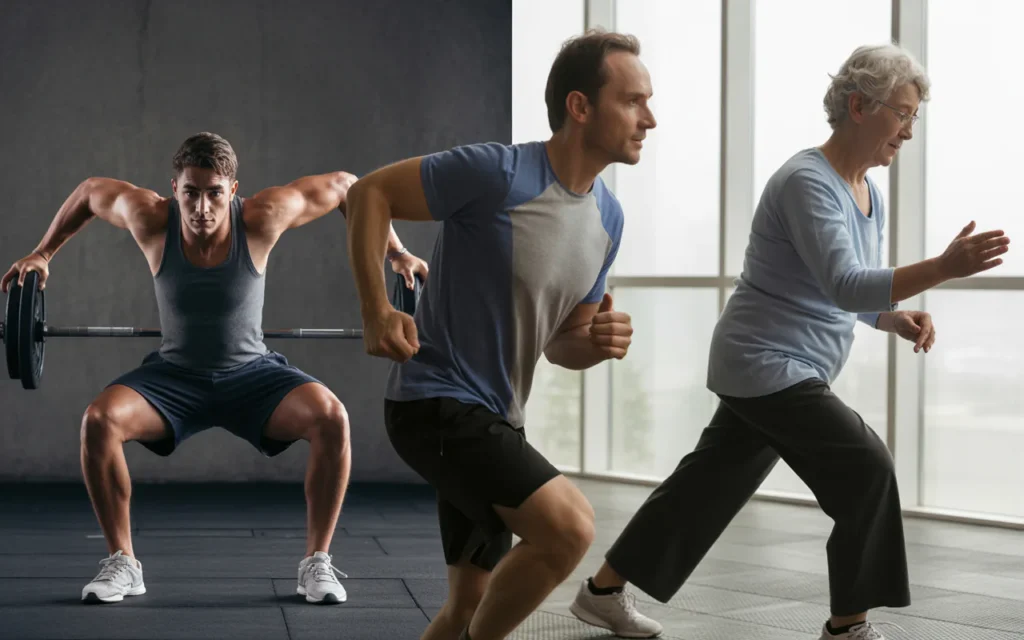
First, move every day. Not hard exercise every day. Just movement. Walk around your house. Do light chores. Stretch for five minutes. The worst thing for an aging body is sitting still for hours.
Second, lift something twice a week. It can be dumbbells. It can be soup cans. It can be your own body weight. Do squats, push ups against a wall, and rows with a resistance band. Two sets of ten repetitions on each exercise. That is enough to keep your muscles alive.
Third, do cardio three times a week. Brisk walking is the best exercise for most people. It is safe, free, and effective. Swim if you have joint pain. Cycle if you prefer sitting. Just get your heart rate up for 30 minutes.
Fourth, eat enough protein. Many older adults do not eat enough protein to support their muscles. Aim for a serving of protein at every meal. Eggs, chicken, fish, beans, tofu, or Greek yogurt. Your muscles need the building blocks.
Fifth, sleep and recover. Recovery takes longer as you get older. That is normal. Do not feel bad about taking rest days. Listen to your body. If you feel pain, stop. If you feel tired, rest.
“The older I get, the more I realize that physical fitness is not a destination. It is a daily choice.” – Jane Fonda
Jane Fonda is a great example. She is still exercising and teaching fitness classes in her 80s. She adapted her workouts for her age. She did not quit.
Real Life Examples of Older Athletes
Let me share some real stories. These are not famous people. Just regular older adults who refused to believe that age stops fitness.
A man named Ernestine Shepherd started bodybuilding at age 56. She was a sedentary secretary before that. By age 70, she became the world’s oldest female bodybuilder. She trained at 3 AM every day. She ran 10 miles. She lifted weights. She said her age never mattered.
Another example is a woman I met named Mary. She was 68 and used a walker. Her doctor said she would never walk without help. Mary started with chair exercises. Then she stood holding a wall. Then she walked one step. Two steps. After one year, she walked around her block without her walker. She simply refused to give up.
These stories show what is possible. The question “is fitness affected by age” gets a different answer from these people. They would say, “Age affects some things, but not my will to move.”
Start Young, Stay Active Forever
If you are reading this and you are young, say in your 20s or 30s, you have a huge advantage. What you do now builds your body for later life. The muscle you build today protects you from sarcopenia later. The bone density you build now prevents fractures when you are 70. Start good habits early. Then keep them.
If you are older, start today anyway. It is never too late. I promise you that the first week is the hardest. Then it gets easier. Then it becomes a habit. Then you wonder why you waited so long.
Listening to Your Body: Signs You Need to Adjust
When you exercise as an older adult, you must listen carefully. Pain is different from soreness. Soreness after a good workout is fine. Sharp pain in a joint is not. Stop if something hurts badly. Wait a few days. Try again with less intensity.
Your breathing matters too. You should be able to talk while exercising. If you cannot say a sentence without gasping for air, slow down. That is called the talk test. It works for any age.
Recovery signs. If you feel tired for more than two days after a workout, you did too much. Reduce the weight or the time next time. Progress slowly. There is no race. The goal is to stay fit for life, not to win a competition.
Also watch for dizziness, chest pain, or unusual shortness of breath. Those are signs to see a doctor. Always check with your doctor before starting a new fitness program, especially if you have health conditions.
Frequently Asked Questions
Q1: Is fitness affected by age in a way that makes exercise dangerous?
No, exercise is safe at any age. In fact, not exercising is more dangerous. The risks of falling, heart disease, and losing independence all go up when you are sedentary. Just start slowly and listen to your body.
Q2: Is fitness affected by age the same for men and women?
Not exactly. Women lose bone density faster after menopause. This increases fracture risk. Women also have less muscle mass on average. But both genders benefit from strength training and weight bearing exercise. Women need to pay extra attention to calcium, vitamin D, and resistance work.
Q3: At what age does fitness start to decline?
Small changes begin around age 30. But most people do not feel a real difference until their 50s or 60s. The good news is that regular exercise can delay decline by decades. A fit 60 year old can be as healthy as an average 40 year old.
Q4: Can I regain fitness if I was inactive for many years?
Yes, absolutely. Your body remembers movement. Muscle cells respond to training at any age. Start with very gentle activities. Walking for 10 minutes a day. Then slowly add time and intensity. Within three to six months, you will see real improvements.
Q5: How often should an older person exercise?
Aim for something every day, even if it is light. For structured exercise: 150 minutes of moderate cardio per week (like 30 minutes, five days a week). Plus two strength sessions. Plus daily stretching and balance work. But if that sounds like too much, start with half. Something is always better than nothing.
Q6: Is fitness affected by age more in the joints or in the muscles?
Both, but joints often cause more problems for people. Arthritis is common with age. That does not mean you stop moving. Low impact exercises like swimming, cycling, and elliptical machines protect your joints while building strength. Strong muscles also support your joints.
Q7: What is the single best exercise for older adults?
Walking. It is free, safe, and effective. It works your heart, legs, and bones. You can do it anywhere. Add hills for more challenge. Add intervals by walking faster for one minute, then slower for two minutes. Walking alone keeps many older adults fit and independent.
Conclusion
So let me bring this all together. You asked, “is fitness affected by age?” The direct answer is yes. Age changes your heart, your muscles, your bones, and your joints. It lowers your maximum heart rate. It slows your recovery. It makes you lose muscle if you do nothing.
But here is what matters most. You are not helpless. You are not broken. Your body still responds to exercise. Your muscles can still grow. Your heart can still get stronger. Your balance can still improve. The only question is whether you will put in the work.
Start small. Walk around your block. Lift a can of beans a few times. Stretch while watching TV. These tiny actions add up. Over months and years, they keep you strong, mobile, and independent. They keep you from becoming a person who cannot get off the floor after a fall.
I believe in you. I have seen 80 year olds transform their lives. I have seen people with arthritis run their first 5K. I have seen couch potatoes become gym regulars. Age is just a number. Fitness is a choice. Make the choice today. Your future self will thank you.
Related posts
 Understanding Fitness Checkup Consultation Cost and Professional Assessment Resources for 2026
Explore Understanding fitness checkup consultation cost factors and professional assessment resources to help you make informed decisions about your health and training goals. Navigating the world…
 Gym Membership Discount Price Alternatives for 2026 Home Fitness
Looking for a gym membership discount price Alternatives? Explore smart home fitness alternatives and equipment to save money and build your own workout space in 2026.…
 Buy Home Workout Sliders: 2026 Guide to Core Fitness Tools
Looking to buy home workout sliders? Compare top-rated gliding discs and core trainers to find the right equipment for your 2026 fitness routine. Adding core sliders…