
What Is An Engine Hoist Used For
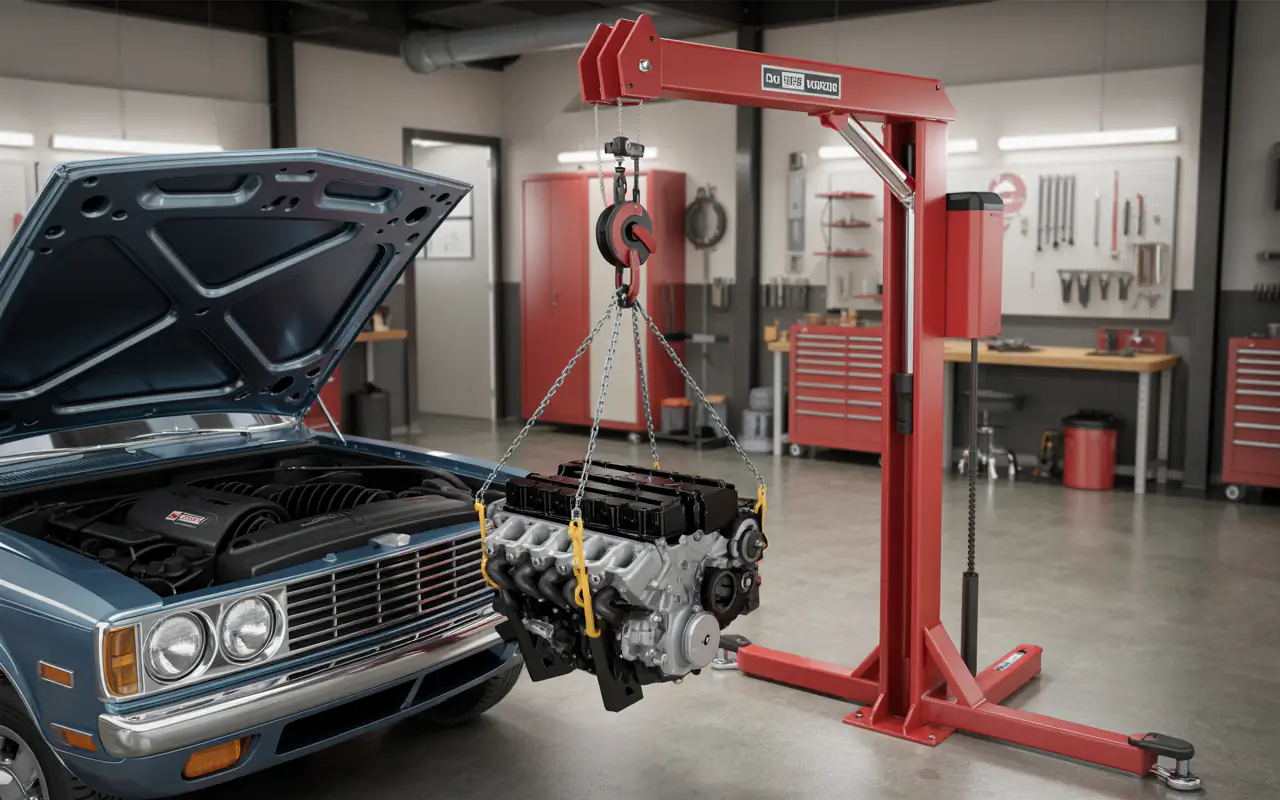
If you work on cars, knowing what an engine hoist used for is vital. This tool is a heavy crane that lifts motors out of cars and holds them while you work on the parts.
An engine hoist is a tool that many people call a shop crane. It is a big metal frame with wheels and a long arm. This tool helps you lift very heavy things that a person cannot move by hand. Most car motors weigh a lot. Some weigh four hundred pounds, while others weigh much more. You cannot just pick them up. That is why this tool is so helpful for car fans and for pros. It lets you pull the motor out of the car bay so you can fix it or swap it for a new one.
Learning what an engine hoist used for will help you stay safe. If you try to lift a motor with just your arms, you will get hurt. The crane does the hard work for you. It uses a hydraulic pump to move the arm up and down. This pump uses oil and pressure to lift the weight. You just have to pump a handle. It is very easy to use once you know how it works. This tool is the best friend of any person who likes to fix their own truck or car at home.
The tool is not just for motors. People use it for many heavy jobs. You might use it to lift a large box or a big piece of metal. It is a tool for any job that needs a lot of force to lift a load off the ground. Most of these tools can fold up. This means they do not take up much room when you are not using them. You can push it into a corner of your shop. When you need it, you pull it out and set it up fast.
The Core Purpose of the Shop Crane
The main thing an engine hoist used for is moving the motor from the car to a stand. When a car has a bad motor, you must take it out. You cannot reach every part of the motor while it is still in the car. The bay is very tight. There is no room for your hands or your tools. By using the hoist, you can lift the whole motor up and out. Then you can move it to a work bench or an engine stand. This makes the job much easier and faster for everyone.
Another big use for the tool is for the gearbox. The gearbox, or transmission, is also very heavy. It sits next to or under the motor. Sometimes you need to lift both at the same time. The hoist can handle that weight if it is a strong model. It keeps the parts steady so they do not fall. This protects the car and it protects you. A falling motor can crush a foot or break the floor. The hoist stops that from happening.
Working on a car project takes a long time. You might need to hold the motor in the air for a bit. The hoist can do this, but you must be careful. It is better to move the motor to a stand. But for short moves, the hoist is perfect. It gives you the height you need to clear the front of the car. Most hoists have an arm that can get longer or shorter. A long arm can reach far into the car, but it cannot lift as much weight as a short arm.
Lifting Large and Heavy Parts
When you look at what an engine hoist used for, you see it handles more than just blocks. It can lift a shop press or a big lathe. Any tool that is too heavy for two people is a good fit for the crane. It has four or six wheels. These wheels let you roll the weight across a smooth floor. This is much better than trying to carry a heavy part. You just strap the part to the hook and lift it a few inches. Then you can push it to where it needs to go.
Moving Items in a Small Shop
In a small shop, space is a big deal. You cannot have a big crane fixed to the ceiling. That is why a mobile hoist is so good. Since it has wheels, you can move it around cars and tools. You can use it to reorganize your shop. If you have a heavy bench that needs to move, the hoist can help. Just be sure the floor is flat. If the floor has bumps, the wheels might get stuck. A flat floor makes the job safe and easy.
“A good tool is one that does the work so you do not have to break your back.” — John Doe
Different Types of Hoists for Your Work
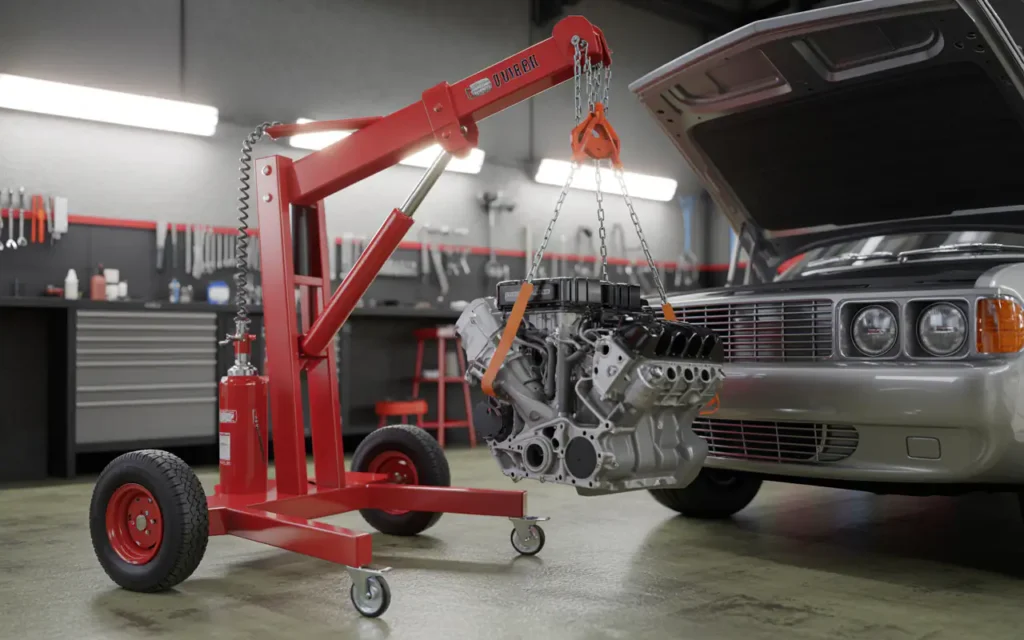
Not every hoist is the same. There are a few main types you will see in a shop. The most common one is the hydraulic hoist. This one uses a bottle jack to move the arm. It is simple and it does not cost a lot of money. Most home shops have this kind. It is easy to fix if it leaks. You just add more oil or change a seal. It is a very reliable tool for many years of use.
There is also the chain hoist. This one usually hangs from a beam in the roof. It does not have wheels. You use a chain to pull the weight up. This is great if you always work in the same spot. But it is not good if you need to move the motor to another room. Many pro shops have a big beam with a chain hoist on it. This lets them lift very heavy diesel motors that a small floor crane could not hold.
| Hoist Type | Best Use | Portability |
| Hydraulic | Home Garages | High |
| Chain | Fixed Shops | Low |
| Electric | Pro Garages | Medium |
| Folding | Small Spaces | Very High |
Hydraulic Floor Cranes
The hydraulic floor crane is the most popular choice. It has a base with legs that slide under the car. This is important because the hook needs to be right over the motor. If the legs cannot go under the car, the crane might tip over. These hoists usually come in one ton or two ton sizes. A two ton hoist can lift four thousand pounds. That is more than enough for most cars and trucks.
Manual vs Electric Models
Most people use a manual pump. You move a bar up and down to lift the load. It is slow, but it gives you a lot of control. You can move the motor one inch at a time. This is good when you are trying to line up bolts. Some pro shops use electric hoists. These use a motor to pull the chain or move the ram. They are very fast but they cost a lot more. For most home fans, the manual pump is the best way to go.
Key Parts of an Engine Hoist
To know what an engine hoist used for, you should know its parts. The main part is the boom. This is the long metal arm that reaches out. On the end of the boom is a hook. This hook holds the chain or the leveler. The boom can move in and out. Most have holes with pins. You move the pin to change the length. Remember, the further out the boom goes, the less weight it can lift. Always check the labels on the arm.
Under the boom is the hydraulic ram. This is the part that does the lifting. It is a big metal tube filled with oil. When you pump the handle, oil moves and pushes a rod out. This rod pushes the boom up. There is also a release valve. When you turn it, the oil flows back, and the boom goes down. You must turn this valve very slowly. If you turn it fast, the heavy motor will drop fast. That is very dangerous.
The legs and wheels are the base of the tool. Most hoists have two long legs. These legs keep the crane from tipping forward. Some hoists let you fold these legs up. This is great for storage. The wheels are usually made of hard steel or tough plastic. They need to be strong to hold all that weight. If a wheel breaks while you are lifting, the whole crane could fall. Always look at your wheels to make sure they are in good shape.
The Importance of the Boom Length
The boom length changes how you use the tool. If you have a car with a long front, you need a long boom. But a long boom is weaker. You must make sure your motor is not too heavy for that setting. Most hoists have marks like 0.5T, 1T, 1.5T, and 2T. These tell you how many tons you can lift at each spot. Always stay under that limit. It is better to be safe than to have the metal bend.
Using an Engine Leveler
A leveler is a tool you add to the hook. It has a crank handle. It helps you tilt the motor. When a motor comes out of a car, it often needs to be at an angle. The leveler makes this easy. You just turn the handle to tilt the front up or down. Without a leveler, you have to mess with chains, which is hard. An engine hoist used for a swap is much better when you have a leveler on the hook.
How to Safely Use the Crane
Safety is the most important part of any shop job. When you think about what an engine hoist used for, you must think about the risks. A motor is a giant lump of metal. If it falls, it can cause a lot of harm. First, always check the chains. Make sure the chains are strong and the bolts are tight. Use bolts that are made for high stress. Never use cheap bolts from a scrap bin. They might snap under the load.
Next, make sure the floor is clear. You do not want to trip while you are moving a heavy motor. Wear boots that protect your toes. If something drops, you want your feet to be safe. Also, never put your hands or legs under a motor that is hanging. Even if the hoist is new, it could fail. Always move the motor to a stand before you put your hands near the bottom of it. This is a rule that every mechanic follows.
When you start to lift, go slow. Watch the car. Sometimes a wire or a hose is still joined to the motor. If you lift too fast, you will rip the wires out. Lift an inch, then stop and look. If everything is clear, lift another inch. This slow work keeps the car safe. Once the motor is high enough, slowly roll the hoist back. Have a friend help you. One person can pull the hoist while the other watches the motor to make sure it does not swing.
Checking for Fluid Leaks
Before you use your hoist, look for oil on the ram. If you see oil, the seals might be bad. A leaking ram can let the motor drop slowly without you touching it. This is called “creep.” If your hoist has creep, do not use it. You need to fix the ram first. You can buy a new ram or a seal kit. Keeping the tool clean will help you see these leaks early.
Stabilizing the Load
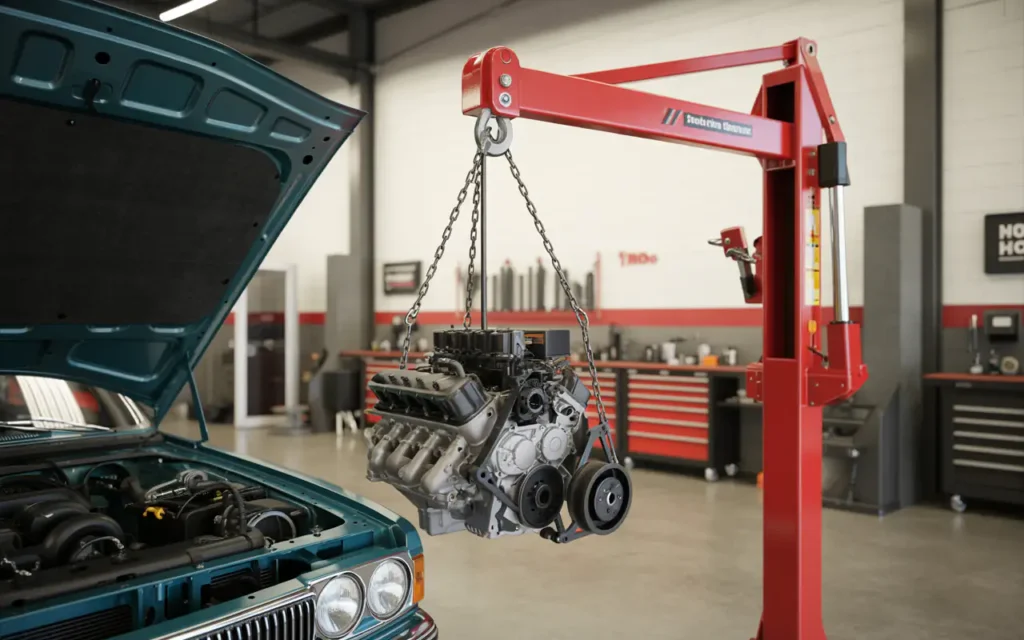
A swinging motor is a big danger. When you move the hoist, the motor will want to sway like a bell. This can make the crane tip. To stop this, keep the motor as low as possible while you move it. If it is close to the ground, it will not swing as much. Also, move the crane slowly. Do not jerk it or pull it fast. A steady pace is the best way to move a heavy load across the shop floor.
“Safety does not happen by luck. It is the result of prep and care.” — Jane Smith
Step by Step: Pulling a Motor
First, you must prep the car. Take off the hood so you have room. Drain all the fluids like oil and coolant. Disconnect the wires, hoses, and the exhaust. Make sure the motor is free from the gearbox if you are leaving the gearbox in the car. Once the motor is loose, you can bring in the crane. Slide the legs under the car. Put the hook over the middle of the motor so it stays balanced.
Second, join the chains to the motor. Most motors have lift points or holes for bolts. Use these spots. Tighten the bolts all the way. Attach the chains to your leveler or the hook. Now, give the pump a few strokes. The chains should get tight. Stop and check everything. Are the bolts holding? Is the crane steady? If yes, keep pumping until the motor starts to lift off the mounts.
Third, lift the motor high enough to clear the car. You might need to tilt it to get it past the radiator support. Use your leveler for this. Once it is clear, slowly pull the hoist back. Be careful not to hit the car. Once the motor is away from the car, lower it down a bit. This makes it safer to move. Now you can roll it over to your engine stand and bolt it in.
| Step | Action | Safety Tip |
| 1 | Prep Car | Remove hood |
| 2 | Attach Chains | Use grade 8 bolts |
| 3 | Lift Slow | Watch for stuck wires |
| 4 | Move Hoist | Keep load low |
| 5 | Mount Stand | Never leave hanging |
Maintaining Your Engine Hoist
A hoist will last a lifetime if you take care of it. You should keep it dry so it does not rust. Rust can make the metal weak. It can also ruin the ram. Every few months, put a little grease on the wheels. This helps them turn easily when you have a heavy load. If the wheels get stuck, it makes the hoist very hard to use. Check the bolts on the frame too. They can get loose over time.
The hydraulic fluid is the heart of the tool. If the hoist does not go as high as it used to, it might be low on oil. There is a small plug on the ram. You can pull this plug and add jack oil. Do not use brake fluid or motor oil. Only use oil made for jacks. Also, you might need to bleed the air out of the ram. To do this, open the valve and pump the handle many times. This pushes the air out and makes the lift smooth.
Keep the chains clean too. If they get covered in grease, they might be hard to handle. Look for any bent links. If a chain link is bent, throw the chain away and get a new one. A weak link is a huge risk. You want to trust your gear when a heavy motor is in the air. Store the hoist in a dry place. If you have a folding model, fold it up to save space and keep the ram tucked away from damage.
Storing the Tool Properly
When you are done, lower the boom all the way. This keeps the ram inside the tube. It protects the metal from dust and moisture. If you leave the ram extended, it can get tiny bits of rust. Then, when you lower it, the rust can rip the seals. Always store it in the “down” spot. This simple habit will make your tool last for decades without any issues.
Inspecting the Hook and Pins
The hook at the end of the boom takes a lot of stress. Look for cracks in the metal. The pin that holds the hook should also be straight. If the pin is bent, replace it with a high-strength pin. These parts are cheap to buy but they are very important for your safety. A broken hook would be a disaster. A quick look before every use is all it takes to stay safe.
Why Every Mechanic Needs One
If you want to do more than just change oil, you need a hoist. It opens up a whole new world of repairs. You can fix head gaskets, change clutches, or build a whole new motor. Without this tool, these jobs are almost impossible to do at home. An engine hoist used for these tasks saves you thousands of dollars in shop fees. You can take your time and do the job right in your own garage.
It also gives you peace of mind. Knowing you have the right tool for the job makes the work fun. You do not have to worry about how you will move a heavy part. You just wheel out the crane and get to work. It is a sign of a serious shop. Even if you only use it once a year, it is worth having. It is a tool that pays for itself the first time you pull a motor.
Also, it is great for helping friends. If a buddy needs a motor swap, you can be the one with the gear. It is a heavy-duty tool that shows you know what you are doing. Many people start with a used hoist. You can often find them for a good price. Just make sure to check the ram and the frame for any damage before you buy a used one.
“A shop without a hoist is just a room with some wrenches.” — Anonymous
Common Mistakes to Avoid
One big mistake is lifting more than the crane can handle. People see a “two ton” label and think they can lift anything. But that two ton limit is only when the boom is short. When you extend the boom, the limit drops. Always read the marks on the arm. If you try to lift too much with a long arm, the hoist will tip or the metal will snap. This is a very common error for new users.
Another mistake is moving the hoist on an uneven floor. If one wheel hits a crack or a stone, the whole thing can stop fast. The motor will then swing forward. This can tip the crane over. Always sweep the floor before you move the hoist. A clean floor is a safe floor. Also, never try to move the hoist across grass or dirt while it has a load. The wheels will sink and the crane will fall.
Lastly, do not leave a motor hanging for a long time. The hydraulic seals can fail. If they fail while you are away, the motor will fall. Always move the motor to a stand or put blocks of wood under it. The hoist is for lifting and moving, not for long-term storage. Using it as a storage rack is a bad idea that can lead to broken parts or a damaged car.
Over-tightening the Release Valve
When you close the valve to lift, you only need to make it snug. Do not crank it down as hard as you can. If you do, you might damage the seat inside the valve. Then it might leak or get stuck. A gentle turn is all it takes. When you go to lower the motor, just turn it a tiny bit. This gives you the best control. Small moves are the key to a safe drop.
Ignoring the Weight of the Chains
Chains and levelers add weight. If your motor is near the limit of the hoist, remember that the chains add more pounds. Most people forget this. If you are close to the max, try to use less chain or a lighter leveler. It is always better to have a lot of extra capacity. Never push a tool to its absolute limit if you can avoid it.
Frequently Asked Questions
Can I use an engine hoist to lift my car?
No, you should not do this. An engine hoist is made to lift from above. A car is too heavy and the shape is wrong. Use a floor jack and jack stands to lift a car. Using a hoist for a car can cause the crane to tip or the frame to bend.
How much weight can a standard hoist lift?
Most home hoists are rated for one or two tons. This means two thousand or four thousand pounds. However, this limit is only for the shortest arm setting. At the longest setting, it might only lift five hundred or one thousand pounds. Always check the labels.
Do I need an engine leveler?
You do not strictly need one, but it makes the job much easier. A leveler lets you change the angle of the motor with a simple crank. Without it, you have to use different chain lengths, which is hard to get right. For most cars, a leveler is well worth the extra cost.
What kind of oil goes in the hydraulic ram?
You must use hydraulic jack oil. Do not use motor oil, brake fluid, or transmission fluid. Those fluids can ruin the rubber seals inside the ram. Jack oil is cheap and easy to find at any auto parts store.
Can a hoist be used on a gravel driveway?
It is not a good idea. The small wheels will sink into the gravel. This makes the hoist very unstable. If you must use it on gravel, put down thick sheets of plywood first. This creates a smooth, hard surface for the wheels to roll on.
Conclusion
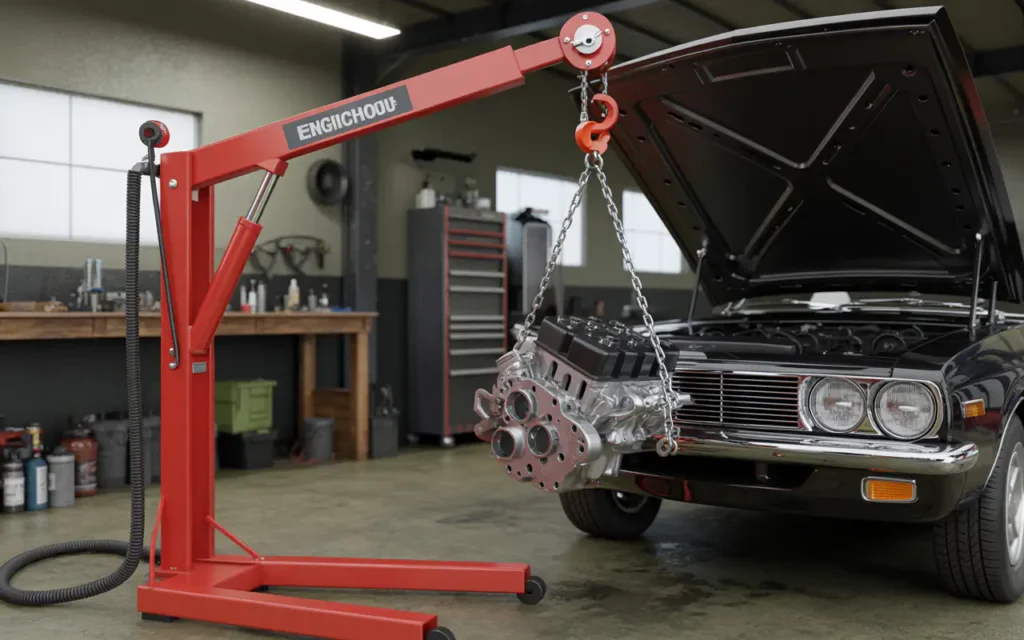
In the end, what an engine hoist used for is simple. It is the tool that does the heavy lifting so you can focus on the repair. It makes pulling a motor a safe and manageable task. Whether you are a pro or just love working on your own car, this tool is a must-have. It saves your back, protects your car, and lets you do jobs you never thought you could.
By following the safety rules and keeping your tool in good shape, you can use it for many years. Remember to go slow, check your bolts, and never work under a hanging load. A good engine hoist is a solid investment for any shop. It gives you the power to take on big projects with confidence. Now that you know how to use it and why it is so important, you are ready to get to work in your garage. Happy wrenching!
Related posts
 How to Strengthen Weak Nails: A Practical Guide to Daily Care
Learn how to strengthen weak nails with simple daily habits, protective care, and targeted hydration. Restore your natural nail strength today. Weak, peeling, or brittle nails…
 What Sounds Do Cats Dislike? 7 Noises That Stress Your Pet
Discover what sounds do cats dislike and why. Learn how to protect your cat’s sensitive hearing from stressful household noises and high-frequency hums. Cats dislike sounds…
 Restoring Faded Black Clothing: Practical Methods and Reality Checks
Can you restore faded black clothing? Learn the difference between temporary color revival and permanent redyeing, plus how to prevent future fading. You can restore the…