
How To Introduce A New Cat To Old Cat

Bringing home a second feline? Learning how to introduce a new cat to old cat the right way can prevent fights and stress. This step-by-step guide helps you build a peaceful, happy multi-cat home.
Bringing a new cat home is exciting. You imagine the two felines becoming best friends, cuddling on the sofa, and playing together. But the reality of that first meeting can be very different. Your resident cat might hiss, hide, or even swat at the newcomer. This reaction is completely normal. Cats are creatures of habit, and they see their home as their territory. A stranger suddenly appearing in that space feels like a threat, not a gift.
The good news is that with patience and a solid plan, you can successfully introduce a new cat to old cat and help them build a peaceful relationship. The process takes time, often weeks or even months, but the effort is worth it. This guide walks you through every step, from preparation to the first face-to-face meeting. You will learn how to read your cats’ body language, avoid common mistakes, and create a home where both felines feel safe and secure.
“Patience is the key to a successful cat introduction. Let the cats set the pace, and you will be rewarded with a harmonious household.” — Dr. Sarah Ellis, Feline Behavior Specialist
Why a Slow Introduction Matters
Cats communicate mostly through scent, body language, and sound. They do not greet each other like dogs do. When two cats meet for the first time without preparation, the result is often fear, aggression, or long-term avoidance. A bad first meeting can set the tone for their entire relationship, making it much harder for them to ever get along.
A gradual introduction allows both cats to get used to each other’s scent and presence without feeling threatened. It gives them time to associate the other cat with positive experiences like food and play. This approach reduces stress for everyone involved, including you. Rushing the process almost always backfires.
Most experts agree that the introduction process can take anywhere from a few days to several months. Every cat is different. Some adjust quickly, while others need more time. The key is to watch your cats closely and move to the next step only when both are showing calm, relaxed behavior.

Before You Bring the New Cat Home
Preparation starts before the new cat even walks through the door. Taking the time to set up properly makes the entire process smoother.
Set Up a Safe Room
Your new cat needs a private space where they can feel safe and secure. This room should be off-limits to your resident cat. A spare bedroom, a large bathroom, or even a home office works well. The room should have:
- Food and water bowls
- A litter box
- A comfortable bed or blanket
- Hiding spots like a cardboard box or cat carrier
- Toys and a scratching post
Make sure all these items are brand new or belong to the new cat. Using your resident cat’s belongings can cause stress because the new cat will smell the other cat on them. Your resident cat might also feel anxious about losing access to their resources.
Prepare Your Resident Cat
Your resident cat’s routine should stay as normal as possible. Keep their feeding schedule, playtime, and attention levels the same. Do not move their litter box, food bowls, or favorite resting spots. Changes to their environment can add stress, which makes introductions harder.
You might also consider using a synthetic feline pheromone diffuser in your home. These products release calming scents that can help reduce anxiety for both cats. Place one in the new cat’s room and another in areas where your resident cat spends most of their time.
Visit the Vet
Before bringing your new cat home, schedule a vet checkup. Make sure they are healthy, up to date on vaccinations, and free from parasites. A sick cat can spread illness to your resident cat, which is the last thing you want. If your new cat is a kitten, ask your vet about the appropriate vaccine schedule.
Step-by-Step Guide: How to Introduce a New Cat to Old Cat
The introduction process happens in stages. Each stage builds on the last, and you should only move forward when both cats are comfortable. Here is a clear roadmap to follow.
Stage 1: Complete Separation (First Few Days to Weeks)
Keep the new cat in their safe room with the door closed. Your resident cat should not have any visual access to the new cat. They can hear and smell each other through the door, but they cannot see or touch each other.
During this stage, both cats are adjusting to the idea that another cat exists in the house. Your new cat is getting used to their new surroundings, and your resident cat is learning that the newcomer is not an immediate threat.
What you should do:
- Feed both cats near the door on opposite sides. Start with the bowls a few feet away from the door and gradually move them closer over several days. This helps both cats associate the other’s presence with something positive (food).
- Spend time with each cat individually. Give your resident cat plenty of attention so they do not feel replaced. Visit your new cat regularly to help them bond with you.
- Swap bedding or soft toys between the two cats. Rub a towel on one cat’s face and cheeks, then place it in the other cat’s room. This allows them to get used to each other’s scent without direct contact.
Signs you are ready to move on:
- Both cats eat calmly near the door.
- Your new cat explores their room confidently and uses the litter box normally.
- Your resident cat does not hiss or growl at the door.
- Neither cat shows signs of extreme stress like hiding, refusing to eat, or excessive vocalization.
Stage 2: Scent Swapping and Visual Contact
Once both cats are comfortable with each other’s scent, it is time to let them see each other. But they should still not have physical contact.
Scent swapping activities:
- Switch the cats’ locations for short periods. Put your resident cat in the new cat’s room while the new cat explores the rest of the house. This allows both cats to investigate each other’s scent in a low-pressure way.
- Continue swapping bedding and toys daily.
Introducing visual contact:
The goal is to let the cats see each other without being able to touch or fight. Here are a few ways to do this:
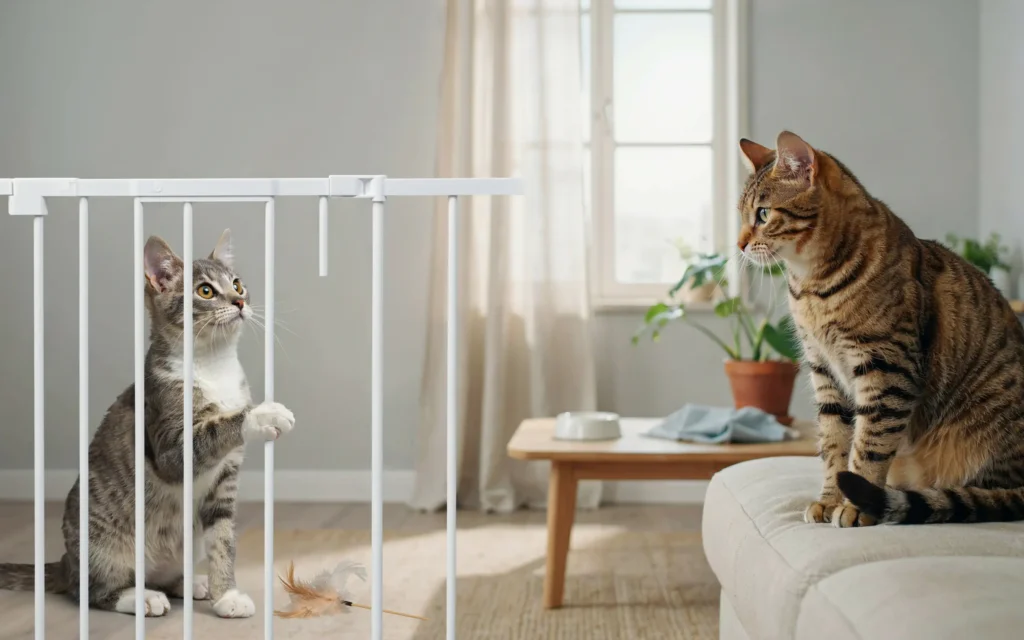
- Use a baby gate or screen door. Stack two baby gates if necessary to prevent jumping.
- Crack the door open just an inch or two and use a doorstop to hold it in place.
- Use a pet carrier or crate for one cat while the other is loose. Place the carrier in a common area where both cats can see each other.
During visual introductions, watch their body language closely. Calm curiosity is a good sign. Hissing, growling, or lunging means you need to go back a step and give them more time.
What you should do:
- Offer treats or small amounts of wet food while the cats can see each other. This reinforces the idea that good things happen when the other cat is around.
- Keep these sessions short, just a few minutes at a time. Gradually increase the duration as both cats become more comfortable.
Signs you are ready to move on:
- Both cats show relaxed body language during visual contact (slow blinks, ears forward, tail up).
- They show interest in each other without aggression.
- They eat treats calmly while in each other’s presence.
Stage 3: Supervised Face-to-Face Meetings
Now comes the moment you have been waiting for, the first real meeting. But do not just open the door and let them loose. This meeting needs to be carefully controlled.
How to conduct the first meeting:
- Choose a neutral room that neither cat considers their core territory. This reduces territorial behavior.
- Have a second person present if possible. Each person can focus on one cat.
- Let the new cat out of their room while your resident cat is in the same space. Keep the meeting short, around 5 to 10 minutes.
- Do not force interaction. Let the cats approach each other on their own terms.
- Use toys and treats to keep the mood positive and relaxed.
What to watch for:
Positive signs include:
- Sniffing each other’s noses or rear ends
- Rubbing against each other
- Playing gently
- Relaxed body posture
Warning signs include:
- Hissing, growling, or yowling
- Swatting or chasing
- Puffed-up tail or arched back
- Ears flattened against the head
- Stiff, tense body posture
If you see any warning signs, separate the cats calmly and go back to the previous stage. Do not punish either cat. Punishment increases fear and makes the situation worse.
Stage 4: Gradual Integration
Once the cats can be in the same room without fighting, you can start giving them more freedom. But integration should still be gradual.
Tips for this stage:
- Allow short supervised sessions multiple times a day. Gradually increase the length of these sessions.
- Provide plenty of resources. Each cat should have their own food bowls, water bowls, litter boxes, and resting spots. The general rule is one litter box per cat, plus one extra.
- Create vertical space. Cat trees, shelves, and window perches give cats places to escape and observe from a safe height.
- Continue using pheromone diffusers to maintain a calm atmosphere.
- Do not leave the cats alone together unsupervised until you are absolutely sure they are comfortable with each other. This could take weeks or even months.
Common Challenges and How to Handle Them
Even with the best plan, problems can arise. Here is how to handle some common issues.
Hissing and Growling
Hissing and growling are normal during introductions. Cats use these sounds to say “back off.” As long as there is no physical fighting, a little hissing is okay. Do not punish the hissing cat. Instead, give them space and let them retreat if they want to.
If the hissing is constant and accompanied by aggressive body language, separate the cats and slow down the process. You may have moved too fast.
Chasing
Chasing can be playful or aggressive. Playful chasing involves relaxed body language, and the cats take turns. Aggressive chasing involves stiff posture, flattened ears, and one cat always being the pursuer.
If you see aggressive chasing, separate the cats. Provide more vertical space so the chased cat can escape. You might also need to go back to visual introductions and spend more time on scent swapping.
Fighting
Physical fights are a serious setback. If a fight breaks out, do not try to pull the cats apart with your hands. You will get scratched or bitten. Instead, make a loud noise to startle them, throw a blanket over them, or use a spray of water to separate them.
After a fight, separate the cats completely and start the introduction process over from the beginning. It may take longer the second time, but it is necessary to prevent the relationship from becoming permanently damaged.
One Cat Refuses to Eat or Use the Litter Box
Stress can cause cats to stop eating or have litter box accidents. If this happens, separate the cats and give the stressed cat more space. Make sure they have access to their food, water, and litter box in a quiet, private area.
If the behavior continues for more than a day or two, contact your veterinarian. Prolonged loss of appetite can lead to serious health problems.
Creating a Peaceful Multi-Cat Home
Once your cats are living together peacefully, the work is not over. Maintaining harmony requires ongoing effort.
Provide Enough Resources
Resource competition is a major cause of conflict between cats. Make sure you have enough of everything to go around.
| Resource | Recommendation |
|---|---|
| Litter boxes | One per cat, plus one extra |
| Food bowls | Separate bowls for each cat, placed in different locations |
| Water bowls | Multiple water stations throughout the house |
| Scratching posts | At least one per cat, placed in different areas |
| Beds and resting spots | Multiple options so each cat can have their own space |
Give Each Cat Individual Attention
Cats can get jealous. Make sure you spend quality time with each cat individually. Play with them, pet them, and talk to them. This helps prevent one cat from feeling neglected or replaced.
Watch for Subtle Signs of Stress
Not all stress is obvious. Look for subtle signs like:
- Over-grooming or bald patches
- Hiding more than usual
- Changes in appetite or litter box habits
- Increased vocalization
- Aggression toward you or other family members
If you notice any of these signs, your cats may be experiencing ongoing stress. Consider consulting a feline behaviorist for professional help.
Quick Reference: Introduction Timeline
This table gives you a rough idea of how long each stage might take. Remember, every cat is different, so adjust based on your cats’ behavior.
| Stage | Duration | Key Activities |
|---|---|---|
| Complete Separation | 3-7 days | New cat in safe room, scent swapping, feeding near door |
| Scent Swapping & Visual Contact | 1-2 weeks | Switch locations, baby gate introductions, treat rewards |
| Supervised Meetings | 1-4 weeks | Short face-to-face sessions, watch for warning signs |
| Gradual Integration | 2-8 weeks | Increase supervised time, provide resources, monitor behavior |
“Do not measure success by how quickly they become friends. Measure it by how calmly they tolerate each other’s presence.” — Pam Johnson-Bennett, Certified Cat Behavior Consultant
Frequently Asked Questions
How long does it take to introduce a new cat to an old cat?
The process typically takes 2 to 4 weeks, but some cats need several months. The timeline depends on the personalities of both cats, their past experiences, and how carefully you follow the introduction steps.

What if my old cat hisses at the new cat?
Hissing is a normal part of cat communication. It means your cat is saying “stay away.” Do not punish the hissing. Give both cats space and continue with the introduction process. If the hissing is constant and accompanied by aggression, slow down and go back a step.
Can I introduce a kitten to an older cat?
Yes, but kittens have lots of energy, which can annoy an older cat. Introduce them slowly using the same steps. Make sure the older cat has places to escape from the kitten’s playful pounces. Opposite sexes often get along better, but neutering both cats is the most important factor.
Should I let them “fight it out”?
No. Never let cats fight it out. Fighting creates fear and long-term resentment. It can also lead to serious injuries. Always separate cats if a fight breaks out and slow down the introduction process.
What if my cats never get along?
Some cats never become best friends, and that is okay. The goal is peaceful coexistence, not necessarily close friendship. As long as they can share the same space without fighting, you have succeeded. Provide plenty of resources and separate spaces so each cat can have their own territory.
Do I need separate litter boxes for each cat?
Yes. Each cat should have their own litter box, plus one extra. Place them in different locations to prevent territorial disputes. Keep them clean to avoid scent overload.
Can pheromone diffusers help?
Yes. Synthetic feline pheromone diffusers can reduce stress and help cats feel more secure. Place them in areas where both cats spend time.
Conclusion
Learning how to introduce a new cat to old cat takes patience, time, and a willingness to let the cats set the pace. There is no shortcut. Rushing the process almost always leads to problems that take even longer to fix. But when you do it right, the reward is a peaceful, happy home where both cats feel safe and secure.
Remember the key principles: separate them at first, swap scents, let them see each other from a distance, and only allow face-to-face meetings when both are calm. Watch their body language carefully and never force interaction. Provide plenty of resources so they do not have to compete for food, water, or litter boxes.
Every cat is different. Some become best friends within weeks. Others simply learn to tolerate each other. Both outcomes are successes. The goal is not to force a friendship, but to create an environment where both cats can live without fear or stress.
“The secret to a happy multi-cat household is respect for each cat’s individual needs and boundaries.” — Dr. Nicholas Dodman, Veterinary Behaviorist
Take your time, stay patient, and trust the process. Your cats will thank you for it.
Related posts
 Why Do Dogs Stare at Walls? Common Causes and When to Worry
Wondering why do dogs stare at walls? Discover the sensory, behavioral, and medical reasons behind this behavior, and learn when to contact your veterinarian. When you…
 How to Test Car Wiring for Continuity Using a Multimeter
Learn how to test car wiring for continuity safely. Find broken automotive wires, check connector ports, and diagnose electrical issues with a multimeter. Testing car wiring…
 Why Organizing Space Reduces Stress: The Mental Clarity Connection
Discover why organizing space reduces stress. Learn how a tidy environment lowers cortisol, improves focus, and creates a sense of calm in your daily life. Organizing…