
What Are Signs Of A Failing Alternator
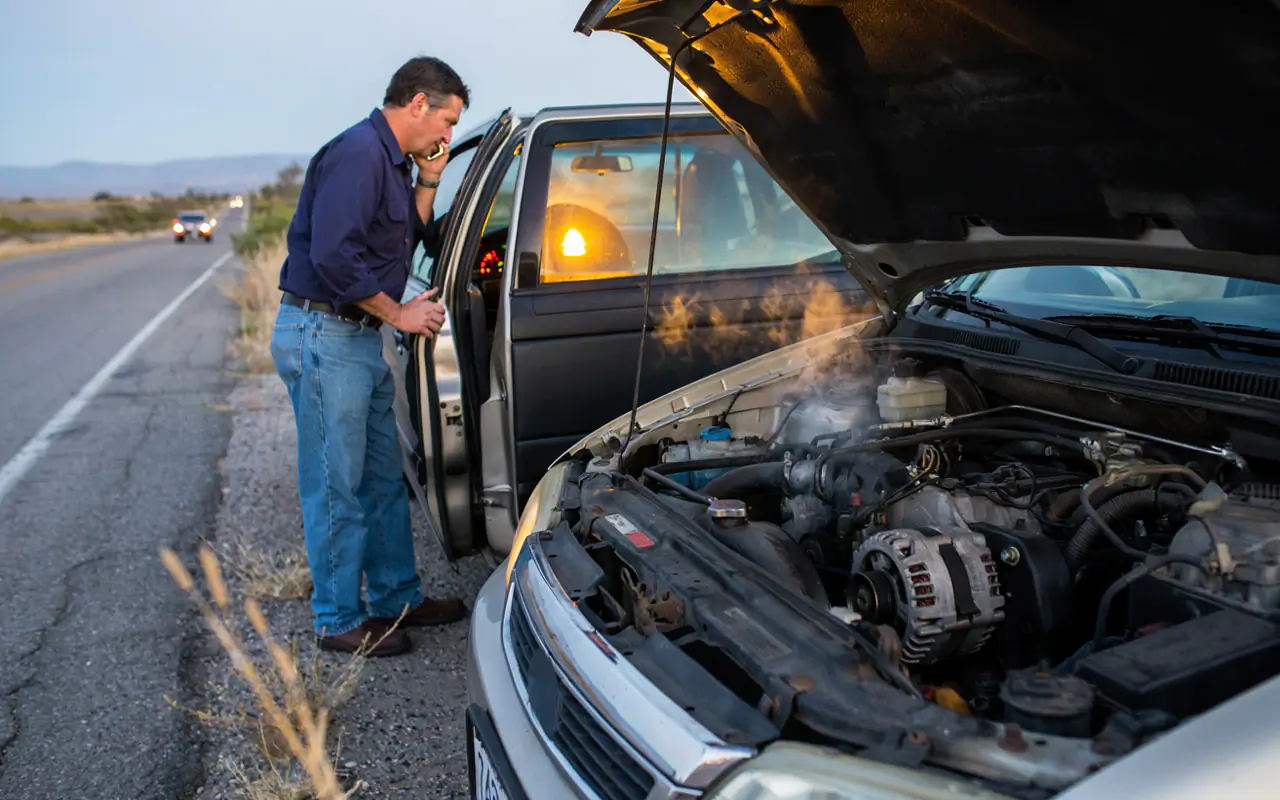
Learn the common signs of a failing alternator, from dim headlights to strange noises. This guide helps you spot trouble early, test your alternator, and know when to get help.
Your car starts fine in the morning. You drive to work, run some errands, and then suddenly your headlights look a little dim. Or maybe you hear a strange whining sound coming from under the hood. These small clues could be pointing to a problem with your alternator.
The alternator is a key part of your vehicle’s electrical system. It keeps the battery charged and powers everything from your headlights to your radio while you drive. When it starts to fail, you will notice it. The tricky part is that the signs of a failing alternator can look a lot like a dead battery. This confusion leaves many drivers unsure about what is really wrong.
Knowing what to look for can save you from getting stuck on the side of the road. It can also help you avoid paying for repairs you do not need. In this guide, we will walk through the most common signs of a failing alternator. We will also show you how to test it yourself and explain what causes these problems in the first place.
As Brian Thompson, North America fleet director at PHINIA, puts it, “Operators should keep an eye out for symptoms, such as frequent jump starts, low batteries, erratic or abnormally high voltage readings or unusual noises, specifically whining or grinding sounds”. His advice applies to everyday drivers just as much as it does to fleet operators.
Let us get started so you can spot trouble before it leaves you stranded.
What Does the Alternator Do?
Before we look at the warning signs, it helps to understand what this part does. The alternator is a small generator. It is driven by a belt that connects to the engine. As the engine runs, the alternator turns mechanical energy into electrical energy. This electricity does two main jobs.
First, it keeps your battery charged. Second, it powers all the electrical systems in your car while you drive. These systems include your headlights, dashboard lights, power windows, windshield wipers, radio, and even the fuel injection system.
If the alternator stops working properly, the battery will not get charged. The car will then run on battery power alone. Once the battery is drained, the engine will stall, and you will not be able to restart it. This is why catching the early signs of a failing alternator is so important.
Common Signs of a Failing Alternator
The signs can vary from car to car. Some are very obvious, while others are easy to miss. Here are the most common ones to watch for.
1. Dim or Flickering Lights
This is one of the first and most noticeable signs of a failing alternator. You might see your headlights dim when you are stopped at a red light. Then they get brighter when you press the gas pedal and the engine revs higher.
The same thing can happen with your interior lights and dashboard lights. They might flicker or seem weaker than usual. This happens because the alternator is not sending a steady flow of electricity. The lights are a direct reflection of how much power the alternator is producing.
If you notice this, do not brush it off. Dim lights are a clear warning that your charging system needs attention.
2. The Battery Warning Light Comes On
Most cars have a warning light on the dashboard that looks like a battery. Many people think this light means the battery is bad. That is not always true. This light actually means the alternator is not charging the battery properly.
The light might come on and stay on. Or it might flicker on and off while you drive. In some cars, you might see a “Check Engine” light or an “ALT” light instead. No matter what it looks like, this is your car telling you something is wrong with the charging system.
Do not ignore this light. It is one of the most reliable signs of a failing alternator.
3. Strange Noises from Under the Hood
Your car should not make whining, growling, or grinding sounds. If you hear these noises, especially from the front of the engine, the alternator could be the source.
A whining noise often means the belt that drives the alternator is loose or worn. A growling or grinding noise usually points to worn bearings inside the alternator. These bearings allow the alternator to spin smoothly. When they wear out, they make noise.
According to automotive experts, “it’s common to hear a whining or rumbling noise as it spins” when there is a charging problem or a physical defect inside the alternator. If you hear these sounds, have a mechanic check it out soon.
4. Electrical Accessories Act Up
Your car has many electrical parts. When the alternator is weak, these parts may not work correctly. You might notice your power windows moving slower than usual. The radio might cut out or reset while you are driving.
The heated seats might stop working. The blower motor for your heat or air conditioning might feel weak. These problems happen because the alternator is not sending enough power to all the systems that need it.
If several electrical accessories start acting strange at the same time, the alternator is a likely cause.
5. Frequent Stalling or Trouble Starting
The engine needs electricity to run. The fuel injection system and ignition system both rely on power from the alternator. If the alternator is failing, the engine might not get the power it needs.
You might experience stalling while driving. The engine could suddenly cut out, especially when you are stopped or driving at low speeds. You might also have trouble starting the car. The engine might crank slowly or not at all.
A simple way to tell if it is the alternator is to jump-start the car. If the car starts but then stalls again shortly after, the alternator is likely the problem. The jump start gives the battery enough power to start the engine, but without a working alternator, the battery quickly drains again.
6. A Dead Battery (Even After a Recent Replacement)
If your battery keeps dying, do not assume the battery is bad. A failing alternator will drain a battery over time. This is because the alternator is not recharging the battery while you drive.
You might replace the battery, only to find it dead again a few days later. This is a strong sign that the alternator is the real problem. A fresh battery will not fix a charging system issue.
If you find yourself needing jump starts often, have the alternator tested. It could save you from buying batteries you do not need.
7. Burning Smells
Smells can tell you a lot about what is going on under the hood. A burning rubber smell often means the alternator belt is slipping or has become too tight. The friction from the slipping belt creates heat and that distinct smell.
A burning electrical smell is even more serious. It could mean the alternator is overheating or that its internal wiring is damaged. This type of smell should not be ignored. It can lead to a fire if not addressed.
If you smell something burning, pull over safely and turn off the engine. Call for help. Do not keep driving.
8. Engine Vibrations or Rough Running
Some drivers report feeling vibrations while driving when the alternator is going bad. This is less common, but it can happen. The vibrations might be felt through the steering wheel or the floor of the car.
The alternator is connected to the engine by a belt. If the alternator bearings are failing, it can cause the alternator to wobble. This wobble can create vibrations that you feel inside the car.
Quick Comparison: Alternator vs. Battery Problems
Many signs of a failing alternator overlap with battery problems. This table can help you tell them apart.
How to Test Your Alternator at Home
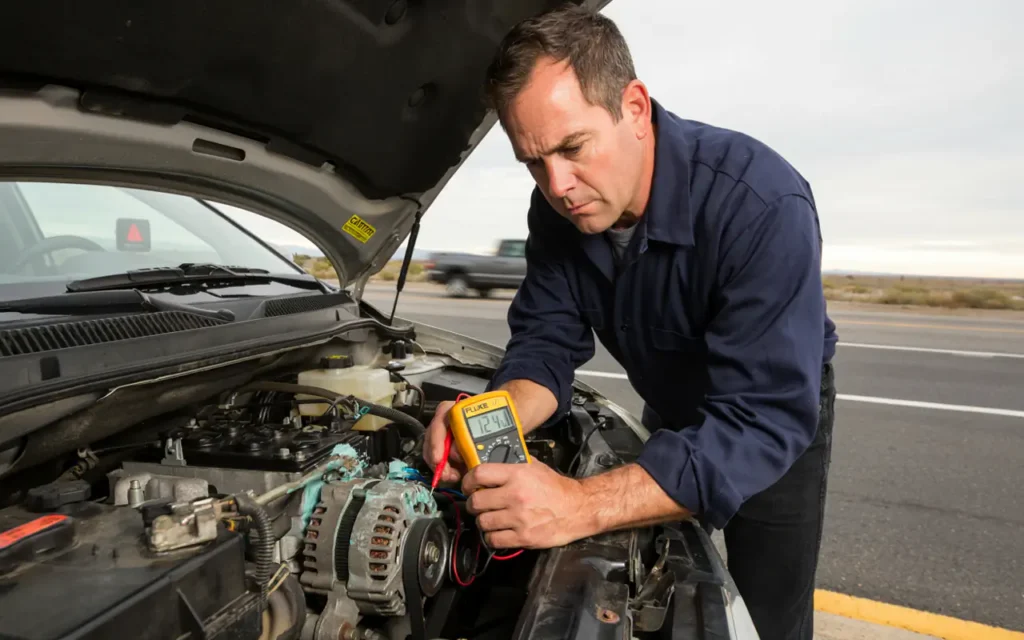
You do not need to be a mechanic to check your alternator. A simple test with a digital multimeter can give you a clear answer. This tool is affordable and available at most auto parts stores.
Important safety note: Never disconnect the battery while the engine is running. This old trick can cause voltage spikes that damage your car’s computer and other sensitive electronics. Always use a multimeter instead.
Here is how to do the test safely.
Step 1: Check the Battery with the Engine Off
Make sure the engine is off and all accessories are turned off. Set your multimeter to measure DC voltage. Connect the red lead to the positive battery terminal. Connect the black lead to the negative terminal.
A healthy battery should read about 12.6 volts. If it reads below 12.4 volts, the battery is partially discharged. Charge the battery before testing the alternator to get accurate results.
Step 2: Check the Charging Voltage with the Engine Running
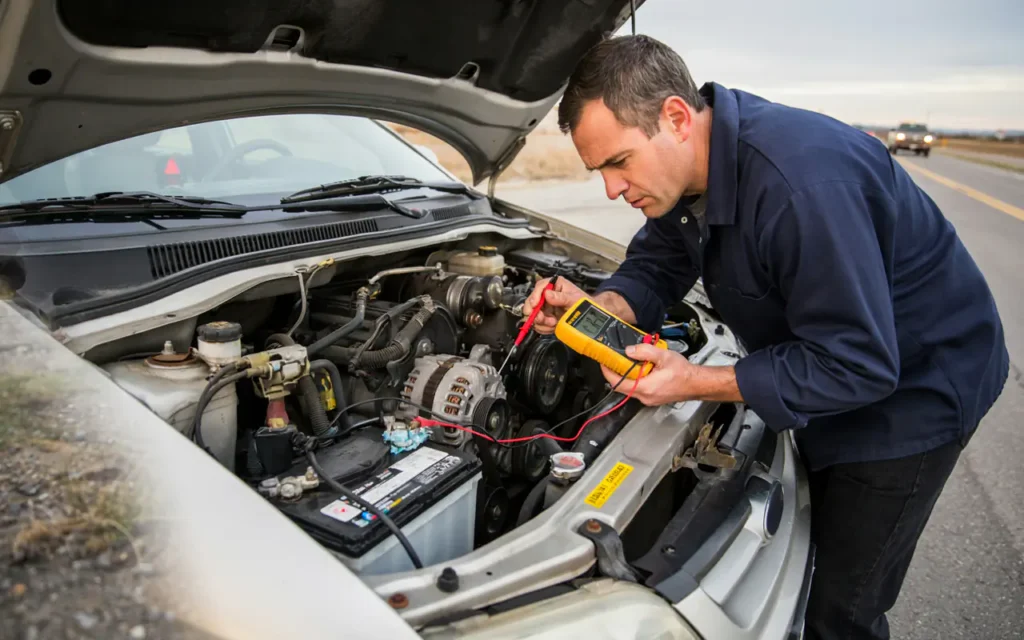
Start the engine and let it idle. Keep the multimeter connected to the battery terminals. The voltage should rise immediately. A properly working alternator should produce between 13.8 and 14.4 volts at idle.
Some cars may read up to 15.3 volts, which is still acceptable. If the reading is below 13.8 volts, the alternator is not charging enough. If it reads above 15.3 volts, the voltage regulator may be faulty.
Step 3: Test Under Load
Turn on your headlights, the radio, the air conditioning, and the rear defroster. Check the voltage reading again. It should stay above 13.5 volts even with all these accessories running. If the voltage drops significantly, the alternator is struggling to keep up.
What Causes an Alternator to Fail?
Alternators do not last forever. They have moving parts that wear out over time. Here are some of the most common reasons they fail.
Worn Bearings
The alternator has bearings that allow the rotor to spin. These bearings experience a lot of stress and heat. Over time, they can wear out. This leads to noise and, eventually, the alternator seizing up.
Belt Problems
The alternator is driven by a belt from the engine. If this belt becomes loose, cracked, or breaks, the alternator will not spin. A loose belt can also slip, causing poor charging and a squealing noise.
Oil or Moisture Contamination
Oil leaks from the engine can drip onto the alternator. The oil can get inside and damage the internal components. Moisture from driving through deep water or using a pressure washer can also cause corrosion and short circuits.
Electrical Overload
Using too many electrical accessories at once can put a heavy load on the alternator. Over time, this can cause it to overheat and fail. This is more common in older vehicles with smaller alternators.
Bad Diodes
Diodes are like one-way valves for electricity. They convert the AC power the alternator produces into DC power the car can use. When a diode fails, it can allow current to flow backward. This drains the battery even when the car is off.
What to Do If You Notice These Signs
If you see any of these signs of a failing alternator, do not wait. The problem will only get worse. Here is a simple plan to follow.
First, check your battery connections. Make sure they are clean and tight. Loose or corroded connections can cause charging problems that look like a bad alternator.
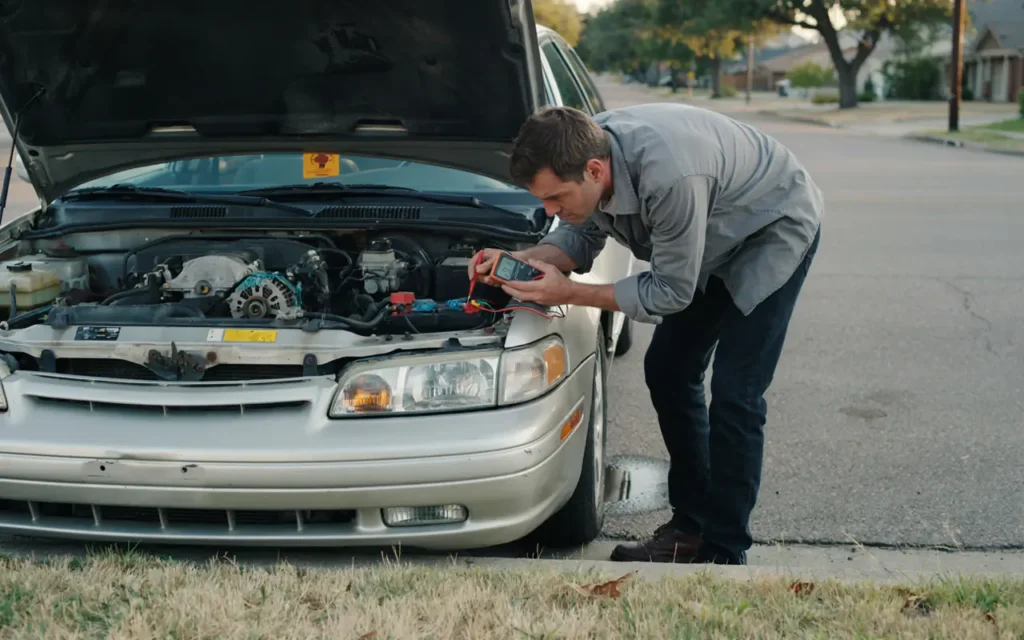
Second, test the alternator. You can use a multimeter at home. Or you can take your car to a local auto parts store. Many stores offer free charging system testing.
Third, if the test shows the alternator is bad, get it replaced. This is not usually a DIY job for most people. It requires removing the belt, disconnecting electrical connections, and sometimes dealing with tight spaces. A professional mechanic can do the job safely and correctly.
Frequently Asked Questions
Q: Can I drive with a failing alternator?
You can drive for a short time, but it is not safe. The car will run on battery power alone. Once the battery dies, the engine will stall. This could happen while you are driving on a busy road. It is best to get it checked and fixed as soon as possible.
Q: How long does an alternator last?
Most alternators last between 80,000 and 150,000 miles. This depends on the make and model of your car, driving conditions, and how well the vehicle is maintained.
Q: How much does it cost to replace an alternator?
The cost varies widely. It depends on the car and the quality of the replacement part. You can expect to pay anywhere from $300 to $700 for parts and labor. Some luxury or high-performance vehicles may cost more.
Q: Will a bad alternator ruin a new battery?
Yes. A failing alternator will not charge the battery properly. Over time, this can damage the battery and shorten its life. If you replace the battery without fixing the alternator, the new battery will also die.
Q: What is the difference between an alternator and a starter?
The starter uses electricity from the battery to start the engine. The alternator generates electricity to keep the battery charged and power the car while it runs. They are two different parts with two different jobs.
Q: Can a bad alternator cause the check engine light to come on?
Yes. In some cars, a failing alternator can trigger the check engine light. A code reader can help identify if the problem is related to the charging system.
Final Thoughts
Your car gives you warnings when something is wrong. The signs of a failing alternator are there for you to notice. Dim lights, strange noises, a battery warning light, and electrical problems are all clues. Paying attention to these signs can save you from a breakdown.
As automotive expert Matthew Hart explains, “If your alternator is going bad, you might see the voltage meter on your dashboard start to drop, or your car might start to vibrate while you’re driving”. These are not things to ignore. They are your car asking for help.
The good news is that alternator problems are fixable. With a simple test, you can know for sure what is wrong. Then you can get the right repair and get back on the road with confidence.
Do not wait until your car dies in the middle of traffic. If you suspect your alternator is failing, have it checked today. Your car, and your safety, are worth it.
Related posts
 How to Strengthen Weak Nails: A Practical Guide to Daily Care
Learn how to strengthen weak nails with simple daily habits, protective care, and targeted hydration. Restore your natural nail strength today. Weak, peeling, or brittle nails…
 What Sounds Do Cats Dislike? 7 Noises That Stress Your Pet
Discover what sounds do cats dislike and why. Learn how to protect your cat’s sensitive hearing from stressful household noises and high-frequency hums. Cats dislike sounds…
 Restoring Faded Black Clothing: Practical Methods and Reality Checks
Can you restore faded black clothing? Learn the difference between temporary color revival and permanent redyeing, plus how to prevent future fading. You can restore the…