
Which Tire Inflator Is Best for SUVs: Selection Guide
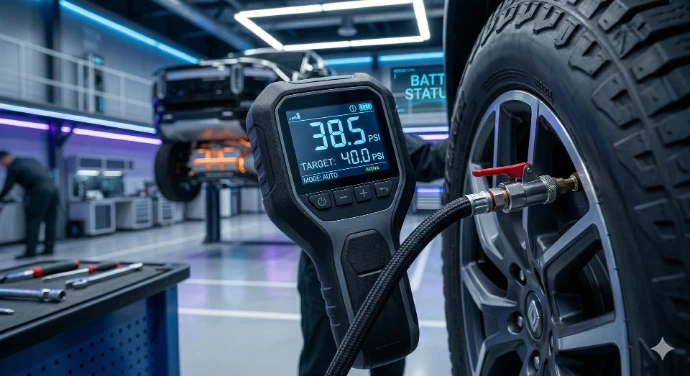
The best tire inflator for an SUV is one that balances a high duty cycle with a long enough power cord or battery capacity to handle the larger air volume of SUV tires. Unlike standard sedans, SUV tires hold more air, which can cause cheaper, low-duty-cycle inflators to overheat before you finish all four tires.
For most SUV owners, a 12V DC inflator that plugs into the vehicle’s accessory port is the most reliable choice, provided it has a cord length of at least 10 feet. If you prefer portability, look for a high-capacity battery-operated unit, but ensure it is rated for the larger tire sizes common to SUVs.
| Topic | When it helps | What to keep in mind |
|---|---|---|
| 1 | Regular maintenance and long road trips. | Check that your 12V port is active when the engine is off if you prefer not to idle. |
| 2 | Quick top-offs and emergency roadside use. | Battery life can drop significantly in cold weather. |
| 3 | Large tires (20-inch+) and frequent pressure adjustments. | These are often larger and take up more trunk space. |
| 4 | Precision and ease of use. | Digital screens can be harder to read in direct sunlight. |
| 5 | Occasional use or limited storage space. | They will likely overheat if used to inflate all four tires at once. |
Key Selection Criteria for SUV Tires
SUV tires are significantly larger than standard passenger car tires. This means they require a higher volume of air to reach the correct pressure. When shopping, look for the duty cycle rating, which tells you how long the unit can run before it needs to cool down.
Reach is another often-overlooked factor. Measure the distance from your car’s 12V port to the rear tire valve. If your cord is too short, you will be unable to reach the back tires without an extension, which can cause voltage drops and damage the inflator.
If you have a large SUV with 20-inch wheels, a tiny emergency inflator will likely overheat before you finish the second tire.
Ignoring the ‘duty cycle’ rating; a low duty cycle means the machine needs long cool-down periods.
- Duty Cycle: Aim for a 50% or higher rating for SUV use.
- Cord Length: Ensure at least 10 feet for 12V models.
- Auto-Shutoff: Essential for preventing over-inflation.
- Pressure Range: Ensure it covers your vehicle’s recommended PSI (usually 30-45 PSI).
| Feature | Why it matters for SUVs |
|---|---|
| Duty Cycle | Prevents overheating during high-volume inflation |
| Cord Length | Ensures reach to all four tires |
| Auto-Shutoff | Protects tires from over-inflation |
| Digital Gauge | Provides accurate, repeatable pressure settings |
Common Mistakes to Avoid
Many users make the mistake of inflating tires to the maximum PSI printed on the tire sidewall. This is a safety risk. Always follow the pressure recommendations found on the sticker inside your driver-side door jamb.
Another common error is failing to let the inflator cool down. Even high-quality portable units generate significant heat. If you are inflating all four tires, take a short break between each one to extend the life of the motor.
Running an inflator while the engine is off can drain your car battery, especially if the inflator draws high current.

Over-inflating tires based on the maximum PSI listed on the tire sidewall rather than the vehicle’s door placard.
- Never use the sidewall PSI as your target pressure.
- Avoid using extension cords with 12V inflators as they can cause overheating.
- Check tire pressure when the tires are cold for the most accurate reading.
- Store the inflator in a cool, dry place to protect internal electronics.
Power requirements for larger tires
- SUV tires require higher air volume, making duty cycle a critical specification.
- Check the power cord length to ensure it reaches the rear tires comfortably.
- Auto-shutoff features prevent over-inflation and allow for hands-free operation.
- Battery-powered units offer convenience but may struggle with multiple large tires on one charge.
Focus on portable 12V and
1. The 12V Direct-Plug Inflator
These units plug into your car’s cigarette lighter or 12V port. They are generally the most consistent for SUV owners because they draw power directly from the vehicle, avoiding battery drain.
- Regular maintenance and long road trips.
- Check that your 12V port is active when the engine is off if you prefer not to idle.
- Look for a model with a 10-foot or longer cord to ensure it reaches the rear tires.
- Power Source – 12V DC
- Reliability – High
2. High-Capacity Battery-Operated Inflator
These offer the ultimate convenience by removing the need for cords. Modern lithium-ion versions can handle multiple tires, but they are heavier and require charging.
- Quick top-offs and emergency roadside use.
- Battery life can drop significantly in cold weather.
- Ensure the battery capacity is rated for at least four full SUV tire inflations.
- Power Source – Rechargeable Battery
- Portability – Excellent
3. Heavy-Duty Dual-Cylinder Compressor
These units feature two pistons instead of one, significantly increasing the speed of inflation. They are ideal for larger SUVs or light off-roading.
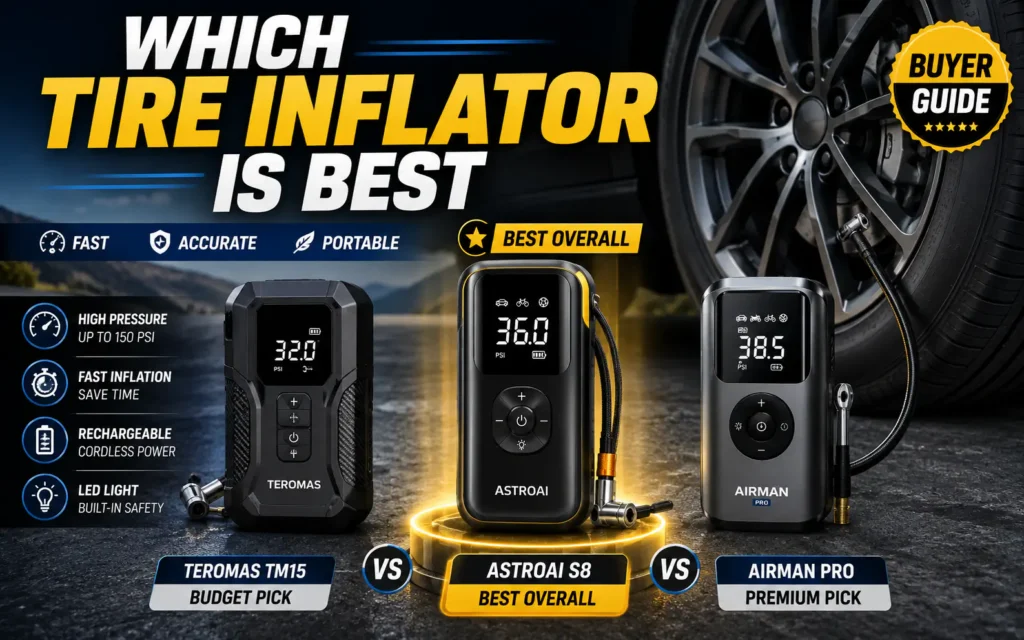
- Large tires (20-inch+) and frequent pressure adjustments.
- These are often larger and take up more trunk space.
- Prioritize these if you frequently deflate tires for terrain and need to reinflate quickly.
- Speed – Fast
- Size – Bulky
4. Digital Gauge Inflators
Digital units allow you to set a specific PSI target. The inflator stops automatically once that pressure is reached, preventing over-inflation.
- Precision and ease of use.
- Digital screens can be harder to read in direct sunlight.
- Always verify the digital reading with a separate manual gauge once a month.
- Precision – High
- Ease of Use – High
5. Compact Emergency Inflators
These are designed for storage in small compartments. They are less powerful and have lower duty cycles, meant only for emergencies.
- Occasional use or limited storage space.
- They will likely overheat if used to inflate all four tires at once.
- Use these only for single-tire top-offs; let the unit cool for 10 minutes between tires.
- Size – Very Compact
- Performance – Limited
FAQs
What is the best PSI for SUV tires?
Always refer to the manufacturer’s recommendation located on the sticker inside the driver-side door jamb. This is the only accurate source for your specific vehicle’s weight and handling needs.
Can I use a portable inflator for off-roading?
Yes, but you need a heavy-duty, high-volume compressor. Standard portable inflators will take too long to reinflate tires after you have lowered the pressure for trail driving.
How often should I check my SUV tire pressure?
It is best practice to check your tire pressure once a month and before any long road trip. Changes in ambient temperature can significantly affect tire pressure.
Why does my inflator keep blowing the car’s fuse?
This usually happens if the inflator draws more current than the 12V port is rated for, or if you are using an extension cord. Check your vehicle’s manual for the maximum amperage allowed for the accessory port.
Conclusion
Selecting the right tire inflator for your SUV comes down to matching the unit’s power and reach to your vehicle’s specific needs. Prioritize models with a high duty cycle and sufficient cord length to ensure you can maintain your tires without frustration or equipment failure.
Before your next trip, test your inflator to ensure it reaches all four tires and that the gauge provides an accurate reading. Keeping your tires properly inflated is one of the simplest ways to improve fuel economy and ensure safe handling on the road.
Related posts
 How to Strengthen Weak Nails: A Practical Guide to Daily Care
Learn how to strengthen weak nails with simple daily habits, protective care, and targeted hydration. Restore your natural nail strength today. Weak, peeling, or brittle nails…
 What Sounds Do Cats Dislike? 7 Noises That Stress Your Pet
Discover what sounds do cats dislike and why. Learn how to protect your cat’s sensitive hearing from stressful household noises and high-frequency hums. Cats dislike sounds…
 Restoring Faded Black Clothing: Practical Methods and Reality Checks
Can you restore faded black clothing? Learn the difference between temporary color revival and permanent redyeing, plus how to prevent future fading. You can restore the…