
Must-Have Tools for Car Maintenance: Your Essential Toolkit
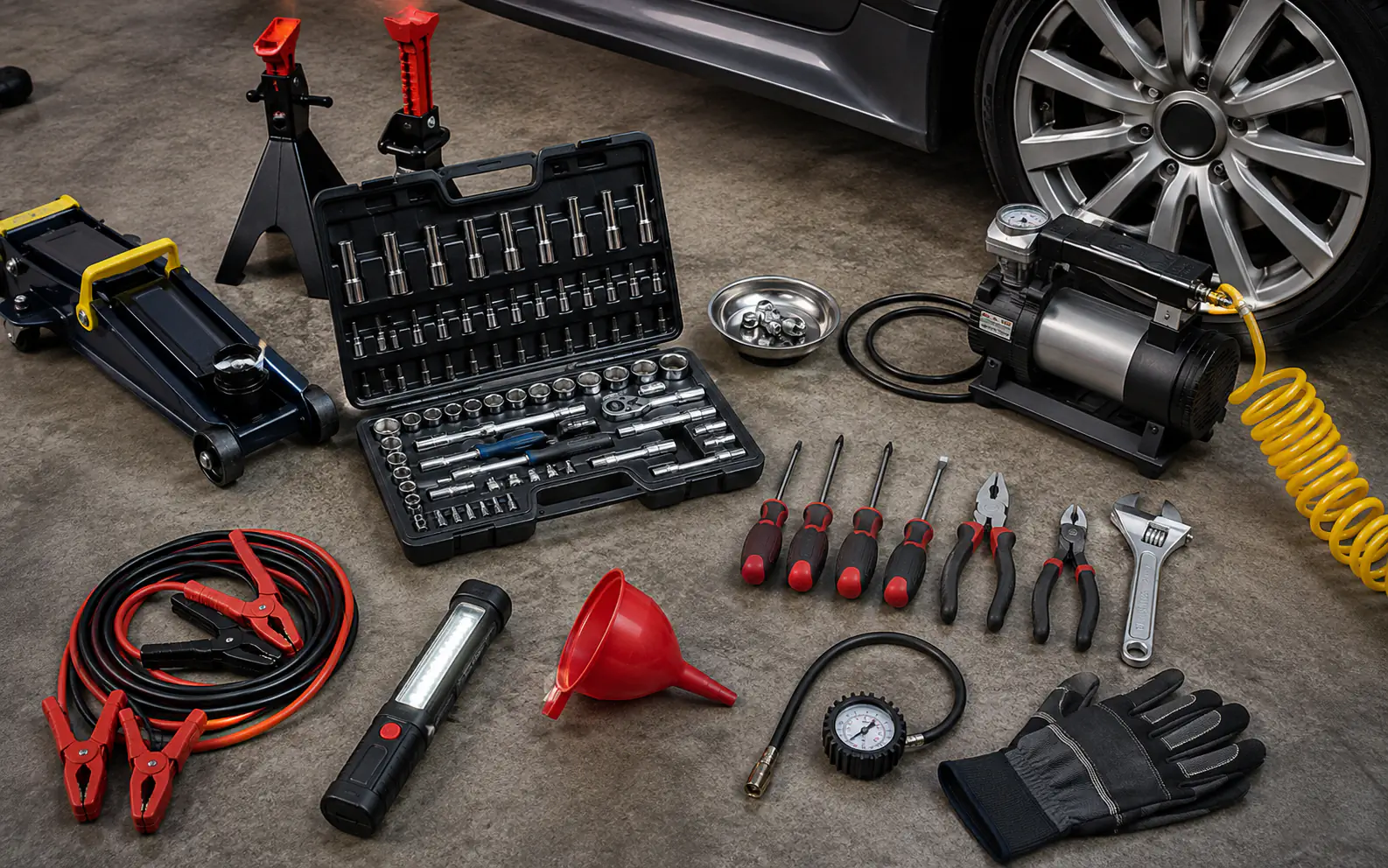
To effectively maintain your car and tackle minor repairs, having the right tools is essential. This isn’t about becoming a professional mechanic overnight, but about equipping yourself with the fundamental items that make routine tasks like oil changes, tire rotations, and brake checks manageable and.
Building a ‘must-have’ toolkit for car maintenance means focusing on versatility, durability, and the tools that address the most common needs. With the right set of tools, you can save money on labor costs, gain confidence in your vehicle’s upkeep, and ensure your car runs.
Core hand tools (wrenches sockets
- A solid foundation of hand tools is crucial for most car maintenance.
- Safety equipment like jacks and stands are non-negotiable.
- Versatile tools save money and space in your toolkit.
- Proper tool care extends their lifespan and ensures reliability.
| Topic | When it helps | What to keep in mind |
|---|---|---|
| 1 | Tightening and loosening fasteners on almost any part of the car. | Cheaply made sockets can strip bolt heads or crack. |
| 2 | Situations where a socket won’t fit, or for quick adjustments. | Using the wrong size wrench can round off bolt heads, making them difficult to remove. |
| 3 | Removing interior panels, battery terminals, and various other components held by screws. | Using a screwdriver that’s too small or the wrong type can damage the screw head and the surrounding. |
| 4 | Gripping, bending, cutting, and holding small components or wires. | Avoid using pliers to loosen or tighten nuts and bolts, as they can easily damage the fastener. |
| 5 | Quick adjustments or when you don’t have the exact size wrench available. | Adjustable wrenches are more prone to slipping than fixed wrenches, which can damage fasteners. |
| 6 | Removing and replacing the engine oil filter. | Ensure the wrench grips the filter securely without crushing it. |
| 7 | Critical components like lug nuts, engine parts, and suspension components. | Never use a torque wrench to loosen bolts. |
| 8 | Lifting the vehicle to perform work on wheels, brakes, exhaust, or suspension. | NEVER work under a vehicle supported only by a jack. |
| 9 | Checking tire pressure regularly, especially before long trips. | Check tire pressure when tires are cold for the most accurate reading. |
| 10 | Performing fluid changes and top-offs cleanly. | Ensure the drain pan is large enough to hold all the fluid you’re draining. |
Focus on the essential hand
1. Socket Set and Ratchet Wrench
A comprehensive socket set with various sizes (metric and SAE) and a good quality ratchet wrench are indispensable for tightening and loosening nuts and bolts. Look for sets with common sizes like 10mm, 12mm, 14mm, 17mm, and 19mm for metric, and 3/8″.
- Tightening and loosening fasteners on almost any part of the car.
- Cheaply made sockets can strip bolt heads or crack.
- Consider a set with both deep and shallow sockets, and a few extension bars for reaching recessed bolts.
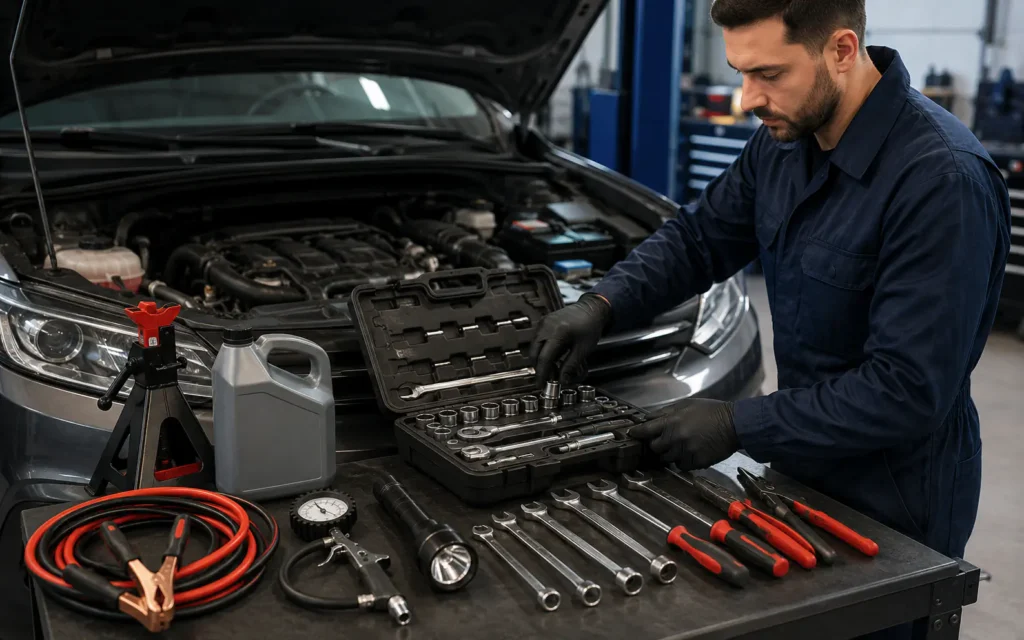
2. Combination Wrenches
A set of combination wrenches (one end open, one end a box/ring) provides versatility. Like socket sets, aim for both metric and SAE sizes, covering the most common ranges.
- Situations where a socket won’t fit, or for quick adjustments.
- Using the wrong size wrench can round off bolt heads, making them difficult to remove.
- Invest in forged steel wrenches for durability.
3. Screwdriver Set
A good set of screwdrivers with various tip types (Phillips, flathead/slotted) and sizes is crucial. Include a few longer ones for reaching into tight spots.
- Removing interior panels, battery terminals, and various other components held by screws.
- Using a screwdriver that’s too small or the wrong type can damage the screw head and the surrounding.
- Magnetic tips are helpful for holding screws in place, especially in awkward positions.
4. Pliers Set
A basic set should include slip-joint pliers for general gripping, needle-nose pliers for reaching into tight spaces and manipulating small parts, and possibly diagonal cutters for snipping wires.
- Gripping, bending, cutting, and holding small components or wires.
- Avoid using pliers to loosen or tighten nuts and bolts, as they can easily damage the fastener.
- Look for comfortable, non-slip grips for better control.
5. Adjustable Wrench
An adjustable wrench (often called a Crescent wrench) can substitute for multiple fixed-size wrenches, making it a space-saver. Get one in a medium size (e.g., 10-inch).
- Quick adjustments or when you don’t have the exact size wrench available.
- Adjustable wrenches are more prone to slipping than fixed wrenches, which can damage fasteners.
- Use it for less critical tasks or when a fixed wrench isn’t an option.
6. Oil Filter Wrench
This specialized tool makes removing a stubborn oil filter much easier. There are several types, including strap, cap, and plier styles.
- Removing and replacing the engine oil filter.
- Ensure the wrench grips the filter securely without crushing it.
- Always lubricate the rubber gasket of the new oil filter with a thin film of oil before installation.
7. Torque Wrench
Essential for ensuring fasteners are tightened to the manufacturer’s specifications, preventing over-tightening (which can cause damage) or under-tightening (which can lead to loosening).
- Critical components like lug nuts, engine parts, and suspension components.
- Never use a torque wrench to loosen bolts.
- A click-type torque wrench is a good entry-level option for most DIYers.
8. Jack and Jack Stands
A reliable hydraulic floor jack and a sturdy pair of jack stands are paramount for safely lifting your vehicle to access the underside for maintenance.
- Lifting the vehicle to perform work on wheels, brakes, exhaust, or suspension.
- NEVER work under a vehicle supported only by a jack.
- Choose jack stands with a weight rating well above your vehicle’s weight for an extra margin of safety.

9. Tire Pressure Gauge
Maintaining correct tire pressure is vital for safety, fuel efficiency, and tire longevity. A digital or reliable analog gauge is a must-have.
- Checking tire pressure regularly, especially before long trips.
- Check tire pressure when tires are cold for the most accurate reading.
- Keep the gauge in your glove compartment for easy access.
10. Funnel and Drain Pan
A funnel is essential for adding fluids (oil, coolant, washer fluid) without spills. A drain pan is needed to catch old fluids during oil changes or other fluid services.
- Performing fluid changes and top-offs cleanly.
- Ensure the drain pan is large enough to hold all the fluid you’re draining.
- Consider a funnel with a flexible hose for easier access to fill ports.
The Foundation: Core Hand Tools
The backbone of any car maintenance toolkit consists of versatile hand tools that can tackle a wide range of tasks. These are the items you’ll reach for most often, from simple checks to more involved jobs.
A good socket set, paired with a reliable ratchet wrench, is arguably the most important tool. It allows you to efficiently tighten and loosen nuts and bolts of various sizes.
When changing your oil, you’ll need a socket set to remove the oil drain plug and an oil filter wrench to remove the old filter.
Using worn-out or the wrong-sized tools can strip bolts, damage components, and lead to frustration.
Specialized Tools for Common Tasks
While core hand tools handle many jobs, certain maintenance tasks benefit greatly from specialized tools. These items might not be used as frequently as a wrench, but they make specific jobs significantly easier and prevent damage.
For routine oil changes, an oil filter wrench is a must. These come in various forms, like strap wrenches or cap wrenches that fit over the filter.
When it’s time for an oil change, an oil filter wrench is indispensable for gripping and removing the old filter, which is often very tight.
Attempting to remove an oil filter with pliers or by hand can be messy and ineffective.
Safety First: Essential Gear
Working on a car, especially when you need to get underneath it, carries inherent risks. Prioritizing safety is paramount, and certain tools are non-negotiable for protecting yourself.
A hydraulic floor jack is essential for lifting your vehicle. However, a jack is only for lifting; it is not a stable support.
If you need to inspect your brakes or rotate your tires, you’ll need to lift the car.
Never, ever work under a car supported only by a jack.
Organization and Tool Care
Once you’ve acquired your essential tools, proper organization and care are vital. A disorganized toolbox leads to wasted time searching for items and can even result in tools being damaged or lost.
Consider a dedicated toolbox or a sturdy tool bag to keep your essentials together. For sockets and wrenches, organizers that keep them sorted by size are incredibly helpful.
Keeping your socket set in its original case or a dedicated toolbox drawer prevents individual sockets from getting lost and ensures you can quickly find the.
Leaving tools exposed to the elements or storing them haphazardly can lead to rust, damage, and difficulty in finding them when needed.
FAQs
What are the absolute minimum tools I need to start car maintenance?
At a minimum, you’ll need a basic socket set with a ratchet, a set of combination wrenches, a few screwdrivers (Phillips and flathead), and a reliable tire pressure.
Do I need both metric and SAE tools?
Yes, most modern cars use metric fasteners, but some older vehicles or specific components might use SAE (standard) sizes. Having both sets ensures you’re prepared for a wider.
How much should I expect to spend on a basic toolkit?
A good starter toolkit with essential hand tools, safety gear, and a few specialized items can range from $150 to $300. Investing in quality over the cheapest option.
What’s the difference between a torque wrench and a regular wrench?
A regular wrench tightens a fastener to a certain tightness based on feel. A torque wrench measures and applies a specific amount of rotational force (torque) to ensure.
Conclusion
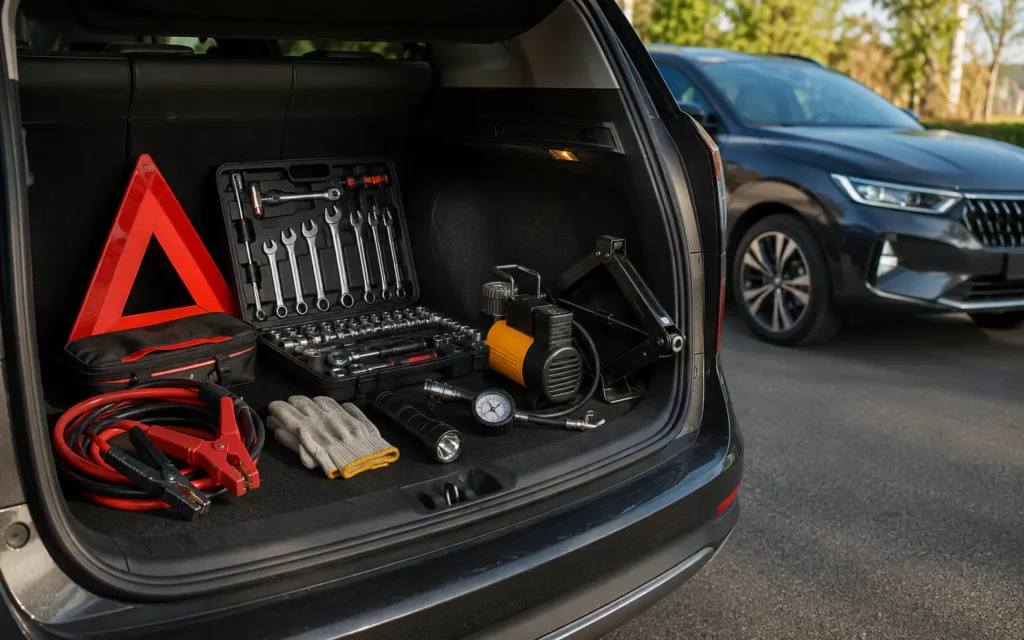
Building a toolkit for car maintenance is an investment in your vehicle’s longevity and your own self-reliance. By focusing on the essential hand tools, key specialized items, and crucial safety gear, you’ll be well-equipped to handle.
Remember that quality tools make the job easier and safer. Start with the basics, maintain your tools properly, and don’t hesitate to seek professional help when a task falls outside your comfort zone or tool capabilities.
Related posts
 How to Strengthen Weak Nails: A Practical Guide to Daily Care
Learn how to strengthen weak nails with simple daily habits, protective care, and targeted hydration. Restore your natural nail strength today. Weak, peeling, or brittle nails…
 What Sounds Do Cats Dislike? 7 Noises That Stress Your Pet
Discover what sounds do cats dislike and why. Learn how to protect your cat’s sensitive hearing from stressful household noises and high-frequency hums. Cats dislike sounds…
 Restoring Faded Black Clothing: Practical Methods and Reality Checks
Can you restore faded black clothing? Learn the difference between temporary color revival and permanent redyeing, plus how to prevent future fading. You can restore the…