
Is Fitness Possible Without Equipment? How to Build Strength and Stamina Anywhere
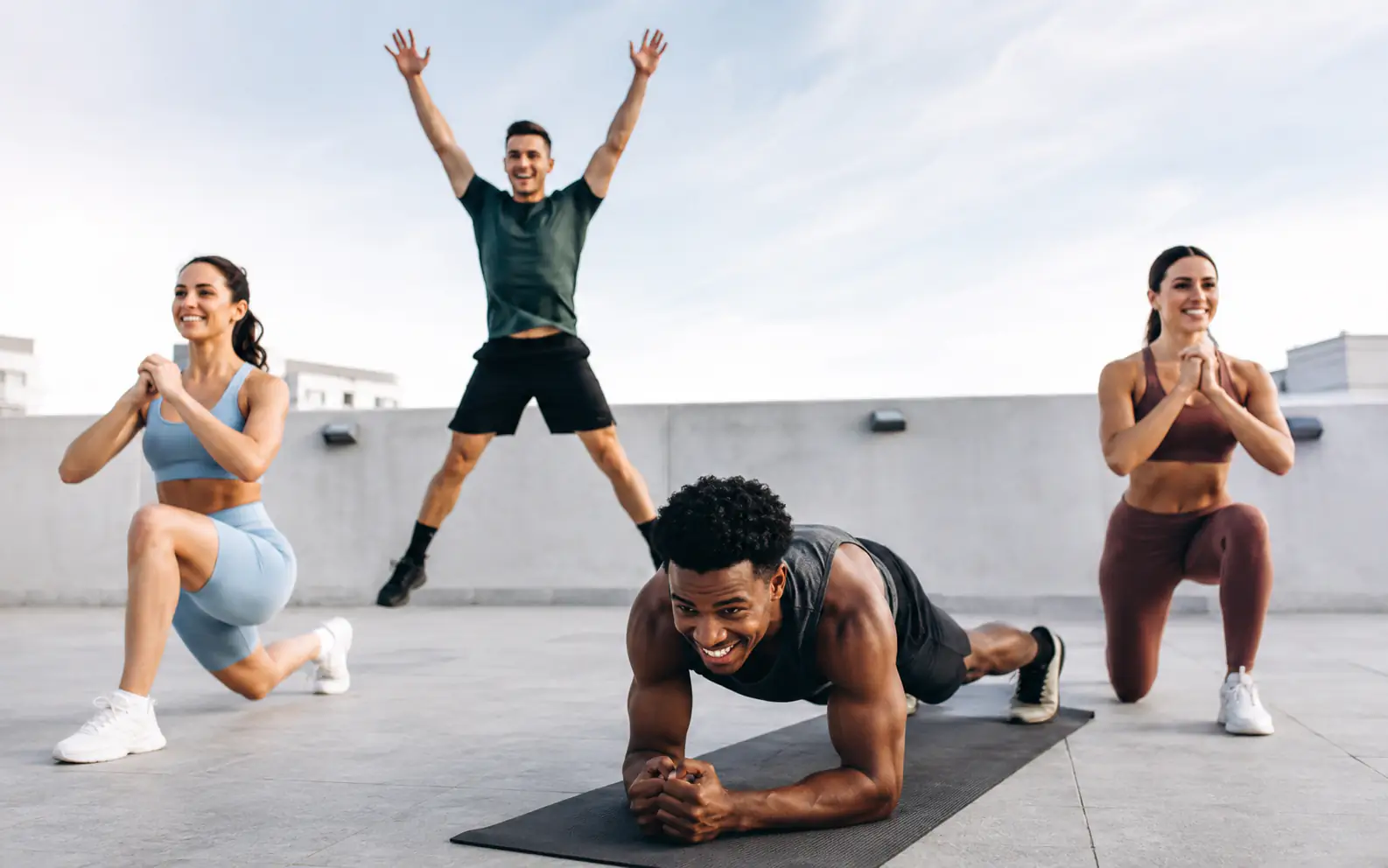
Yes, achieving a high level of fitness is entirely possible without any equipment. Your muscles do not know the difference between a twenty-pound dumbbell and the natural resistance of your own body weight. When you perform a push-up, a squat, or a plank, your body is working against gravity to move and stabilize itself, which triggers the exact same muscle-building and fat-burning processes as gym machines.
To get fit without gear, you simply need to understand how to challenge your muscles consistently over time. By mastering foundational bodyweight movements and learning how to make them more difficult as you get stronger, you can build a lean, strong, and highly functional physique from the comfort of your living room or a local park.
Direct confirmation that fitness is
- Yes, you can achieve excellent cardiovascular health, strength, and flexibility without any equipment.
- Your body weight acts as the resistance; changing your body’s angle or speed changes the difficulty.
- Progressive overload is still necessary and can be achieved by adjusting reps, sets, tempo, and rest times.
- Pulling movements are the hardest to replicate at home but can be done using doorways, tables, or towels.
- Consistency and effort matter far more than the tools you use to exercise.
| Topic | When it helps | What to keep in mind |
|---|---|---|
| Pushing Movements | Building upper body strength and defining the chest and arms. | Flaring your elbows out too wide during push-ups, which can strain the shoulder joints. |
| Pulling Movements | Balancing out pushing exercises and improving posture. | Neglecting these movements entirely, which leads to muscle imbalances and rounded shoulders. |
| Squatting and Lunging | Building leg strength, improving balance, and burning calories. | Letting your knees cave inward or lifting your heels off the ground during a squat. |
| Hinging Movements | Strengthening the hamstrings, glutes, and lower back to prevent injury. | Rounding your spine instead of keeping a flat, neutral back during the movement. |
Comparing Equipment-Free Training to Gym Workouts
Is Fitness Possible Without Equipment. While gym equipment makes it easy to isolate specific muscles and add precise amounts of weight, bodyweight training offers unmatched convenience and functional strength. When you train without equipment, you teach your muscles to work together as a cohesive unit rather than in isolation.
This style of training improves your balance, joint stability, and relative strength-which is how strong you are in relation to your own body weight. It is highly practical for daily life, as it mimics the natural movements you perform outside of exercise.
A busy parent choosing to do a 20-minute living room workout during a child’s nap instead of spending 45 minutes driving to and from a commercial gym.
Assuming that a lack of heavy weights means you cannot build a strong, athletic body.
- Zero financial cost: No monthly membership fees or expensive home gear required.
- Maximum flexibility: Work out in hotel rooms, parks, or small apartments.
- Natural joint movement: Exercises adapt to your body’s natural anatomy rather than a machine’s fixed path.
- Improved core stability: Almost every bodyweight exercise requires your core to stay engaged for balance.
| Feature | No-Equipment Training | Gym/Equipment Training |
|---|---|---|
| Cost | Free | Moderate to High (memberships/gear) |
| Space Required | Minimal (just enough to lie down) | Moderate to Large |
| Ease of Progression | Requires changing angles/tempo | Simple (just add more weight) |
| Joint Impact | Generally lower and more natural | Can be high if lifting heavy weights |
| Time Efficiency | High (no travel or waiting for machines) | Lower (travel and setup time) |
How to Progress Without Adding Weight
To build muscle and strength, you must challenge your body with progressive overload. In a gym, you do this by picking up a heavier dumbbell. At home, you must get creative by changing the physics of the movement.
By manipulating leverage, speed, and volume, you can make a simple bodyweight exercise feel incredibly heavy. This stimulates muscle fibers to grow and adapt just as effectively as lifting iron.
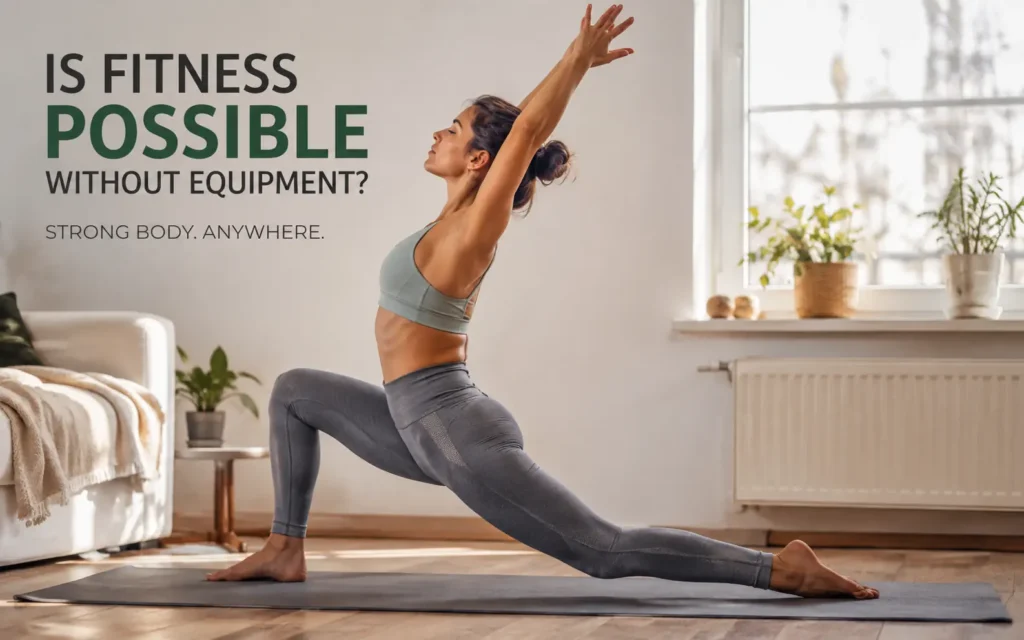
Instead of doing 15 fast push-ups, you perform 10 push-ups where you take 4 seconds to lower your chest to the floor, pause for 1 second, and then push up quickly.
Thinking that the only way to make an exercise harder is to do more and more repetitions, which eventually turns strength training into pure cardio.
- Adjust the Leverage: Change your body’s angle. Elevating your feet on a chair during a push-up shifts more of your body weight onto your chest and shoulders.
- Slow Down the Tempo: Increase the time under tension. Spend three to five seconds on the lowering phase of a squat or push-up.
- Reduce Rest Times: Shorten the breaks between your sets to force your muscles to recover faster and work under fatigue.
- Unilateral Training: Move from two legs or arms to one. Progressing from standard squats to single-leg pistol squats dramatically increases the load on each leg.
Creating a Balanced Routine at Home
A successful no-equipment routine must be balanced to prevent injury and ensure overall physical development. A full-body workout routine performed three times a week is often the best approach for beginners and intermediates alike.
This structure ensures that every major muscle group is stimulated regularly while allowing ample time for recovery. Focus on quality of movement over speed, ensuring your form remains perfect on every single repetition.
A beginner performing a full-body circuit of squats, push-ups, glute bridges, and planks three times a week, leaving a rest day between each session.
Working the same muscles every single day without giving them time to rest, repair, and grow.
Sample Full-Body Circuit
Perform these exercises one after the other with minimal rest. Once you complete all four, rest for two minutes. Repeat the entire circuit three to four times.
- 1. Lower Body: 12 to 15 Bodyweight Squats (focus on depth and control)
- 2. Upper Body Push: 8 to 12 Push-ups (modify on knees or an incline if needed)
- 3. Lower Body Posterior: 12 to 15 Glute Bridges (squeeze glutes at the top)
- 4. Core: 30 to 45-second Plank (keep body in a straight line, do not let hips sag)
The feasibility of no-equipment fitness
Pushing Movements. Upper Body Pushing Exercises
These exercises target your chest, shoulders, and triceps. They involve pushing your body away from a surface or pushing against gravity.
- Building upper body strength and defining the chest and arms.
- Flaring your elbows out too wide during push-ups, which can strain the shoulder joints.
- Start with incline push-ups against a wall or kitchen counter if standard floor push-ups are too difficult.
- Primary Muscles – Chest, Shoulders, Triceps
- Difficulty Range – Beginner to Advanced
- Key Example – Standard Push-up, Pike Push-up
Pulling Movements. Upper Body Pulling Exercises
Pulling exercises target your back and biceps. They are crucial for posture but are the hardest to perform without equipment.
- Balancing out pushing exercises and improving posture.
- Neglecting these movements entirely, which leads to muscle imbalances and rounded shoulders.
- Use a sturdy table to perform inverted rows, or wrap a towel around a secure doorknob to perform standing rows.
- Primary Muscles – Back, Biceps, Rear Shoulders
- Difficulty Range – Intermediate
- Key Example – Table Row, Doorway Towel Row
Squatting and Lunging. Lower Body Quad-Dominant Exercises
These movements target the front of your legs and your glutes. They mimic everyday actions like sitting down and standing up.
- Building leg strength, improving balance, and burning calories.
- Letting your knees cave inward or lifting your heels off the ground during a squat.
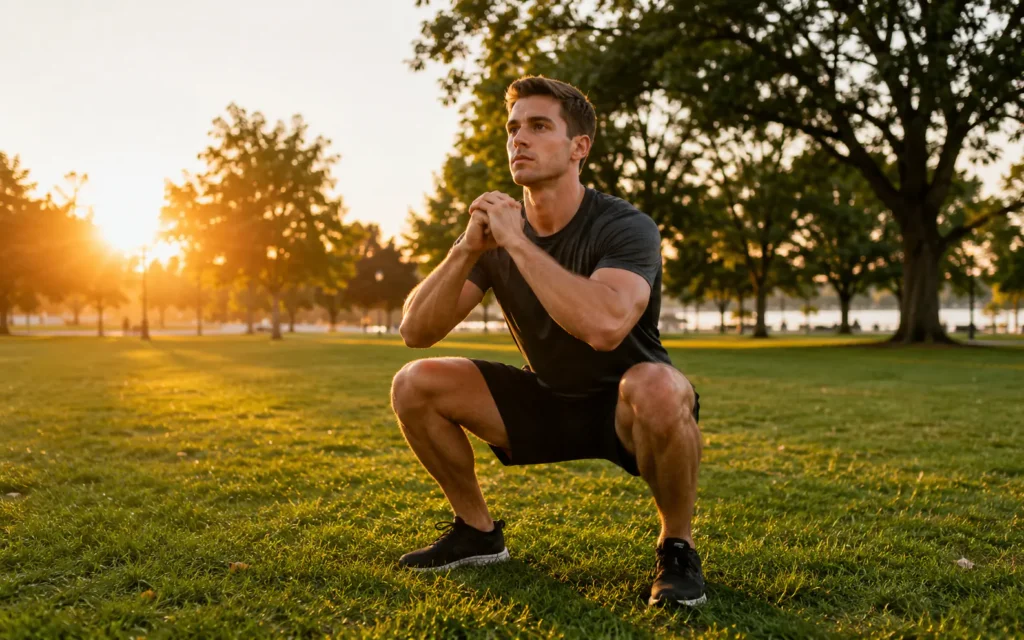
- Focus on sitting back into your hips as if sitting in an invisible chair to keep the weight distributed correctly.
- Primary Muscles – Quadriceps, Glutes, Calves
- Difficulty Range – Beginner to Advanced
- Key Example – Air Squat, Reverse Lunge
Hinging Movements. Lower Body Posterior Chain Exercises
Hinging movements focus on bending at the hips to target the back of your legs and lower back.
- Strengthening the hamstrings, glutes, and lower back to prevent injury.
- Rounding your spine instead of keeping a flat, neutral back during the movement.
- Perform single-leg glute bridges on the floor to isolate the hamstrings and glutes without needing heavy weights.
- Primary Muscles – Hamstrings, Glutes, Lower Back
- Difficulty Range – Beginner to Intermediate
- Key Example – Glute Bridge, Single-Leg Romanian Deadlift
FAQs
Can you build noticeable muscle without weights?
Yes. Muscle growth is triggered by mechanical tension and metabolic stress. As long as you perform bodyweight exercises close to muscular failure and consistently make the movements harder using leverage or tempo, your muscles will grow.
How do I do pulling exercises if I don’t have a pull-up bar?
You can perform inverted rows by lying under a sturdy dining table, gripping the edge, and pulling your chest upward. Alternatively, you can wrap a bedsheet or towel around a doorknob, hold the ends, lean back, and pull yourself forward.
Is cardio possible at home without a treadmill?
Absolutely. High-intensity bodyweight movements like mountain climbers, burpees, jumping jacks, and high knees elevate your heart rate quickly and provide an excellent cardiovascular workout in a small space.
How many times a week should I work out without equipment?
For most people, training three to four times a week is ideal. This frequency provides enough stimulus to build strength and cardiovascular fitness while leaving plenty of time for muscle recovery.
What is the biggest mistake people make with bodyweight workouts?
The biggest mistake is rushing through repetitions with poor form just to finish the set. Slow, controlled movements create more muscle tension and protect your joints from injury.
Conclusion
Fitness is not defined by a gym membership or a collection of heavy weights. It is defined by how you move, challenge, and care for your body. By using your own body weight as resistance, you can build a high level of strength, endurance, and flexibility without spending a single dollar on equipment.
The key to success is consistency and progression. Start with the basic movements, focus on perfect form, and gradually make the exercises more challenging as you get stronger. Your body is the only tool you truly need to achieve your fitness goals.
Related posts
 How to Strengthen Weak Nails: A Practical Guide to Daily Care
Learn how to strengthen weak nails with simple daily habits, protective care, and targeted hydration. Restore your natural nail strength today. Weak, peeling, or brittle nails…
 What Sounds Do Cats Dislike? 7 Noises That Stress Your Pet
Discover what sounds do cats dislike and why. Learn how to protect your cat’s sensitive hearing from stressful household noises and high-frequency hums. Cats dislike sounds…
 Restoring Faded Black Clothing: Practical Methods and Reality Checks
Can you restore faded black clothing? Learn the difference between temporary color revival and permanent redyeing, plus how to prevent future fading. You can restore the…