
Can Home Workouts Build Muscle

Asking yourself can home workouts build muscle? Yes, with proper progressive overload and consistency. This guide gives you science-backed methods to gain strength and size without a gym.
Have you ever stood in your living room, looked at a yoga mat, and wondered: can home workouts build muscle? You are not alone. Millions of people ask this same question every day. The good news is that the answer is a clear yes. You do not need a fancy gym membership or heavy barbells to grow stronger. Your own home can become a great place for building muscle. Let me show you how.
I have helped friends and family train at home for years. I have seen people go from skinny arms to noticeable biceps using just a pull up bar and some floor space. I have also seen people fail because they did not follow the right plan. The difference is not the equipment. It is the method. This article will give you that method. You will learn the science, the exercises, and the simple rules that make home workouts work for muscle growth.
“Strength does not come from what you can do. It comes from overcoming the things you once thought you could not do.” – Riki Rachtman
Can Home Workouts Build Muscle? The Truth About Training Without a Gym
Let us start with the main question directly. Can home workouts build muscle? Yes. Research in sports science shows that your muscles do not know if you are in a gym or at home. They only know tension, fatigue, and recovery. If you create enough tension through resistance, your muscles will grow. This tension can come from your own body weight, resistance bands, dumbbells, or household items like water jugs.
The key is progressive overload. That means you slowly make your exercises harder over time. At home, you can do this by adding more repetitions, slowing down each move, using a harder variation, or adding weight. Many people think that without a squat rack or leg press machine, they cannot grow. That is false. Your legs can get very strong with squats, lunges, and step ups. Your back can grow with pull ups and rows using a table or bands.
I remember a client named Sarah. She stopped her gym membership during a move. She trained at home for six months using only bands and bodyweight. She came back stronger in her pull ups and push ups than before. Her squat depth improved too. Home workouts did not hold her back. They freed her to focus on form and consistency.
How Muscles Actually Grow – The Simple Science
Before we go deeper into home workouts, let us understand muscle growth. When you exercise, you create small tears in your muscle fibers. Your body repairs these tears and makes the fibers thicker and stronger. This process needs three things: mechanical tension, metabolic stress, and muscle damage. All three can happen at home.
Mechanical tension is the force your muscles produce against resistance. Push ups create tension in your chest and triceps. Squats create tension in your thighs and glutes. Metabolic stress is that burning feeling when you do many repetitions. It comes from blood flow being trapped in the working muscle. Muscle damage is the micro tearing we just mentioned. Rest and protein help repair it.
You do not need a bench press to get mechanical tension. A decline push up with your feet on a chair creates more tension than a regular push up. A single leg squat creates more tension than a regular squat. You just need to know the variations.
The Role of Progressive Overload at Home
Progressive overload is the main rule for muscle growth. If you always do the same 10 push ups, your muscles stop growing. They have no reason to change. To answer can home workouts build muscle, you must learn to overload. Here are simple ways to do that at home:
Do more repetitions. If you can do 12 squats, try 15 next week. If you can do 8 push ups, try 10. Add sets. Go from 3 sets of an exercise to 4 sets. Slow down the movement. Take 4 seconds to lower yourself in a push up. That feels much harder. Use harder variations. Switch from regular push ups to diamond push ups. Switch from bodyweight squats to jump squats or pistol squats. Add weight. Hold a backpack filled with books or a jug of water.
“Little by little, one travels far.” – J.R.R. Tolkien
Equipment Options for Home Muscle Building
You do not need much. But some tools help. Here is a simple breakdown of what works best for home workouts. The table below shows you the options from least to most effective for muscle growth.
| Equipment Type | Best For | Cost | Space Needed |
|---|---|---|---|
| Bodyweight only | Push ups, squats, lunges, planks | Free | Small |
| Resistance bands | Rows, presses, curls, pull aparts | Low ($10-30) | Very small |
| Adjustable dumbbells | Curls, overhead press, rows, goblet squats | Medium ($50-150) | Small |
| Pull up bar | Back, biceps, grip strength | Low ($20-40) | Doorway |
| Sandbag or backpack | Squats, lunges, carries, rows | Very low (free to $20) | Small |
Table 1: Home workout equipment compared for muscle growth
As you see, even with zero cost, you can build muscle. Bodyweight exercises work. But adding bands or a backpack with weight makes progressive overload easier. That does not mean you cannot grow without them. Many calisthenics athletes have amazing physiques using only bars and floor space. The question can home workouts build muscle is already answered by these athletes. They prove it every day.

Bodyweight Only – Is It Enough?
Yes. But you have to be smart. Bodyweight training uses your own mass as resistance. For upper body pushing (chest, shoulders, triceps), push ups and dips work great. For pulling (back, biceps), you need something to pull against. Without a bar, you can use a sturdy table for rows or a door frame for pull ups (carefully). For legs, squats, lunges, step ups, and Bulgarian split squats produce serious tension.
The limit for bodyweight is that your legs can become very strong. After a while, a bodyweight squat is too easy. You can then do pistol squats (one leg squat) or deep step ups onto a high chair. Those are very hard. Even advanced athletes struggle with pistol squats. So you have room to grow.
“Motivation is what gets you started. Habit is what keeps you going.” – Jim Ryun
A Sample Weekly Home Workout Plan for Muscle Gain
Now let us get practical. Here is a simple plan for someone asking can home workouts build muscle and wanting to start tomorrow. This plan uses bodyweight plus optional bands or a backpack. Do it three days per week. Rest one day between sessions.
Monday – Push and Legs Focus
- Push ups: 4 sets of 8 to 12 reps (go slow down, explode up)
- Squats: 4 sets of 12 to 15 reps (hold a backpack for weight)
- Pike push ups (for shoulders): 3 sets of 6 to 10 reps
- Lunges: 3 sets of 10 per leg
- Triceps dips on a chair: 3 sets of 8 to 12 reps
Wednesday – Pull and Core Focus
- Rows (under a table or with bands): 4 sets of 8 to 12 reps
- Pull ups (if you have a bar) or door frame rows: 3 sets of max reps
- Bicep curls (bands or backpack): 3 sets of 10 to 15 reps
- Plank: 3 sets of 30 to 60 seconds
- Leg raises: 3 sets of 10 to 15 reps
Friday – Full Body Higher Reps
- Push ups (diamond for triceps): 3 sets of 15 to 20 reps
- Squat jumps: 3 sets of 10 to 15 reps
- Rows: 3 sets of 12 to 15 reps
- Glute bridges (single leg for more tension): 3 sets of 15 per leg
- Side planks: 3 sets of 20 to 30 seconds per side
| Day | Focus | Sets per Exercise | Rep Range |
|---|---|---|---|
| Monday | Push + Legs | 3-4 | 8-15 |
| Wednesday | Pull + Core | 3-4 | 8-15 (max for pull ups) |
| Friday | Full body higher reps | 3 | 15-20 |
Table 2: Weekly home workout schedule for muscle building
Do this plan for 6 to 8 weeks. Then make it harder. Add weight. Do more reps. Use a harder push up variation. This consistency will prove that can home workouts build muscle is not a question anymore. It becomes a statement: yes, they can.
How to Progress Each Week
Each week, try to add one more rep per set. Or add 2 to 5 pounds to your backpack. Or reduce rest time between sets from 90 seconds to 60 seconds. Small changes add up. After 4 weeks, you might do 4 sets of 15 push ups instead of 4 sets of 10. That is a 50 percent increase in volume. Your muscles will respond with growth.
If you cannot add reps, add a set. If you cannot add a set, slow the lowering phase to 5 seconds. There is always a way to overload. That is the beauty of home training. You have full control.

Nutrition and Rest – The Missing Pieces
You cannot build muscle without proper food and sleep. Training breaks the muscle down. Food and rest build it back stronger. Many people ask can home workouts build muscle but forget to eat enough protein. Here is what you need.
Protein: Eat about 0.7 to 1 gram of protein per pound of your body weight. For a 150 pound person, that is 105 to 150 grams of protein daily. Good sources are eggs, chicken, fish, beans, lentils, Greek yogurt, tofu, and protein powder if needed. Carbohydrates give you energy for workouts. Eat rice, oats, potatoes, fruits, and vegetables. Fats help hormone function. Eat nuts, seeds, avocados, olive oil.
Sleep: Your body repairs muscle mostly when you sleep. Aim for 7 to 9 hours per night. Without sleep, your progress slows down a lot. Even the best home workout plan fails if you sleep only 5 hours.
Water: Drink water before, during, and after your workout. Dehydration makes you weaker and slows recovery. A simple rule is to drink when you feel thirsty, plus a little more.
Common Mistakes When Training at Home
People fail at home workouts for a few reasons. Avoid these mistakes and you will succeed.
Mistake 1: Going too easy. At home, no one watches you. It is tempting to do half effort push ups and call it done. Do not do that. Treat each rep like it matters. Squeeze your muscles at the top. Control the lowering.
Mistake 2: No plan. Random workouts do not build muscle well. You need a structured plan like the one above. Write it down. Track your reps and weight. This is non negotiable.
Mistake 3: Forgetting progressive overload. If you do the same workout for months, you stop growing. Every week, ask yourself: how can I make this harder? Add a rep. Add weight. Slow down. Do an extra set.
Mistake 4: Not eating enough. Muscle needs calories and protein. If you train hard but eat like a bird, you will not grow. Eat slightly more than your maintenance calories if you want to gain size.
Mistake 5: Ignoring rest days. You grow when you rest, not when you train. Training the same muscles every day is counterproductive. Take rest days seriously. Do light walks or stretching on off days.
Real Life Success Stories – Home Workout Gains
I know a father of two named Mike. He is 42 years old. He works from home. He started asking can home workouts build muscle after his gym closed. He bought a pair of adjustable dumbbells and a pull up bar. He followed a simple push, pull, legs split at home for 9 months. He gained 12 pounds of muscle. His wife noticed his shoulders looked broader. He felt better in his clothes.
Another person is Lisa. She is a 28 year old teacher. She only uses bodyweight and resistance bands. She could not do a single push up when she started. After 4 months of home workouts, she did 15 push ups in a row. Her arms and back look defined. She says home workouts gave her confidence she never had in a gym.
These are real people. They did not have fancy equipment. They had consistency, a plan, and patience. That is all you need. Can home workouts build muscle for you? Yes, just like it did for Mike and Lisa.
Frequently Asked Questions About Home Workouts and Muscle Growth
Q1: Can home workouts build muscle as fast as gym workouts?
Yes, if you apply progressive overload. The gym has more heavy weights. That makes overload easier. But at home, you can still overload with harder variations, slower reps, and more volume. Many studies show no big difference in muscle growth between home and gym for beginners and intermediate lifters. Advanced lifters might need heavier weights, but they can buy adjustable dumbbells.
Q2: How many days per week should I train at home to build muscle?
Three to four days per week works best for most people. Train with full body workouts three days a week, or do an upper lower split four days a week. Rest between sessions is important. Do not train the same muscles two days in a row.
Q3: Do I need to buy weights to answer the question “can home workouts build muscle” with a yes?
No. Bodyweight alone works for many people. Use harder bodyweight exercises like pistol squats, archer push ups, and pull ups. But adding some weight like a backpack or resistance bands helps you progress longer. It is worth the small cost.
Q4: What is the best rep range for muscle growth at home?
Anywhere from 5 to 30 reps per set can build muscle, as long as you reach near failure. For home workouts, aim for 8 to 15 reps for most exercises. If you can do more than 20 reps easily, make the exercise harder instead of doing very high reps. High reps work but take more time.
Q5: Can women build noticeable muscle with home workouts?
Yes. Women build muscle exactly like men, just with different hormone levels. Home workouts give women great tone, shape, and strength. Many women prefer home training because it feels less intimidating than a gym.
Q6: What if I have no equipment and cannot do pull ups?
Use table rows. Lie under a sturdy table, grab the edge, and pull your chest up. That works your back and biceps. For legs, do bulgarian split squats with your back foot on a chair. For chest, do push ups. You can get very strong with just these moves.
Q7: How long until I see results from home workouts?
Most people see strength gains in 2 to 4 weeks. Visible muscle growth takes 8 to 12 weeks of consistent training and good nutrition. Take photos every 2 weeks. You will see changes before the mirror shows them.
Q8: Can home workouts build muscle for men over 40?
Yes. Older adults need to focus on joint friendly movements and more warm up sets. But muscle growth happens at any age. Home workouts are excellent for older men because they reduce travel time and allow slower, controlled movements that protect joints.

Conclusion – Your Home Is Your Gym
Let me be direct with you. Can home workouts build muscle? Yes, absolutely. The science is clear. The real life examples are everywhere. The only things you need are a small space, a smart plan, and the will to push yourself a little harder each week. You do not need a mirror wall of dumbbells. You do not need a monthly gym fee. You need consistency and patience.
Start with the simple plan I gave you. Do it for 4 weeks. Eat your protein. Sleep well. Track your reps. Each week, add one more rep or one more set or a little more weight in that backpack. By week 8, you will see and feel the difference. Your shirts will fit tighter around your arms. Your squats will feel deeper and stronger. Your confidence will grow.
Do not let the lack of a gym stop you. Your living room floor is as good as any gym floor. Your body is the best piece of equipment you will ever own. Use it. Challenge it. Rest it. Feed it. Watch it grow.
Now go do your first set of push ups. Right now. Ten slow ones. That is how you start answering the question for yourself. Can home workouts build muscle? You are about to prove that the answer is yes.
Related posts
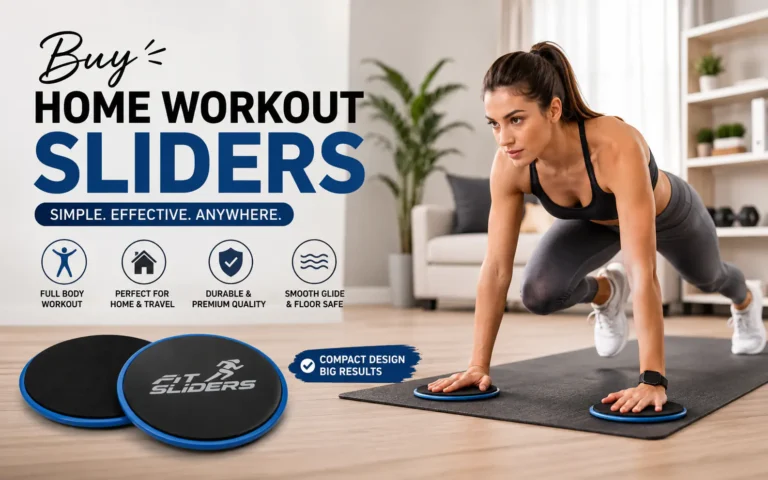 Buy Home Workout Sliders: 2026 Guide to Core Fitness Tools
Looking to buy home workout sliders? Compare top-rated gliding discs and core trainers to find the right equipment for your 2026 fitness routine. Adding core sliders…
 Best Resistance Bands for Beginners: 2026 Buyer Guide
Looking for the best resistance bands for beginners? Compare top-rated loop and handle sets to find the right home gym equipment for your fitness goals. Starting…
 Best Treadmill for Home Use: 2026 Buyer Guide
Finding the best treadmill for home use in 2026. Compare top-rated compact, folding, and incline models to fit your space, budget, and fitness goals. Choosing the…