
How Often Should Tires Be Replaced
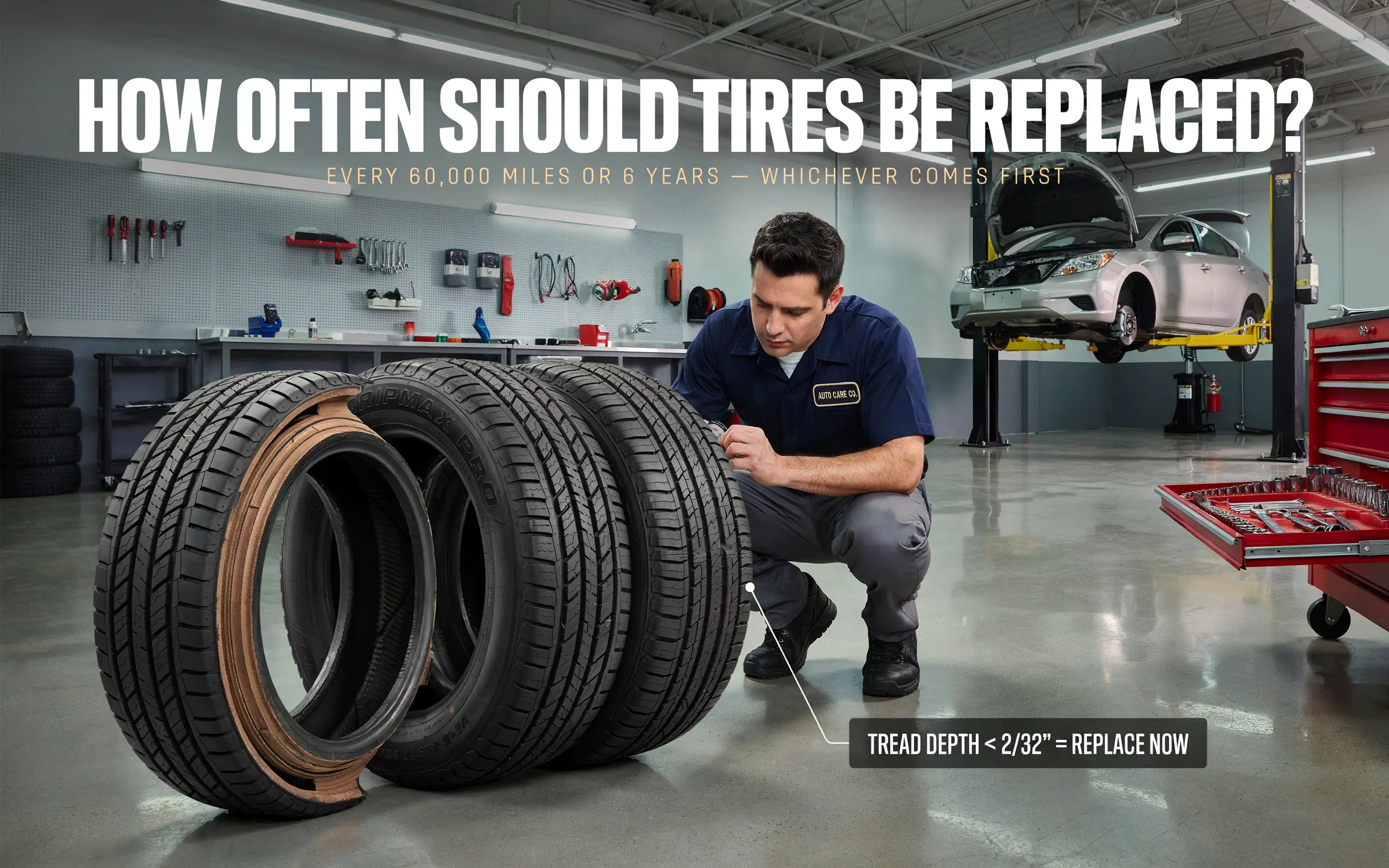
Are you wondering how often should tires be replaced? Most experts say every 6 years due to aging rubber, or when tread depth falls below 4/32 inch. Check your tires regularly for cracks, bulges, and uneven wear to stay safe on the road.
Let’s be honest about something. Most of us don’t think about our tires until something goes wrong. Maybe you hear a strange noise, feel a vibration, or notice your car pulling to one side. But waiting until that moment is not the best approach. Your tires are the only part of your vehicle that actually touches the road. They affect your braking, your steering, and your overall safety. So asking yourself how often should tires be replaced is one of the most important questions you can ask as a driver.
The short answer is that most tires need replacement every 6 to 10 years, regardless of how they look. But there is more to it than just counting years. Many factors influence tire life, including your driving habits, the climate where you live, and how well you maintain them. This guide will walk you through everything you need to know about tire replacement, so you can make smart decisions and stay safe on the road.
Why Tire Replacement Matters More Than You Think
Tires do not last forever. Even if they look fine on the outside, the rubber compounds inside them break down over time. This breakdown happens because of oxidation, heat, and exposure to sunlight. The rubber loses its flexibility and becomes brittle. When that happens, your tires cannot grip the road as well. Your stopping distance gets longer. Your car becomes harder to control in wet conditions.
The National Highway Traffic Safety Administration has found that tire-related issues contribute to thousands of accidents every year. Many of these accidents could have been prevented with timely tire replacement. So when you ask how often should tires be replaced, you are really asking how to keep yourself and your family safe.
How Often Should Tires Be Replaced Based on Mileage?
Mileage is one of the most common ways people think about tire life. Most passenger car tires are designed to last between 40,000 and 60,000 miles under normal driving conditions. However, this number can vary widely based on several factors.
| Tire Type | Average Expected Mileage |
|---|---|
| All-season tires | 50,000 – 70,000 miles |
| Performance tires | 30,000 – 40,000 miles |
| Off-road tires | 40,000 miles or less |
| Winter tires | 3-4 seasons (if used only in winter) |
These numbers are just averages. Your actual mileage may be higher or lower depending on how you drive. Aggressive acceleration, hard braking, and high-speed driving can reduce tire life by as much as 30 percent. Frequent stop-and-go city driving causes more wear than steady highway driving.
Electric vehicles tend to wear out tires faster because of their instant torque. EV owners may need to replace tires up to 20 percent more frequently than drivers of gas-powered cars.
But here is the thing. Mileage alone does not give you the full picture. You cannot just say “I have driven 50,000 miles, so it is time for new tires.” You also need to consider the age of the tires, the condition of the tread, and any visible damage.
How Often Should Tires Be Replaced Based on Age?
This is where many drivers get confused. Your tires age even when you are not driving. The rubber compounds in tires degrade over time due to oxidation, heat, and UV exposure. This degradation happens whether the tires are on your car or sitting in your garage.
Michelin recommends that tires be thoroughly inspected at least once a year after five years of service. As a precaution, they recommend replacing tires ten years after their date of manufacture, regardless of remaining tread depth or apparent condition. This recommendation includes spare tires.
Other organizations have slightly different guidelines. The AA (Automobile Association) recommends replacing tires every five to six years from the manufacturing date. Discount Tire recommends replacement at 6 years of age. Tire Rack follows a similar policy, suggesting approximately 6 years of service and 10 years from the manufacturing date as the rough limits of tire usage.
| Age Milestone | Recommended Action |
|---|---|
| 5 years | Annual professional inspection required |
| 6 years | Strongly consider replacement |
| 10 years | Maximum service life – replace immediately |
So how often should tires be replaced when it comes to age? Most experts agree on a window of 6 to 10 years. The safer end of that range is 6 years. The absolute maximum is 10 years. If your tires are older than 10 years, you need to replace them right away, no matter how much tread they have left.
How to Check the Age of Your Tires
Finding out how old your tires are is actually quite simple. Every tire has a DOT (Department of Transportation) code printed on the sidewall. The last four digits of this code tell you the week and year the tire was manufactured.
For example, if you see “3520” at the end of the DOT code, that means the tire was made during the 35th week of 2020. If you see “1224”, it means the 12th week of 2024.
Dean Keeling, AA managing director of road services, said: “Year on year, tyre issues populate one of the top two slots for member callouts. Often, these could be avoided by carrying out some quick and easy routine checks on a vehicle’s tyres”.
Checking your tire age takes less than a minute. Walk around your car, look at the sidewall of each tire, and find the DOT code. Write down the dates. If any tire is approaching 6 years old, start planning for replacement. If any tire is over 10 years old, replace it now.
How Often Should Tires Be Replaced Based on Tread Depth?
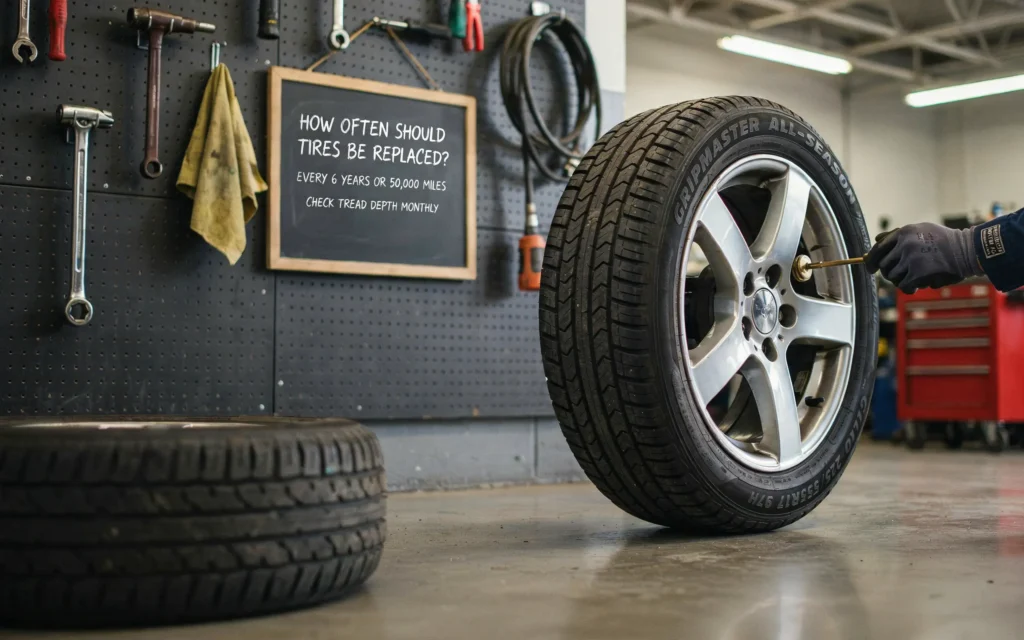
Tread depth is another critical factor in determining how often should tires be replaced. The tread is what gives your tires grip on the road. When the tread wears down, your car becomes more likely to hydroplane on wet roads. Your stopping distance increases. Your ability to steer around obstacles decreases.
The legal minimum tread depth in most places is 2/32 of an inch (1.6 mm). However, most safety experts recommend replacing tires much earlier than that. Nokian Tyres recommends replacing tires when they reach a tread depth of 4/32 of an inch (3 mm). Tires with tread below that mark have deteriorating wet grip and are more prone to hydroplaning.
Once your tires reach 2/32 of an inch, their contact area with the road is only 6 percent of what it was when they were new. That is a huge loss of traction. So do not wait until you hit the legal minimum. Start shopping for new tires when your tread reaches 4/32 of an inch.
The Penny Test
You can check your tread depth at home with a simple penny. Place a Lincoln penny head-first into the tread grooves of your tire. If the tread covers Lincoln’s head, you still have at least 2/32 of an inch of tread remaining. If his entire head sticks out above the tread, it is time to replace your tires immediately.
For a more conservative check, use a quarter. Place George Washington’s head into the tread. If the tread does not reach the top of his head, you are at about 4/32 of an inch and should start planning for replacement.
Tread Wear Indicators
Most tires also have built-in tread wear indicators. These are small raised bars located within the tread grooves. When the tread surface wears down to the same level as these indicators, the tire has reached its minimum tread depth and should be replaced.
Visual Signs That Tell You It Is Time for New Tires
Sometimes the answer to how often should tires be replaced is not about mileage or age at all. Sometimes it is about what you can see with your own eyes. Regular visual inspections can catch problems early and prevent dangerous failures.
Sidewall Damage
Cuts, cracks, bulges, or blisters on the sidewall are serious warning signs. They may indicate structural damage to the tire. Sidewall damage cannot be repaired and may increase the risk of tire failure. Any tire showing visible sidewall damage should be inspected immediately by a trained professional.
Uneven Wear Patterns
If your tires are wearing unevenly, that is a sign of a problem. Uneven wear can be caused by incorrect tire pressure, alignment issues, or suspension problems. Inner edge wear or outer edge wear often indicates poor alignment. Excessive center tread wear suggests overinflation. Edge wear suggests underinflation.
Cracks and Dry Rot
Over time, tires can develop cracks in the rubber. This is often called dry rot or weather cracking. It happens because the rubber loses its flexibility and begins to break down. If you see cracks in the sidewall or between the tread blocks, it is time for replacement.
Bulges and Blisters
Bulges or blisters on the tire surface are especially dangerous. They often appear after hitting a curb or pothole. They indicate that the internal structure of the tire has been damaged. A tire with a bulge can fail at any time. Replace it immediately.
How Climate and Driving Conditions Affect Tire Life
The question of how often should tires be replaced does not have a single answer because your environment plays a huge role. Hot climates accelerate the aging process. Extreme heat causes rubber to break down faster. In places like the UAE, the RTA recommends replacing tires no later than 5 years.
Cold weather can also affect tires. When temperatures drop, rubber becomes harder and less flexible. This can lead to cracking and reduced grip. If you live in a region with harsh winters, you may need to replace your tires more frequently.
Road conditions matter too. Rough, potholed roads cause more rapid deterioration than smooth highways. If you frequently drive on gravel or dirt roads, your tires will wear out faster.
Greg Carter, AA Public Affairs Technical Specialist, said: “The AA believes there is a strong case for EU tyre labelling stickers to hold the date of manufacture in addition to existing fuel-efficiency, noise and wet-braking information”.
Proper Maintenance Can Extend Tire Life
While you cannot stop your tires from aging, you can take steps to make them last as long as possible. Good maintenance habits can help you get the most out of your tires and delay the day when you need to ask how often should tires be replaced.
Check Tire Pressure Monthly
Improper inflation is the most common cause of premature tire wear. Underinflated tires flex more, generate excessive heat, and wear faster along the edges. Overinflated tires wear more quickly in the center of the tread.
Check your tire pressure at least once a month using a reliable gauge. Always check when the tires are cold, meaning the car has not been driven for at least three hours. Follow the pressure recommendations in your vehicle owner’s manual or on the sticker inside the driver’s door frame.
Rotate Your Tires Regularly
Tire rotation helps ensure even wear across all four tires. Most experts recommend rotating tires every 5,000 to 8,000 miles. Some recommend every 10,000 kilometers (about 6,200 miles). Check your vehicle owner’s manual for specific recommendations.
Keep Your Wheels Aligned
Misalignment causes uneven tire wear, with one side of the tire wearing faster than the other. This can reduce tire life by thousands of miles. Have your alignment checked regularly, especially after hitting a pothole or curb.
Should You Replace All Four Tires at Once?
This is a common question that comes up when people start thinking about how often should tires be replaced. The general recommendation is to replace all four tires at the same time whenever possible. This ensures consistent handling, braking, and traction across all four wheels.
On all-wheel-drive vehicles, replacing all four tires is especially important. Mismatched tires can cause mechanical damage to the drivetrain.
If you must replace only two tires on a two-wheel-drive vehicle, the new tires should be installed on the rear axle for better vehicle stability and safer handling.
Frequently Asked Questions
How often should tires be replaced if I don’t drive much?
Even if you drive very little, your tires still age. Rubber degradation happens over time regardless of mileage. Most experts recommend replacing tires every 6 to 10 years from the manufacturing date, even if they have plenty of tread left. If you drive less than average, age becomes even more important than mileage.
How often should tires be replaced on a car that sits outside?
Tires that sit outside are exposed to more UV radiation and temperature extremes. This accelerates the aging process. You may need to replace them closer to the 6-year mark rather than waiting for 10 years. Check them regularly for cracks and dry rot.
How often should tires be replaced on an electric vehicle?
Electric vehicles tend to wear out tires faster because of their instant torque and heavier weight. EV owners may need to replace tires up to 20 percent more frequently. Pay extra attention to tread depth and rotate your tires regularly.
How often should tires be replaced if I see cracks in the sidewall?
If you see cracks in the sidewall, you should replace the tire immediately, regardless of its age or tread depth. Sidewall cracks indicate structural damage that can lead to sudden tire failure.
How often should tires be replaced after a patch or repair?
A properly repaired tire can continue to be used safely. However, the repair does not reset the clock on tire age. You still need to follow the same age-based replacement guidelines. Also, if the damage is near the sidewall or larger than 6 mm in diameter, the tire should be replaced rather than repaired.
How often should tires be replaced on a spare tire?
Spare tires age just like regular tires. Michelin recommends replacing spare tires at the same time as your road tires, or after six years due to aging even if unused. Check your spare tire’s age and condition regularly.
Conclusion
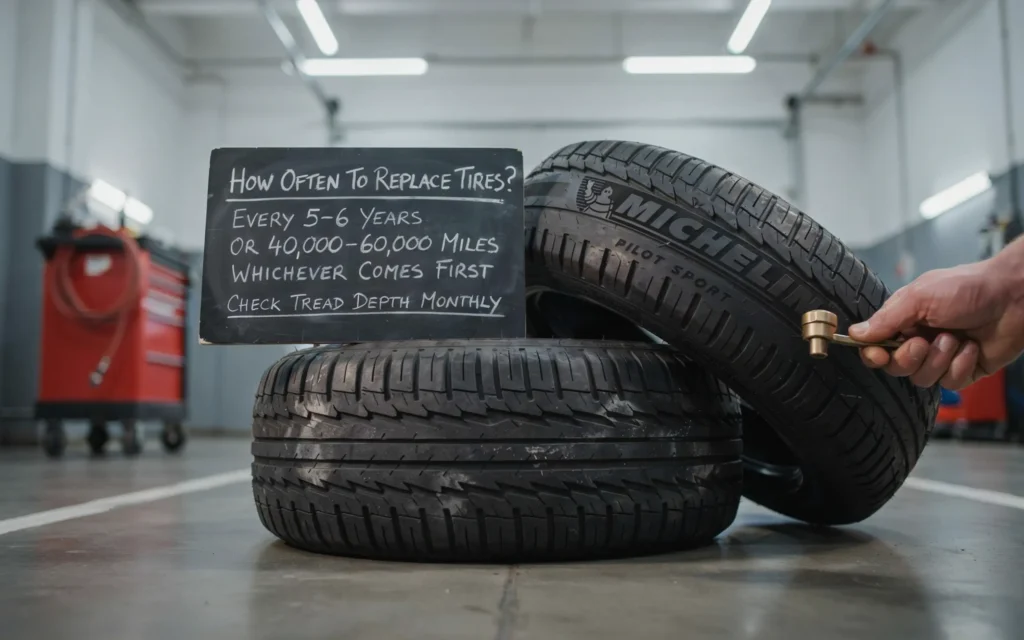
So how often should tires be replaced? The honest answer is that it depends on several factors. But here are the key takeaways to remember:
First, pay attention to age. Most tires need replacement between 6 and 10 years from their manufacturing date. The 6-year mark is when you should start taking replacement seriously. The 10-year mark is the absolute maximum.
Second, check your tread depth regularly. Start shopping for new tires when your tread reaches 4/32 of an inch. Do not wait until you hit the legal minimum of 2/32 of an inch.
Third, inspect your tires visually. Look for cracks, bulges, uneven wear, and other signs of damage. If you see any of these warning signs, replace the tire immediately.
Fourth, maintain your tires properly. Check pressure monthly, rotate them regularly, and keep your wheels aligned. Good maintenance helps you get the most life out of your tires.
Your tires are the connection between your car and the road. They affect every aspect of your driving experience, from braking to handling to fuel efficiency. Taking the time to understand how often should tires be replaced is one of the smartest things you can do as a driver. It keeps you safe, saves you money in the long run, and gives you peace of mind every time you get behind the wheel.
Do not wait until you have a problem. Check your tires today. Find the DOT codes. Measure your tread depth. Look for signs of wear and damage. And if you are not sure, take your car to a professional for an inspection. A few minutes of attention now can prevent a dangerous situation later.
Drive safe, and take care of those tires. They take care of you every single day.
Related posts
 How to Strengthen Weak Nails: A Practical Guide to Daily Care
Learn how to strengthen weak nails with simple daily habits, protective care, and targeted hydration. Restore your natural nail strength today. Weak, peeling, or brittle nails…
 What Sounds Do Cats Dislike? 7 Noises That Stress Your Pet
Discover what sounds do cats dislike and why. Learn how to protect your cat’s sensitive hearing from stressful household noises and high-frequency hums. Cats dislike sounds…
 Restoring Faded Black Clothing: Practical Methods and Reality Checks
Can you restore faded black clothing? Learn the difference between temporary color revival and permanent redyeing, plus how to prevent future fading. You can restore the…