
Why Do Dogs Circle Before Lying Down? The Science Behind the Spin
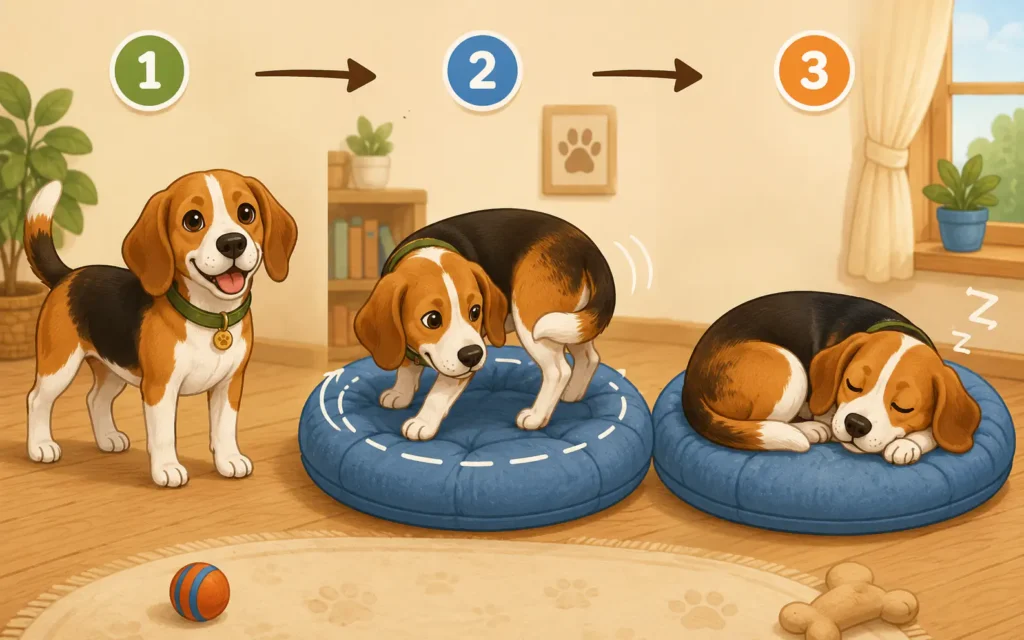
Dogs circle before lying down because of a deeply ingrained evolutionary instinct inherited from their wild ancestors. Long before dogs slept on plush orthopedic beds, wild canines had to prepare their own sleeping quarters in rough outdoor environments. Spinning in circles was a practical way to survive the night.
By turning in circles, wild dogs flattened tall grass, packed down snow, and cleared away hidden hazards like rocks, thorns, snakes, or insects. This simple routine transformed a patch of wilderness into a safe, comfortable nest. Today, even though your dog sleeps on a soft rug or a dedicated pet bed, this ancestral programming remains active in their brain.
While this behavior is entirely normal for most dogs, sudden changes in how your dog circles can sometimes point to physical discomfort. Understanding the difference between a cozy bedtime ritual and a struggle to find comfort is key to keeping your pet healthy.
Safety checks
- Circling is a deeply ingrained evolutionary instinct inherited from wild canine ancestors.
- The behavior originally served to create a safe, comfortable, and temperature-regulated sleeping space.
- Dogs use their paws during this ritual to clear debris and mark the area with their scent.
- Excessive, frantic, or painful-looking circling can be a sign of arthritis, anxiety, or cognitive decline.
| Topic | When it helps | What to keep in mind |
|---|---|---|
| 1 | If your dog scratches at their bed while circling, they are trying to mimic this flattening action. Provide a bed with loose blankets they can easily manipulate. | In the wild, tall grass, brush, and leaves make for an uneven and potentially painful bed. Circling repeatedly acts as a natural lawnmower, flattening the vegetation to create a sm |
| 2 | Observe if your dog performs this behavior more intensely outdoors on grass compared to indoors on carpet. | Sleeping in the wild comes with the risk of unwanted bedfellows. Turning in circles disturbs the immediate area, forcing snakes, spiders, rodents, and biting insects to scurry away |
| 3 | Notice if your dog circles more tightly in the winter or spreads out flat after a quick spin in the summer. | Wild dogs used circling to modify their microclimate. In cold weather, curling into a tight ball after circling preserved body heat. In hot weather, scratching and circling exposed |
| 4 | Multi-dog households may notice more frequent scratching and circling as dogs establish ownership of specific sleeping spots. | Dogs have scent glands located in their paw pads. When they circle and scratch at their sleeping spot, they leave behind unique chemical signatures that claim the space as theirs, |
The Evolutionary Roots of the Bedtime Spin
Why Do Dogs Circle Before Lying Down. To understand why your dog spins in circles, you have to look back thousands of years to their wild ancestors, the wolves. In the wild, survival depended on preparation. A wolf could not simply flop down anywhere; doing so exposed them to predators, cold winds, and uncomfortable terrain.
Circling allowed wild canines to assess their immediate surroundings. By turning 360 degrees, they could determine the direction of the wind. Sleeping with their nose pointed into the wind allowed them to catch the scent of approaching predators quickly, giving them a vital head start if they needed to flee.
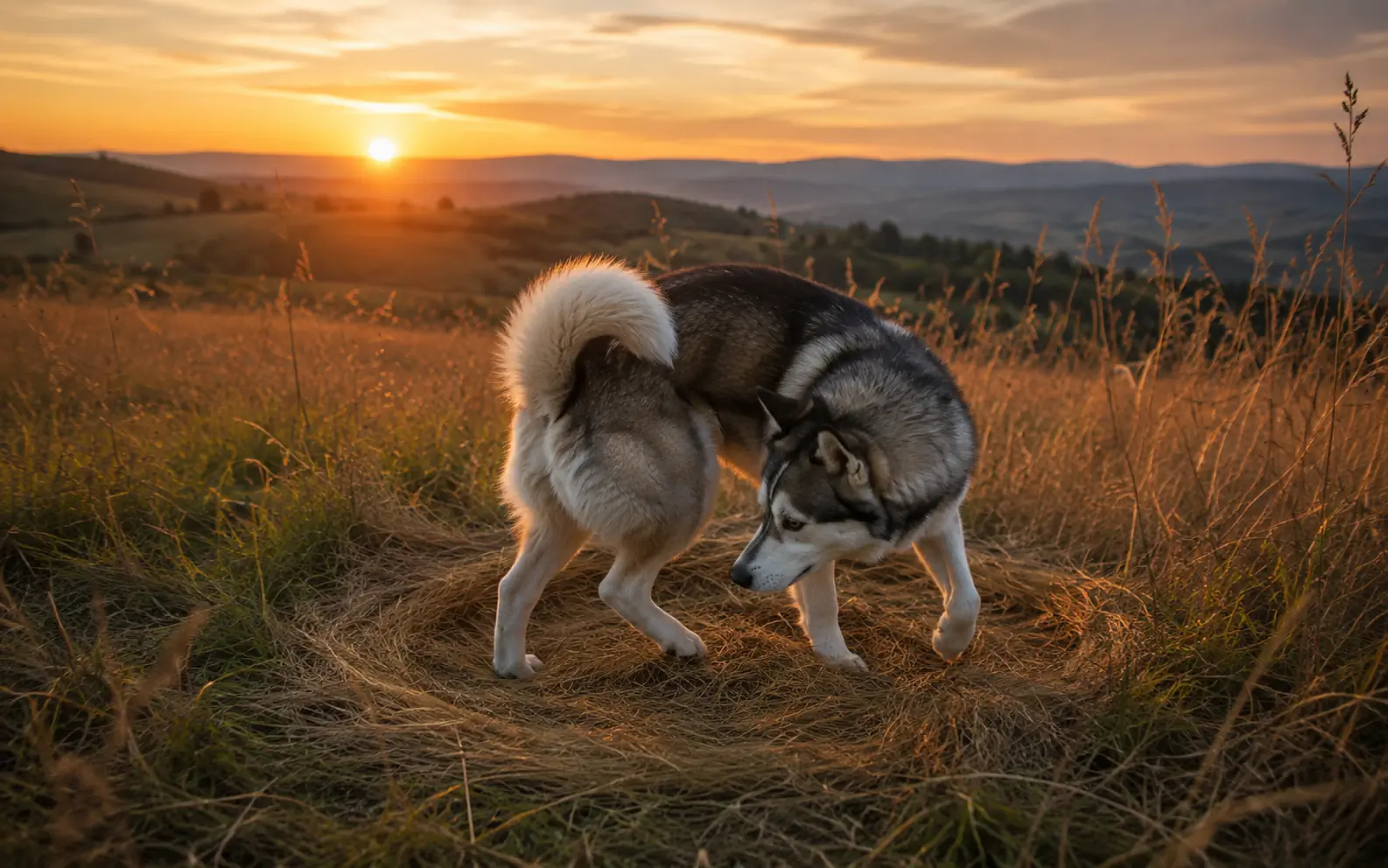
A husky spinning three times on a living room rug before curling into a tight, nose-to-tail ball, mimicking how its ancestors conserved heat in arctic winds.
Do not punish or interrupt a dog for circling or light scratching before bed, as this can cause unnecessary stress and anxiety.
- Wind direction assessment: Helps detect incoming scents and predators.
- Visual sweep: Offers one final look at the horizon before lowering their guard.
- Pack alignment: Allowed wild packs to arrange themselves safely together.
| Wild Canine Instinct | Domestic Dog Expression |
|---|---|
| Trampling tall grass and brush | Scratching and circling on rugs or dog beds |
| Digging into cool earth or snow | Pushing blankets around to create a nest |
| Scanning for predators before sleep | A quick visual check of the room while spinning |
| Marking territory with paw scent glands | Scratching the bed surface before lying down |
When Circling Signals Pain or Discomfort
While a few quick spins are perfectly normal, excessive or frantic circling can indicate an underlying health issue. As dogs age, they often develop joint pain, arthritis, or spinal issues. When a dog is in pain, finding a comfortable position becomes difficult, leading to repetitive spinning and hesitation.
Another condition to watch for in senior dogs is Canine Cognitive Dysfunction, which is similar to dementia in humans. Affected dogs may become disoriented, pacing and circling aimlessly at night without ever settling down.
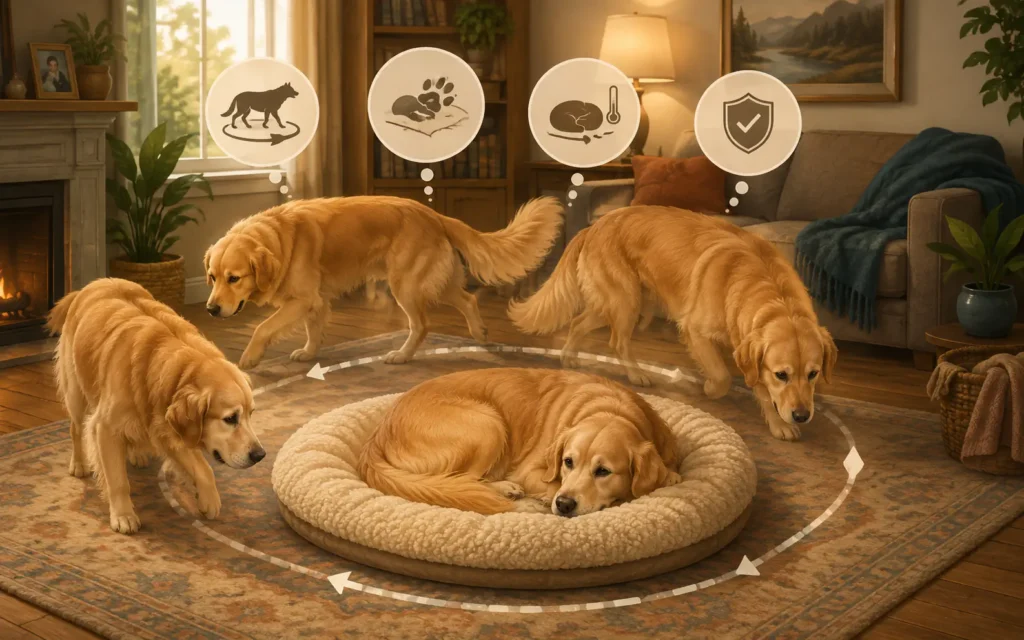
An older golden retriever that circles repeatedly for several minutes, whining softly and hesitating to lower its hindquarters, indicating potential hip dysplasia or arthritis.
Assuming a senior dog’s sudden, frantic spinning is just a cute quirk, when it is actually a sign of physical distress.
- Difficulty lowering down: Taking a long time to transition from standing to lying down.
- Vocalizing: Whining, sighing heavily, or grunting while trying to get comfortable.
- Restlessness: Getting up immediately after lying down to circle again.
- Asymmetrical spinning: Only circling in one direction due to neurological issues.
Evolutionary history (wolves) physical comfort
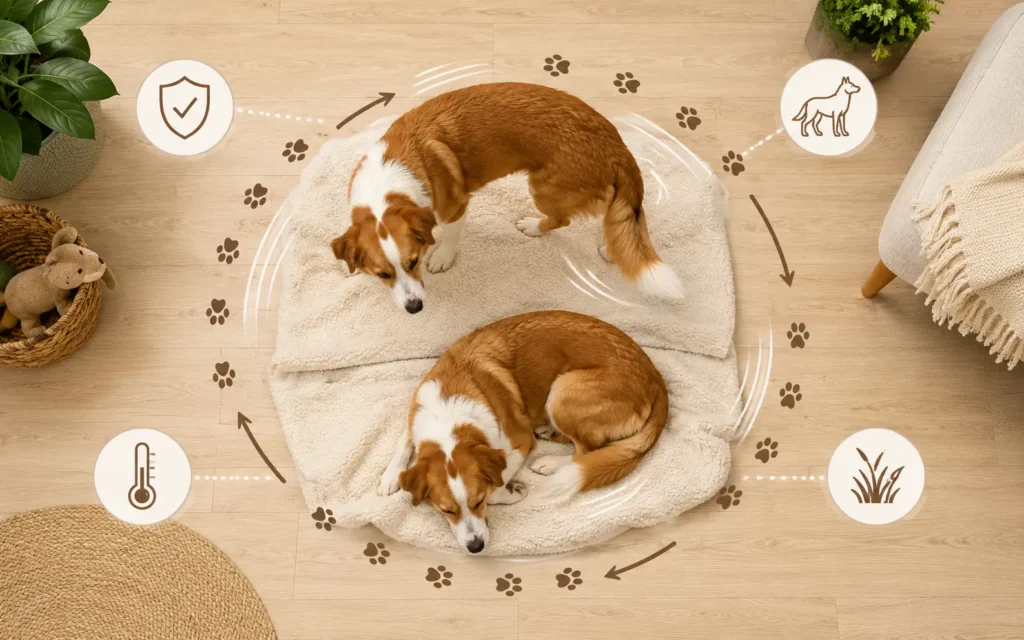
1. Trampling the Ground for Comfort
In the wild, tall grass, brush, and leaves make for an uneven and potentially painful bed. Circling repeatedly acts as a natural lawnmower, flattening the vegetation to create a smooth, contoured sleeping surface.
- If your dog scratches at their bed while circling, they are trying to mimic this flattening action. Provide a bed with loose blankets they can easily manipulate.
- Ancestral Purpose – Flattening vegetation
- Modern Equivalent – Fluffing blankets or pillows
2. Evicting Hidden Pests
Sleeping in the wild comes with the risk of unwanted bedfellows. Turning in circles disturbs the immediate area, forcing snakes, spiders, rodents, and biting insects to scurry away before the dog settles down.
- Observe if your dog performs this behavior more intensely outdoors on grass compared to indoors on carpet.
- Ancestral Purpose – Safety from venomous pests
- Modern Equivalent – Checking the bed surface
3. Temperature Regulation
Wild dogs used circling to modify their microclimate. In cold weather, curling into a tight ball after circling preserved body heat. In hot weather, scratching and circling exposed cooler layers of soil beneath the surface.
- Notice if your dog circles more tightly in the winter or spreads out flat after a quick spin in the summer.
- Ancestral Purpose – Thermal control
- Modern Equivalent – Seeking warm or cool spots
4. Scent Marking and Territory
Dogs have scent glands located in their paw pads. When they circle and scratch at their sleeping spot, they leave behind unique chemical signatures that claim the space as theirs, providing a sense of security.
- Multi-dog households may notice more frequent scratching and circling as dogs establish ownership of specific sleeping spots.
- Ancestral Purpose – Territorial boundaries
- Modern Equivalent – Claiming the favorite couch spot
FAQs
Why do dogs scratch their bed before circling?
Scratching is a nesting instinct. In the wild, it helped loosen hard dirt, clear away debris, or dig a shallow trench for warmth. Indoors, it is a harmless way for your dog to arrange their blankets and mark the bed with their paw scent.
Is it bad if my dog circles too many times?
If your dog spins more than a few times or seems frustrated, anxious, or unable to get comfortable, it could indicate joint pain, skin allergies, or anxiety. Consult your veterinarian if the behavior changes suddenly.
Do all dogs circle before lying down?
No, not all dogs do it. While the instinct is common, some dogs simply flop down without any preparation. It depends on the individual dog’s personality, comfort level, and environment.
Why does my dog circle me before lying down next to me?
Your dog is applying the same nesting instinct to you. They are checking the area for safety, marking you with their scent, and finding the most comfortable angle to cuddle up against your body.
Conclusion
The next time you watch your dog spin in circles before settling down, you are witnessing a living piece of evolutionary history. This quirky bedtime ritual is a direct link to the wild wolves that roamed thousands of years ago, ensuring their safety, comfort, and warmth in a harsh world.
As a pet owner, your main job is to keep an eye on this routine. As long as your dog spins a few times and settles down contentedly, you can smile knowing they are simply making their nest. If the spinning turns into a struggle, a quick trip to the vet can help keep your companion resting comfortably for years to come.
Related posts
 Which GPS Tracker Is Best for Vehicles? How to Choose the Right Tracking Device
Find out which GPS tracker is best for vehicles . Compare OBD-II, battery-powered, and hardwired trackers to secure your car and monitor real-time location. The best…
 Which Car Chargers Support Fast Charging? A Practical Decision Guide
Find out which car chargers support fast charging for your phone or laptop. Learn about USB-PD, Quick Charge, PPS, and how to choose the right wattage.…
 Can Fitness Improve Posture? How Exercise Resets Your Alignment
Discover how targeted fitness routines can fitness improve posture. Learn which exercises strengthen your core and back to fix slouching and stand taller. Yes, a targeted…