
Which GPS Tracker Is Best for Vehicles? How to Choose the Right Tracking Device
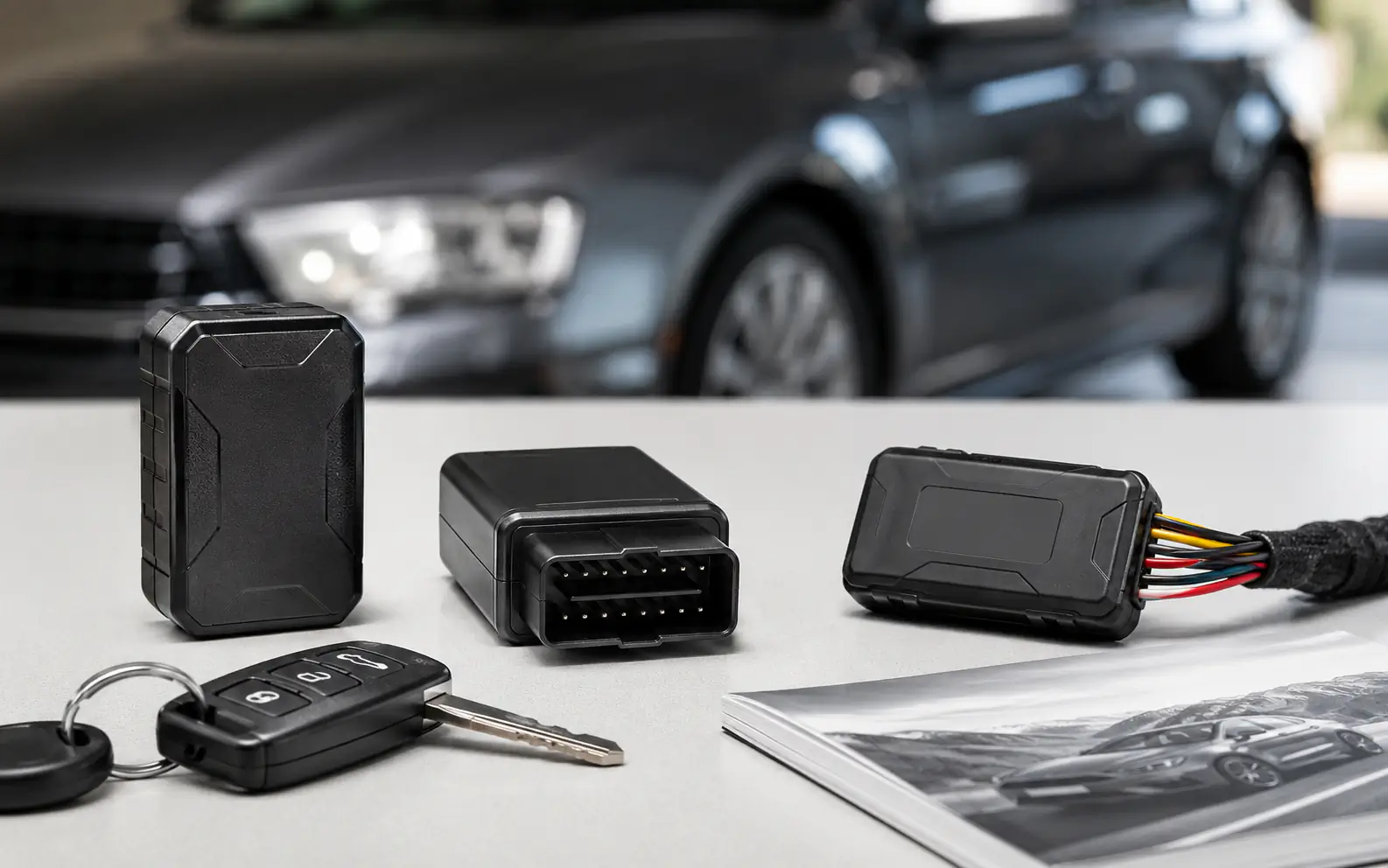
The best GPS tracker for your vehicle depends on whether you prioritize easy installation, hidden placement, or permanent anti-theft security. For most everyday drivers and families, an OBD-II port tracker is the most practical choice.
If your primary goal is discreet theft recovery or monitoring a classic car, a magnetic, battery-powered tracker is the better option. These can be hidden inside glove boxes, under seats, or beneath the chassis.
| Topic | When it helps | What to keep in mind |
|---|---|---|
| OBD-II Port Trackers | Parents monitoring teen drivers, family cars, and drivers who want vehicle health alerts. | They are highly visible and can be easily unplugged by a thief or valet driver. |
| Magnetic Battery-Powered Trackers | Discreet anti-theft protection, classic cars, and temporary asset tracking. | The battery must be manually recharged every few weeks or months, depending on your update frequency. |
| Hardwired GPS Trackers | Commercial fleets, high-value vehicles, and long-term anti-theft security. | Requires basic automotive electrical knowledge or professional installation. |
| Micro GPS Trackers | Users who want to switch the tracker between cars, motorcycles, and personal luggage. | Small size means a smaller internal battery, requiring more frequent charging cycles. |
| Bluetooth Tracking Tags | Budget-conscious owners living in densely populated urban areas. | Useless in remote or rural areas with no passing smartphones. |
Key Decision Criteria: How to Compare Vehicle Trackers
When choosing a vehicle tracker, you must balance how the device is powered with how quickly it updates its location. Real-time tracking requires a constant cellular connection to transmit coordinates to your phone or computer.
You should also consider who will be driving the vehicle. If you are monitoring a teenager or managing employees, driving behavior data like rapid acceleration, hard braking, and speed alerts are incredibly valuable.
A classic car owner buys an OBD-II tracker, only to realize their vintage vehicle lacks an OBD-II port, forcing them to exchange it for a hardwired or magnetic unit.
Buying a tracker without checking the cellular network coverage in your daily driving areas.
- Update Frequency: Real-time tracking (every 3 to 60 seconds) is essential for active recovery but.
- Power Source: Decide if you are willing to recharge a battery every few weeks or.
- Diagnostic Capabilities: OBD-II trackers read engine error codes and fuel levels, adding maintenance value beyond.
- Geofencing: Look for software that lets you draw virtual boundaries on a map and alerts.
| Tracker Type | Installation Difficulty | Battery Maintenance | Theft Concealment |
|---|---|---|---|
| OBD-II Port. | Very Easy. | None (Car Powered). | Low (Visible). |
| Magnetic Battery. | Easy. | Requires Recharging. | High (Hidden). |
| Hardwired. | Moderate to High. | None (Car Powered). | Very High (Hidden). |
| Bluetooth Tag. | Very Easy. | Annual Replacement. | High (Hidden). |
Understanding Subscription Fees and Hidden Costs
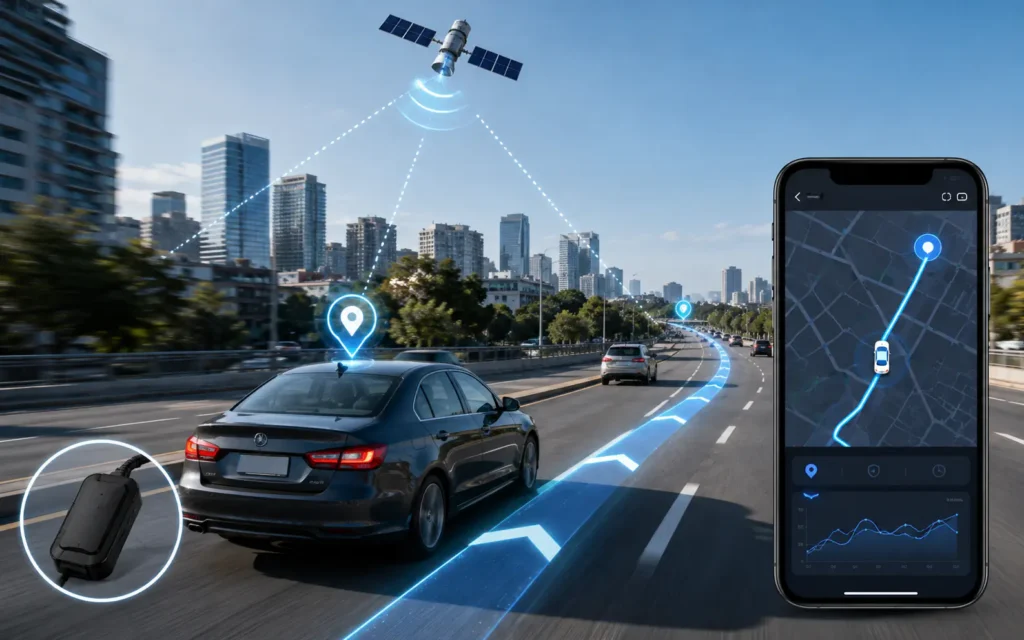
A common point of confusion for first-time buyers is the monthly subscription fee. True GPS trackers use satellite networks to determine their location, but they must use cellular networks (like 4G LTE) to send that location data to your smartphone app.
When comparing subscription costs, look at the contract terms. Some brands offer cheaper monthly rates if you prepay for a full year, while others offer month-to-month flexibility so you can pause the service when the vehicle is in winter storage.
A buyer purchases a cheap tracker online, only to find out they must pay a monthly cellular service fee that costs more than the hardware itself within three months.
Assuming all GPS trackers work for free like a standard handheld hiking GPS.
- Month-to-Month Plans: Best for seasonal vehicles like RVs, boats, or convertibles.
- Annual Prepayment: Offers the lowest overall cost if you plan to keep the tracker active.
- Update Tier Pricing: Some companies charge extra for rapid 3-second updates compared to standard 60-second.
Common Installation Mistakes That Block GPS Signals
GPS signals travel from satellites in space down to your tracker. Heavy metal blocks these signals, while plastic, glass, and fiberglass do not.
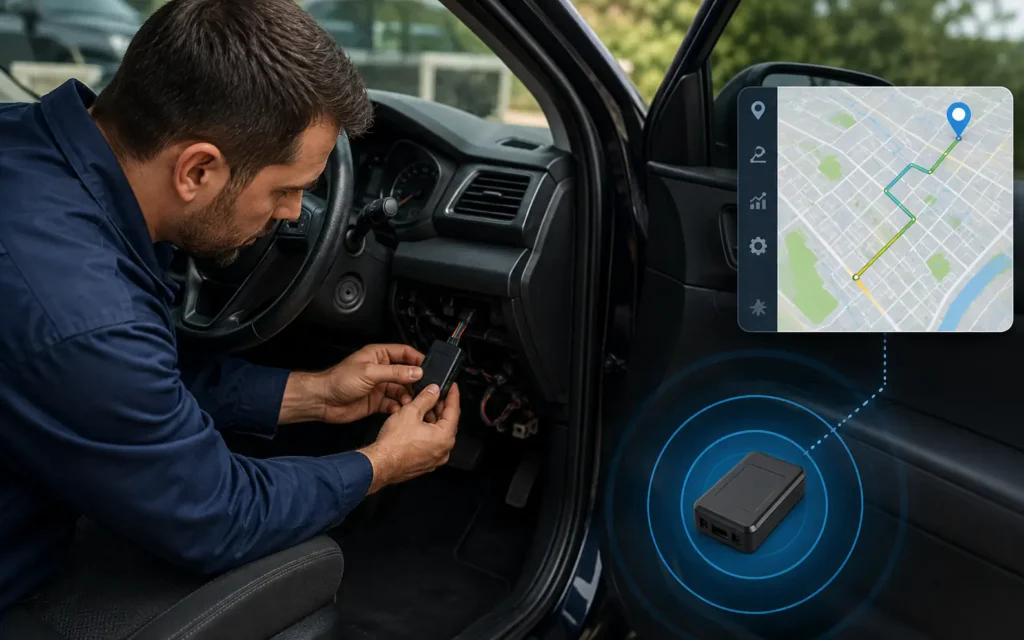
For magnetic trackers mounted underneath the vehicle, the best placement is near the edge of the frame, facing down toward the road. The signal can bounce off the asphalt and reach the tracker’s internal antenna.
Mounting a magnetic tracker deep inside a heavy steel frame rail, which completely blocks satellite signals and causes the device to drain its battery trying to find a connection.
Placing a tracker directly underneath heavy metal components without a clear line of sight to the sky or road surface.
Safety checks
- OBD-II trackers are best for zero-maintenance power and monitoring teen drivers.
- Battery-powered magnetic trackers offer the best concealment but require regular recharging.
- Hardwired trackers provide the highest security for classic cars and commercial fleets.
- True real-time tracking requires a cellular subscription; Bluetooth tags are not reliable for active recovery.
Focus on the main categories
OBD-II Port Trackers: Best for Families and Daily Commuters
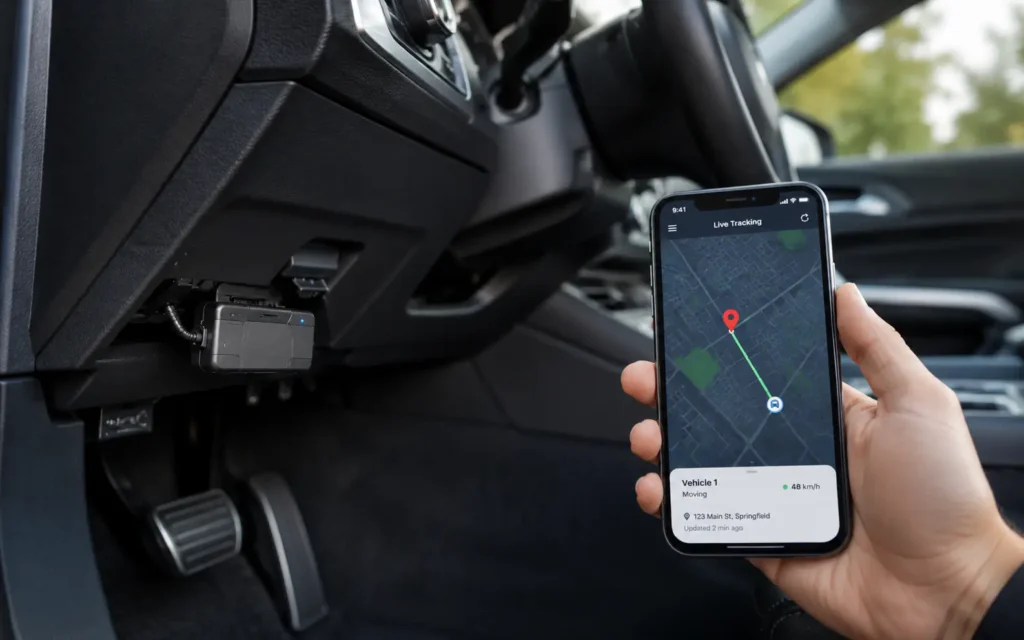
These devices plug directly into the onboard diagnostics port located under the steering wheel. They draw power directly from the vehicle battery, meaning they run continuously without manual recharging.
- Parents monitoring teen drivers, family cars, and drivers who want vehicle health alerts.
- They are highly visible and can be easily unplugged by a thief or valet driver.
- Choose this type if you want a plug-and-play setup with zero battery maintenance.
- Power Source – Vehicle Battery (Continuous).
- Installation – Instant Plug-in.
- Concealment – Low.
Magnetic Battery-Powered Trackers: Best for Hidden Security
These self-contained units feature powerful built-in magnets and internal rechargeable batteries. They can be placed almost anywhere on or inside the vehicle, including inside the trunk, under seats, or attached to the metal frame underneath the car.
- Discreet anti-theft protection, classic cars, and temporary asset tracking.
- The battery must be manually recharged every few weeks or months, depending on your update frequency.
- Opt for a model with a dark mode that disables flashing LED lights to keep the device completely hidden.
- Power Source – Rechargeable Internal Battery.
- Installation – Magnetic Mount.
- Concealment – High.
Hardwired GPS Trackers: Best for Permanent Fleet and Theft Protection
Hardwired trackers are spliced directly into your vehicle’s 12V electrical wiring, usually behind the dashboard or stereo system. They remain completely out of sight and draw continuous power from the car, often featuring a small backup battery in case the main car battery is disconnected.
- Commercial fleets, high-value vehicles, and long-term anti-theft security.
- Requires basic automotive electrical knowledge or professional installation.
- Ensure the model you choose has an ignition-sensing feature to accurately track engine hours.
- Power Source – Vehicle Wiring (Continuous).
- Installation – Professional/Wired.
- Concealment – Very High.
Micro GPS Trackers: Best for Versatile, Multi-Use Tracking
These ultra-compact devices are designed to be highly portable. While they can track vehicles, they are small enough to slip into a backpack, glove compartment, or motorcycle seat.
- Users who want to switch the tracker between cars, motorcycles, and personal luggage.
- Small size means a smaller internal battery, requiring more frequent charging cycles.
- Look for models that offer geofencing alerts so you are notified the moment the device leaves a set boundary.
- Power Source – Small Internal Battery.
- Installation – Placement Only.
- Concealment – High.
Bluetooth Tracking Tags: Best for Low-Cost Local Recovery
Devices like Apple AirTags or Tile trackers do not use true GPS or cellular networks. Instead, they ping nearby smartphones via Bluetooth to report their location to a crowdsourced network.
- Budget-conscious owners living in densely populated urban areas.
- Useless in remote or rural areas with no passing smartphones.
- Only use these as a secondary backup system rather than a primary real-time vehicle recovery tool.
- Power Source – Coin Cell Battery (1 Year).
- Installation – Placement Only.
- Concealment – High.
FAQs
Which is better, an AirTag or a real GPS tracker for a car?
A real GPS tracker is far superior for vehicle security. AirTags rely on nearby Apple devices to update their location, making them unreliable in rural areas.
What is the best car tracking device with no monthly fee?
If you want absolutely no monthly fees, a Bluetooth tracking tag like an AirTag or Tile is the simplest option, though it has limited range. Alternatively, some passive GPS loggers record location data to.
What is the best hidden GPS tracker for my car?
A magnetic, battery-powered tracker or a hardwired tracker is best for concealment. Magnetic trackers can be hidden under the vehicle chassis or inside the bumper, while hardwired trackers are spliced behind the dashboard, leaving.
Will a vehicle GPS tracker drain my car battery?
OBD-II and hardwired trackers draw very little power and will not drain a healthy car battery during normal daily use. However, if the vehicle sits parked and unused for several weeks, the constant minor.
Conclusion
Choosing the best GPS tracker for your vehicle comes down to identifying your primary goal. If you want a simple, maintenance-free way to monitor driving habits and vehicle health, an OBD-II port tracker is the ideal solution.
Remember to factor in the ongoing subscription costs when making your decision, as real-time tracking requires a cellular connection to keep you updated. By choosing the right hardware type and placing it where signals can easily reach the satellites, you can keep your vehicle secure.
Related posts
 Which Car Chargers Support Fast Charging? A Practical Decision Guide
Find out which car chargers support fast charging for your phone or laptop. Learn about USB-PD, Quick Charge, PPS, and how to choose the right wattage.…
 Can Fitness Improve Posture? How Exercise Resets Your Alignment
Discover how targeted fitness routines can fitness improve posture. Learn which exercises strengthen your core and back to fix slouching and stand taller. Yes, a targeted…
 What Is the Kitchen Workflow Triangle? A Practical Design Guide
Understand what is the kitchen workflow triangle, a classic design concept for efficient cooking. Learn how to arrange your sink, stove, and fridge for better movement.…