
What Is The Purpose Of Cutting Boards
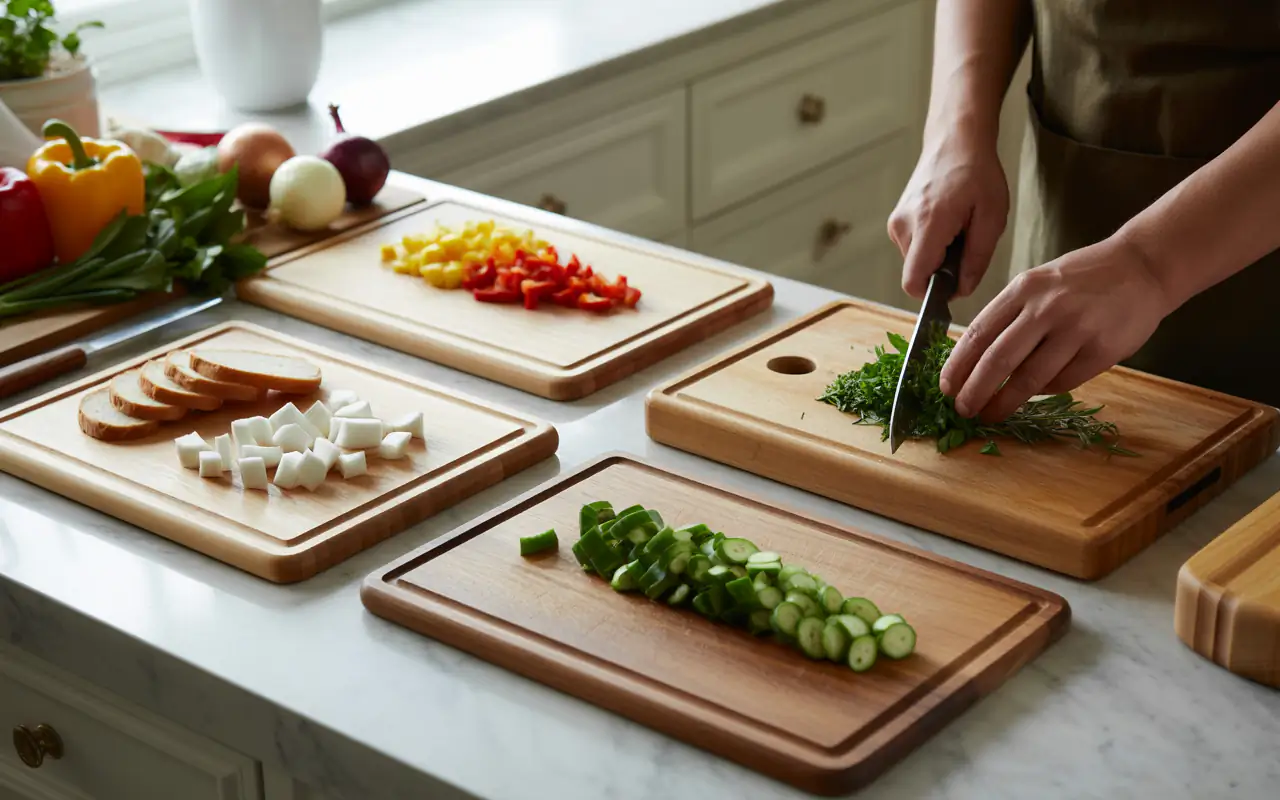
Curious about the purpose of cutting boards? These kitchen tools protect your counters, keep knives sharp, and stop bacteria from spreading. Learn why the purpose of cutting boards goes beyond just chopping food safely.
If you have ever cooked a meal, you have probably used a cutting board. It is that flat piece of wood, plastic, or bamboo sitting on your counter. But have you stopped to ask: what is the purpose of cutting boards? Many people think it is just a surface to chop onions or slice bread. However, the real answer is much more interesting.
A cutting board does three main jobs. It protects your kitchen counters from knife marks. It keeps your knives from getting dull too fast. And it helps you keep raw meat away from fresh vegetables so you do not get sick. That last part is very important for food safety.
In this article, I will share everything you need to know about the purpose of cutting boards. You will learn why every kitchen needs at least one. You will also find out how to pick the right board and take care of it. Let us get started.
The Main Jobs of a Cutting Board
To fully understand the purpose of cutting boards, we need to look at each job one by one. These tools are not just random pieces of material. They are carefully made to solve real problems in the kitchen.
Protecting Your Countertops
Imagine chopping a hard carrot directly on your granite or marble counter. The knife blade would scratch the surface over time. Those scratches can trap dirt and bacteria. They also look bad. A cutting board acts like a shield. It takes all the knife hits so your counter stays smooth and clean.
Most counter materials are expensive to fix or replace. Wooden counters can get deep cut marks. Stone counters can chip. Plastic laminate counters can peel. A simple board prevents all that damage. That is a big part of the purpose of cutting boards.
Keeping Knives Sharp
A sharp knife is a safe knife. Dull knives slip and cause cuts. When you chop on a hard surface like stone or glass, the knife edge bends and rolls over. That makes the knife dull very fast. A good cutting board has a softer surface. Wood and plastic give just a little bit under the knife. This keeps the edge straight and sharp for much longer.
Chefs know this well. They spend good money on quality knives. They also spend money on good cutting boards. The board and the knife work together. If you want your knives to last, you need a proper board. That is another key part of the purpose of cutting boards.
Preventing Cross Contamination
This is the most important job for safety. Raw chicken, beef, or fish can carry harmful germs like Salmonella and E. coli. If you cut raw meat on a board and then cut a tomato on the same board without washing it, the germs move to the tomato. That is called cross contamination. Eating that tomato can make you very sick.
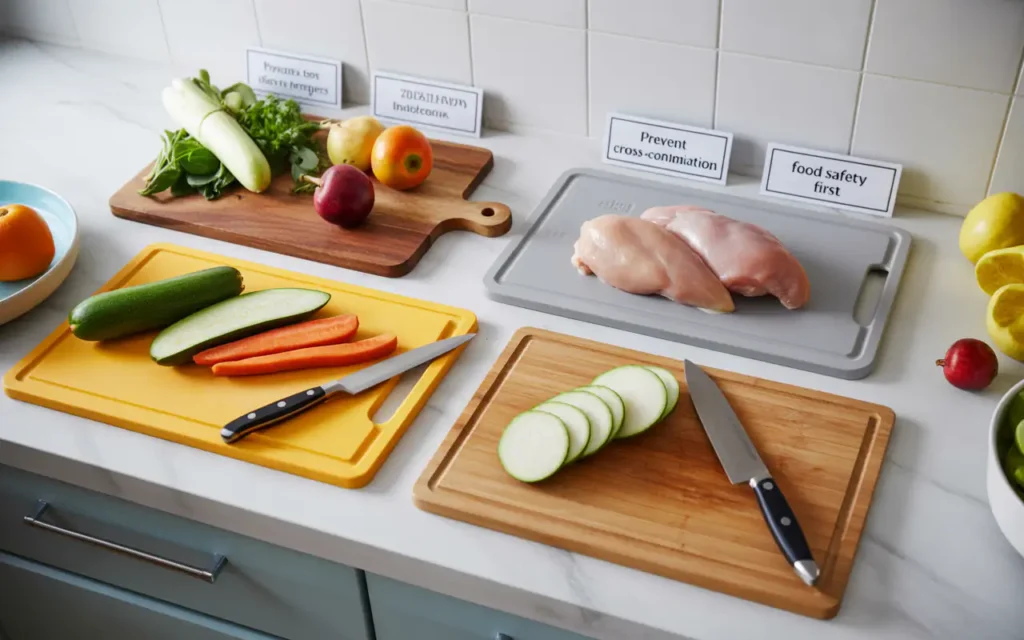
A cutting board helps you separate foods. Many people use one board for raw meat and a different board for fruits and vegetables. Some boards have two sides. You can use one side for meat and flip it over for produce. The purpose of cutting boards includes keeping your family safe from food poisoning.
A cutting board is the unsung hero of kitchen safety. It is the barrier between raw germs and your finished meal.”
— Julia Child, legendary chef and author
Different Materials, Different Purposes
Not all cutting boards are the same. The material changes how the board performs. Here is a simple table to show you the main types and their best uses.
| Material | Best For | Main Benefit |
|---|---|---|
| Wood (maple, walnut) | Meat, vegetables, bread | Gentle on knives, natural antibacterial properties |
| Plastic (polyethylene) | Raw meat, fish | Dishwasher safe, easy to sanitize |
| Bamboo | Light chopping, fruits | Eco-friendly, hard surface |
| Composite (paper/resin) | Heavy daily use | Very durable, heat resistant |
Each material serves the purpose of cutting boards in a slightly different way. Let me explain more.
Wooden Cutting Boards
Wood is a classic choice. It looks nice on your counter. It feels good under your knife. Wood has tiny fibers that close up after a cut. This helps push bacteria away from the surface. Studies show that wood boards are naturally somewhat antibacterial. Maple is a popular type because it is hard but not too hard. It does not dull knives quickly.
The downside is that wood needs more care. You cannot put it in the dishwasher. You need to hand wash it and oil it sometimes. But many people love wooden boards for daily cooking.
Plastic Cutting Boards
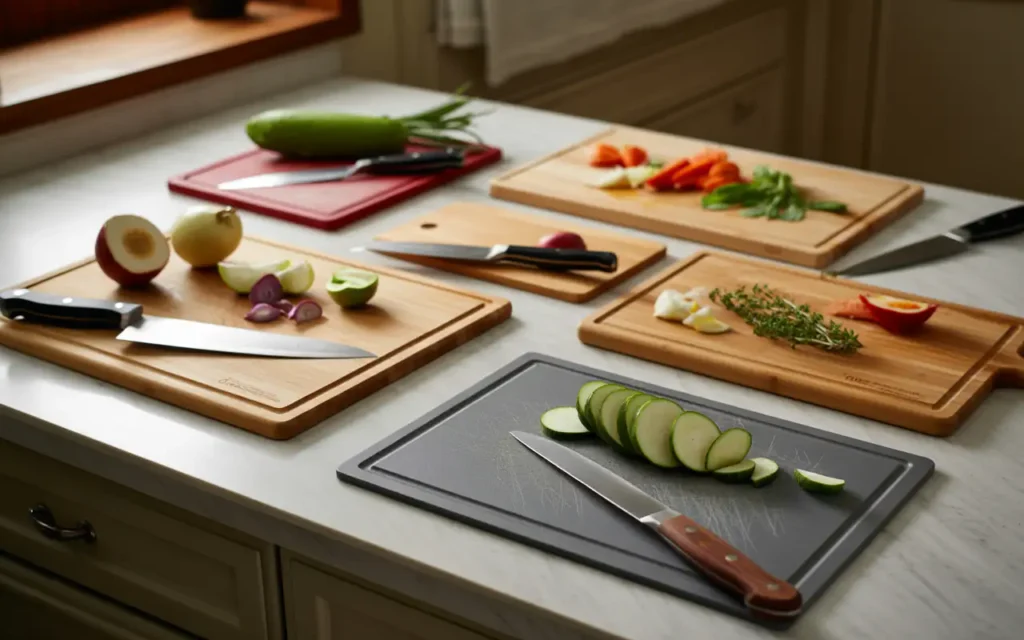
Plastic boards are very common. They are cheap and light. You can put them in the dishwasher, and the hot water kills germs. This makes them great for raw meat and chicken. Many restaurants use colored plastic boards. Red for meat, green for vegetables, yellow for chicken, and so on.
The problem is that plastic gets deep knife grooves quickly. Those grooves can hide bacteria even after washing. When the board gets too many cuts, you need to replace it or sand it down. Still, plastic works very well for the purpose of cutting boards when used correctly.
Bamboo Cutting Boards
Bamboo is not actually wood. It is a grass. But it is very hard. Some people like bamboo because it grows fast and is good for the environment. However, that hardness can dull your knives faster than maple or walnut. Bamboo is good for light jobs like cutting fruit or bread. It is not the best for heavy chopping.
Composite Boards
These are made from paper fibers and resin pressed together. They are very hard and smooth. They do not soak up juices. You can put hot pans on some of them. They also do not dull knives as badly as glass or stone. Composite boards are expensive but last a long time.
How to Use Cutting Boards the Right Way
Knowing the purpose of cutting boards is one thing. Using them properly is another. Here are some simple tips to get the most out of your board.
Use Separate Boards for Raw Meat
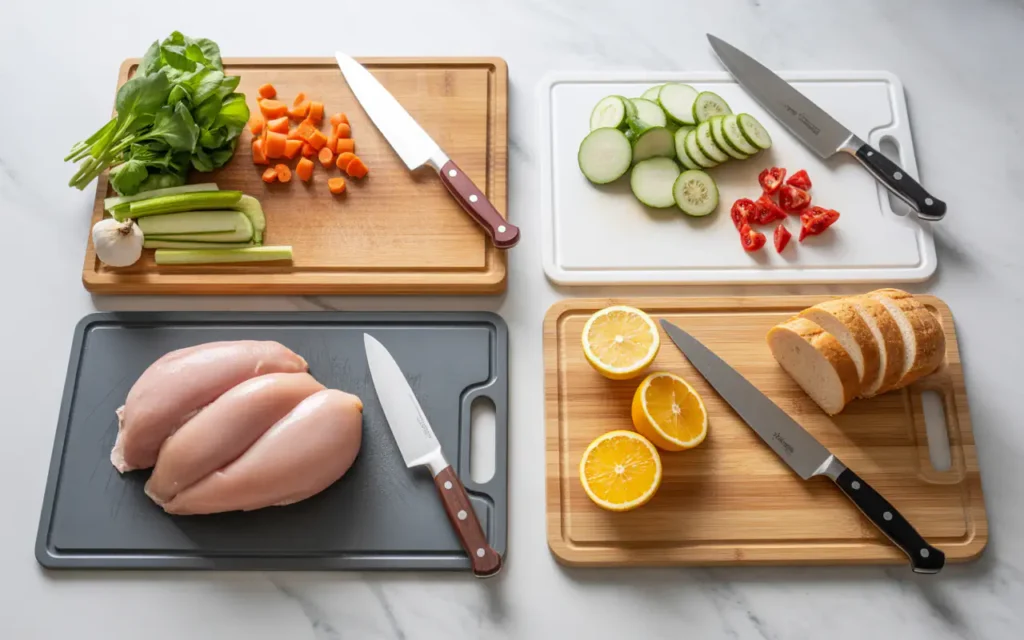
This is the number one rule. Keep one board just for raw meat, poultry, and fish. Use another board for everything else. If you only have one board, wash it with hot soapy water after cutting meat. Then dry it before cutting other foods. Better yet, use the two sides. Mark one side with a permanent marker if needed.
Wash Your Board Correctly
For plastic boards, put them in the dishwasher on the hot cycle. For wood boards, wash by hand with warm soapy water. Do not soak wood in water. That can cause cracks. After washing, rinse and dry with a towel. Let it stand on its edge to air dry completely.
Some people think they can just wipe a board with a cloth. That is not enough. Germs need hot water and soap to be removed. The purpose of cutting boards includes being easy to clean, but you still have to do the cleaning.
Replace Worn Boards
When a plastic board has many deep cuts, it is time for a new one. Those cuts trap bacteria that even a dishwasher may not kill. Wood boards can last for many years if you sand them lightly when they get rough. But if a wood board has deep cracks or smells bad, replace it.
“A cutting board with deep grooves is a home for germs. Do not be afraid to throw it away and buy a fresh one.”
— Dr. Ruth Frechman, registered dietitian and food safety expert
Choosing the Right Board for Your Kitchen
Now that you know the purpose of cutting boards, how do you pick one? Here are some questions to ask yourself.
How Much Space Do You Have?
If you have a small kitchen, get a medium sized board that fits in your sink. A board that is too big is hard to wash. Too small, and food falls off the sides. A good size for most people is about 12 by 18 inches.
What Foods Do You Cook Most?
If you cook a lot of raw meat, get a plastic board or a few plastic boards. You can put them in the dishwasher after each use. If you do mostly vegetables and bread, a wood board is wonderful. It looks good and feels nice to use.
What Is Your Budget?
You can find a decent plastic board for five dollars. A nice wood board may cost forty dollars or more. But a good wood board can last ten years or more with proper care. That makes it cheaper over time. Think about the long term value.
Here is a second table to help you decide based on your cooking habits.
| Your Cooking Style | Recommended Board | Why |
|---|---|---|
| Mostly vegetables and fruit | Wood or bamboo | Gentle on knives, looks attractive |
| Frequent raw meat dishes | Plastic (multiple colors) | Dishwasher safe, easy to color code |
| Bread and pastries only | Large wood or composite | No deep cuts needed, easy to wipe |
| Heavy daily cooking for family | One plastic + one wood | Best of both worlds for safety and feel |
Taking Care of Your Cutting Board
A good board needs a little love. Proper care helps the board do its job longer. It also keeps the board cleaner and safer.
Oiling Wood Boards
Wood can dry out and crack. To prevent this, rub food grade mineral oil on the board once a month. Let it soak in for a few hours. Then wipe off the extra. Do not use cooking oil like olive oil. That can go rancid and smell bad. You can buy special cutting board oil, but plain mineral oil from the drugstore works fine.
Sanitizing Without Bleach
Bleach is strong and can leave a smell. Instead, make a mix of one tablespoon of white vinegar and one gallon of water. Wipe this on the board after washing. Let it sit for a minute. Then rinse and dry. Vinegar kills many bacteria safely.
Removing Stains and Smells
Onions and garlic can leave smells on wood. Sprinkle baking soda on the board. Rub it with a half of a lemon. Let it sit for five minutes. Then rinse. This works very well. For plastic boards, a paste of baking soda and water scrubs away stains.
“The best cutting boards are the ones you are not afraid to use and clean. A dirty board helps no one.”
— Alton Brown, food scientist and TV host
Common Myths About Cutting Boards
There are many wrong ideas about the purpose of cutting boards. Let me clear up a few.
Myth 1: Glass Cutting Boards Are Best
Glass is very hard. It destroys knife edges in just a few cuts. It is also loud and slippery. Glass boards look nice but they fail the main job of protecting knives. Avoid them for actual cutting. Use glass only as a serving platter.
Myth 2: Wood Is Unsafe Because It Holds Bacteria
This is false. Research from the University of California Davis showed that wood boards actually kill bacteria over time. The wood fibers pull bacteria down and trap them. The bacteria then die. Plastic boards, when new, are easier to clean. But old scratched plastic boards can hold more live bacteria than wood.
Myth 3: You Can Cut Anything on Any Board
No. The purpose of cutting boards is specific to the material. Do not cut raw meat on a wood board if you plan to use it for bread right after without washing. Do not cut on glass or stone at all. Use the right board for the right food.
Frequently Asked Questions
1. What is the purpose of cutting boards in a home kitchen?
The purpose of cutting boards is to protect your countertops, keep your knives sharp, and prevent cross contamination between raw meats and ready to eat foods. They create a safe, stable surface for all your chopping tasks.
2. How often should I replace my cutting board?
Replace plastic boards when they have deep knife grooves or permanent stains. This could be every one to two years with heavy use. Wood boards can last many years if you sand and oil them. Replace wood boards if they crack badly or develop a sour smell that does not go away.
3. Can I put a wood cutting board in the dishwasher?
Never put wood or bamboo in the dishwasher. The high heat and water will warp, crack, or split the board. Hand wash wood boards with warm soapy water and dry them right away.
4. Do I really need more than one cutting board?
Yes, if you cook raw meat at home. Having at least two boards is the easiest way to avoid cross contamination. Use one for meat and one for vegetables. You can also use a two sided board. But separate boards are safer.
5. What is the best material for the purpose of cutting boards regarding knife sharpness?
Wood, specifically maple or walnut, is the best for keeping knives sharp. These woods are hard enough to be durable but soft enough to not roll the knife edge. Plastic is second best. Avoid bamboo, glass, and stone if you care about your knives.
6. How do I remove garlic smell from my cutting board?
Rub the board with a paste of baking soda and water. Let it sit for ten minutes. Then scrub with a lemon half and rinse. For plastic boards, wash with hot soapy water and then wipe with white vinegar.
7. Is it okay to cut raw chicken on a wood board?
Yes, but you must wash the board thoroughly with hot soapy water right after. Do not use the same board for other foods without cleaning it. Many experts prefer plastic for raw chicken because it can go in the dishwasher for high heat sanitizing.
8. Why do some cutting boards have rubber edges?
Rubber edges or feet stop the board from sliding on your counter. This is a safety feature. A slipping board can cause the knife to go off course and cut your hand. Boards with rubber grips are easier and safer to use.
Conclusion
So, what is the purpose of cutting boards? It is not just a place to chop. The purpose of cutting boards includes protecting your expensive countertops from knife marks. It includes keeping your knives sharp and safe to use. Most importantly, it includes preventing cross contamination that can cause serious food poisoning.
Whether you choose wood, plastic, or bamboo, each type serves the purpose of cutting boards in a valuable way. Wood feels good and has natural properties that fight bacteria. Plastic is easy to clean and perfect for raw meat. Bamboo is eco friendly but a little hard on knives. The best choice depends on how you cook and what you cook.
Remember to care for your board properly. Wash it after each use. Replace it when it gets too worn. Use separate boards or separate sides for meat and produce. These small habits make a big difference in your kitchen safety.
A good cutting board is a simple tool. But it does serious work every single day. Next time you chop an onion or slice a tomato, take a moment to appreciate that flat piece of wood or plastic. It is doing three important jobs at once. That is the real purpose of cutting boards. Keep yours clean, use it wisely, and it will serve you well for years to come.
Related posts
 What is Food Contamination? Causes, Types, and Prevention
Understand what is food contamination , including its common causes like microorganisms and chemicals. Learn how to prevent it to ensure food safety. Food contamination occurs…
 Can Fitness Help You Sleep Better? The Science and Benefits
Discover how regular fitness Can Fitness Help You Sleep Better , reduce time to fall asleep, and regulate your body’s natural sleep-wake cycle. Learn the science…
 Practical Lighting Ideas for Your Home Garage
Explore smart lighting ideas for your home garage. Discover LED options, task lighting, and layout tips to brighten your space for work, storage, and parking. A…