
Eco Friendly Kitchen Ideas
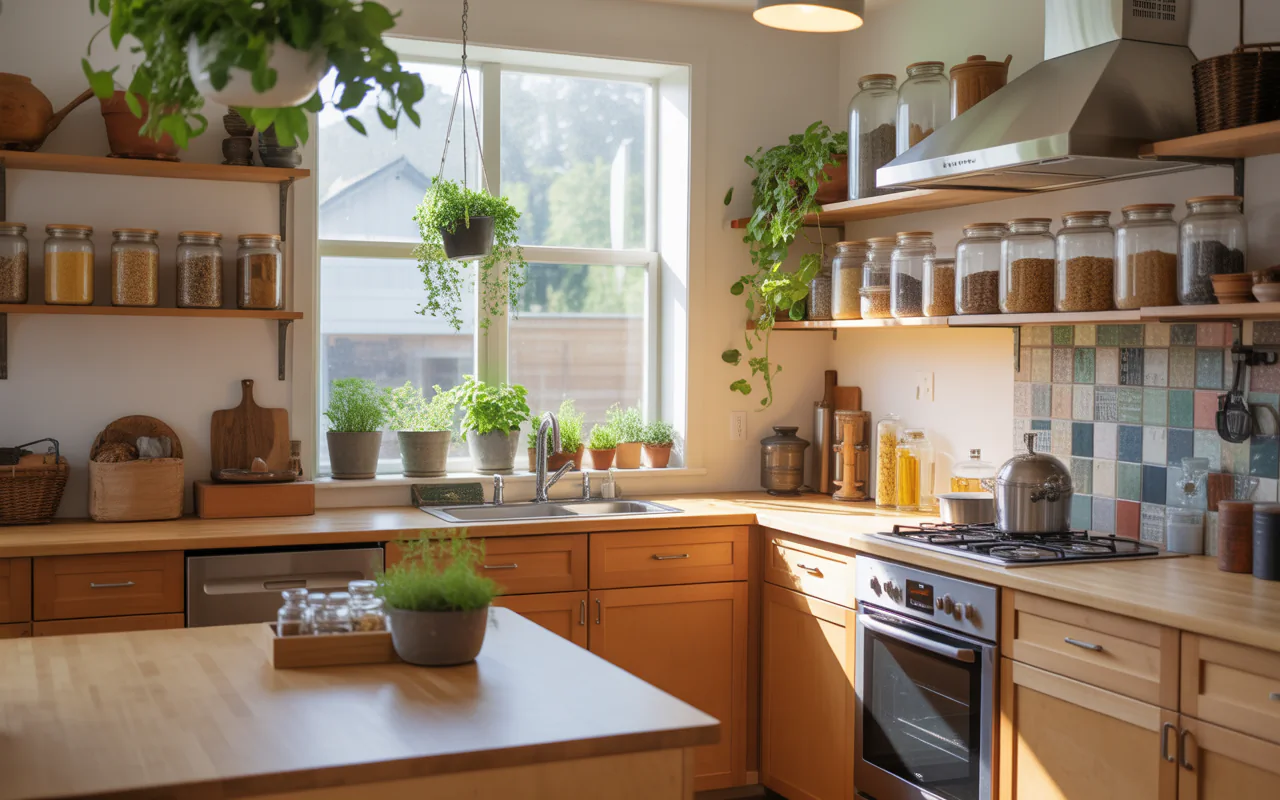
Looking for simple ways to go green? These eco friendly kitchen ideas help reduce waste, save energy, and cut costs. From reusable swaps to composting, get practical tips for a sustainable home.
Making your kitchen greener is easier than you think. You do not need a big budget or a full remodel. Small daily changes add up to a big positive effect on the planet. I have spent years testing simple swaps and habits in my own home. And I am excited to share what works best.
In this guide, you will find many eco friendly kitchen ideas that anyone can try. Whether you rent or own, cook a lot or a little, these tips fit your life. Let us start with why this matters so much.
Why Choose Eco Friendly Kitchen Ideas?
The kitchen is the heart of the home. It is also where we create the most trash. Think about food packaging, plastic bags, paper towels, and leftover scraps. Every year, a typical family throws away lots of things that could be reused or recycled.
By using eco friendly kitchen ideas, you help lower pollution. You also save money on things like disposable plates and plastic wrap. Plus, you teach your family good habits that last a lifetime.
As zero waste expert Bea Johnson once said, “Refusing what you do not need is the first step to a lighter life.” That simple idea guides many of the tips below.
1. Reduce Waste with Smart Swaps
Waste reduction starts with what you buy and how you store food. Many common kitchen items have a green alternative. You just need to know where to look.
Swap Single Use for Reusable
Plastic wrap, sandwich bags, and paper towels create tons of waste. Instead, try these options:
- Beeswax wraps for covering bowls or wrapping cheese.
- Silicone food covers that stretch over any container.
- Cloth napkins and towels that you wash and reuse.
- Glass jars for storing dry goods and leftovers.
I keep a drawer full of cloth napkins. My family uses them every day. We wash them with our regular laundry. It feels good to toss less paper into the bin.
Buy in Bulk with Your Own Containers
Many stores let you fill your own jars with rice, pasta, nuts, and spices. This cuts out plastic bags and boxes. Keep a set of small cloth bags and glass jars in your car. Then you are always ready.
Here is a quick table of common swaps you can make today.
Table 1: Simple Swaps for Less Waste
| Instead of This | Try This Instead |
|---|---|
| Plastic wrap | Beeswax wrap or a plate on top of a bowl |
| Paper towels | Cotton cloths or cut up old t-shirts |
| Plastic water bottles | Reusable stainless steel bottle |
| Single use coffee pods | Reusable pod or a French press |
| Zipper bags | Silicone bags or glass containers |
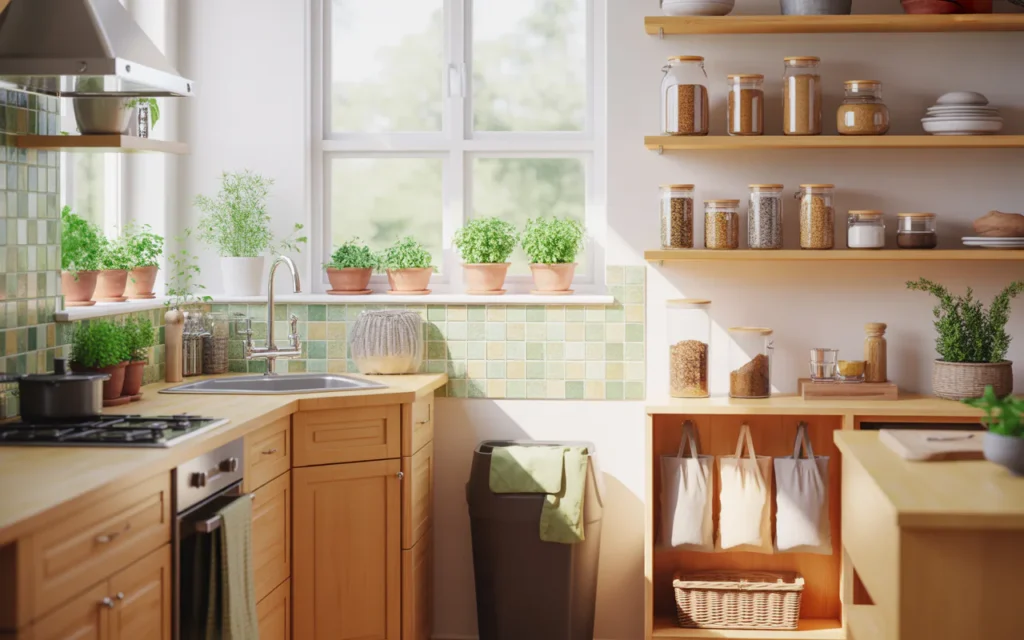
These small changes are some of the best eco friendly kitchen ideas because they work every single day. You will notice less trash in your bin within a week.
2. Save Energy with Efficient Habits
Your kitchen appliances use a lot of electricity. But you can lower that number without buying new machines. Smart habits are free and easy to learn.
Cook Smarter, Not Harder
Use lids on pots to keep heat inside. Match the pot size to the burner. A small pan on a big burner wastes energy. Also, turn off the stove a few minutes early. The leftover heat will finish the job.
When you bake, try to fill the oven. Bake a casserole and some potatoes at the same time. Open the door less often. Each peek lets heat escape.
Use Appliances the Right Way
Your fridge runs all day. Keep it happy by cleaning the coils twice a year. Set the temperature to 37°F (3°C) for the fridge and 0°F (-18°C) for the freezer. Do not pack it too full. Air needs to flow.
Run the dishwasher only when full. Skip the heat dry setting. Open the door and let dishes air dry instead. This simple step cuts energy use by 15 percent.
As energy expert Amory Lovins said, “The cheapest energy is the energy you do not use.” That is very true in the kitchen.
Table 2: Quick Energy Saving Actions
| Action | How Much You Save |
|---|---|
| Use a lid on pots | Up to 20 percent less energy |
| Air dry dishes | 15 percent on dishwasher cost |
| Clean fridge coils | 10 percent better efficiency |
| Turn off oven early | Small but adds up over time |
These eco friendly kitchen ideas for energy work best when you make them a routine. Post a note on your fridge to remind everyone.
3. Water Conservation in the Kitchen
Water is precious. Yet we let the tap run while washing a single apple or rinsing a plate. Small changes in how you use water make a real difference.
Stop the Leaks and Drips
A dripping faucet can waste over 3,000 gallons a year. That is like taking 180 showers. Fixing a worn washer costs less than a dollar. Do it as soon as you hear a drip.
When you wash veggies, fill a bowl instead of running the tap. Use that water to give your houseplants a drink. The same goes for pasta water. Let it cool and then water your garden.
Install Low Flow Fixtures
Aerators on your faucet mix air with water. You get strong pressure but use half the water. They cost about five dollars and screw on in a minute. Most hardware stores carry them.
Also, think about a foot pedal for your sink. It lets you turn water on and off with your foot. That way you never leave the tap running while you scrub a pot.
“We never know the worth of water till the well is dry,” wrote Benjamin Franklin. That old saying still rings true today.
4. Choose Sustainable Materials
If you are ready to buy new things for your kitchen, pick items that last and come from nature. Wood, glass, stainless steel, and cast iron are good choices. Avoid plastic tools that break and end up in landfills.
Cutting Boards and Utensils
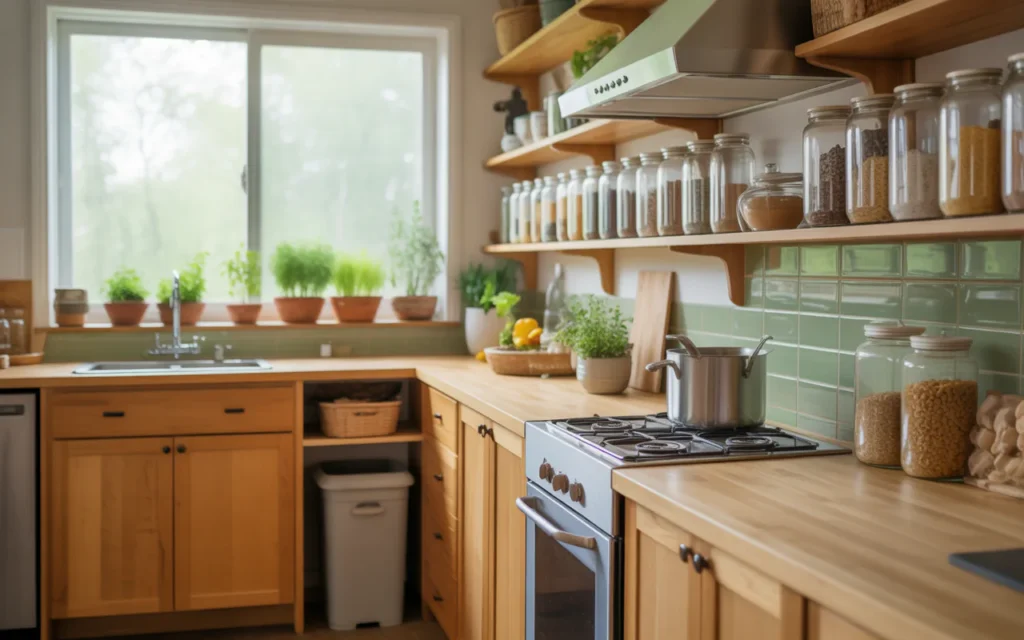
A solid wood cutting board lasts for decades. You can sand it down when it gets knife marks. Bamboo is also great because it grows fast and does not need replanting.
For spoons and spatulas, choose wood or metal. Plastic ones melt and wear out. I have had the same wooden spoon for 15 years. It looks better with age.
Cookware That Stands the Test of Time
Nonstick pans have a coating that flakes off after a few years. That coating goes into your food and the trash. Instead, try cast iron or stainless steel. Cast iron gets better with use. It is naturally nonstick when you season it right.
Glass baking dishes last forever. They do not warp or stain. And you can see your food as it cooks.
These material choices are long term eco friendly kitchen ideas. You buy once and use for life. That saves money and reduces waste.
5. Composting Made Simple
Food scraps do not have to go to the dump. In a landfill, they make methane gas. But in a compost pile, they turn into rich soil for your garden. Even if you live in an apartment, you can compost.
Indoor Composting Options
A small bin under your sink works well. Collect coffee grounds, eggshells, veggie peels, and fruit scraps. Do not add meat, dairy, or oily foods. They smell bad and attract pests.
Empty the bin every few days. You can give the scraps to a community garden. Some cities have curbside compost pickup. Or use a worm bin. Worms eat your scraps and make castings that plants love.
Outdoor Pile or Tumbler
If you have a yard, start a simple pile. Throw in leaves, grass clippings, and kitchen scraps. Turn it with a pitchfork once a week. In a few months, you get dark crumbly compost.
Use that compost on your vegetable beds or indoor plants. It feeds the soil without chemicals.
Home composting advocate Anne-Marie Bonneau said, “We do not need a handful of people doing zero waste perfectly. We need millions of people doing it imperfectly.” So do not worry about getting it perfect. Just start.
6. Eco Friendly Cleaning Solutions
Many store bought cleaners come in plastic bottles. They also have harsh chemicals. You can clean your whole kitchen with three simple ingredients: vinegar, baking soda, and lemon.
Natural Cleaners You Can Make
Mix equal parts white vinegar and water in a glass spray bottle. That cleans countertops, sinks, and windows. The vinegar smell goes away when it dries.
For tough grease, sprinkle baking soda on a wet sponge. Scrub your stovetop or oven door. Rinse with water.
To freshen your garbage disposal, drop in a few lemon peels. Run cold water and turn it on. The citrus smell is clean and nice.
Buy vinegar and baking soda in bulk or in cardboard boxes. Refill your spray bottle again and again. That is a perfect example of eco friendly kitchen ideas in action.
Wash Dishes with Less Impact
Use a dish brush with a wooden handle. The head is replaceable. Or use a loofah sponge that grows from a plant. They dry fast and do not hold bacteria.
For dish soap, look for a solid bar. Liquid soap comes in plastic. Solid soap comes in paper. Rub your wet brush on the bar and scrub away.
7. Grow Some of Your Own Food
You do not need a farm to grow food. A few pots on a sunny windowsill give you fresh herbs. Basil, mint, chives, and parsley grow easily inside. Snip what you need for dinner. The plant keeps growing.
Regrow From Kitchen Scraps
Did you know you can regrow lettuce, green onions, and celery from the leftover ends? Put the white root end in a small dish of water. Change the water every two days. In a week, new leaves appear. Then plant it in soil.
This is one of my favorite eco friendly kitchen ideas because it feels like magic. Plus, you buy fewer vegetables from the store. That means less packaging and less transport pollution.
Start Small and Simple
Pick one herb to start. Put it near a sunny spot. Water it when the soil feels dry. After a month, you will have fresh leaves for cooking. Kids love to watch it grow too.
Frequently Asked Questions
Do eco friendly kitchen ideas cost more money?
Not at all. Many of these tips save you money. Reusable items replace things you buy over and over. Energy and water savings show up on your bills. Composting gives you free soil. The only cost is a little time to form new habits.
How do I start if my family is not on board?
Pick one change and do it yourself. Switch to cloth napkins for your own place setting. Start a small compost bin just for your coffee grounds. When others see how easy it is, they often join in. Lead by example, not by lecture.
What is the single most impactful change?
Stopping single use plastic. Bring your own bags, skip bottled water, and use reusable food storage. Plastic production creates a lot of pollution. And most plastic never gets recycled. So focus on refusal first.
Can I compost if I live in an apartment?
Yes. Use a small countertop bin with a charcoal filter to block smells. Then look for a local drop off spot. Many farmers markets and community gardens accept food scraps. Some cities have compost collection services for a small monthly fee.
Are bamboo products truly eco friendly?
Bamboo grows fast without fertilizer or much water. It also absorbs carbon quickly. But check how the product is made. Some bamboo fabrics use chemicals. For kitchen tools like cutting boards and spoons, solid bamboo is a great choice.
Conclusion
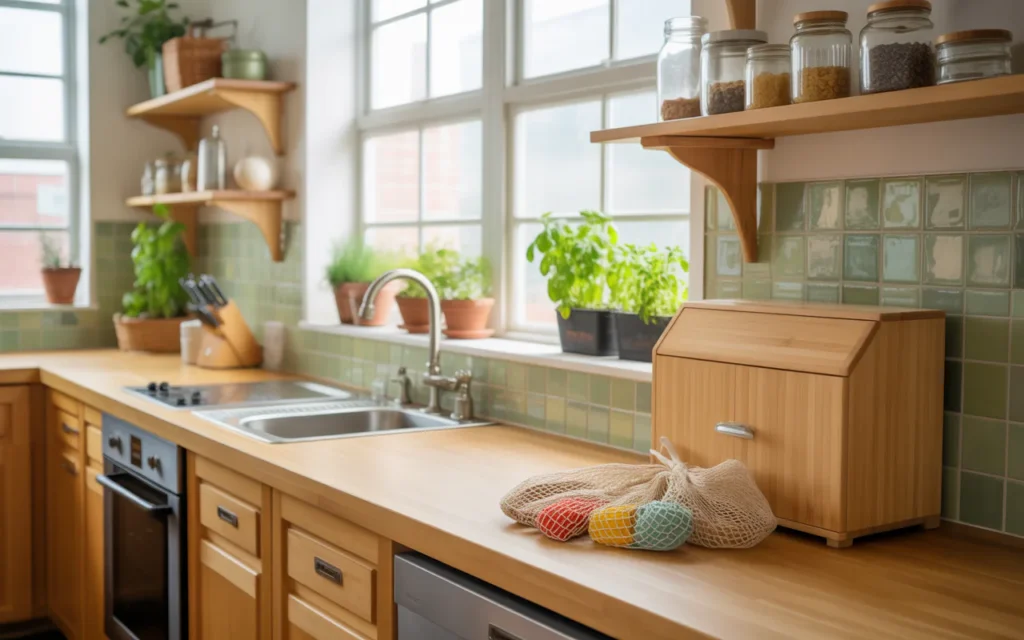
You now have a full set of eco friendly kitchen ideas to try. Pick two or three that feel easy for you. Maybe start with reusable cloth towels and a vinegar cleaning spray. Then add composting or energy smart cooking next month.
Every small step matters. The planet benefits from each piece of plastic you refuse. Your wallet thanks you for each kilowatt and gallon you save. And your family learns that green living is normal and good.
As naturalist John Muir wrote, “When we try to pick out anything by itself, we find it hitched to everything else in the universe.” Your kitchen choices connect to clean air, clean water, and a stable climate.
So go ahead. Open that fridge and wipe the coils. Fill a jar with bulk oats. Start a worm bin. You have the power to make your kitchen a force for good. And it starts with the very next meal you cook.
Related posts
 Best Under Sink Organizers Kitchen 2026: Practical Storage Solutions
Find the best under sink organizers kitchen in 2026. Compare top-rated pull-out bins, L-shaped racks, and protective mats to maximize your cabinet space. The space under…
 Best Kitchen Cabinet Storage Solutions for 2026
Organize your kitchen efficiently with our Best Kitchen Cabinet Storage Solutions. Compare the best organizers for lids, pans, and spices to maximize your space. A cluttered…
 Top Rated Kitchen Shelf Organizers for 2026
Discover the top rated kitchen shelf organizers for 2026. Compare durable racks, magnetic shelves, and tiered storage to maximize your pantry and counter space. A cluttered…