
Practical Lighting Ideas for Your Home Garage
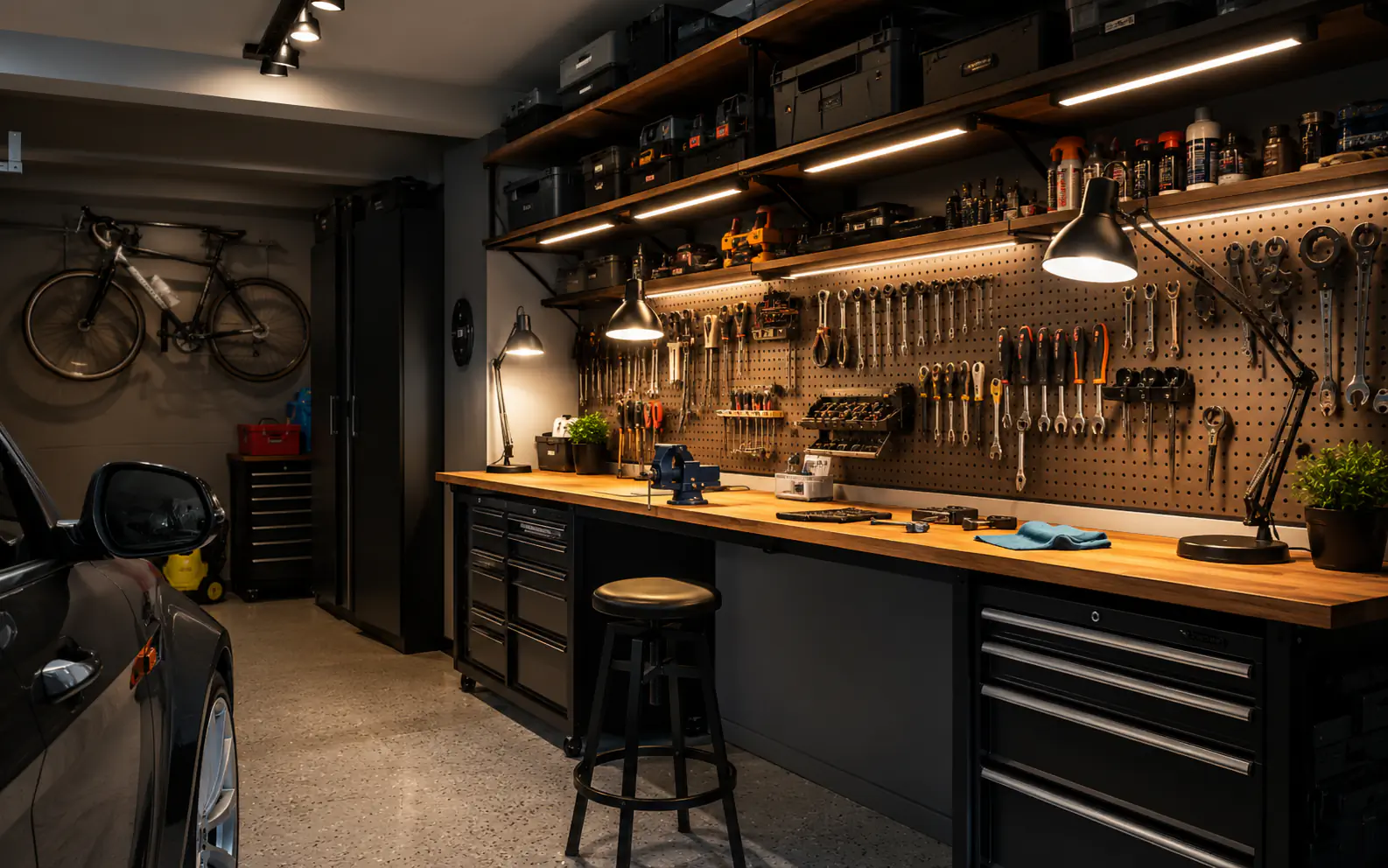
A well-lit home garage goes beyond simply seeing where you’re going; it transforms the space into a functional area for parking, storage, and projects. Effective garage lighting ideas focus on providing ample brightness, reducing shadows, and enhancing safety and productivity.
Choosing the right lighting involves considering the garage’s primary use, the ceiling height, and your budget. Modern LED options offer significant advantages in terms of energy efficiency, lifespan, and light quality, making them a popular choice for homeowners looking to upgrade.
Safety checks
- Match your lighting type and intensity to your garage’s primary use (parking, workshop, storage).
- Layering ambient, task, and accent lighting provides the most flexible and effective illumination.
- LED fixtures offer superior brightness, energy efficiency, and longevity for garage environments.
- Pay attention to lumen output and color temperature for optimal visibility and comfort.
| Topic | When it helps | What to keep in mind |
|---|---|---|
| 1 | Garages primarily used for parking, general storage, or as a multi-purpose space where overall brightness is key. | While great for ambient light, they might not provide enough focused illumination for detailed workbench tasks without supplemental lighting. |
| 2 | Workshops, garages with multiple work zones, or areas needing bright, continuous light. | Ensure proper spacing to avoid dark spots between fixtures. |
| 3 | Any garage with a dedicated workbench, hobby area, or specific zones where detailed work is performed. | Avoid task lights that create harsh glare or cast shadows from your hands or tools. |
| 4 | Garages where you frequently enter with hands full, or for security purposes. | Ensure sensors are positioned to avoid false triggers from pets or passing cars if the garage door is open. |
| 5 | Any garage where natural light access is possible. | Ensure windows are properly insulated to prevent heat loss or gain. |
| 6 | Garages with cathedral ceilings, commercial-style garages, or those with vehicle lifts where light needs to travel a greater distance. | These fixtures are often more expensive and may require professional installation due to their weight and wiring. |
Focus on practical lighting solutions
1. LED Panel Lights for General Ambient Lighting
LED panel lights, often square or rectangular, provide broad, even illumination across the entire garage. They are excellent for general ambient lighting, ensuring the whole space is well-lit without harsh shadows.
- Garages primarily used for parking, general storage, or as a multi-purpose space where overall brightness is key.
- While great for ambient light, they might not provide enough focused illumination for detailed workbench tasks without supplemental lighting.
- Look for panels with high lumen output (e.g., 5,000-10,000 lumens per fixture) and a color temperature around 4000K-5000K for a bright, neutral.
- Light Type – Ambient.
- Installation – Flush-mount or suspended.
- Efficiency – High.
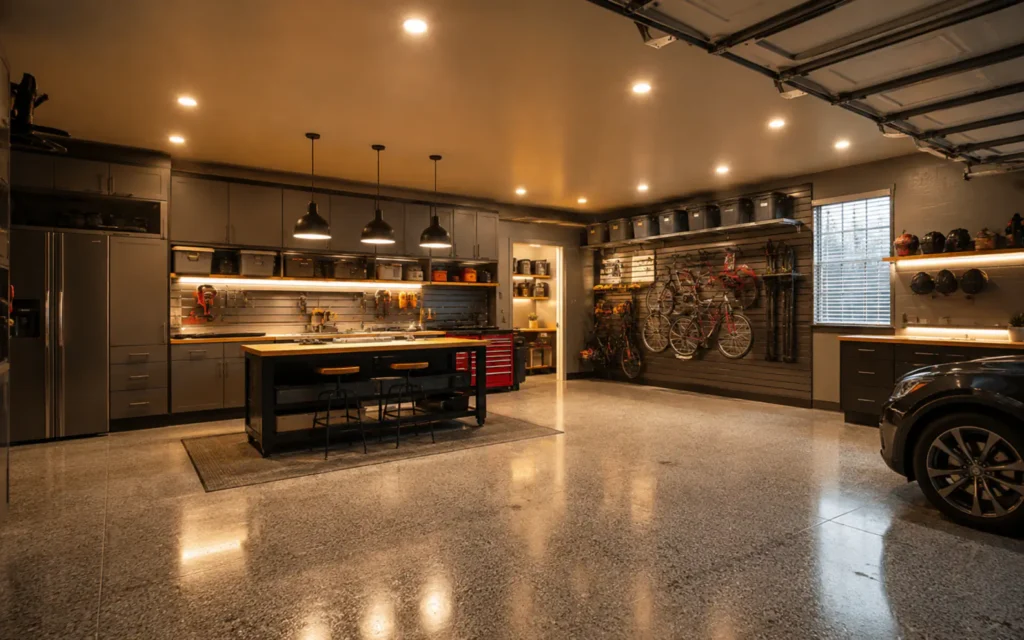
2. LED Tube Lights (Shop Lights) for Versatility
LED tube lights, often sold as integrated fixtures or replacement bulbs for fluorescent shop lights, are a classic and highly versatile choice for garages. They offer excellent linear light distribution, making them perfect for illuminating long workbenches or vehicle bays.
- Workshops, garages with multiple work zones, or areas needing bright, continuous light.
- Ensure proper spacing to avoid dark spots between fixtures.
- Install these in rows or a grid pattern for even coverage.
- Light Type – Ambient & Task.
- Installation – Suspended or surface-mount.
- Linkable – Often.
3. Dedicated Task Lighting for Work Zones
Task lighting focuses intense light directly onto specific work areas, such as a workbench, tool chest, or crafting station. This type of lighting is crucial for detailed projects, reducing eye strain and improving precision.
- Any garage with a dedicated workbench, hobby area, or specific zones where detailed work is performed.
- Avoid task lights that create harsh glare or cast shadows from your hands or tools.
- Combine task lighting with good ambient light.
- Light Type – Task.
- Placement – Directly over work area.
- Purpose – Detail work, precision.
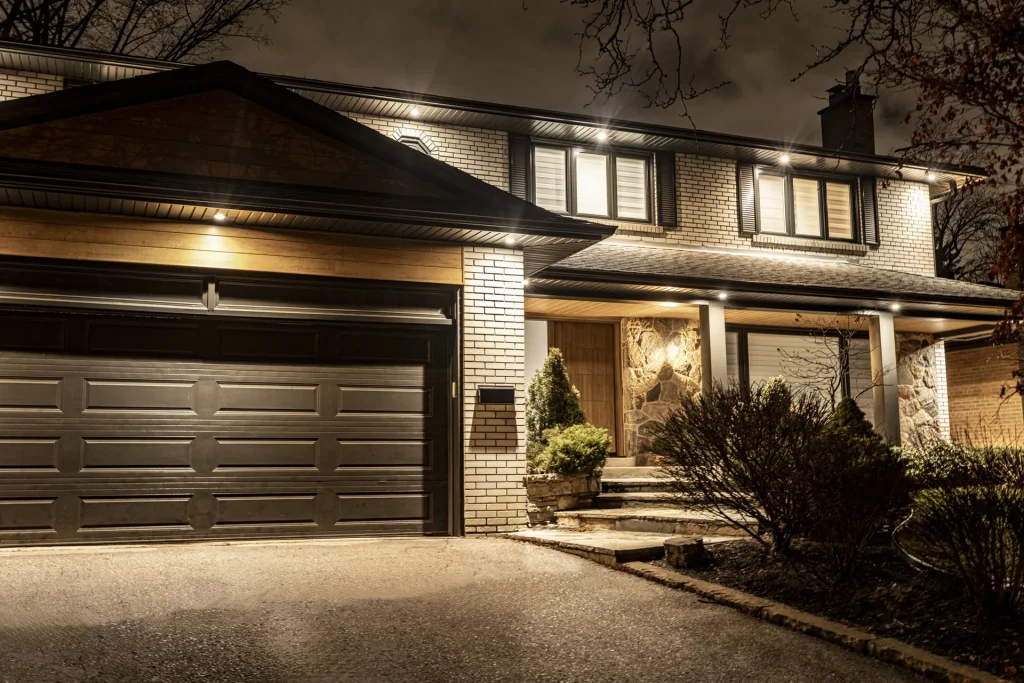
4. Motion Sensor Lights for Convenience and Security
Integrating motion sensor technology into your garage lighting offers both convenience and an added layer of security. Lights automatically turn on when movement is detected, eliminating the need to fumble for switches and deterring potential intruders.
- Garages where you frequently enter with hands full, or for security purposes.
- Ensure sensors are positioned to avoid false triggers from pets or passing cars if the garage door is open.
- Consider motion sensors for general ambient lights or specific zones like entryways.
- Light Type – Convenience/Security.
- Automation – Motion-activated.
- Energy Saving – Yes.
5. Natural Light Integration (Windows & Skylights)
Harnessing natural light is one of the most energy-efficient and pleasant ways to illuminate a garage during the day. Windows, especially those positioned high on walls, and skylights or solar tubes can dramatically reduce the need for artificial lighting.
6. High Bay or Low Bay Fixtures for High Ceilings
For garages with exceptionally high ceilings (10 feet or more), standard fixtures may not provide enough light intensity at floor level. High bay or low bay fixtures are designed to project light effectively from greater heights, ensuring adequate illumination throughout the space.
- Garages with cathedral ceilings, commercial-style garages, or those with vehicle lifts where light needs to travel a greater distance.
- These fixtures are often more expensive and may require professional installation due to their weight and wiring.
- Calculate the required lumen output carefully based on ceiling height and floor area to avoid under- or over-lighting.
- Light Type – Ambient (High Output).
- Ceiling Height – High (10+ feet).
- Power – High.
Key Lighting Considerations for Your Garage
Before diving into specific fixture types, understanding a few key lighting concepts will help you make informed decisions for your home garage. The right light can significantly impact visibility, safety, and the overall usability of your space.
The primary goal is to achieve adequate illumination without creating harsh glare or deep shadows. This often involves layering different types of light: ambient (general overhead light), task (focused light for specific activities), and sometimes accent lighting (for aesthetics or highlighting features).
If your garage is primarily a woodworking shop, you’ll need higher lumens (50-100 lumens per square foot) and a cooler color temperature (5000K) for accurate color rendering and detail work, compared to a garage.
A common mistake is choosing fixtures based solely on wattage or assuming ‘brighter is always better’ without considering lumen output, color temperature, or the specific needs of the space, leading to inadequate or uncomfortable.
| Consideration | What It Means for Your Garage | Recommendation |
|---|---|---|
| Lumens (Brightness). | The total amount of visible light produced. | 30-50 lumens/sq ft for parking/storage; 80-100 lumens/sq ft for workshops. |
| Color Temperature (K). | Describes the color appearance of light (warm to cool). | 4000K-5000K (cool white) for general tasks; 5000K-6500K for detailed work. |
| CRI (Color Rendering Index). | How accurately a light source reveals the true colors of objects (0-100). | CRI 80+ for general use; CRI 90+ for painting or detailed color-critical tasks. |
| Light Distribution. | How light spreads from the fixture (e.g., wide flood, narrow spot). | Wide flood for ambient; narrow spot for task; linear for workbenches. |
Optimizing Light Placement and Control
Once you’ve chosen your lighting fixtures, their placement is just as critical as the fixtures themselves. Strategic placement ensures even illumination, minimizes shadows, and supports the various activities you perform in your garage.
Layering light sources is key to a versatile garage. Start with good ambient lighting that covers the entire space.
To avoid shadows when working at a workbench, install linear LED tube lights parallel to the front edge of the bench, or use two fixtures positioned to the left and right of your primary.
A common mistake is installing a single, central light fixture in the garage.
- Grid Pattern for Ambient Light: For general overhead lighting, arrange fixtures in a grid pattern.
- Targeted Task Lighting: Position task lights to shine directly on your work surface from multiple.
- Avoid Single Overhead Fixtures: Relying on one central light source will inevitably create shadows. Supplement.
- Consider Wall-Mounted Lights: In addition to ceiling fixtures, wall-mounted lights can provide supplementary ambient light.
FAQs
How many lumens do I need for a home garage?
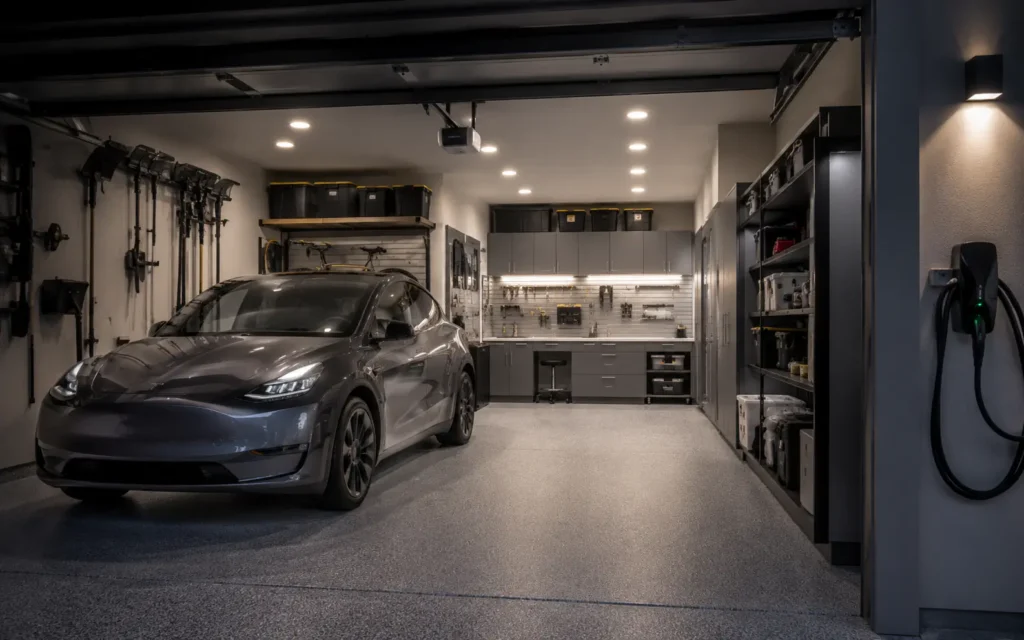
For general parking and storage, aim for 30-50 lumens per square foot. If your garage doubles as a workshop or hobby area, target 80-100 lumens per square foot for adequate brightness and visibility for.
What’s the best color temperature for garage lighting?
A color temperature between 4000K and 5000K (cool white to daylight white) is generally recommended for garages. This range provides a bright, crisp light that enhances visibility and alertness, making it ideal for tasks.
Can I mix different types of lights in my garage?
Yes, mixing different types of lights is highly effective. Combining general ambient lighting (like LED panels) with dedicated task lighting (such as under-cabinet strips over a workbench) creates a layered lighting scheme.
Are motion sensor lights a good idea for a garage?
Motion sensor lights are an excellent idea for convenience and security. They automatically illuminate the garage when you enter, which is helpful when your hands are full.
How can I light a garage with a high ceiling?
For high ceilings (10 feet or more), consider high bay or low bay LED fixtures. These are designed to project powerful light effectively from greater heights.
Conclusion
Transforming your home garage with effective lighting is a practical upgrade that enhances both its utility and safety. By understanding the different types of fixtures, key lighting considerations like lumens and color temperature, and strategic placement, you can create a space that perfectly suits your.
Whether you’re parking vehicles, tackling DIY projects, or simply storing items, the right lighting makes all the difference. Modern LED solutions offer bright, efficient, and long-lasting illumination, making them an ideal choice for any home garage.
Related posts
 How to Strengthen Weak Nails: A Practical Guide to Daily Care
Learn how to strengthen weak nails with simple daily habits, protective care, and targeted hydration. Restore your natural nail strength today. Weak, peeling, or brittle nails…
 What Sounds Do Cats Dislike? 7 Noises That Stress Your Pet
Discover what sounds do cats dislike and why. Learn how to protect your cat’s sensitive hearing from stressful household noises and high-frequency hums. Cats dislike sounds…
 Restoring Faded Black Clothing: Practical Methods and Reality Checks
Can you restore faded black clothing? Learn the difference between temporary color revival and permanent redyeing, plus how to prevent future fading. You can restore the…