Find out what proper kitchen ventilation is and why it matters. From range hoods to duct systems, we explain everything about proper kitchen ventilation for a safer, fresher kitchen.
Cooking is a joy. But it creates smoke, grease, steam, and smells. Over time, these things can hurt your air quality and your kitchen walls. So what is the answer? You need good air movement. This article explains proper kitchen ventilation in simple words. You will learn why it helps, how it works, and what to look for. Let’s get started.
Why Your Kitchen Needs Good Air Flow
Every time you cook on a stove or in an oven, tiny particles float into the air. Some come from burning gas. Others come from hot oil or burnt food. Breathing these particles is not good for you. A friend of mine once said, “I ignored my kitchen air for years until my cabinets turned sticky.” That sticky layer is grease. It builds up slowly.
Good air flow pulls those particles out of your home. It keeps your breathing easy. It also stops mold. Steam from boiling water can make walls damp. Damp walls grow mold. Mold causes allergies and other health problems. So moving air out is a simple way to stay healthy.
Clean air in the kitchen is just as important as clean water from the tap.” – Dr. Sarah Miller, indoor air quality specialist
Another big reason is fire safety. Grease in the air can land on hot surfaces. If too much grease builds up inside your exhaust system, it can catch fire. A proper kitchen ventilation system lowers that risk. It removes grease before it settles.
Your kitchen also smells better. Nobody wants their whole house to smell like fried fish from last night. A good system pulls those smells outside. Your living room stays fresh. Your guests feel comfortable. So good air flow is not a luxury. It is a basic need for every home cook.
The Basic Parts of a Ventilation System
A kitchen ventilation system has a few key parts. Let me break them down for you.
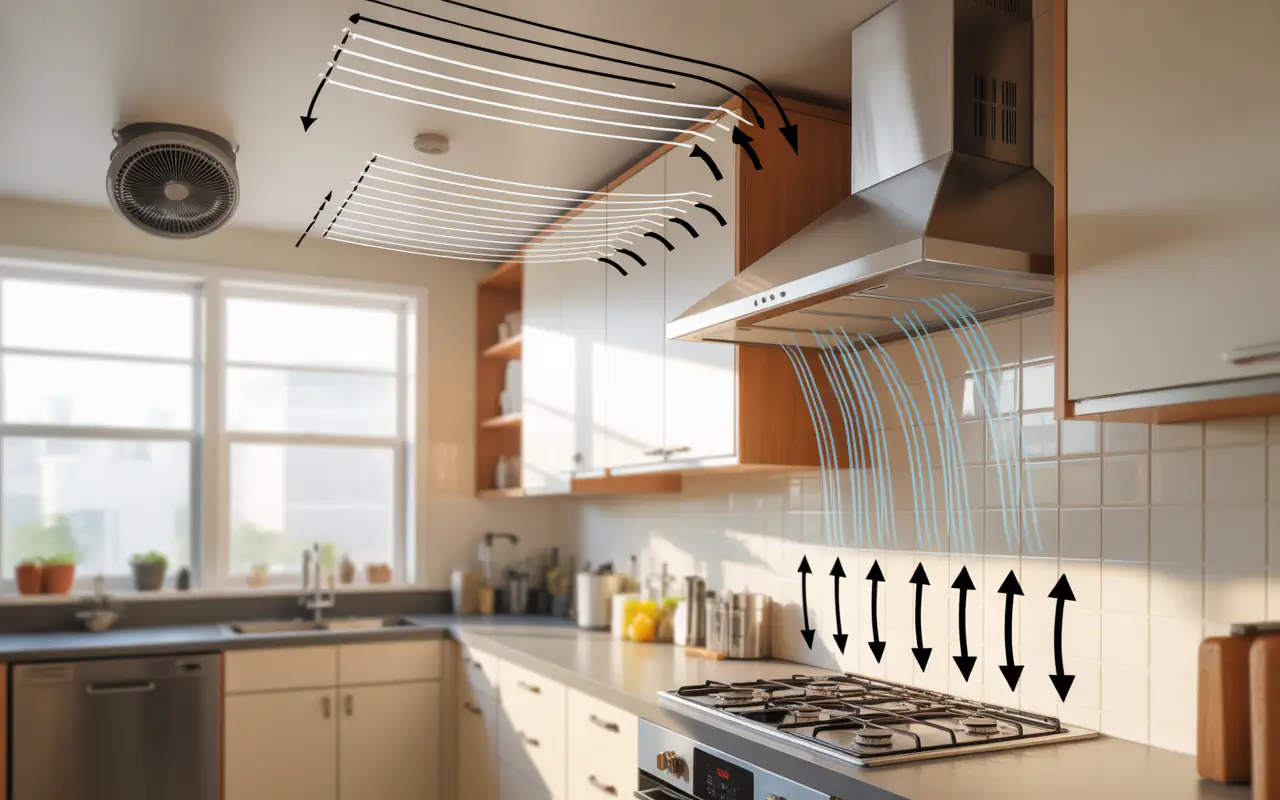
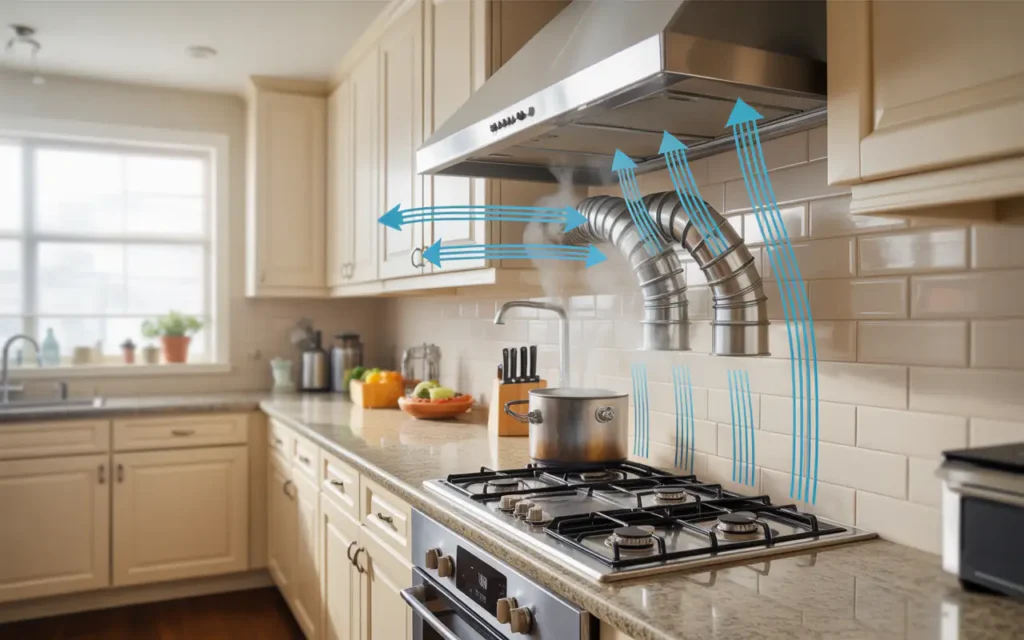
The hood sits above your stove. It catches smoke and steam right when they rise. Hoods come in different shapes and sizes. Some look like an umbrella. Others are built into a cabinet.
The fan creates suction. It pulls air from the hood into a duct. The fan speed matters. A weak fan does little work. A strong fan clears the air fast.
The duct is a metal tube. It carries the dirty air outside your home. Ducts should be as short and straight as possible. Every bend slows down the air flow.
The filter catches grease before it enters the duct. You need to clean or change filters often. A dirty filter blocks air movement. It also becomes a fire risk.
The exhaust outlet is the hole on your outside wall or roof. This is where the air leaves your house. Make sure nothing blocks it. Bird nests or leaves can cause problems.
A proper kitchen ventilation system uses all these parts together. If one part fails, the whole system works poorly.
Types of Kitchen Ventilation
There are four main types of systems for home kitchens. Each one works a little differently. Here is a simple table to compare them.
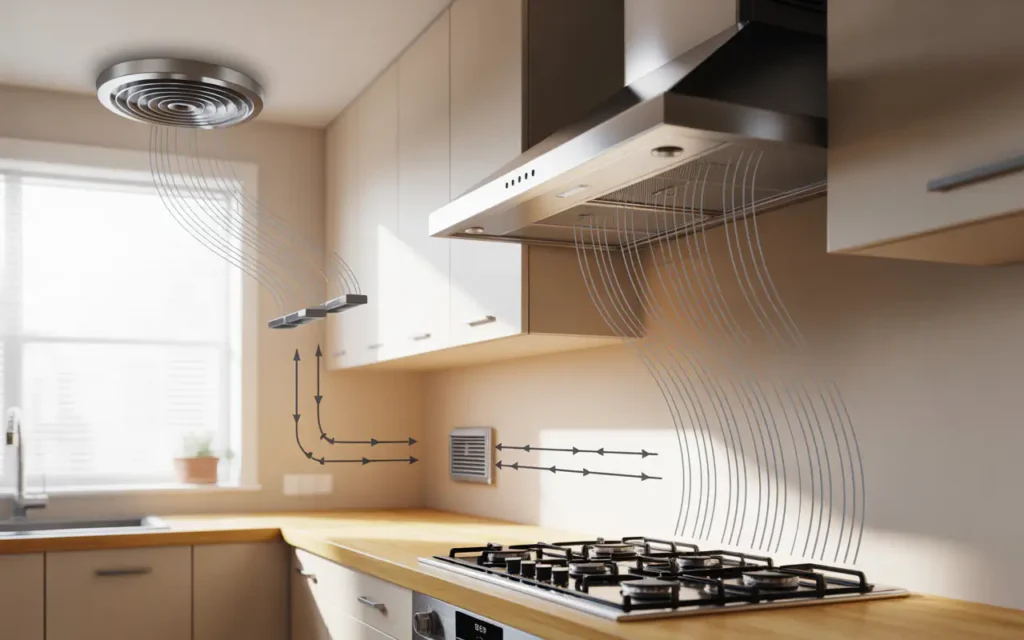
Ducted hoods are the gold standard. They remove heat, moisture, and pollution completely. Ductless hoods are okay for electric stoves. But they do not remove moisture well. They only trap some grease and smells. Downdraft vents look nice, but they fight against physics. Heat and smoke go up. A downdraft tries to pull them down. So they need very strong fans.
When you ask “what is proper kitchen ventilation?” the answer is often a ducted hood. It is the most reliable way to keep your air clean.
“I have installed over 500 kitchen fans. The ducted hood wins every time for real air cleaning.” – Mike Torres, licensed HVAC contractor
How to Know If Your Ventilation Is Working Well
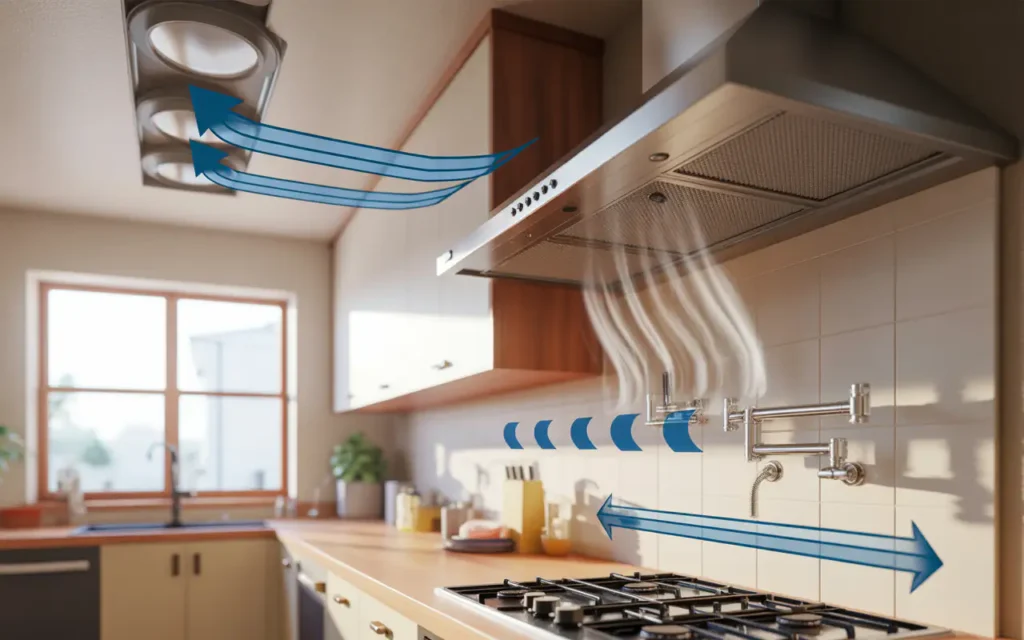
You do not need special tools to check your system. Use your senses. Light a match or a stick of incense near the stove. Watch where the smoke goes. Does it get pulled into the hood quickly? Or does it drift into the room? Good suction pulls smoke straight up and into the filter.
Next, stand by the stove while cooking bacon or frying chicken. Can you smell the food strongly in the next room? If yes, your fan is not strong enough. You should barely smell cooking outside the kitchen.
Feel the air near the hood while the fan runs. Do you feel a gentle breeze going into the filter? That means air is moving correctly. Also check the outside exhaust vent when the fan is on. You should feel air coming out. If not, there might be a blockage.
Listen to the fan. A good fan makes a steady hum. If it makes rattling noises, something is loose. If it sounds weak, the motor may be failing. Noise is not always bad. But very loud fans can make you want to turn them off. And turning them off defeats the purpose.
A proper kitchen ventilation system works quietly and effectively. You should not have to shout over it. But you should hear it clearly when it runs.
Common Signs of Poor Ventilation
Many people live with bad ventilation without knowing it. Here are clear signs that your system is failing.
Sign
What It Means
Greasy film on cabinets
Grease is not being pulled out
Mold near the ceiling
Steam is not leaving the room
Lingering food smells after hours
Air is not fully exchanged
Foggy windows while cooking
Too much moisture stays inside
Fan does not remove smoke from burnt toast
Suction is too weak
If you see any of these signs, take action. Clean your filters first. Many people forget to clean them for months. A dirty filter stops all air movement. Remove the filter and wash it with hot soapy water. Let it dry fully before putting it back.
Next, check the duct. Over time, grease builds up inside the duct too. This is a fire hazard. You may need a professional cleaning every few years. Also look at the outside vent cover. Make sure it opens easily when the fan runs. Sometimes it gets stuck shut.
If cleaning does not help, your fan may be too small for your stove. Gas stoves need more power than electric ones. A general rule is 100 cubic feet per minute (CFM) for every 10,000 BTUs of your stove. For example, a 40,000 BTU gas stove needs at least 400 CFM.
Remember that proper kitchen ventilation is not a one-time setup. It needs regular care. Think of it like changing your car’s oil. Ignore it for too long, and you will pay the price later.
Tips for Choosing the Right System
Buying a new hood or fan can feel confusing. There are many choices. But you can narrow them down with a few simple rules.
Measure your stove width. Your hood should be at least as wide as your stove. Better yet, go three inches wider on each side. That catches more smoke and steam.
Pick the right size fan. For most home cooks, 300 to 600 CFM is enough. If you cook with very high heat often, go up to 900 CFM. But bigger is not always better. A huge fan will suck out your heated or cooled air too fast. That wastes energy.
Decide between ducted or ductless. If you own your home and can make holes in walls, choose ducted. If you rent or live in an apartment with no outside access, ductless is your only option. Just know that ductless needs frequent filter changes. And it does not remove moisture.
Look for easy-to-clean filters. Some filters have many small holes. They trap grease well but are hard to clean. Others have a baffle design. Baffle filters use angled metal strips. They are easier to wash in the dishwasher.
Check the noise level. Fan noise is measured in sones. Lower is quieter. A good hood runs at 1 to 4 sones on low speed. On high speed, 6 to 8 sones is acceptable but loud. For comparison, a quiet refrigerator is about 1 sone.
Consider the style. Do you want a hood that sticks out from the wall? Or an insert that hides inside a cabinet? Or a chimney hood that goes up to the ceiling? Pick one that fits your kitchen design. But never pick style over function. A pretty hood with a weak fan is still a weak hood.
Getting proper kitchen ventilation starts with smart choices. Do not rush. Read reviews. Ask a local HVAC person for advice.
How to Keep Your Ventilation Clean and Effective
Once you have a good system, keep it working well. Here is a simple maintenance schedule.
Every week: Wipe the outside of the hood. Look for visible grease. Check the fan for strange noises.
Every month: Remove the metal filters. Wash them in hot soapy water or run them through the dishwasher. Let them dry completely.
Every three months: Clean the inside of the hood where the filter sits. Use a degreaser spray. Wipe away old grease.
Every year: Check the duct from the inside if you can. Look for grease buildup. If you see more than a thin layer, call a professional duct cleaner.
Every two years: Have a professional inspect the fan motor. They can oil the bearings and test the electrical parts.
Do not use flammable cleaners near the stove. Do not spray water directly into the fan motor. Turn off power to the hood before cleaning inside. Safety first.
If your fan stops working well after cleaning, the motor may be old. Most motors last 10 to 15 years with good care. Replace the whole hood if repairs cost more than half the price of a new one.
“A cleaned filter works twice as hard as a dirty one. I tell my customers to treat filter cleaning like washing dishes.” – Elena Zhou, home efficiency expert
A proper kitchen ventilation system that is well maintained will serve you for many years. It will keep your kitchen fresh, your lungs happy, and your home safe.
Frequently Asked Questions
Q: Can I use my microwave’s built-in fan as my main ventilation? A: Yes, if it vents to the outside. Many over-the-range microwaves have small fans. They work okay for light cooking. But they are not as powerful as a real hood. For heavy frying or gas stoves, get a dedicated hood.
Q: How much does it cost to install a ducted hood? A: A basic hood costs 100to300. But installation can cost 200to1,000. Why? Because adding new ductwork through walls or cabinets takes time. If you already have a duct, installation is cheaper. Get three quotes before hiring anyone.
Q: Do I need a permit to install kitchen ventilation? A: In many cities, yes. Cutting holes in outside walls or changing electrical wiring often needs a permit. Check with your local building office. Skipping a permit can cause fines or problems when you sell your home.
Q: What size fan do I need for my kitchen size? A: A simple formula is kitchen volume divided by 7.5. Measure length x width x height in feet. Multiply by 10 (for a gas stove) or 7 (for electric). Then divide by 60. Example: 12x12x8 foot room = 1,152 cubic feet. For gas: 1,152 x 10 / 60 = 192 CFM. That is too low. So most experts recommend at least 300 CFM for any kitchen. Add 100 CFM for every gas burner beyond two.
Q: Can I install a kitchen fan myself? A: If you are handy, yes. Replacing an old hood with the same size is doable. But installing a new ducted system is harder. You need to cut holes, seal ducts, and connect wiring. If you are unsure, hire a pro. Bad installation can cause leaks or fire risks.
Q: Is proper kitchen ventilation really that important? A: Yes. The American Lung Association says indoor air pollution from cooking is a real health risk. Children, older adults, and people with asthma are most at risk. A good ventilation system lowers that risk.
Conclusion
So what is proper kitchen ventilation? It is a system that moves cooking smoke, grease, steam, and smells out of your home. It uses a hood, fan, duct, filter, and exhaust outlet. The best type is a ducted hood that sends air outside. You need a fan strong enough for your stove. And you must clean the filters often.
Good ventilation keeps your air clean. It protects your walls and cabinets from sticky grease. It lowers fire risks. It stops mold from growing. And it makes your whole house smell better. Every kitchen deserves this.
Start today. Check your current system. Clean the filters. Turn on the fan every time you cook. If your system is old or weak, plan for an upgrade. Your lungs and your family will thank you. Cooking is wonderful. Breathing clean air while you cook is even better.
Learn how to strengthen weak nails with simple daily habits, protective care, and targeted hydration. Restore your natural nail strength today. Weak, peeling, or brittle nails…
Discover what sounds do cats dislike and why. Learn how to protect your cat’s sensitive hearing from stressful household noises and high-frequency hums. Cats dislike sounds…
Can you restore faded black clothing? Learn the difference between temporary color revival and permanent redyeing, plus how to prevent future fading. You can restore the…

 How to Strengthen Weak Nails: A Practical Guide to Daily Care
 What Sounds Do Cats Dislike? 7 Noises That Stress Your Pet
 Restoring Faded Black Clothing: Practical Methods and Reality Checks