
What Is a Test Light Used For in Cars? Practical Automotive Uses and Safety Rules
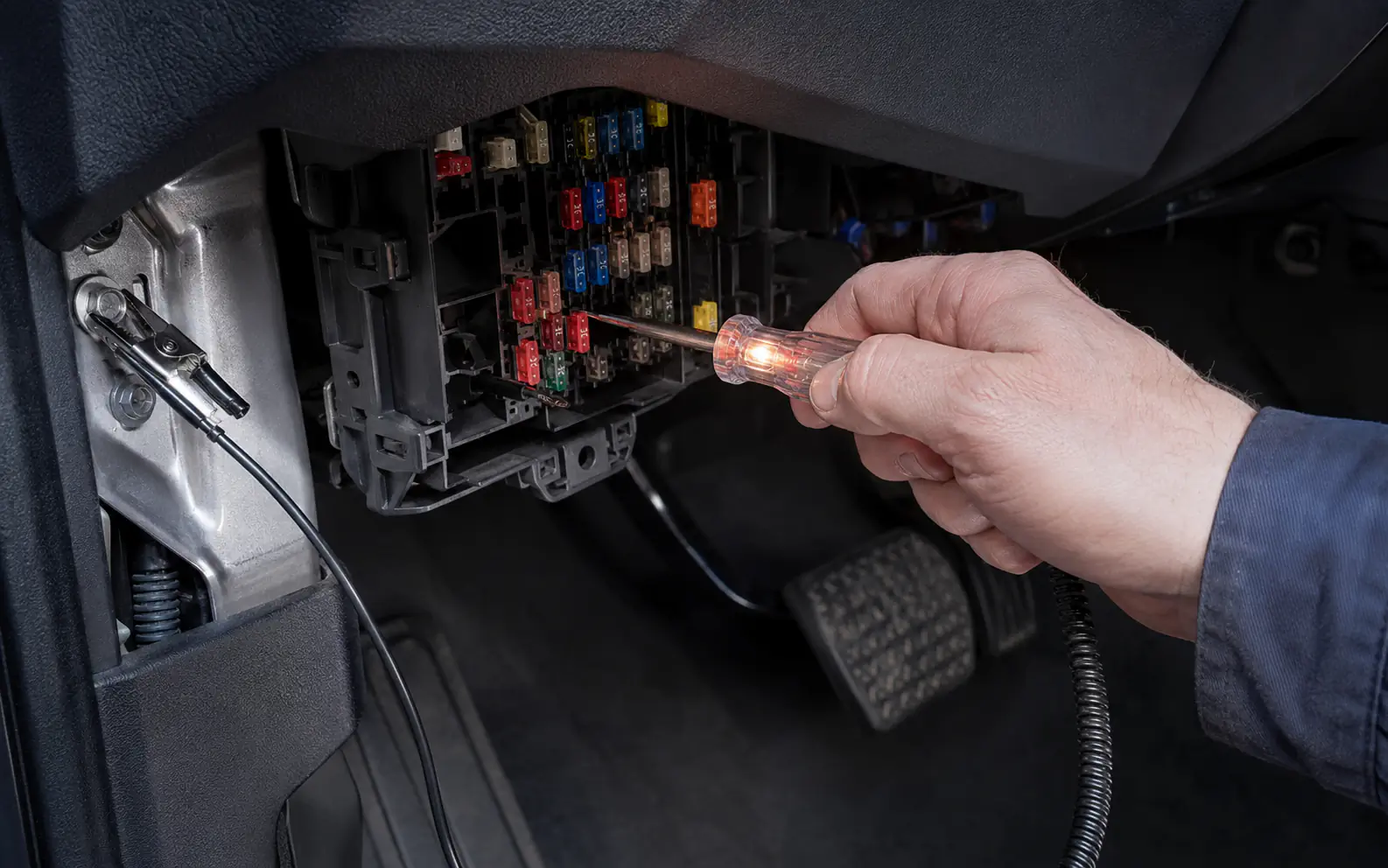
An automotive test light, also known as a circuit tester, is a simple pen-shaped tool used to quickly check for the presence of electrical voltage or ground in a vehicle’s wiring. It features a sharp metal probe on one end, an internal indicator light in the handle, and a long wire with an alligator clip.
In cars, a test light is primarily used to diagnose electrical failures by checking fuses, verifying if power is reaching components like headlights or radio units, and locating broken wires or bad ground connections. It serves as a fast, visual alternative to a multimeter when you only need to know if voltage is present rather.
| Topic | When it helps | What to keep in mind |
|---|---|---|
| 1 | Quickly identifying why a specific accessory, like a cigarette lighter or radio, suddenly stopped working. | Make sure the vehicle ignition is turned on so the circuits you are testing are actually receiving power. |
| 2 | Isolating whether a broken part or a wiring fault is causing an electrical failure. | Do not shove the thick probe directly into female wire terminals, as this can stretch the metal contacts and cause a loose. |
| 3 | Locating open circuits, broken wires, or corroded connections hidden behind panels. | Probing through wire insulation can leave tiny holes that allow moisture to enter, potentially causing corrosion later. |
How an Automotive Test Light Works
An automotive test light operates on a very basic electrical principle: it completes a circuit. The tool itself contains a small light bulb or light-emitting diode (LED) wired between the sharp metal probe and the ground lead wire.
When the sharp probe touches a wire carrying 12-volt positive electricity, the current flows through the probe, illuminates the bulb, and exits through the ground wire back to the car’s chassis. This simple loop provides an instant visual confirmation of electrical flow.
If you clip the tool to a painted rusty bolt on the car frame, the light will not turn on even if you touch a live wire, because rust and paint act as electrical.

Assuming a circuit is dead just because the light did not turn on, without first verifying that your ground clip is connected to bare, unpainted metal.
- Alligator Clip: Connects to the ground source (or positive terminal when testing grounds).
- Indicator Bulb: Glows when a complete circuit is established.
- Sharp Probe: Pierces insulation or touches small terminals to access electrical current.
| Feature | Test Light | Digital Multimeter (DMM) |
|---|---|---|
| Primary Function. | Detects presence of voltage/ground. | Measures exact voltage, resistance, and current. |
| Speed of Use. | Extremely fast for quick checks. | Slower, requires setting dials and reading a screen. |
| Visual Feedback. | Instant light bulb illumination. | Numerical value on a digital display. |
| Computer Safety. | Risky if incandescent; safe if LED. | Always safe for sensitive electronics. |
Step-by-Step: How to Test Car Fuses in Seconds
Testing fuses is the most common task for an automotive test light. Modern automotive blade fuses have two tiny exposed metal terminals on their top edge, specifically designed for testing without removing the fuse from the block.
To perform this test, turn the vehicle’s ignition key to the ‘On’ or ‘Accessory’ position so that power is supplied to the fuse panel. Connect the test light’s alligator clip to a clean, unpainted metal part of the car’s body or dashboard support frame.
Testing the radio fuse by touching both metal test points on top of the fuse casing while the key is in the accessory position.
Testing fuses with the ignition completely off, which can lead you to believe a good fuse is bad because no power is running to that circuit yet.

- Step 1: Turn the ignition key to the ‘On’ position.
- Step 2: Attach the alligator clip to a solid chassis ground.
- Step 3: Touch the probe to the first test point on top of the fuse.
- Step 4: Touch the probe to the second test point on the same fuse.
The Critical Safety Rule: Incandescent vs. Computer-Safe LED Test Lights
Modern vehicles are packed with sensitive computers, sensors, and electronic control units (ECUs). These components operate on very low current and are highly sensitive to electrical changes.
Traditional test lights use an incandescent light bulb. These bulbs require a relatively high amount of electrical current to glow.
Using an old brass-style incandescent test light on an airbag sensor wire can trigger the airbag or fry the engine control unit (ECU).
Using a standard, cheap incandescent test light on any wire that connects directly to a vehicle control module or sensor.
- Incandescent Test Lights: Draw high current; safe only for basic circuits like headlights, horns, and.
- LED Test Lights: Draw minimal current; safe for computers, sensors, and modern electronic modules.
- Digital Test Lights: Feature a small LCD screen to show the actual voltage alongside the.
Safety checks
- A test light is a simple tool used to verify the presence of electrical voltage or ground in.
- It is highly efficient for testing fuses quickly and locating broken wires.
- Standard incandescent test lights draw too much current and should never be used on sensitive computer or sensor.
- Always connect the ground clip to clean, unpainted metal on the vehicle chassis for accurate readings.
Focus strictly on automotive 12V/24V
1. Testing and Diagnosing Fuses
The fastest way to find a blown fuse is with a test light. Instead of pulling every fuse out of the fuse box to inspect the tiny metal filament inside, you can test them while they are still plugged in.
- Quickly identifying why a specific accessory, like a cigarette lighter or radio, suddenly stopped working.
- Make sure the vehicle ignition is turned on so the circuits you are testing are actually receiving power.
- If the test light illuminates on one side of the fuse but not the other, the fuse is blown and must be.
- Speed – Very Fast.
- Difficulty – Beginner.
2. Verifying Power and Ground at Components
When an electrical component like a fuel pump, headlight, or blower motor stops working, a test light helps you determine if the issue is the component itself or the wiring leading to it. You can probe the power wire connector to see if electricity is reaching the device.
- Isolating whether a broken part or a wiring fault is causing an electrical failure.
- Do not shove the thick probe directly into female wire terminals, as this can stretch the metal contacts and cause a loose.
- If the test light glows at the connector but the component does not work, the component itself is likely faulty.
- Speed – Moderate.
- Difficulty – Beginner to Intermediate.
3. Tracing Broken Wires and Short Circuits
If a wire has a hidden break inside its plastic insulation, a test light can help you locate the exact spot where the current stops. By starting at the power source and probing the wire at various intervals moving toward the component, you can find the point where the light no longer.
- Locating open circuits, broken wires, or corroded connections hidden behind panels.
- Probing through wire insulation can leave tiny holes that allow moisture to enter, potentially causing corrosion later.
- Work systematically from the power source outward to save time and avoid unnecessary wire piercing.
- Speed – Slow.
- Difficulty – Intermediate.
FAQs
Can a test light damage a car’s computer?
Yes, a traditional incandescent test light can damage a car’s computer because it draws too much electrical current to power its internal bulb. To safely test circuits connected to computers or sensors, always use.
Where should I connect the test light’s ground clip?
Connect the clip to any clean, unpainted metal surface on the vehicle’s chassis, frame, or engine block. You can also connect it directly to the negative terminal of the car battery.
How do I use a test light to check for a ground connection?
To test for ground, connect the alligator clip to a known positive power source, such as the positive terminal of the battery. Then, touch the probe to the wire or terminal you suspect should.
What is the main disadvantage of using a test light?
The main disadvantage is that a test light only tells you if voltage is present, not how much. It cannot distinguish between a healthy 12.6-volt signal and a weak, corroded 9-volt signal, both of.
Can I use a test light on household electrical outlets?
Automotive test lights are designed specifically for low-voltage direct current (DC) systems, typically 6V, 12V, or 24V. Using an automotive test light on household alternating current (AC) outlets, which are usually 120V or 240V.
Conclusion
An automotive test light is one of the most practical, time-saving tools you can keep in your vehicle’s toolbox. It simplifies the process of diagnosing dead fuses, locating broken wires, and verifying that power is reaching your electrical components.
However, as vehicle technology continues to advance, safety must remain your top priority. Always ensure you are using a computer-safe LED test light when working near sensitive electronic modules, sensors, or dashboard wiring.
Related posts
 How to Strengthen Weak Nails: A Practical Guide to Daily Care
Learn how to strengthen weak nails with simple daily habits, protective care, and targeted hydration. Restore your natural nail strength today. Weak, peeling, or brittle nails…
 What Sounds Do Cats Dislike? 7 Noises That Stress Your Pet
Discover what sounds do cats dislike and why. Learn how to protect your cat’s sensitive hearing from stressful household noises and high-frequency hums. Cats dislike sounds…
 Restoring Faded Black Clothing: Practical Methods and Reality Checks
Can you restore faded black clothing? Learn the difference between temporary color revival and permanent redyeing, plus how to prevent future fading. You can restore the…