
What is a Breaker Bar Used For? Understanding Its Purpose
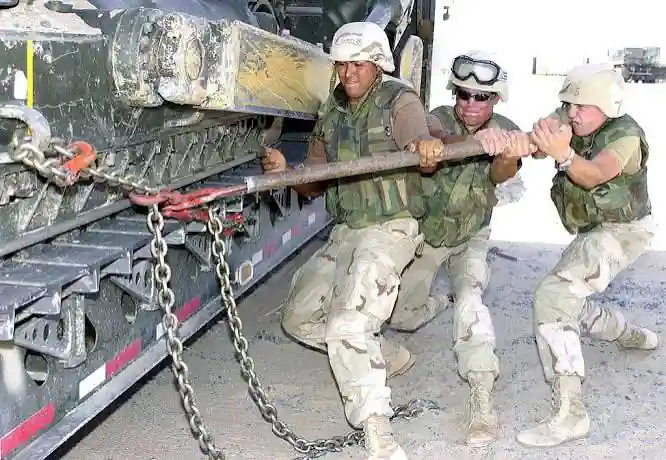
A breaker bar is a specialized hand tool primarily used to apply significant leverage for loosening very tight, stubborn, or seized fasteners like bolts and nuts. Its design focuses on providing more torque than a standard wrench or ratchet, making it indispensable for tasks where fasteners are difficult to turn.
Unlike a ratchet, a breaker bar has a long, solid handle with a fixed head that doesn’t click or move back and forth. This allows for a continuous, controlled application of force, which is crucial for breaking the initial resistance of a tight fastener without damaging the tool or the fastener itself.
| Topic | When it helps | What to keep in mind |
|---|---|---|
| 1 | Rusted bolts, seized nuts, over-torqued fasteners, large diameter bolts. | Using excessive force can strip threads or break the fastener. |
| 2 | Situations requiring precise force application, avoiding sudden jerks. | Sudden, uncontrolled movements can cause injury or damage. |
| 3 | Preventing damage to expensive or frequently used ratchets. | Never use a breaker bar to tighten fasteners beyond their specified torque, as this can damage the threads or the component being fastened. |
What is a Breaker Bar?
What is a Breaker Bar Used For. A breaker bar is a type of hand tool, often found in mechanic’s toolkits, that looks similar to a long, solid metal bar with a socket attachment point at one end. Unlike a ratchet, it does not have an internal ratcheting mechanism.
This extended length is not for aesthetics; it’s the key to the tool’s effectiveness. The longer handle allows a user to apply more leverage, meaning the same amount of force exerted by the user results in a much higher rotational force (torque) being applied to the fastener.
Imagine trying to loosen a lug nut on a car that’s been overtightened for months.
Key Uses and Applications
The primary application for a breaker bar is to break loose fasteners that are exceptionally tight. This includes situations where bolts or nuts have been subjected to high torque settings, have corroded over time, or have become seized due to heat cycles or rust.
Common areas where breaker bars are invaluable include automotive repair (like loosening lug nuts, suspension components, or engine bolts), heavy machinery maintenance, and any situation involving large-diameter or heavily stressed fasteners. They are particularly useful when a fastener is difficult to access with shorter tools, as the extended length can help reach around obstacles.
When working on older vehicles, exhaust system bolts can become severely corroded and fused.
Using a breaker bar on a fastener that is already loose or only slightly tight can lead to over-tightening and stripping the threads.
- Loosening rusted or seized bolts and nuts.
- Breaking free over-torqued fasteners.
- Working on suspension components.
- Removing exhaust system parts.
- Disassembling heavy machinery.
Breaker Bar vs. Ratchet: What’s the Difference?
The most common point of confusion is the difference between a breaker bar and a ratchet. A ratchet has a head that pivots and clicks, allowing you to turn a fastener without repositioning your hand or the tool.
A breaker bar, on the other hand, is a solid, non-ratcheting bar. Its strength lies in its simplicity and the leverage it provides.
You’ve just removed a wheel using a breaker bar to loosen the lug nuts.
Using a ratchet for extremely tight fasteners risks damaging its internal gears.
- Ratchet: Faster, for moderate torque, has internal mechanism.
- Breaker Bar: Slower, for high torque, solid construction.
| Feature | Breaker Bar | Ratchet |
|---|---|---|
| Primary Use. | Loosening very tight fasteners. | Faster tightening/loosening. |
| Mechanism. | Solid bar, no ratcheting. | Internal ratcheting mechanism. |
| Leverage. | High. | Moderate. |
| Durability under high torque. | High. | Lower (risk of damage). |
When to Reach for a Breaker Bar
The decision to use a breaker bar comes down to the resistance you’re encountering. If a fastener is proving exceptionally difficult to turn with a standard ratchet or wrench, and you’re concerned about damaging your tools or the fastener itself, it’s time to consider a breaker bar.
Think of it as a tool for the ‘breaking loose’ phase. It’s designed to apply that initial, high-force twist to overcome the stiction.
You’re trying to remove a bolt from a piece of old farm equipment, and it’s covered in rust and grime.
Do not use a breaker bar to tighten fasteners to a specific torque value.
- When a standard ratchet fails to budge a fastener.
- For fasteners that have been exposed to the elements (rust, corrosion).
- On large-diameter bolts or nuts requiring significant torque.
- When you need to apply steady, controlled force to avoid stripping.
Definition of a breaker bar
- A breaker bar is designed for maximum leverage to break loose very tight or seized fasteners.
- Its long, non-ratcheting handle is key to applying consistent, high torque.
- It’s distinct from a ratchet, which is for faster, repeated tightening or loosening.
- Essential for rusted, over-torqued, or stubborn bolts, especially in automotive or heavy machinery.
- Using it for tightening can lead to over-torquing and damage.
This article will define a
1. Breaking Loose Tight Fasteners
The primary use of a breaker bar is to generate high torque to overcome the initial static friction of a bolt or nut that is extremely tight, rusted, or has been over-torqued. Its length allows the user to apply more force with less physical effort compared to shorter tools.
- Rusted bolts, seized nuts, over-torqued fasteners, large diameter bolts.
- Using excessive force can strip threads or break the fastener.
- If a standard ratchet struggles to turn a fastener, a breaker bar is the next logical tool to try.
2. Providing Controlled Leverage
A breaker bar’s long, non-ratcheting handle provides a smooth, continuous application of force. This control is vital for preventing damage to the fastener head, the tool itself, or surrounding components, especially when dealing with delicate or critical parts.
- Situations requiring precise force application, avoiding sudden jerks.
- Sudden, uncontrolled movements can cause injury or damage.
- Feel the resistance; if it feels like the fastener might break or strip, ease up and consider a penetrating lubricant.
3. Preventing Damage to Ratchets
Attempting to loosen extremely tight fasteners with a standard ratchet can overstress its internal mechanism, leading to breakage or premature wear. A breaker bar, being a solid bar, is built to withstand these higher forces, protecting your more delicate ratcheting tools.
- Preventing damage to expensive or frequently used ratchets.
- Never use a breaker bar to tighten fasteners beyond their specified torque, as this can damage the threads or the component being fastened.
- If a fastener is exceptionally tight, use the breaker bar to loosen it, then switch to a ratchet for faster removal once it’s free.
FAQs
Can you use a breaker bar to tighten bolts?
While technically possible, it’s strongly discouraged. Breaker bars are designed for maximum leverage to loosen stubborn fasteners.
Why is a breaker bar non-ratcheting?
The non-ratcheting design is crucial for applying continuous, high torque without the risk of damaging the internal mechanism of a ratchet. It allows for a steady, controlled application of force needed to break a tight fastener free.
Do I really need a breaker bar if I have a good ratchet set?
If you frequently encounter very tight, rusted, or over-torqued fasteners, a breaker bar is a valuable addition. It protects your ratchets from damage and provides the necessary leverage that a standard ratchet often cannot deliver.
Is a breaker bar the same as a cheater bar?
A ‘cheater bar’ is often an improvised tool, like a pipe slipped over a wrench handle, used to increase leverage. A breaker bar is a purpose-built tool designed for this specific task, offering better grip, durability, and control than a makeshift cheater.
Conclusion
In essence, a breaker bar is a specialized tool designed for one critical job: providing the extra leverage needed to break loose stubborn fasteners. Its simple, robust construction and long handle make it an indispensable asset for anyone dealing with tight bolts or nuts, especially in automotive or heavy-duty applications.
By understanding its purpose and how it differs from a standard ratchet, you can use a breaker bar effectively to save time, prevent damage to your tools, and tackle those challenging mechanical tasks with greater confidence.
Related posts
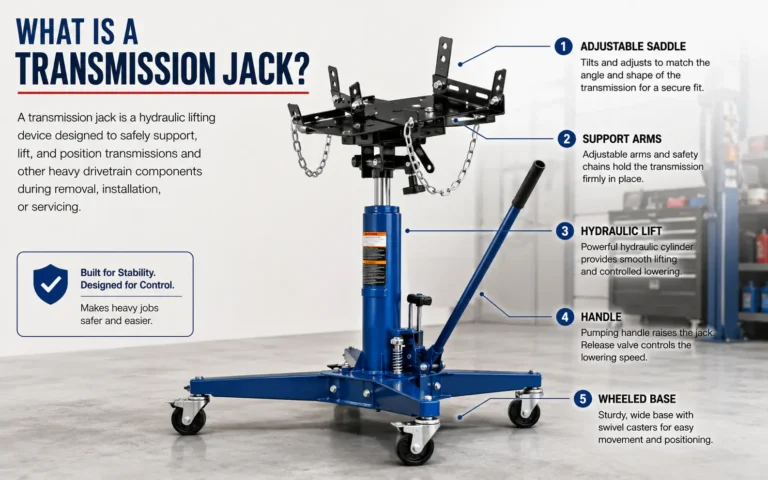 What is a Transmission Jack? Purpose, Types, and Use Explained
Learn what is a transmission jack , its purpose in automotive repair, and the different types available. Essential for safely removing and installing vehicle transmissions. A…
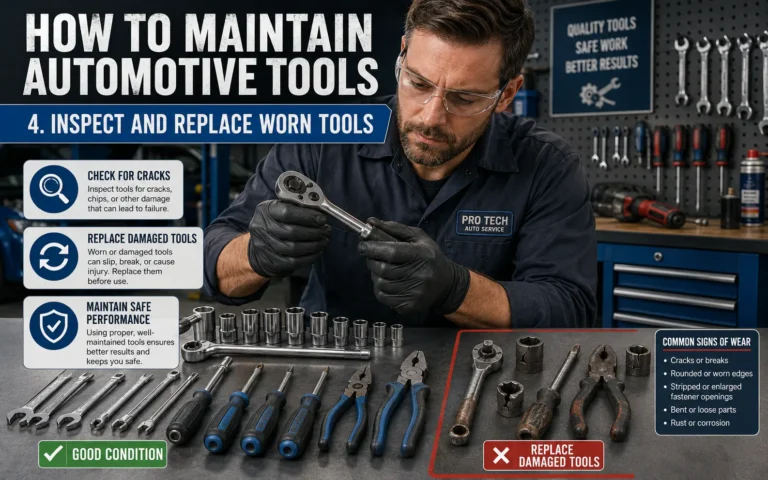 How to Maintain Automotive Tools for Longevity and Performance
Learn how to maintain automotive tools. Discover essential steps for cleaning, rust prevention, proper storage, and inspection to extend their lifespan. Maintaining your automotive tools is…
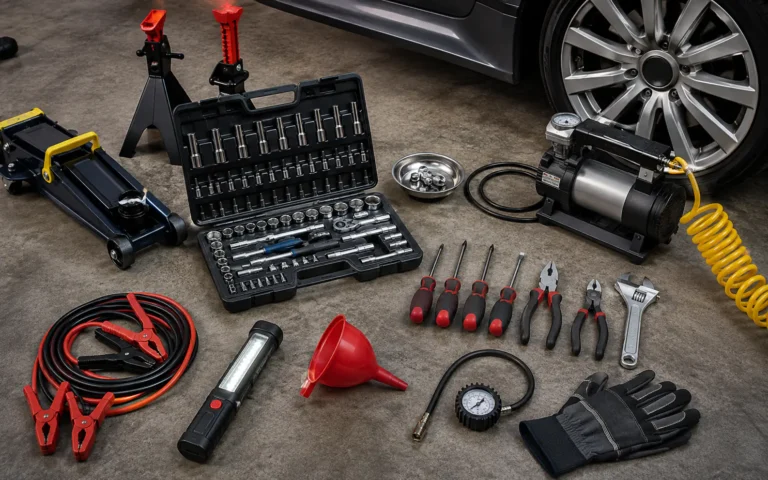 Must-Have Tools for Car Maintenance: Your Essential Toolkit
Discover must-have tools for car maintenance owner needs for routine maintenance and minor repairs. Build your car maintenance toolkit for confidence and savings. To effectively maintain…