
What is a Transmission Jack? Purpose, Types, and Use Explained
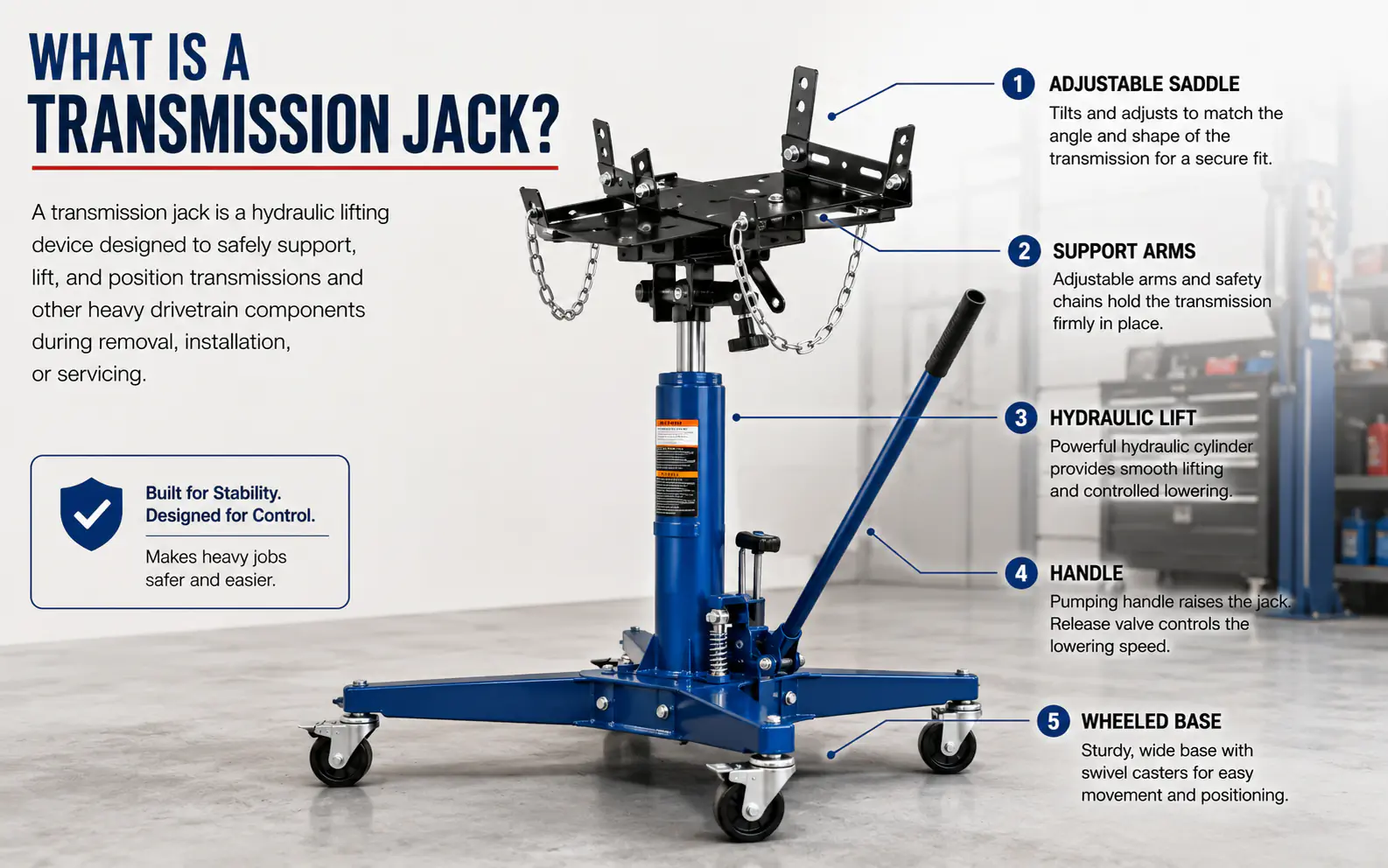
A transmission jack is a specialized piece of automotive equipment designed to safely support, lift, and precisely position vehicle transmissions. Think of it as a dedicated lift for the heavy gearbox that connects your engine to the drive wheels.
Its main purpose is to make the often-difficult and dangerous task of removing or installing a transmission much more manageable and secure. Without one, mechanics and DIYers would struggle to handle the significant weight and awkward shape of these components, risking injury or damage to the vehicle.
| Topic | When it helps | What to keep in mind |
|---|---|---|
| 1 | Any automotive repair involving transmission removal or installation. | Attempting to manually support a heavy transmission without proper equipment can lead to severe injury or damage. |
| 2 | Understanding how the tool operates. | The saddle’s design and securing straps are vital for preventing the transmission from slipping. |
| 3 | Choosing the right type for your vehicle and needs. | Using a jack with insufficient capacity is extremely dangerous. |
What Exactly is a Transmission Jack?
Imagine you need to replace the clutch in your car.
How Does a Transmission Jack Work?
What is a Transmission Jack. At its core, a transmission jack operates on principles similar to other hydraulic or pneumatic lifting devices, but with a focus on stability and precise control for heavy, irregularly shaped loads.
The base of the jack provides a wide, stable footprint on the garage floor. A vertical column, typically powered by a hydraulic ram or pneumatic cylinder, extends upwards.
This saddle is often adjustable, allowing for tilt and swivel movements. These adjustments are crucial for aligning the transmission’s input shaft with the engine’s flywheel or for maneuvering it into its mounting brackets.
The hydraulic system within the jack uses fluid pressure to extend a piston, which in turn raises the lifting column.
Over-extending the hydraulic ram beyond its safe limits or failing to properly secure the transmission to the saddle can lead to catastrophic failure.
Key Components
Base: A wide, sturdy foundation that distributes the weight and ensures stability. Often features wheels for maneuverability.
Common Types of Transmission Jacks
Transmission jacks are not one-size-fits-all. They are designed with different vehicle types and repair needs in mind, leading to several common variations.
What is a Transmission Jack. The most basic type might be a standard floor jack with a specialized transmission adapter that attaches to the jack’s lifting pad. While versatile, these can sometimes be less stable for transmission work than dedicated units.
Dedicated universal transmission jacks are more common. These often feature a wider base and a saddle designed specifically for transmissions.
If you’re working on a sports car with very little ground clearance, a low-profile transmission jack would be essential to even get under the vehicle, whereas a standard floor-type jack might suffice for a truck with higher clearance.
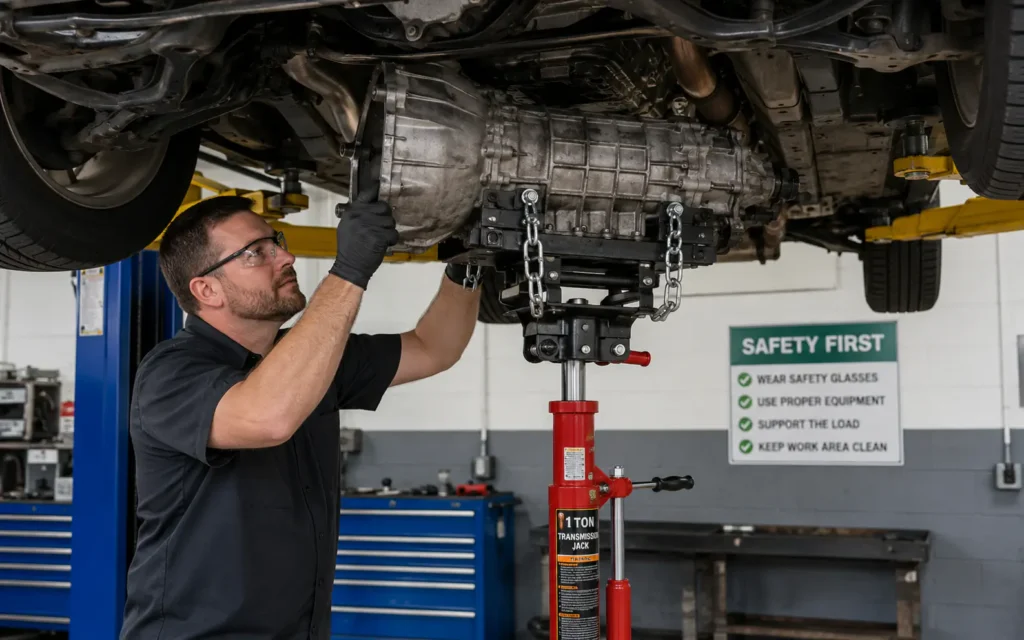
Purchasing a jack that is too tall for the vehicle or lacks the necessary lifting capacity for the specific transmission.
| Type | Description | Best For |
|---|---|---|
| Standard Floor Jack with Adapter. | A regular floor jack fitted with a transmission cradle. | Occasional use on vehicles with adequate clearance. |
| Universal Transmission Jack. | Dedicated jack with a specialized saddle and stable base. | General transmission removal/installation on most vehicles. |
| Low-Profile Transmission Jack. | Designed with a very low minimum height for tight spaces. | Sports cars, sedans, and vehicles with limited ground clearance. |
| Heavy-Duty Transmission Jack. | Built for higher weight capacities and larger vehicles. | Trucks, buses, and commercial vehicles. |
Why is a Transmission Jack Necessary?
While it might seem like an extra tool, a transmission jack is indispensable for anyone performing transmission work. Its necessity stems from a combination of safety, precision, and efficiency.
Transmissions are heavy and bulky. Attempting to remove or install one without a dedicated support system is extremely dangerous.
Precision is another key benefit. Aligning a transmission with the engine or its mounting points requires very fine adjustments.
Without a transmission jack, a mechanic might try to balance a heavy transmission on a regular floor jack, or worse, attempt to support it manually.
Underestimating the weight of a transmission or the risks involved in handling it without proper equipment.
Definition of a transmission jack
- A transmission jack is a specialized hydraulic or pneumatic device designed to support, lift, and lower vehicle transmissions.
- Its primary role is to safely manage the weight and precise positioning of transmissions during removal and installation.
- Key components include a base, lifting column, saddle, and control mechanism.
- Types vary by capacity, lift range, and profile (e.g., standard, low profile, universal).
- Using a transmission jack is crucial for safety, preventing damage to the vehicle and the transmission itself.
Define what a transmission jack
1. The Core Function: Support and Positioning
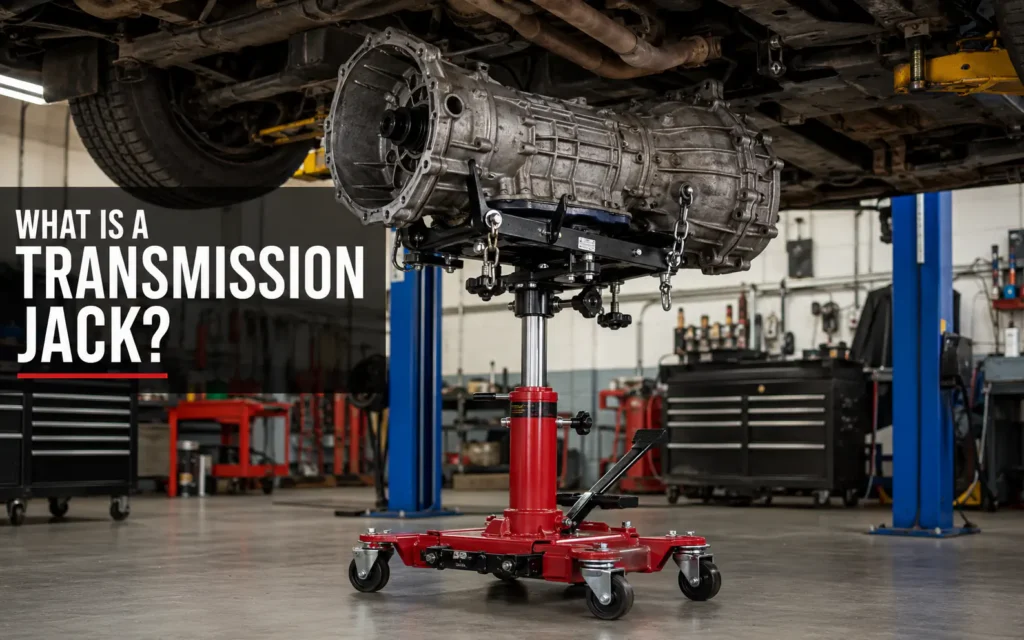
What is a Transmission Jack. A transmission jack’s primary job is to securely hold a transmission in place while it’s being detached from or reattached to the vehicle’s chassis. It allows for fine adjustments in height and angle, which is critical for aligning the transmission with the engine or mounting points.
- Any automotive repair involving transmission removal or installation.
- Attempting to manually support a heavy transmission without proper equipment can lead to severe injury or damage.
- Ensure the jack’s capacity meets or exceeds the weight of the transmission you are working with.
2. Essential Components for Operation
Transmission jacks typically feature a stable base for support, a vertical lifting column (often hydraulic or pneumatic), a saddle or cradle designed to hold the transmission securely, and a control mechanism for raising, lowering, and sometimes tilting the load.
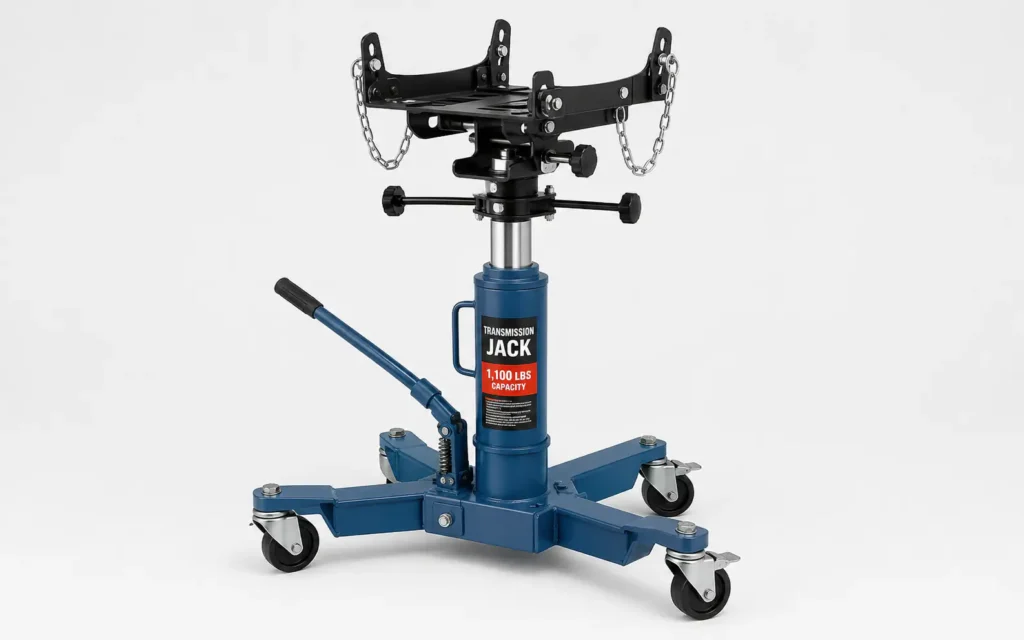
- Understanding how the tool operates.
- The saddle’s design and securing straps are vital for preventing the transmission from slipping.
- Look for features like adjustable saddle tilt and swivel for easier alignment.
3. Variety in Design and Capacity
Transmission jacks come in various forms, including standard floor jacks with transmission adapters, dedicated universal transmission jacks, and low-profile models for vehicles with limited undercarriage clearance. Capacities can range from a few hundred pounds for smaller cars to several tons for heavy-duty trucks.
- Choosing the right type for your vehicle and needs.
- Using a jack with insufficient capacity is extremely dangerous.
- Consider the vehicle type and transmission weight before selecting a jack.
FAQs
Is a transmission jack necessary for all transmission repairs?
Yes, for any repair that involves removing the transmission from the vehicle, a transmission jack is highly recommended for safety and ease of work. It’s designed to handle the weight and provide the necessary control.
What is the difference between a transmission jack and a regular floor jack?
A regular floor jack lifts a vehicle, while a transmission jack is specifically designed to support, lift, and precisely maneuver a transmission once it’s detached from the vehicle’s chassis. Transmission jacks have specialized saddles and control mechanisms for this purpose.
Can I use a regular floor jack with a transmission adapter instead of a dedicated transmission jack?
What is a Transmission Jack. While possible for some lighter transmissions and with caution, a dedicated transmission jack offers superior stability, control, and safety features specifically tailored for the task, making it the preferred tool for most transmission work.
What is the typical weight capacity of a transmission jack?
Capacities vary widely, from around 500 lbs for smaller car transmissions to over 2,000 lbs for heavy-duty truck transmissions. Always check the jack’s rating against the transmission’s weight.
What does ‘low profile’ mean for a transmission jack?
A low-profile transmission jack has a significantly reduced minimum height, allowing it to fit under vehicles with very little ground clearance, such as sports cars or sedans, where a standard jack might not be able to reach.
Conclusion
In essence, a transmission jack is a specialized, safety-critical tool that transforms a potentially hazardous and complex automotive task into a manageable one. Its ability to securely support and precisely maneuver heavy transmissions is vital for efficient and safe vehicle repair.
What is a Transmission Jack. Understanding what a transmission jack is and why it’s used provides valuable insight into the specialized equipment that keeps modern vehicles running. When faced with transmission work, recognizing the role of this dedicated jack highlights the importance of using the right tool for the job.
Related posts
 How to Maintain Automotive Tools for Longevity and Performance
Learn how to maintain automotive tools. Discover essential steps for cleaning, rust prevention, proper storage, and inspection to extend their lifespan. Maintaining your automotive tools is…
 Must-Have Tools for Car Maintenance: Your Essential Toolkit
Discover must-have tools for car maintenance owner needs for routine maintenance and minor repairs. Build your car maintenance toolkit for confidence and savings. To effectively maintain…
 How to Lift a Car Safely with Jack Stands: A Step-by-Step Guide
Learn how to lift a car safely using a jack and secure it with jack stands. Follow clear, step-by-step instructions to perform under-car work with confidence.…