
Smart Home Kitchen Essentials: Must-Have Gadgets for Modern Cooking
Smart home kitchen essentials are connected appliances and gadgets designed to automate tasks, offer remote control, and provide data-driven insights to make cooking, cleaning, and food management more efficient and convenient. These devices leverage Wi-Fi, Bluetooth, or other smart home protocols to integrate with your broader smart home system, often controlled via a smartphone app or voice assistant.
Moving beyond basic kitchen tools, these essentials aim to simplify meal prep, monitor cooking progress, and even help with grocery management. They range from smart ovens and coffee makers to connected scales and thermometers, each offering a unique way to streamline your kitchen routine.
Choosing the right smart kitchen essentials means focusing on practical utility and how they fit into your lifestyle. This guide will help you identify the most impactful smart gadgets and provide clear criteria for selecting and integrating them into your modern home.
Definition of a smart kitchen
- Smart kitchen essentials offer convenience, efficiency, and enhanced control over cooking tasks.
- Prioritize devices that solve a real problem or significantly improve a routine task.
- Consider ecosystem compatibility to ensure seamless integration with existing smart home devices.
- Start with a few key essentials that align with your cooking habits and budget.
- Look for devices with intuitive apps and reliable connectivity for the best experience.
| Topic | When it helps | What to keep in mind |
|---|---|---|
| Cooking Appliances | Busy individuals, meal preppers, or anyone who wants more control and flexibility over their cooking schedule. | Ensure compatibility with your existing smart home ecosystem if you plan extensive integration. |
| Food Prep Tools | Bakers, health-conscious cooks, or anyone aiming for precision in their recipes. | Check app reviews for reliability and ease of use. |
| Beverage Makers | Coffee and tea enthusiasts, early risers, or those who appreciate a perfectly timed morning beverage. | Consider the cleaning process and filter type. |
| Kitchen Hubs | Anyone seeking hands-free assistance, recipe guidance, or centralized control for their smart kitchen devices. | Consider privacy settings and microphone placement. |
The article must cover the
Cooking Appliances. Smart Cooking Appliances: Ovens, Air Fryers, & Slow Cookers
These appliances offer remote control, preheating, recipe integration, and precise temperature management via smartphone apps. Smart ovens can suggest cooking times, while connected air fryers and slow cookers allow you to start, stop, or adjust settings from anywhere, ensuring meals are ready when you are.
- Busy individuals, meal preppers, or anyone who wants more control and flexibility over their cooking schedule.
- Ensure compatibility with your existing smart home ecosystem if you plan extensive integration.
- Look for models with intuitive apps, reliable Wi-Fi connectivity, and features that genuinely simplify your most frequent cooking tasks.
- Connectivity – Wi-Fi, Bluetooth.
- Control – App, Voice Assistant.
- Benefits – Remote control, recipe integration.
Food Prep Tools. Smart Food Prep Tools: Scales & Thermometers
Smart food scales connect to apps to provide precise measurements, nutritional information, and guided recipes, helping with baking or dietary tracking. Smart meat thermometers offer real-time temperature monitoring and alerts, ensuring perfectly cooked food without constant checking.

- Bakers, health-conscious cooks, or anyone aiming for precision in their recipes.
- Check app reviews for reliability and ease of use.
- Prioritize accuracy and a user-friendly app interface.
- Connectivity – Bluetooth, Wi-Fi.
- Accuracy – High.
- Features – Recipe guidance, nutritional tracking, temperature alerts.
Beverage Makers. Smart Coffee Makers & Kettles
Start your coffee brewing from bed or schedule it to be ready when you wake up with a smart coffee maker. Smart kettles allow you to set precise temperatures for different teas or pour-over coffee, often controlled via an app or voice command, ensuring your morning routine is seamless.
- Coffee and tea enthusiasts, early risers, or those who appreciate a perfectly timed morning beverage.
- Consider the cleaning process and filter type.
- Look for programmable schedules, temperature control options, and easy integration with your preferred smart home platform.
- Connectivity – Wi-Fi.
- Control – App, Voice, Schedule.
- Convenience – Automated brewing, precise temperature.
Kitchen Hubs. Voice Assistants & Smart Displays
While not strictly kitchen appliances, voice assistants like Amazon Echo or Google Nest Hub are central to a smart kitchen. They can set multiple timers, convert measurements, read recipes aloud, play music, and control other smart devices hands-free, making them invaluable kitchen companions.
- Anyone seeking hands-free assistance, recipe guidance, or centralized control for their smart kitchen devices.
- Consider privacy settings and microphone placement.
- Choose a device compatible with your preferred smart home ecosystem and consider a smart display for visual recipe guidance.
- Connectivity – Wi-Fi.
- Control – Voice, Touch (for displays).
- Functions – Timers, recipes, unit conversion, device control.
What Makes a Kitchen “Smart”?
A “smart” kitchen goes beyond traditional appliances by integrating technology that allows for automation, remote control, and enhanced functionality. These devices connect to your home network, often via Wi-Fi or Bluetooth, enabling you to manage them through a smartphone app, voice commands, or even other smart home hubs.
The goal is to streamline cooking processes, improve efficiency, and add a layer of convenience to your daily kitchen routines. This can mean anything from a coffee maker that starts brewing on a schedule to an oven you can preheat from your office, or a scale that helps you track macros.

The real value of a smart kitchen lies in its ability to save you time, reduce guesswork, and provide a more personalized cooking experience. It’s about making your kitchen work smarter for you, adapting to your habits and preferences.
Imagine you’re running late, but you can preheat your oven from your phone on the way home, or tell your smart display to add ‘milk’ to your grocery list without touching anything while your hands are covered in dough.
Don’t assume ‘smart’ just means Wi-Fi enabled.
Choosing Your Smart Kitchen Essentials
With a growing number of smart kitchen gadgets available, choosing the right ones can feel overwhelming. The key is to focus on your personal needs, cooking habits, and how a device will genuinely enhance your kitchen experience, rather than just adding another piece of tech.
Consider your existing smart home ecosystem. If you already have a preferred voice assistant or smart hub, look for devices that are compatible to ensure smooth integration and control.
Budget and space are also crucial factors. Smart devices can range widely in price, and some larger appliances require significant kitchen real estate.
If you already use Google Assistant for your smart lights, choosing a smart oven that integrates with Google Home will offer a more seamless experience than one that only works with Alexa.
A common mistake is buying a smart gadget just because it’s ‘smart’ without considering if it genuinely solves a problem or adds significant value to your specific cooking habits.
| Consideration | What to Look For | Why It Matters |
|---|---|---|
| Ecosystem Compatibility. | Works with Alexa, Google Home, Apple HomeKit. | Ensures seamless control and automation with existing devices. |
| Connectivity Reliability. | Stable Wi-Fi, quick app response. | A device that constantly disconnects adds frustration, not convenience. |
| Actual Utility. | Solves a real problem, simplifies a task. | Avoids buying gadgets that offer novelty but little practical benefit. |
| Ease of Use. | Intuitive app, simple setup. | A complex device will likely sit unused. |
Integrating Smart Devices for a Cohesive Kitchen
The true power of smart kitchen essentials comes from their ability to work together. Integrating your devices into a cohesive system allows for automation, routines, and centralized control, making your kitchen truly intelligent.
Start by connecting all your compatible devices to your main smart home hub or voice assistant. This allows you to create custom routines.
Regularly check for software updates for your smart devices and their apps. Updates often introduce new features, improve performance, and enhance security.
You can set up a routine where saying ‘Good morning’ to your voice assistant automatically turns on your smart kitchen lights and starts your smart coffee maker.
A common pitfall is buying devices from too many different ecosystems, leading to multiple apps and fragmented control, which defeats the purpose of a ‘smart’ home.
- Choose a Central Hub: Decide if you’ll primarily use a voice assistant (Alexa, Google Assistant) or a dedicated.
- Create Routines: Use your smart home app to set up automated sequences, like ‘Morning Coffee’ or ‘Dinner Time’.
- Explore IFTTT (If This Then That): For more advanced automation, IFTTT can connect devices and services that don’t.
- Organize Your Apps: Keep all your smart device apps in one folder on your phone for easy access.
- Test Connections: Periodically check that all your devices are connected and responding correctly to commands.
FAQs
Are smart kitchen gadgets really worth the investment?
Smart kitchen gadgets offer significant convenience, save time through automation, and can improve cooking precision. The ‘worth’ depends on how much you value these benefits and how well the devices integrate into your daily routines and existing smart home setup.
How do I start building a smart kitchen without breaking the bank?
Begin with one or two essential items that address a specific need or pain point in your kitchen, such as a smart coffee maker for your morning routine or a smart thermometer for precise cooking. Voice assistants are also a low-cost entry.
What are the privacy concerns with smart kitchen devices?
Smart devices collect data on usage, which can raise privacy concerns. Always review the privacy policies of manufacturers, use strong, unique passwords, and keep your device software updated.
Do all smart kitchen essentials require Wi-Fi?
Most smart kitchen essentials rely on Wi-Fi for remote control and integration with cloud services or other smart home platforms. Some smaller gadgets might use Bluetooth for local control via a smartphone, but Wi-Fi is generally needed for full smart home functionality.
Can smart kitchen devices save me money?
While the initial investment can be higher, some smart kitchen devices can indirectly save money. For example, a smart oven that preheats more efficiently or a smart scale that helps reduce food waste through precise measurements can lead to savings over time.
Conclusion
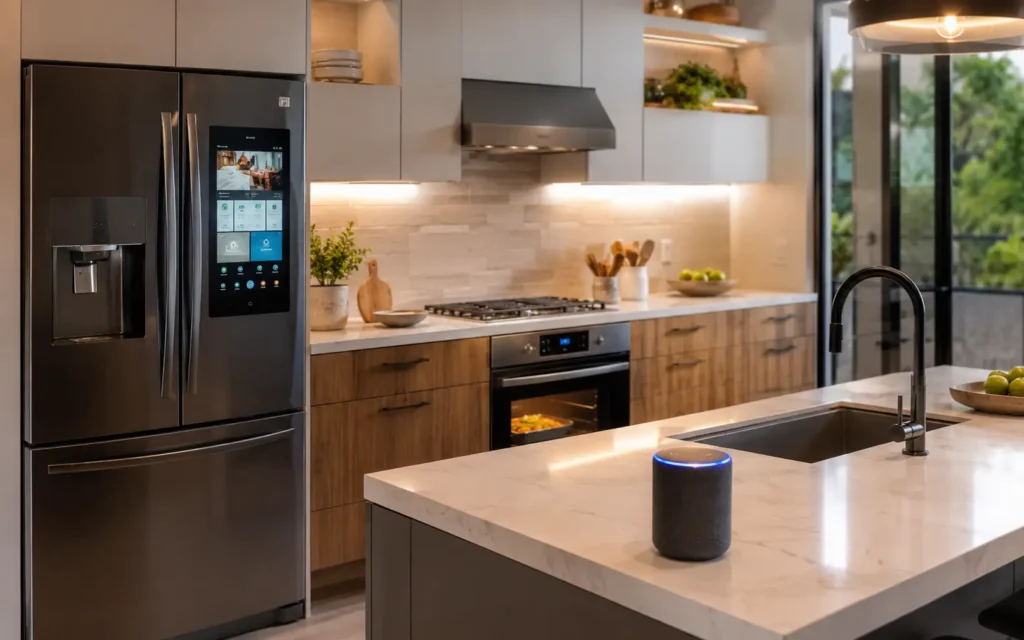
Embracing smart home kitchen essentials can transform your cooking space into a hub of efficiency and convenience. By understanding what makes a kitchen smart and focusing on devices that genuinely enhance your daily routines, you can make informed choices that align with your lifestyle and budget.
The true value isn’t just in owning connected gadgets, but in how seamlessly they integrate to simplify tasks, from brewing your morning coffee to perfectly timing your dinner. Prioritize utility, compatibility, and ease of use to build a smart kitchen that truly works for you.
Related posts
 How to Strengthen Weak Nails: A Practical Guide to Daily Care
Learn how to strengthen weak nails with simple daily habits, protective care, and targeted hydration. Restore your natural nail strength today. Weak, peeling, or brittle nails…
 What Sounds Do Cats Dislike? 7 Noises That Stress Your Pet
Discover what sounds do cats dislike and why. Learn how to protect your cat’s sensitive hearing from stressful household noises and high-frequency hums. Cats dislike sounds…
 Restoring Faded Black Clothing: Practical Methods and Reality Checks
Can you restore faded black clothing? Learn the difference between temporary color revival and permanent redyeing, plus how to prevent future fading. You can restore the…