
Makeup Tools Hygiene Tips
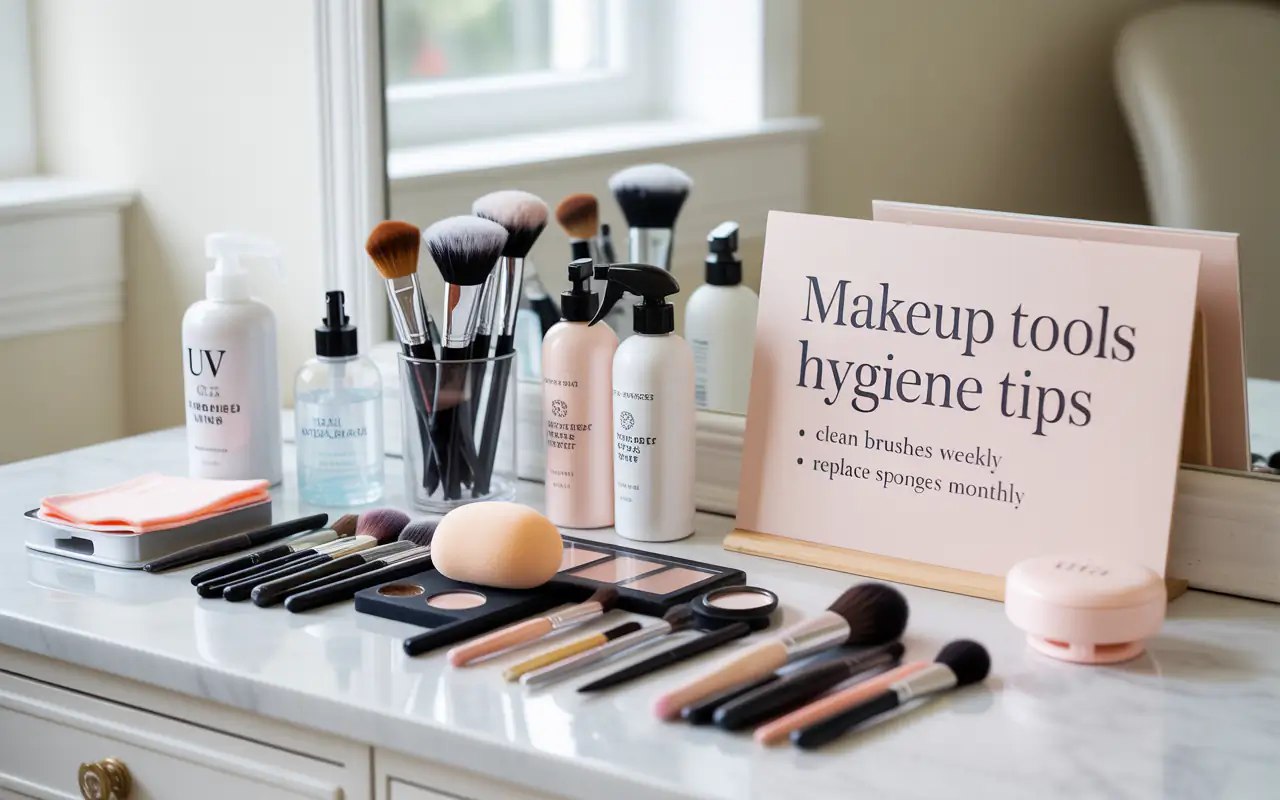
For safe beauty, follow these makeup tools hygiene tips. Wash brushes weekly with mild soap. Clean sponges after each use. Sanitize metal tools with alcohol. Stop breakouts and infections now.
Do you love makeup? I do too. But dirty tools can hurt your skin. Small germs live on your brushes. They can cause pimples. They can cause infections. That is why you need good makeup tools hygiene tips. These tips are easy to follow. They keep your face safe. Let me show you how.
Why Clean Makeup Tools Matter
Your makeup tools touch your face every day. They pick up oil, dead skin, and bacteria. Over time, this builds up. You might not see it. But it is there. Dirty brushes can give you breakouts. They can make old acne worse. Some germs are very bad. They can cause pink eye. They can cause skin rashes. That is why makeup tools hygiene tips are so important. Clean tools mean clean skin.
Your makeup brushes can carry more bacteria than a toilet seat if not cleaned.” – Dr. Hadley King
Basic Makeup Tools Hygiene Tips for Beginners
If you are new to this, do not worry. Here are three simple makeup tools hygiene tips. First, clean your brushes once a week. Second, wash your sponge after each use. Third, spray alcohol on items like tweezers. These makeup tools hygiene tips will change your routine. They take just a few minutes.
How Often to Clean Each Tool
Let me break it down more. For liquid products, clean after each use. For powder products, once a week is fine. But here is a key makeup tools hygiene tip: always let tools dry fully. Wet tools grow mold.
Cleaning Schedule for Makeup Tools
| Tool | How Often to Clean |
|---|---|
| Foundation brush | After every use |
| Powder brush | Once a week |
| Beauty sponge | After each use |
| Eyelash curler | Once a week |
| Tweezers | After each use |
Step by Step Guide to Wash Your Brushes
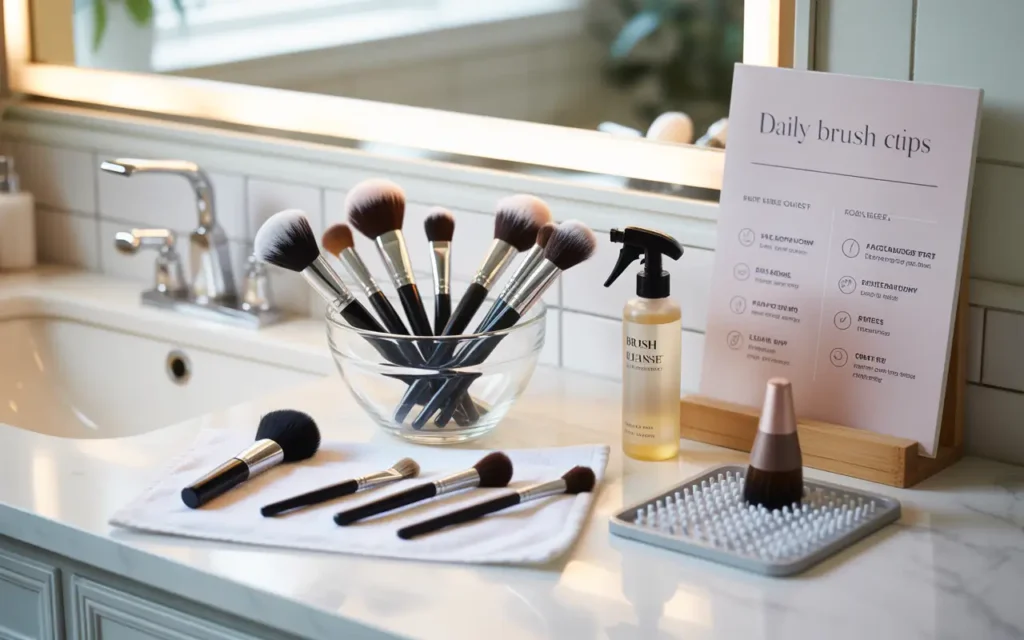
You need warm water. You need mild soap. Baby shampoo works well. Wet the brush hairs. Put a drop of soap in your palm. Swirl the brush on your palm. Rinse until water is clear. Squeeze out extra water. Lay the brush flat to dry. Do not dry it standing up. Water will go inside the handle. That ruins the glue. Another makeup tools hygiene tip: wash new brushes before first use. They have factory dust.
Special Care for Beauty Sponges
Beauty sponges are tricky. They hold a lot of water. They also hold a lot of germs. Here is a good makeup tools hygiene tip: use a soap bar to clean your sponge. Wet the sponge. Rub it on a bar of soap. Squeeze gently. Rinse. Repeat until no makeup comes out. Squeeze with a towel. Let it air dry. Change your sponge every three months. Old sponges have tiny cuts inside. Germs hide there. That is not safe.
“A dirty sponge is a breeding ground for acne.” – Caroline Hirons
Sanitizing Other Makeup Tools
Do not forget your small tools. Eyelash curlers have rubber pads. Those pads collect bacteria. Wipe them with alcohol after each use. Tweezers touch your skin too. Clean them with soap and water. Then dip in rubbing alcohol. Scissors for brow trimming? Same thing. Here is a makeup tools hygiene tip for metal tools: boil them for 5 minutes once a month. That kills everything.
Sanitizing Solutions for Different Tools
| Solution | Best for |
|---|---|
| 70% rubbing alcohol | Metal tools, curlers, tweezers |
| Mild soap + water | Brushes, sponges |
| White vinegar (diluted) | Deep cleaning brushes |
Signs Your Makeup Tools Are Too Dirty
How do you know it is time to clean? Look for these signs. Your brush smells bad. The hairs feel sticky. You see color buildup near the base. Your sponge has dark spots. You get new pimples after makeup. These are clear warnings. Do not ignore them. A simple makeup tools hygiene tip is to set a weekly reminder on your phone. Sunday night is a good time.
How to Store Clean Tools
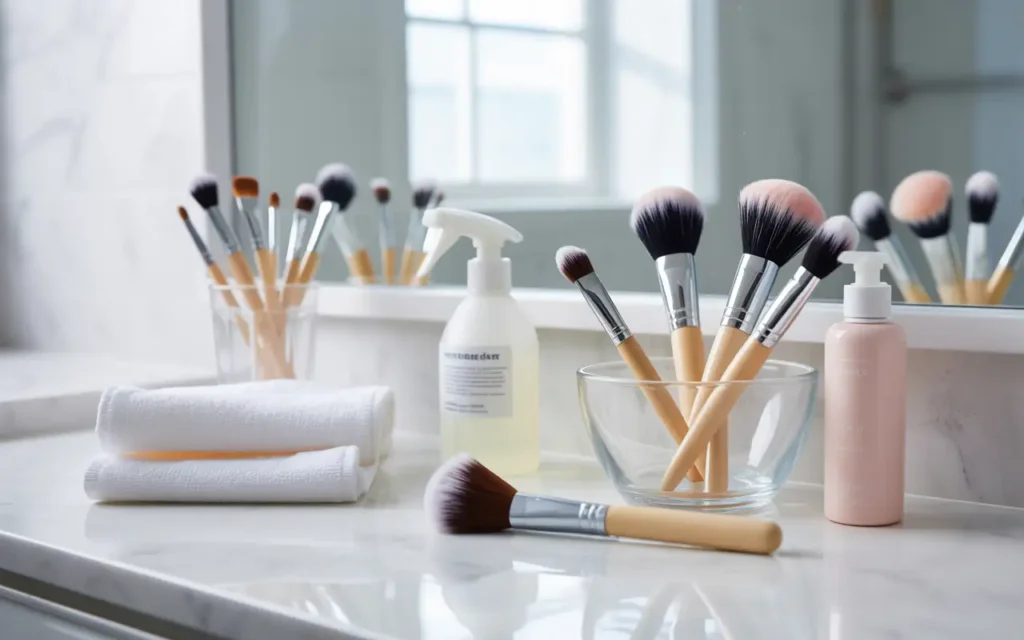
Storage is part of good hygiene. Do not toss wet brushes in a drawer. They will get moldy. Store dry brushes upright in a cup. Keep them in a cool place. Not in the bathroom. The bathroom has too much moisture. Use a closed case for travel. Put a silica gel packet inside to absorb wetness. Another makeup tools hygiene tip: keep your storage container clean. Wash the cup once a month.
Common Mistakes to Avoid
Many people make these errors. Do not soak brushes in water. The handle will crack. Do not use hot water. It ruins the bristles. Do not share your tools. That spreads germs. Do not use hair conditioner on brushes. It leaves a film. Do not forget to clean your makeup bag. The bag itself gets dirty. Here is a final makeup tools hygiene tip: wash your makeup bag every two weeks. Or use a washable bag.
“I wash my brushes every Sunday night without fail.” – Bobbi Brown
Frequently Asked Questions
Q1: Can I use dish soap to clean my brushes?
A1: No. Dish soap is too strong. It dries out the bristles. Use mild soap or baby shampoo.
Q2: How often should I replace my makeup sponge?
A2: Every three months. If you see tears or weird smells, change it sooner.
Q3: Is it safe to use the same brush for different products?
A3: Not really. Each brush picks up color and germs. If you must, clean it between uses. Or get separate brushes.
Q4: What is the fastest way to dry brushes?
A4: Let them air dry flat. Do not use a hair dryer. Heat melts the glue.
Q5: Can I get an infection from dirty tweezers?
A5: Yes. Dirty tweezers can pass bacteria into small cuts. Always clean them with alcohol before each use.
Conclusion
Good makeup tools hygiene tips are not hard to follow. They just need a little habit. Clean your tools weekly. Replace sponges often. Store them dry. Your skin will thank you. No more mystery pimples. No more red spots. Just clear, happy skin. Start today. Pick one tool to clean right now. You can do this.
Related posts
 Best Compact Powder for Women: 2026 Buyer Guide
Finding the best compact powder for women in 2026. We compare top-rated matte, mineral, and lightweight pressed powders to help you choose the right finish. Finding…
 Best Casual Wear for Women: 2026 Style and Comfort Essentials
Discover the best casual wear for women in 2026. We compare top-rated trousers and versatile tops to help you build a comfortable, stylish everyday wardrobe. Finding…
 Best Claw Clips for Thick Hair in 2026
Finding the best claw clips for thick hair requires a balance of grip and size. Explore our top 2026 recommendations for secure, stylish, and reliable styling.…