
Is Homemade Dog Food Safe
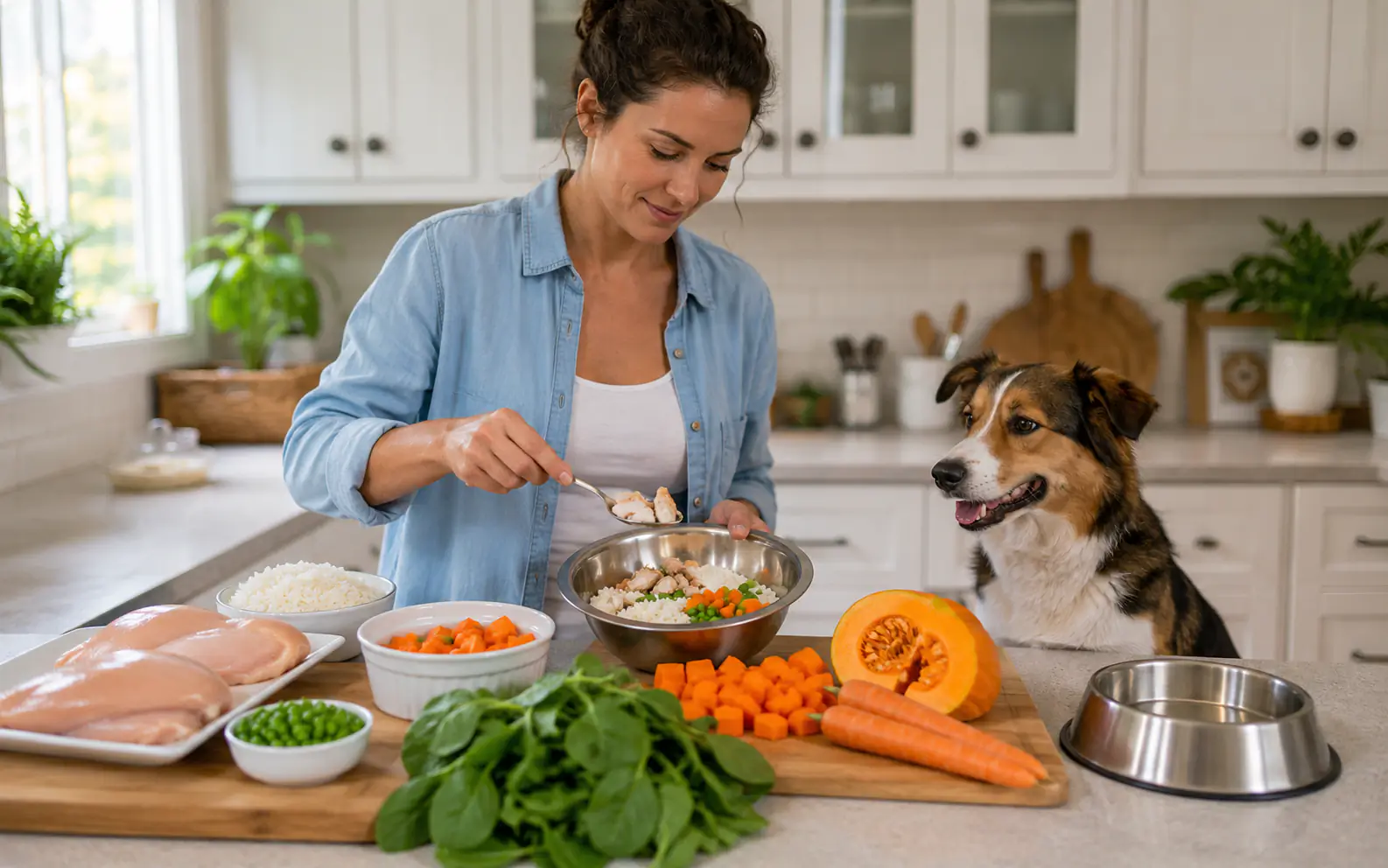
Wondering is homemade dog food safe for your furry friend? Yes, if you follow vet-approved recipes and balance nutrients. Learn the risks, benefits, and simple steps to feed your dog healthy homemade meals.
Every morning, I scoop kibble into my dog’s bowl. But lately, I have thought about making his food myself. Many dog owners ask the same question: is homemade dog food safe? You love your pup like family. So you want the best for them. Cooking for your dog seems loving and natural. But before you toss chicken and rice into a pot, let me share what I have learned from vets, nutritionists, and my own experience.
The short answer? Yes, homemade dog food can be safe. But only if you do it right. Getting it wrong can hurt your dog. This article will guide you through everything you need to know. You will learn the good, the bad, and the simple rules to follow. By the end, you will know exactly is homemade dog food safe for your unique dog.
“Feeding your dog a homemade diet is like cooking for a child with special needs. One mistake can cause serious harm. Always work with a professional.” – Dr. Lisa Freeman, Veterinary Nutritionist at Tufts University
What Does “Safe” Mean for Dog Food?
Safety means different things to different people. For dog food, safety covers three big areas. First, the food must have all the nutrients a dog needs. Second, it must not contain harmful germs like Salmonella. Third, it must avoid toxic ingredients like onions or chocolate.
When you ask is homemade dog food safe, you are really asking: can a regular person cook meals that meet all these rules? The answer is yes, but it takes work. You cannot just guess. Dogs need protein, fats, carbs, vitamins, and minerals in specific amounts. Too little calcium can break their bones. Too much vitamin A can damage their liver. So safety starts with knowledge.
The Benefits of Homemade Dog Food
Why do people switch to homemade food? Let me share the good stuff.
You Control Every Ingredient
Store bought food can have fillers, preservatives, and mystery meats. When you cook at home, you choose fresh chicken, beef, fish, or turkey. You add real vegetables like carrots and spinach. You skip artificial colors and flavors. For dogs with allergies, this control is a lifesaver.
Better for Picky Eaters
Some dogs turn their nose up at kibble. My friend’s dog would go days without eating. Then she started making homemade meals. Now her dog licks the bowl clean. Fresh food smells and tastes better. So picky pups often love it.
Helps Manage Health Issues
Vets sometimes suggest homemade diets for dogs with kidney disease, diabetes, or food allergies. You can adjust the recipe to lower phosphorus or avoid specific proteins. But always do this with a vet’s help.
Stronger Bond and Peace of Mind
Cooking for your dog feels good. You know exactly what goes into their body. Many owners say they feel closer to their pet after making the switch. That emotional benefit matters too.
But benefits only matter if the food is safe. So let’s look at the risks.
The Risks You Need to Know
Now for the hard truth. Homemade diets can go wrong in several ways. I want you to see these clearly so you can avoid them.
Nutritional Imbalance
This is the biggest risk. A study found that over 90% of homemade dog food recipes online lack essential nutrients. Yes, 90%! That is scary. Missing calcium leads to weak bones. Too much liver causes vitamin A toxicity. Even small mistakes over months can cause big health problems.
Common imbalances include:
- Too little calcium and phosphorus
- Too much fat (causing pancreatitis)
- Wrong calcium-to-phosphorus ratio
- Missing trace minerals like zinc and copper
“I see dogs every week with brittle bones, heart problems, or skin issues from unbalanced homemade diets. Please do not guess.” – Dr. Ernie Ward, Founder of the Association for Pet Obesity Prevention
Contamination and Food Poisoning
Raw meat diets are popular. But raw chicken can carry Salmonella. Raw beef can have E. coli. These germs make dogs sick. They can also spread to your family. Kids, older adults, and people with weak immune systems are at risk.
Even cooked food can spoil if you leave it out. Homemade food lacks preservatives. So you must store it cold and use it quickly.
Toxic Ingredients
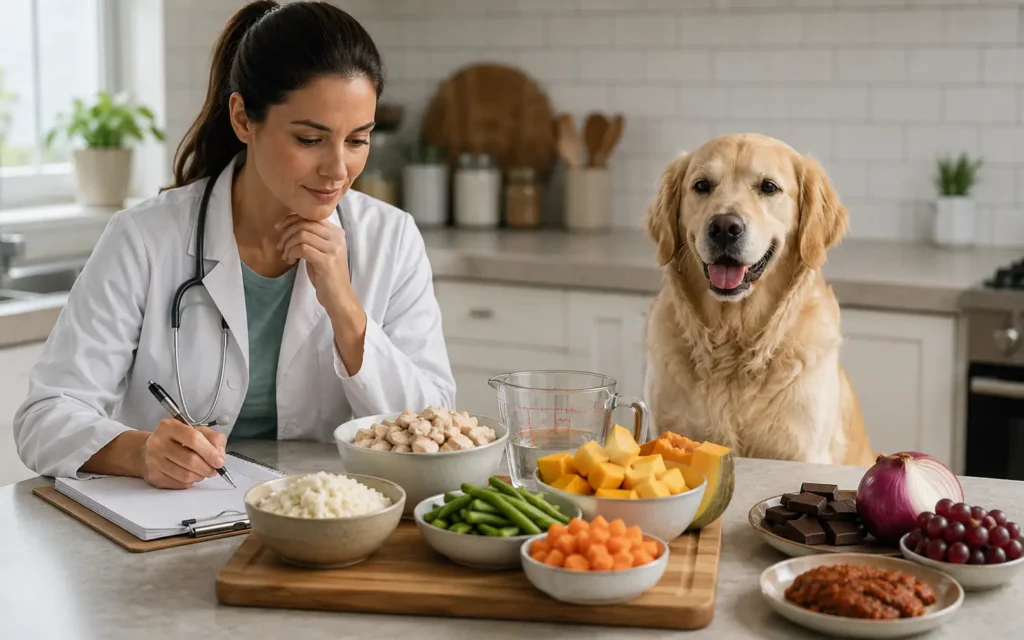
Many human foods are poison to dogs. Onions, garlic, grapes, raisins, macadamia nuts, and xylitol (a sweetener) can kill dogs. Even small amounts matter. If you cook at home, you must learn the full list of forbidden foods. One slip in the kitchen can send your dog to the emergency vet.
Too Many or Too Few Calories
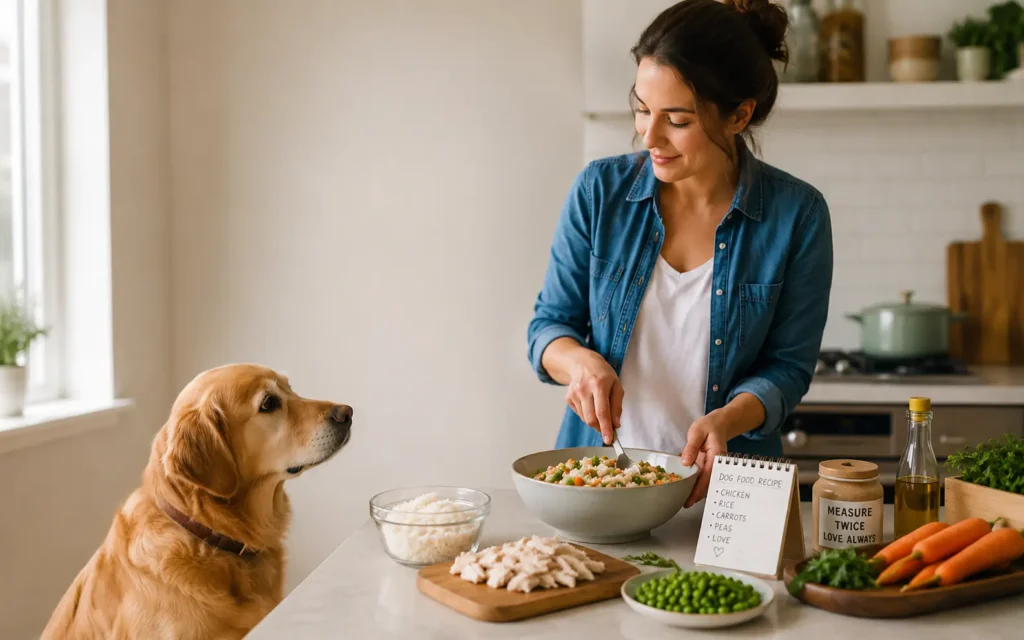
Homemade meals vary in calories. A cup of rice and chicken has different calories than a cup of beef and potatoes. Without exact measurements, dogs can gain weight or lose weight. Obesity hurts joints and organs. Being too thin weakens the immune system.
So is homemade dog food safe? It can be, but you must handle these risks head on.
How to Make Homemade Dog Food Safely
Let me walk you through a step by step plan. Follow this, and you will feed your dog well.
Step 1: Talk to Your Vet or a Canine Nutritionist
This is not optional. Before you change anything, ask your vet. Tell them you want to make homemade food. They might run blood tests to check your dog’s current health. They can also recommend a board certified veterinary nutritionist. These experts create recipes just for your dog based on age, weight, breed, and health issues.
Many vets offer online consultations now. Find one who supports homemade diets. Do not trust random blogs or Facebook groups. Your dog’s life depends on real science.
Step 2: Use Recipes from Reliable Sources
Where do you find good recipes? Look for ones created by veterinary nutritionists. The best resource is the website of the American College of Veterinary Nutrition (ACVN). They offer a list of certified nutritionists who sell balanced recipes. Another good source is the book “Home-Prepared Dog and Cat Diets” by Dr. Donald Strombeck.
Avoid recipes that say “just mix meat, rice, and veggies.” That is not complete. A safe recipe includes exact measurements of protein, carbohydrates, calcium powder, vitamin mixes, and oils.
Step 3: Buy a Kitchen Scale
You cannot measure dog food with cups alone. Cups are not accurate. A kitchen scale gives grams and ounces. Use it for every ingredient. This precision keeps the nutrient balance correct.
Step 4: Cook Meat Thoroughly
Unless your vet says otherwise, cook all meat to safe internal temperatures. Chicken to 165°F (74°C). Beef to 160°F (71°C). Cooking kills harmful bacteria. Wash your hands, cutting boards, and counters after handling raw meat.
Step 5: Add Supplements Carefully
Most homemade diets need supplements. Calcium is almost always missing. You might need a multivitamin or specific minerals like taurine for heart health. Your vet will tell you which supplements and how much. Use human grade supplements from reputable brands. Never guess the dose.
Step 6: Store and Serve Safely
Put leftovers in airtight containers. Refrigerate for up to 3 days. Freeze extra portions for up to 3 months. Thaw frozen food in the fridge overnight. Serve at room temperature. Wash your dog’s bowl after every meal.
Safe vs. Dangerous Foods for Dogs
| Safe Foods (in moderation) | Never Feed |
|---|---|
| Cooked chicken, turkey, beef | Onions, garlic, chives |
| Carrots, green beans, peas | Grapes, raisins |
| White rice, oats, quinoa | Chocolate, caffeine |
| Pumpkin (plain, not pie mix) | Macadamia nuts |
| Apples (no seeds), blueberries | Xylitol (in gum, candy) |
| Plain yogurt (no sweetener) | Raw bread dough |
| Eggs (cooked) | Alcohol |
A Simple Recipe Framework (For Illustration Only)
Please do not use this as a complete diet. This is just an example of what a base might look like. Always get a vet approved recipe.
- 40% lean protein (chicken, turkey, lean beef)
- 30% healthy carbs (brown rice, sweet potato, oats)
- 20% dog safe vegetables (carrots, broccoli, spinach)
- 10% supplements (calcium powder, fish oil, vitamin mix)
Cook protein and veggies. Cook carbs separately. Mix together. Add supplements after cooling. Serve appropriate portion for your dog’s weight.
Again, this is not balanced. Real recipes need exact gram amounts and often require liver, eggs, or other organ meats plus precise supplement doses.
Commercial vs. Homemade: Quick Comparison
Let me show you how the two options stack up.
Table 2: Commercial Kibble vs. Homemade Food
| Aspect | Commercial Kibble | Homemade Food |
|---|---|---|
| Nutritional balance | Guaranteed by AAFCO standards | Depends on recipe quality |
| Convenience | High – just pour and serve | Low – shopping, cooking, storing |
| Cost | Low to medium | Medium to high (fresh ingredients) |
| Food safety risk | Low (heat processed) | Medium (handling and storage) |
| Ingredient control | Low (you trust the brand) | High (you choose everything) |
| Best for | Most healthy dogs | Dogs with allergies or specific needs |
So is homemade dog food safe compared to kibble? Both can be safe. But kibble has safety built in through regulations. Homemade needs you to build the safety yourself.
Frequently Asked Questions
1. Is homemade dog food safe for puppies?
Puppies need exact nutrient ratios for bone growth. Homemade diets for puppies are very risky. Only do this with a veterinary nutritionist’s recipe. Mistakes cause permanent damage. Most vets suggest high quality puppy kibble instead.
2. Can I mix homemade food with kibble?
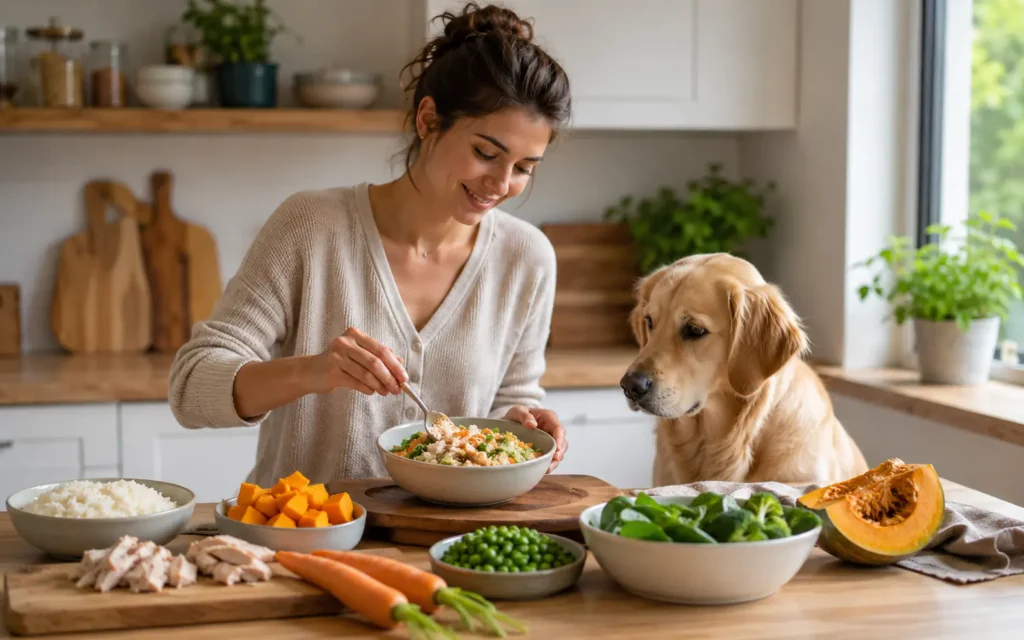
Yes, mixing is often safer than going all homemade. You can add a little cooked chicken and veggies to kibble as a topper. This gives variety without major risk. Keep the kibble as the main source of balanced nutrition. If you do half and half, you still need to ensure the homemade half is complete.
3. How do I know if my dog is doing well on homemade food?
Watch for signs: shiny coat, normal energy, firm stools, stable weight. Also do blood tests every 6 to 12 months. Your vet can check organ function and nutrient levels. If your dog gets itchy, tired, or has soft poop, something is wrong.
4. Is homemade dog food safe for dogs with kidney disease?
Yes, but only with a special recipe. Kidney dogs need low phosphorus and moderate protein. A regular homemade diet can harm them. Work with your vet to create a kidney friendly plan.
5. What is the cheapest way to make safe homemade dog food?
Use chicken thighs (cheaper than breasts), white rice, frozen mixed vegetables, and a calcium supplement like ground eggshells. But you still need a vitamin mix. The cheapest safe route is to use a pre made supplement powder like Balance IT, then add your own protein and carbs.
6. How long does homemade dog food last in the fridge?
3 days maximum. After that, bacteria grow even in sealed containers. For longer storage, freeze portions in small bags or containers. Frozen food lasts 3 months.
7. My dog is picky. Is homemade dog food safe as a permanent diet?
Yes, many picky dogs eat homemade well. But again, you need a balanced recipe. Do not give in and feed only meat. That causes malnutrition. Stick to the recipe. If your dog refuses it, ask your vet for tips or try a different vet approved recipe.
Common Mistakes to Avoid
Let me save you from problems I see all the time.
Mistake 1: Feeding only meat and rice. This lacks calcium, vitamins A, D, E, zinc, copper, and more. Dogs need organ meat, vegetables, and supplements.
Mistake 2: Adding garlic for flea prevention. Garlic is toxic to dogs. It damages red blood cells. Never add it.
Mistake 3: Using human multivitamins. Human vitamins have different amounts. Too much iron or vitamin D is dangerous for dogs. Use dog specific supplements.
Mistake 4: Cooking everything until mushy. Overcooking destroys some vitamins. Lightly steam vegetables instead of boiling them to death.
Mistake 5: Not rotating proteins. Feeding only chicken for months can cause new allergies. Rotate between chicken, turkey, beef, and fish (if no allergies).
Mistake 6: Forgetting about dental health. Kibble scrapes plaque off teeth. Homemade soft food does not. Brush your dog’s teeth or give dental chews.
How Often Should You Feed Homemade Food?
Most adult dogs do well with two meals per day. Puppies need three or four. Divide the total daily calories by the number of meals. Your vet or nutritionist will give you a daily calorie target based on your dog’s weight and activity level.
For example, a 30 pound dog might need 800 calories per day. Two meals of 400 calories each. Weigh the food portions on your scale to match those calories. Adjust if your dog gains or loses weight.
A Real Life Example
Let me tell you about Max, a 7 year old Labrador. Max had terrible itchy skin and chronic ear infections. His owner asked the vet is homemade dog food safe for Max. The vet said yes but referred them to a nutritionist. The nutritionist created a recipe with novel protein (duck), sweet potato, green beans, calcium, and fish oil. Within two months, Max’s skin cleared up. His ears stopped smelling bad. He had more energy. But the owner followed every instruction exactly. She used a scale. She added the right supplements. She did not guess.
That is the difference between safe and unsafe.
When Homemade Dog Food Is NOT Safe
Let me be direct. Homemade food is not safe in these situations:
- You do not want to spend time cooking every week.
- You cannot afford supplements and a nutritionist consultation.
- Your dog has complex health issues like liver shunt or severe pancreatitis.
- You are not willing to use a kitchen scale.
- You trust random online recipes without checking with a vet.
In these cases, stick with high quality commercial dog food. Many brands like Hill’s, Royal Canin, and Purina Pro Plan have excellent safety records.
The Bottom Line on Safety
So let me answer the big question clearly: Is homemade dog food safe? Yes, absolutely, but only when you do it correctly. The safety comes from three things:
- A recipe from a veterinary nutritionist
- Exact measurements with a scale
- Proper cooking and storage
Skip any of these, and you risk harming your dog. Follow all three, and many dogs thrive on fresh, homemade meals.
I cook for my dog twice a week. I freeze portions. I work with a vet. And my dog has never been healthier. It takes effort, but for me, it is worth it. You have to decide if it fits your life.
If you are not sure, start small. Add a little cooked chicken and pumpkin to kibble. See how your dog responds. Then talk to your vet about going further.
Your dog trusts you with their life. That trust deserves real knowledge, not guesswork. Now you know exactly is homemade dog food safe and how to make it so.
Conclusion
Making dog food at home can be a beautiful way to care for your pet. You avoid mystery ingredients and fillers. You see the love in every bowl. But love alone does not create safety. Science does.
Always start with a vet visit. Get a custom recipe from a board certified nutritionist if possible. Buy a kitchen scale and use it every time. Cook meat fully. Wash everything well. Store food cold and use it fast. Watch your dog for any changes in health, energy, or poop quality. Do regular blood tests.
If you do these things, then yes, homemade dog food is safe. If you skip steps or guess, it is not safe. The choice is yours. Make it with care.
Your dog cannot speak up when something is wrong. So you must be their protector. Learn the facts. Follow the rules. And enjoy the happy, healthy tail wags that come from a well fed pup.
Now go give your dog a gentle pat from me. And if you decide to cook for them, do it the right way.
Related posts
 Buy Dog Toys Online: Top 2026 Picks for Every Play Style
Looking to buy dog toys online? Explore our 2026 guide to the best durable chews, interactive balls, and plush favorites to keep your pup happy and…
 Buy Dog Food Online: Top 2026 Selections for Every Breed
Looking to buy dog food online? Explore our top 2026 recommendations for dry and wet formulas tailored to different breed sizes, sensitivities, and nutritional needs. Choosing…
 Buy a Dog Harness Online in 2026
Looking to buy a dog harness online? Explore our 2026 guide to finding the right fit, style, and control features for your dog's daily walks. Finding…