
How To Treat Damaged Nails
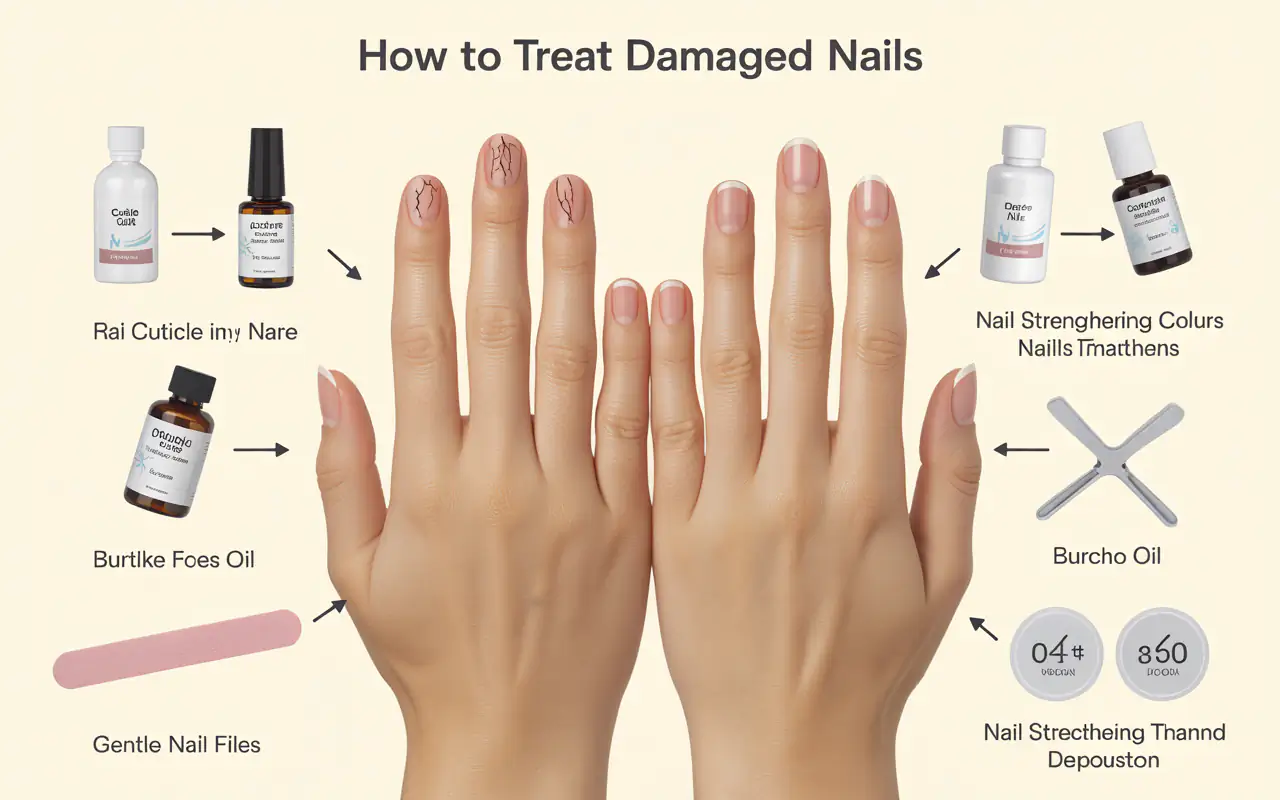
This article shows you how to treat damaged nails with simple steps. Get direct answers on cuticle oil, nail hardeners, and nail care habits. Restore healthy nails easily.
Do your nails feel soft, look yellow, or peel at the edges? You are not alone. Many people face nail problems after using harsh products, biting nails, or wearing fake nails too often. The good news is you can treat damaged nails at home with simple care. You do not need expensive products or many hours each day. Just follow the steps in this guide, and your nails can look strong and healthy again.
I have helped friends and family fix their nails over the years. My own nails became very thin after I used gel polish every two weeks for six months. I learned the hard way that nails need rest and the right kind of help. Now I want to share what works. This article is friendly, honest, and based on real experience and expert advice.
Let us start with the signs of nail damage. Then we will look at the causes, the best ways to treat damaged nails, and how to keep them healthy for good.
What Do Damaged Nails Look Like? (Signs and Symptoms)
Damaged nails do not all look the same. You might see one or more of these signs:
- Peeling layers on the nail tip
- Brittle nails that crack easily
- Soft or bendy nails
- White spots or yellow color
- Rough ridges running from cuticle to tip
- Nails that separate from the nail bed
- Slow growth or no growth at all
If you notice any of these problems, it is time to take action. Early care makes it much easier to treat damaged nails before the problem gets worse.
Dr. Emily Ross, a board-certified dermatologist, says, “Many people ignore early nail damage until the nails start breaking halfway down the nail bed. The best time to act is when you first see peeling or ridges.”
Why Do Nails Get Damaged? (Common Causes)
Understanding the cause helps you stop the damage and choose the right treatment. Here are the most common reasons nails become weak or broken.
Table 1: Common Causes and Their Effects on Nails
| Cause | Effect on Nails |
|---|---|
| Frequent use of acetone nail polish remover | Strips natural oils, leaving nails dry and brittle |
| Wearing gel or acrylic nails for months | Thins the nail plate from filing and soaking |
| Biting or picking at nails | Causes peeling, uneven edges, and infections |
| Washing dishes without gloves | Dries out nails and cuticles due to hot water and soap |
| Low iron or biotin levels | Slows nail growth and causes spoon-shaped nails |
| Using nails as tools (opening cans, scraping) | Leads to splits, cracks, and breaks |
Once you know the cause, you can stop the harmful habit. Then you can treat damaged nails using the methods below.
How to Treat Damaged Nails: Step by Step
This section gives you seven easy steps. Each step builds on the last one. You do not have to do everything at once. Start with step one and add more as you get comfortable.
Step 1: Stop the Harmful Habits
You cannot fix nail damage while still doing the things that hurt them. So take a honest look at your daily routine.
- Stop biting or picking. This is hard, but you can try bitter-tasting nail polish or keeping your hands busy with a stress ball.
- Take a break from gel, acrylic, and dip powder nails. Give your natural nails at least three months of rest.
- Do not use your nails as tools. Get a small tool set for opening packages or removing stickers.
- Limit acetone removers. Choose non-acetone removers, but even those can be drying. Try to remove polish only once a week.
When you remove these stressors, your nails can begin to heal. This is the first and most important step to treat damaged nails.
Step 2: Keep Nails Moisturized
Dry nails break easily. Moisture is your best friend. You should moisturize your nails and cuticles at least twice a day.
- Use a cuticle oil or natural oil like jojoba oil, vitamin E oil, or coconut oil.
- Massage the oil into each nail and cuticle for a few seconds.
- After washing your hands, apply a thick hand cream that contains urea or glycerin.
- At night, put on a heavy balm and wear cotton gloves while you sleep.
“Moisture is the single most underrated tool to treat damaged nails,” says nail care specialist Laura Chen. “Most people think hardeners are the answer, but soft, flexible nails that are well-oiled break far less often than hard, dry ones.”
Step 3: File and Trim Correctly
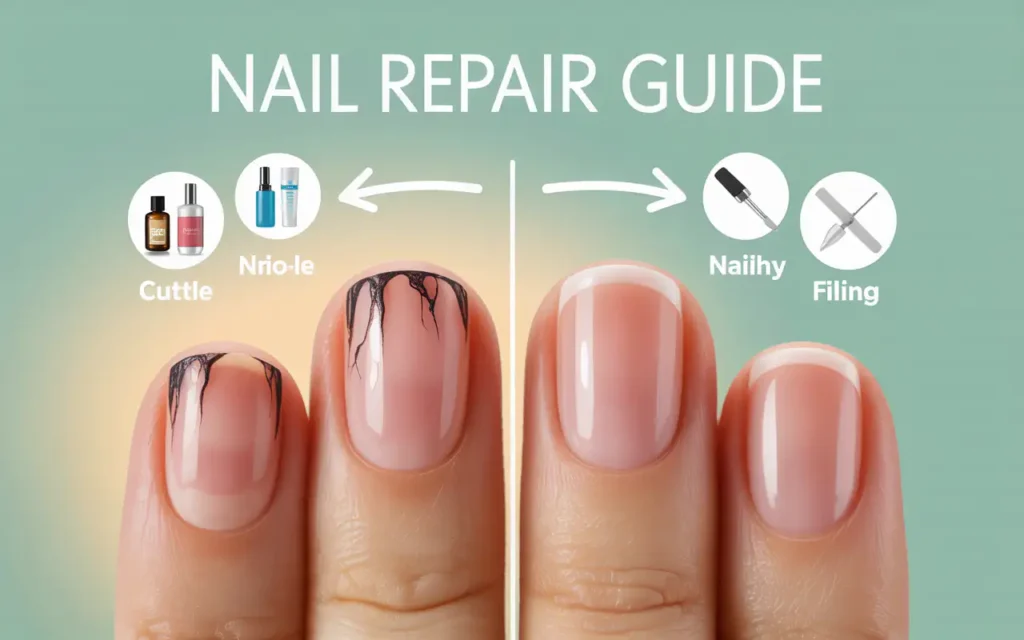
Wrong filing can cause more splits and peeling. Here is how to do it right.
- Use a fine-grit glass file or a soft cardboard file. Avoid metal files.
- File in one direction only. Do not saw back and forth.
- File your nails into a rounded or squoval shape. Sharp corners catch on things and break.
- Do not file deep into the sides. Leave the side walls intact.
- Trim nails when they are soft after a shower. Use sharp nail clippers and cut straight across.
This gentle filing method helps you treat damaged nails without causing new breaks. Also, keep your nails short while they heal. Long nails put stress on the nail bed.
Step 4: Use a Nail Hardener or Strengthener
Some nails are soft and bendy. Others are hard and brittle. You need a product that matches your nail type.
- For soft, peeling nails: use a nail hardener that contains nylon or acrylic polymers. But do not use it every day. Apply once a week, then remove and reapply.
- For brittle, cracking nails: use a nail strengthener with calcium or keratin. These add flexibility, not just hardness.
- Avoid products with formaldehyde. They can make nails worse over time.
Apply the product as a base coat or on its own. Let your nails breathe for one day between applications. When used correctly, a good strengthener can help treat damaged nails in four to six weeks.
Step 5: Take Nail-Friendly Supplements
What you eat shows up in your nails. If your diet lacks key nutrients, your nails will stay weak. Consider adding these supplements after talking with your doctor.
- Biotin (vitamin B7): 2.5 to 5 mg per day can thicken nails and reduce splitting.
- Collagen peptides: help build the protein structure of nails.
- Iron: low iron causes spoon-shaped nails that lift at the edges.
- Zinc and magnesium: support nail growth and strength.
You can find many nail health supplements in drugstores. Look for one that contains biotin and collagen. But remember, supplements take time. You need three to six months to see clear results. Use them along with the other steps to treat damaged nails completely.
Step 6: Try Natural Home Remedies
Simple kitchen ingredients can also help. These home remedies are cheap, safe, and easy to add to your weekly routine.
- Olive oil soak: Warm a few tablespoons of olive oil. Soak your fingertips for 10 minutes. Do this twice a week.
- Lemon juice and olive oil: Mix equal parts. Massage into nails for five minutes, then rinse. Lemon helps with yellow stains.
- Sea salt soak: Dissolve one teaspoon of sea salt in a cup of warm water. Soak for 10 minutes once a week. This strengthens nails without drying them.
- Tea tree oil: Mix two drops of tea tree oil with a carrier oil (like coconut oil). Apply to nails if you see any sign of fungus or infection.
These natural methods work best for mild damage. For more serious problems, combine them with the other steps in this guide.
Step 7: Protect Nails During Daily Tasks
Prevention is part of treatment. You can treat damaged nails and keep them safe by changing a few small habits.
- Wear rubber gloves when washing dishes, cleaning with chemicals, or gardening.
- Wear gloves outside in cold weather. Dry winter air sucks moisture from nails.
- Apply a base coat before any nail polish. It acts like a barrier.
- Do not soak your nails in water for a long time (like long baths or swimming). Water makes nails swell and then shrink, causing peeling.
- Use hand sanitizer only when needed. Alcohol is very drying. Follow it with hand cream every time.
Professor Jonathan Hayes, a researcher in nail health, notes, “Most women who successfully treat damaged nails change three things: they stop using acetone, they wear gloves for wet work, and they apply cuticle oil daily. That is 90% of the solution.”
Professional Treatments for Damaged Nails
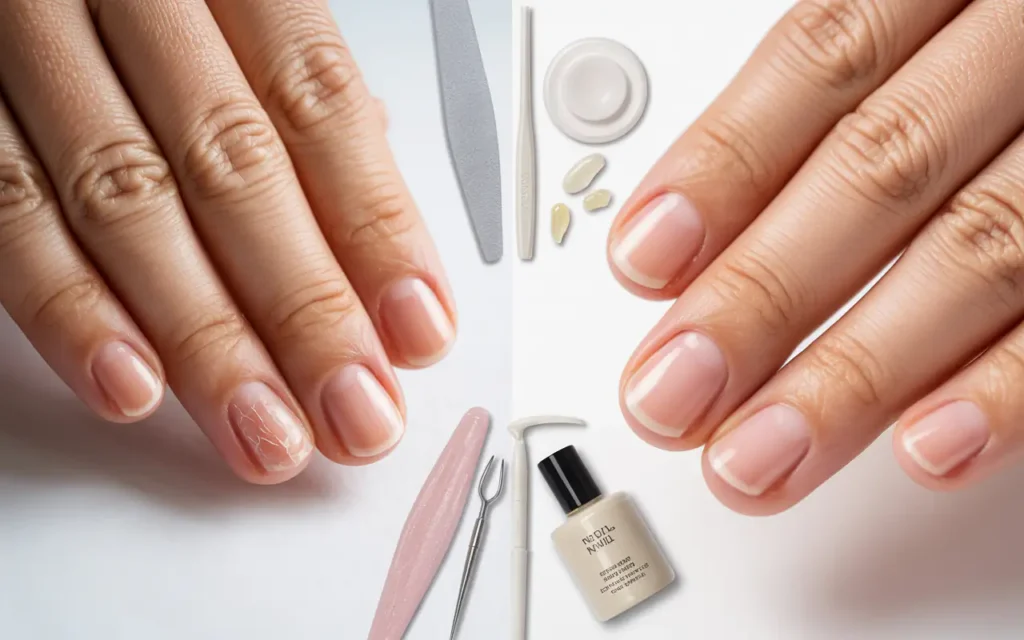
Sometimes home care is not enough. If you have tried the steps above for three months and see no improvement, or if your nails hurt, turn yellow, or separate from the skin, you may need professional help.
When to See a Doctor or Dermatologist
Make an appointment if you have:
- Thick, yellow, or crumbly nails (possible fungal infection)
- Redness, swelling, or pain around the nails (infection)
- Nails that lift off the nail bed completely
- No nail growth for many months
- Damage from a recent injury
A doctor can prescribe antifungal pills or creams. They can also check for health conditions like psoriasis, thyroid disease, or low iron that affect nails.
Medical Options for Damaged Nails
If you see a doctor, they may suggest:
- Prescription nail lacquer for fungus (ciclopirox)
- Oral antifungal drugs for severe infections (terbinafine)
- Blood tests to check for vitamin or mineral deficiencies
- Nail removal in extreme cases to allow new nail growth
Do not try to treat a suspected fungus with home remedies for more than two weeks. You need the right medicine. Once the medical problem is solved, you can again treat damaged nails with the gentle care steps above.
How to Prevent Nail Damage in the Future
After you heal your nails, you want them to stay healthy. Use these simple rules every day.
Table 2: Dos and Don’ts for Healthy Nails
| Do | Don’t |
|---|---|
| Keep nails short and filed smoothly | Bite or pick at nails or cuticles |
| Apply cuticle oil twice daily | Use nails as tools (scraping, prying) |
| Wear gloves for cleaning and gardening | Soak hands in water for over 10 minutes |
| Use a glass file in one direction | File back and forth with a metal file |
| Take breaks between nail polish applications | Wear gel or acrylics for more than two months straight |
| Moisturize hands after every wash | Use acetone remover more than once a week |
Following these dos and don’ts will help you treat damaged nails once and prevent them from breaking again.
Also, keep a small nail care kit with you. Put a mini glass file, cuticle oil pen, and hand cream in your bag. This makes it easy to care for your nails anywhere.
Frequently Asked Questions (FAQ)
1. How long does it take to treat damaged nails?
It takes about three to six months to see full healing. Fingernails grow about 1 mm per week. A full new nail takes four to six months to grow from cuticle to tip. You will see small improvements in two to three weeks if you follow the steps daily.
2. Can I wear nail polish while I treat damaged nails?
Yes, but take breaks. Wear polish for two days, then remove and let nails breathe for one day. Always use a base coat. Avoid gel or acrylic polish until nails are fully healed.
3. Is it safe to use nail hardeners every day?
No. Daily use of hardeners can make nails too hard and brittle, causing more breaks. Use them once a week or as the product label says. For most people, a good oil and moisturizer work better than hardeners.
4. What is the best oil to treat damaged nails?
Jojoba oil is the best because it is very similar to the natural oils your skin makes. It absorbs quickly. Vitamin E oil and pure coconut oil are also good. Apply any of these two to four times a day.
5. Can diet alone fix damaged nails?
Diet helps a lot, but it is not enough by itself. You also need proper filing, moisturizing, and protection from chemicals. A whole approach works best when you want to treat damaged nails completely.
6. Why do my nails still peel after I stopped using gel polish?
Your nails may still have thin layers from the filing that was done to apply the gel. It takes a full growth cycle (four to six months) for the damaged part to grow out and be trimmed away. Keep them short and moisturized during this time.
7. Does soaking nails in gelatin really help?
No scientific proof shows that gelatin soaks help. It is better to eat protein-rich foods or take biotin supplements. Soaking in water for a long time can actually dry out nails.
Conclusion
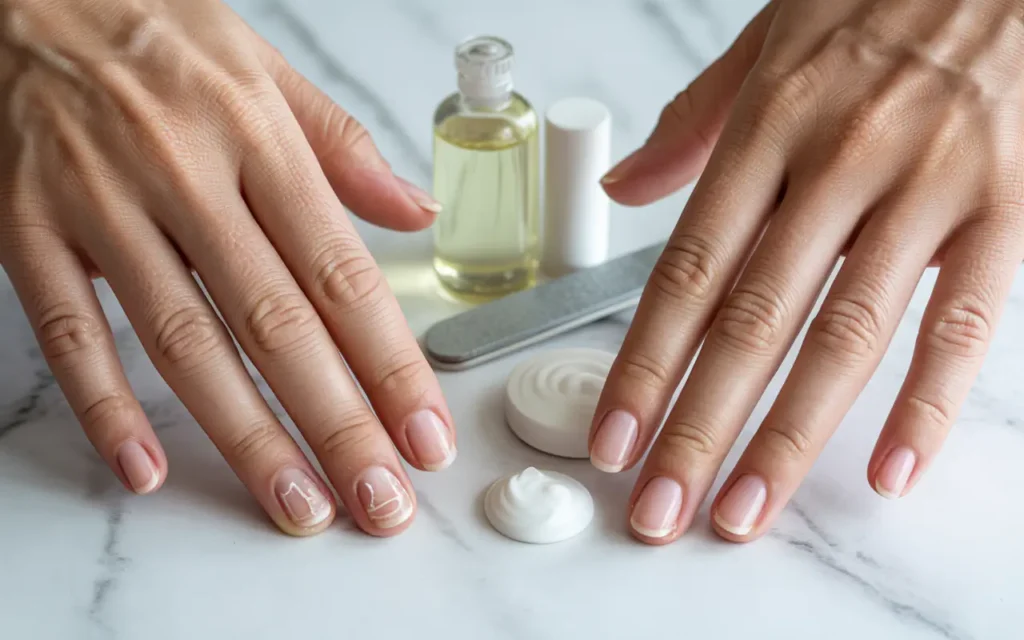
You now have a complete plan to treat damaged nails at home. Start by stopping the bad habits. Then add moisture, correct filing, and the right products. Use natural remedies and protect your hands during daily tasks. If problems continue after three months, see a doctor for possible infection or nutrient issues.
Remember, nails grow slowly. Be patient and kind to your hands. You did not damage your nails in one day, and they will not heal in one day. But with consistent care – oil, gloves, gentle filing, and breaks from harsh products – you will see real change.
I have watched my own thin, peeling nails turn into strong, smooth nails in about four months. I still use cuticle oil every morning and night. I wear gloves for dishes. And I never go back to acetone removers. You can do the same. Your nails can get better. Just take the first step today.
Dr. Emily Ross adds, “Healthy nails are a sign of overall wellness. When you take time to treat damaged nails, you are also learning to take better care of your whole body.”
Related posts
 How To Clean A Refrigerator Inside
Learn the best way to clean a refrigerator inside with this simple step-by-step guide. Discover easy tips for a fresh, odor-free fridge and safe food storage. A clean…
 How To Lose Fat Without Supplements
If you want to lose fat without supplements, this guide gives you science-backed strategies. Learn how to lose fat without supplements through real food, better sleep, stress…
 How To Use An OBD2 Scanner
Learning how to use an OBD2 scanner can save you time and money on car repairs. This guide shows you exactly how to connect, read codes,…