
How To Remove Dust From Home
Learn how to remove dust from home using easy, low cost methods. This guide covers vacuuming, dusting, air filters, and daily habits. Breathe cleaner air starting today.
Dust is that gray, fuzzy stuff that appears on your shelves just hours after you clean. It makes you sneeze, tickles your nose, and makes your home look messy. If you are tired of seeing it come back again and again, you are not alone. Most people want to know the best way to remove dust from home without spending all weekend cleaning. The good news is that you can cut down dust a lot by changing a few small habits and using the right tools.
This article shares real, practical steps that work. I have tried these methods in my own home, and they helped me breathe better and clean less often. You do not need fancy products or a lot of money. Just a bit of time and the right plan. Let us get started.
“Cleanliness is not next to godliness. It is the path to better health and peace of mind.”
— Dr. Sanjiv Sharma, family physician
Why Dust Is a Problem in Every Home
Dust is more than just dirt. It is a mix of dead skin cells, pet dander, pollen, fabric fibers, dust mite droppings, and tiny bits of soil from outside. Every time you walk, sit, or open a window, you bring in or stir up more dust. For people with allergies or asthma, dust can cause coughing, watery eyes, and trouble sleeping.
Even if you do not have allergies, a dusty home looks and feels less cozy. Dust can also damage electronics, scratch wood surfaces, and make your air feel heavy. The goal is not to get rid of every single dust particle. That is impossible. The goal is to reduce dust so that you notice it less and feel better in your space.
The Best Tools to Remove Dust From Home
Before you start cleaning, you need the right gear. Using the wrong tools can actually spread dust around instead of removing it. Here are the tools that work best.
| Tool | Why It Helps | Best For |
|---|---|---|
| Microfiber cloth | Traps dust instead of pushing it | All surfaces, especially electronics |
| Vacuum with HEPA filter | Captures tiny particles, does not release them back | Carpets, rugs, floors |
| Extendable duster | Reaches high places without a ladder | Ceiling fans, tall shelves |
| Air purifier with HEPA | Removes floating dust from the air | Bedrooms, living rooms |
| Washable mop pads | Holds dust and washes clean | Hard floors |
You can find all of these items at any store or online. Start with a microfiber cloth and a good vacuum. Those two tools will help you remove dust from home more than anything else.
“The simplest tools often give the biggest results in house cleaning. A wet microfiber cloth beats any spray and paper towel.”
— Marie Kondo, organizing consultant
Step-by-Step Methods to Remove Dust From Home
Now let us get into the actual steps. Follow these in order, and you will see a big difference.
Start From Top to Bottom
Dust falls down. If you clean your floors first and then dust a ceiling fan, all that dust will land right back on your clean floor. Always start high and end low.
First, dust your ceiling corners, light fixtures, and the tops of tall furniture. Use an extendable duster or a microfiber cloth on a stick. Next, clean walls, window sills, and picture frames. Then move to mid level surfaces like tables, desks, and countertops. Finally, vacuum or mop the floor. This simple order saves you from doing double work.
Use the Right Cloth
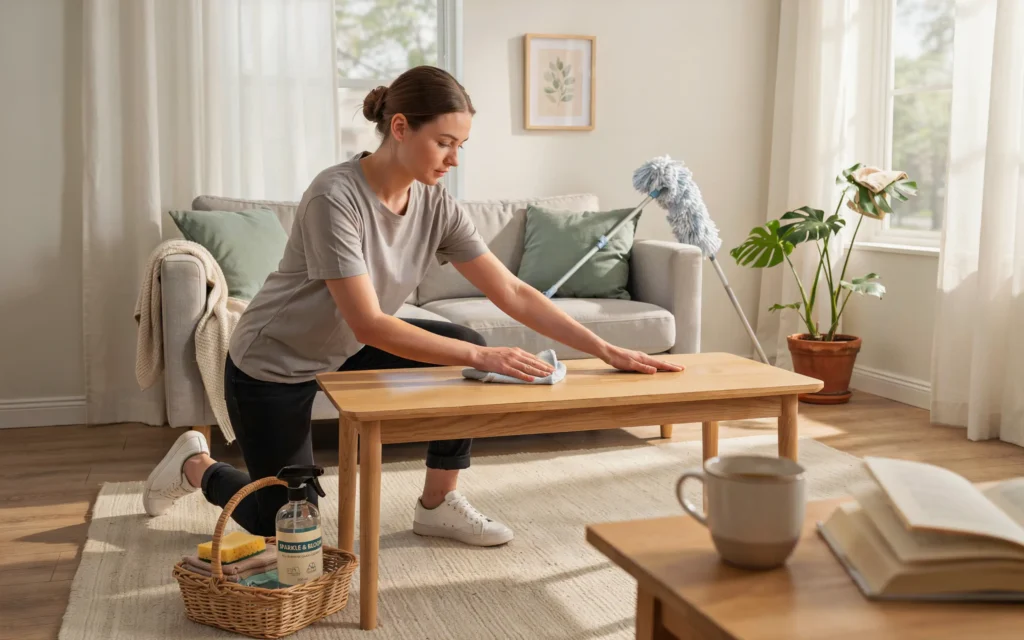
Paper towels and feather dusters push dust into the air. Then it floats around and settles somewhere else. That is not what you want. Instead, use a slightly damp microfiber cloth. The dampness catches dust and holds it. After you wipe a surface, rinse the cloth in water and wring it out. You can reuse microfiber cloths many times. Wash them in hot water without fabric softener to keep them working well.
For electronics like TVs and computer screens, use a dry microfiber cloth. A damp cloth can leave streaks or cause damage.
Vacuum With Care
Vacuuming is one of the best ways to remove dust from home. But many people do it wrong. Use a vacuum with a HEPA filter. This filter traps dust so it does not blow back out. Vacuum slowly. Go over each spot two or three times. Pay extra attention to edges of the room, under furniture, and along baseboards.
Do not forget to vacuum your upholstery. Sofas, chairs, and mattress tops hold a lot of dust. Use the brush attachment for these areas. Vacuum your carpets and rugs at least twice a week. If you have hard floors, use the hard floor setting so you do not scratch them.
Clean Air Vents and Filters
Your heating and cooling system pushes air through vents. Those vents collect dust over time. Then every time the system turns on, it blows dust into your rooms. Once a month, take off the vent covers and wash them with soap and water. Let them dry fully before putting them back.
Also change your HVAC filter every three months. During high dust seasons like spring or fall, change it every two months. A clean filter stops dust before it enters your home. This single step can cut your dust levels by a lot.
Wash Fabrics Often
Curtains, bed sheets, pillowcases, blankets, and rugs are dust magnets. Fabric fibers trap dust and hold it. Shaking a blanket in the room just throws dust into the air. Instead, wash these items in hot water every week or two.
For curtains, check the label. Many can go in the washing machine on a gentle cycle. For large rugs that do not fit in a machine, take them outside and beat them with a broom. Then vacuum both sides before bringing them back in.
| Weekly Task | Time Needed | Dust Reduction |
|---|---|---|
| Wash sheets and pillowcases | 15 minutes | High |
| Vacuum carpets and rugs | 20 minutes | Very high |
| Dust all surfaces with damp cloth | 30 minutes | High |
| Clean vent covers | 10 minutes | Medium |
| Shake out doormats | 5 minutes | Low but helpful |
How to Keep Dust Away Longer
Removing dust is one part of the job. Stopping it from coming back so fast is the other part. Here are ways to keep your home dust free for more days.
Reduce Clutter
Every knickknack, stack of papers, and decorative item is a place for dust to land. The more stuff you have on tables and shelves, the more surfaces you need to wipe. Try to keep flat surfaces mostly empty. Put books behind glass doors or on closed shelves. Store small items in drawers or bins. A less cluttered home is much easier to keep clean.
Control Humidity
Dust mites love humid air. They grow fast when humidity is above 50 percent. Use a dehumidifier in damp rooms like basements or bathrooms. Keep your home humidity between 40 and 50 percent. You can buy a small humidity meter for ten dollars. In dry seasons, a little humidity is fine, but too much moisture makes dust problems worse.
Groom Pets
Dogs and cats shed fur and skin flakes. These are big parts of household dust. Brush your pets outside every few days. This removes loose hair before it falls on your floors. Wash pet bedding once a week. Wipe your pet’s paws when they come inside. This stops them from tracking in soil and pollen.
A clean home starts at the door. Leave shoes outside and wipe paws. You will remove half the dust before it enters.”
— Melissa Maker, cleaning expert and author
Frequently Asked Questions
How often should I remove dust from home?
Most homes need dusting once a week. High traffic areas like the living room and kitchen may need twice a week. Bedrooms can go every 7 to 10 days if you wash sheets often. Use your eyes and fingers. If you see a gray layer or feel grit on a surface, it is time to clean.
Can air purifiers help me remove dust from home?
Yes, a lot. An air purifier with a true HEPA filter pulls dust out of the air. It cannot remove dust that has already landed on surfaces. But it stops that dust from floating around and resettling. Run an air purifier in the room where you spend the most time, like your bedroom or home office.
Do expensive vacuums work better for dust?
Not always. A mid priced vacuum with a HEPA filter works very well. The most important thing is how you use it. Vacuum slowly, empty the canister or change the bag often, and clean the filter every month. A cheap vacuum used well beats an expensive vacuum used poorly.
Why does dust come back so fast after I clean?
You might be missing the hidden sources. Old pillows, dirty HVAC filters, unwashed curtains, and carpet padding under your rugs all hold dust. Also check your windows. If they do not seal tight, outdoor dust and pollen blow right in. Fix those hidden spots, and dust will return more slowly.
Is it safe to use dryer sheets for dusting?
No. Dryer sheets leave a waxy coating on surfaces. That coating can attract more dust later. They also damage some plastics and electronics. Stick to damp microfiber cloths or a simple spray of water and a drop of dish soap.
How do I remove dust from home without using chemicals?
Very easily. Water and a microfiber cloth work great. For sticky spots, add a little white vinegar to your water. Vinegar cuts grease and cleans without toxic fumes. You do not need store bought sprays. They often leave residue that pulls dust back faster.
Conclusion
Learning how to remove dust from home does not have to be hard or expensive. You just need a simple system: start high, use damp microfiber cloths, vacuum with a HEPA filter, wash fabrics often, and change your air filters. Do these things on a weekly schedule, and you will see less dust and feel better breathing.
The key is consistency. Fifteen minutes of dusting every few days stops the buildup that takes hours to clean later. Invite your family to help. Make it a quick routine, not a big chore. Your nose, eyes, and lungs will thank you.
Start today. Pick one corner of one room and wipe it down with a damp cloth. Then vacuum that area. You will notice the difference right away. Keep going room by room. Soon you will have a fresher, cleaner home that stays that way for days longer than before.
Related posts
 Best Gas Stove Safety Devices for 2026: Child and Pet Proofing Solutions
Keep your kitchen secure with our 2026 guide to the best gas stove safety devices. Compare top-rated knob covers for child and pet proofing your home.…
 Top Water Purifier for Kitchen Choices in 2026
Looking for the top water purifier for kitchen use? Explore our 2026 guide to the best faucet-mount, pitcher, and under-sink systems for cleaner drinking water. Finding…
 Top Kitchen Tissue for Daily Cleaning: 2026 Buyer Guide
Find the top kitchen tissue for daily cleaning in 2026. We compare five popular paper towel options to help you choose the right strength and value…