
How to Reduce Humidity in Home Spaces: Practical Steps for Dry Air
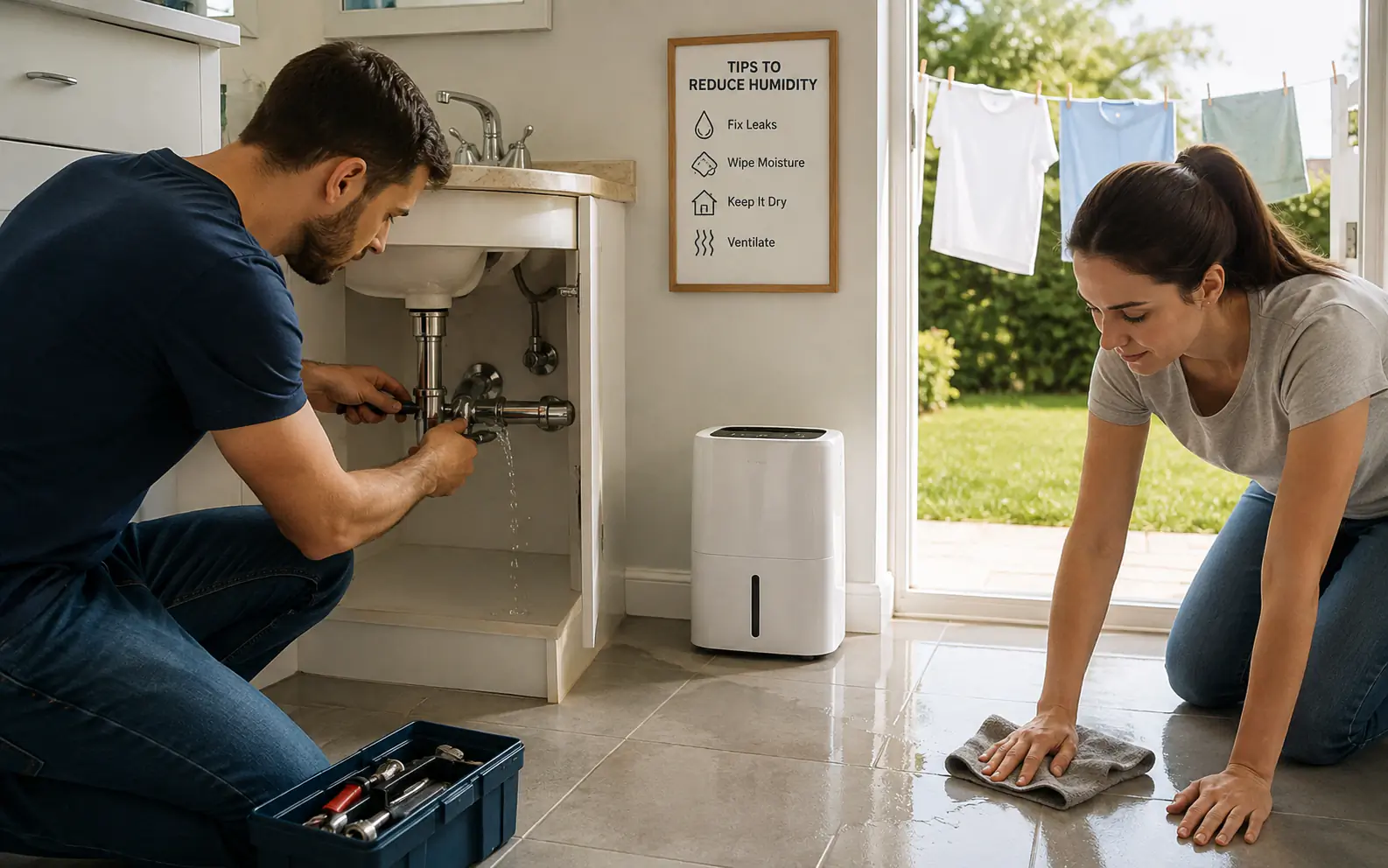
To reduce humidity in your home quickly, start by increasing air circulation and venting moisture directly at its source. Run exhaust fans in the kitchen while cooking and in the bathroom during and after showers. If the outdoor air is dry, open your windows to let fresh air circulate. When outdoor air is humid, keep windows closed and run your air conditioner or a dedicated dehumidifier to pull moisture from the air.
High indoor humidity does more than make your living space feel sticky and warm. It creates an ideal breeding ground for mold, mildew, and dust mites, which can damage your property and irritate your respiratory system. Maintaining a balanced indoor environment requires a combination of daily habits, proper ventilation, and the strategic use of household appliances.
Ideal indoor humidity levels
- Keep indoor relative humidity between 30% and 50% to prevent mold growth and dust mites.
- Always run exhaust fans during and after showering or cooking.
- Only open windows if the outdoor humidity is lower than the indoor humidity.
- Ensure your air conditioner is set to auto rather than fan-on to prevent reintroducing moisture.
| Topic | When it helps | What to keep in mind |
|---|---|---|
| Step 1 | Immediate moisture control during high-steam activities. | Leaving fans on for hours can waste energy and pull conditioned air out of your home. |
| Step 2 | Warm weather moisture control. | An oversized AC unit will cool the house too quickly without running long enough to remove moisture. |
| Step 3 | Basements, crawlspaces, and poorly ventilated rooms. | Empty the water collection bucket regularly to prevent the unit from shutting off automatically. |
| Step 4 | Everyday moisture prevention. | Hanging wet laundry indoors can raise relative humidity levels by up to thirty percent in a single day. |
Focus on indoor humidity control
Step 1. Utilize Exhaust Fans and Improve Ventilation
Exhaust fans in the kitchen and bathroom pull moist air directly out of your home before it can spread to other rooms. Keep these fans running for at least twenty minutes after you finish cooking or showering to ensure all residual steam is cleared.
- Immediate moisture control during high-steam activities.
- Leaving fans on for hours can waste energy and pull conditioned air out of your home.
- If your bathroom lacks an exhaust fan, place a portable fan in the doorway blowing outward toward an open window.
- Cost – Free
- Effort – Very Low
- Speed – Instant
Step 2. Optimize Your Air Conditioning Settings
Your air conditioner naturally removes moisture as it cools the air. To maximize this effect, set the thermostat fan to Auto rather than On. When set to On, the fan runs continuously, which can blow moisture back into your home from the wet evaporator coils.
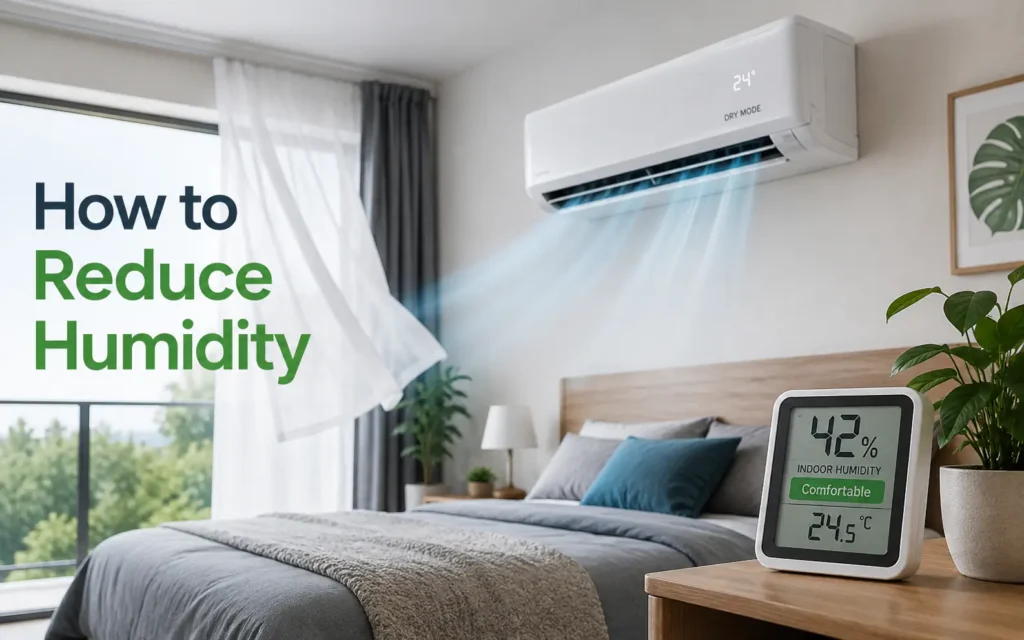
- Warm weather moisture control.
- An oversized AC unit will cool the house too quickly without running long enough to remove moisture.
- Clean or replace your AC air filters monthly to maintain optimal airflow and dehumidification.
- Cost – Low (maintenance)
- Effort – Low
- Speed – Fast
Step 3. Deploy Dehumidifiers in Damp Areas
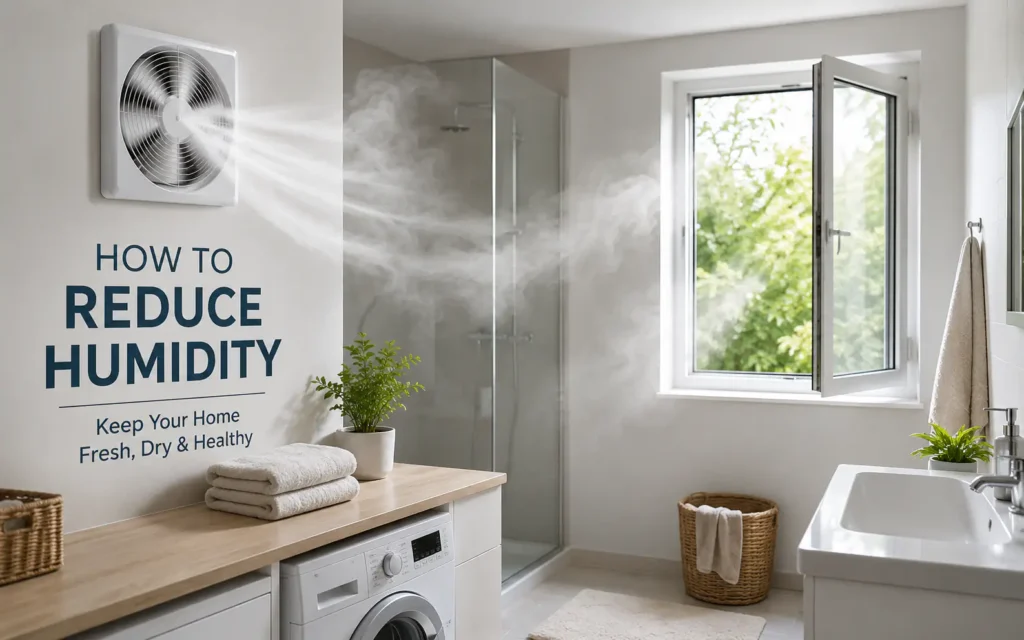
For persistent moisture issues, especially in basements or crawlspaces, a portable dehumidifier is highly effective. These units draw in damp air, condense the moisture into an internal bucket or drain hose, and release drier air back into the room.
- Basements, crawlspaces, and poorly ventilated rooms.
- Empty the water collection bucket regularly to prevent the unit from shutting off automatically.
- Choose a unit with a continuous drain hose option if you do not want to empty the bucket daily.
- Cost – Moderate to High
- Effort – Medium
- Speed – Fast
Step 4. Adjust Daily Household Habits
Simple changes in how you live can drastically reduce the amount of water vapor released into your indoor air. Cover pots with lids while boiling water, take shorter and cooler showers, and dry your laundry outdoors or in a properly vented dryer rather than hanging wet clothes inside.
- Everyday moisture prevention.
- Hanging wet laundry indoors can raise relative humidity levels by up to thirty percent in a single day.
- Move indoor houseplants outdoors temporarily if you notice condensation on nearby windows.
- Cost – Free
- Effort – Medium
- Speed – Gradual
Understanding Indoor Humidity Levels
Before taking steps to dry out your home, it is helpful to know exactly what you are aiming for. Relative humidity refers to the amount of water vapor present in the air compared to the maximum amount the air can hold at that temperature. For optimal comfort and structural safety, indoor humidity should ideally remain between thirty and fifty percent.
When humidity drops below thirty percent, the air can feel uncomfortably dry, leading to dry skin, static electricity, and irritated nasal passages. Conversely, when humidity consistently exceeds fifty-five or sixty percent, mold spores can begin to colonize surfaces, wood can warp, and dust mite populations can thrive.
Using a cheap digital hygrometer placed on a living room shelf to monitor daily changes in relative humidity.
Relying on physical comfort alone to guess humidity levels, which can lead to over-drying or ignoring hidden moisture issues.Under 30%: Too dry. Can cause dry skin, respiratory irritation, and wood shrinkage.30% to 50%: Ideal range. Comfortable for occupants and safe for home structures.50% to 60%: High. Monitor closely; condensation may begin to form on cold surfaces.Over 60%: Critical. High risk of mold growth, musty odors, and dust mite proliferation.
| Humidity Range | Comfort Level | Potential Risks | Recommended Action |
|---|---|---|---|
| Below 30% | Dry | Dry skin, static electricity, wood cracking | Use a humidifier sparingly if needed |
| 30% to 50% | Ideal | None (optimal for health and home) | Maintain current ventilation habits |
| 50% to 60% | Moderate | Slight stuffiness, window condensation | Increase air circulation, run exhaust fans |
| Above 60% | High | Mold growth, musty smells, dust mites | Run a dehumidifier, check for leaks |
Room-by-Room Moisture Control Strategies
Different areas of your home generate and trap moisture in unique ways. Bathrooms and kitchens are the primary sources of daily humidity due to hot water usage and cooking. Basements and crawlspaces, on the other hand, often suffer from moisture migrating through concrete foundation walls from the surrounding soil.
Addressing these areas individually ensures you are not wasting energy trying to dehumidify the entire house when only one or two rooms are causing the issue. Simple, localized adjustments can make a significant difference in your overall indoor air quality.
Placing a small, moisture-absorbing tub of calcium chloride crystals in a damp closet that lacks electrical outlets.
Ignoring crawlspaces or basements, assuming the moisture there does not affect the upper living areas.
The Bathroom
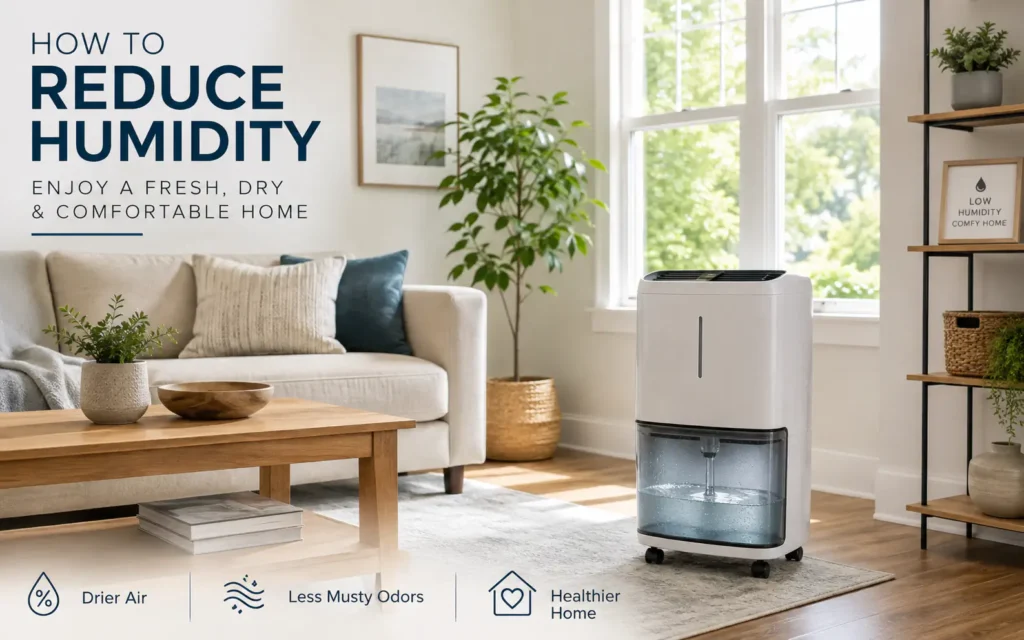
Always run the exhaust fan during your shower and leave it on for twenty minutes afterward. Keep the bathroom door closed while showering to prevent steam from migrating into adjacent bedrooms. Wipe down wet shower walls with a squeegee to reduce standing water that evaporates back into the air.
The Kitchen
Cook with lids on your pots to trap steam. Use the range hood fan every time you boil water or use the stovetop. Avoid boiling water excessively, and ensure your dishwasher door remains closed until the drying cycle is completely finished.
Basements and Crawlspaces
Basements are naturally cooler and more humid than upper floors. Run a dedicated dehumidifier in the basement during spring and summer. Ensure your gutters and downspouts direct rainwater at least six feet away from your foundation to prevent water from seeping through basement walls.
Common Mistakes That Keep Your House Humid
Sometimes, well-intentioned efforts to cool down or ventilate a home can backfire, raising the humidity levels instead. Understanding how indoor and outdoor air interact is crucial for keeping your home dry and comfortable.
By identifying and correcting these common household mistakes, you can maintain a more stable indoor climate without relying solely on expensive appliances.
Opening the windows on a warm, rainy summer day, which immediately floods the air-conditioned house with outdoor moisture.
Assuming that opening windows is always a good way to ventilate, regardless of outdoor weather conditions.
- Opening windows when outdoor humidity is high: Always check the outdoor relative humidity before opening windows. If it is higher than your indoor level, keep the windows shut.
- Overwatering indoor plants: Houseplants release moisture into the air through transpiration. Limit the number of plants in damp rooms and avoid overwatering them.
- Ignoring slow plumbing leaks: A small drip under a sink or a slow leak behind a toilet can constantly feed moisture into the air and lead to localized mold growth.
- Leaving wet towels on the floor: Damp towels or bathmats left in a heap cannot dry efficiently and will slowly release moisture into the bathroom air.
FAQs
How can I lower the humidity in my house fast?
The fastest way to lower indoor humidity is to turn on your air conditioner and run a portable dehumidifier simultaneously. Additionally, turn on all exhaust fans in your kitchen and bathrooms to actively pull moist air out of the home.
What causes high humidity in a house?
High indoor humidity is typically caused by daily activities like cooking, showering, and washing dishes, combined with poor ventilation. It can also be caused by outdoor humidity entering through open windows, rising dampness from basements, or plumbing leaks.
How do I dehumidify my house naturally?
You can dehumidify naturally by improving cross-ventilation when outdoor air is dry, using natural moisture absorbers like baking soda, rock salt, or charcoal in small spaces, and keeping pots covered while cooking.
Why is my house so humid even with the AC on?
If your AC is running but the house remains humid, your system’s fan might be set to ‘On’ instead of ‘Auto,’ which recirculates moisture. Alternatively, your AC unit might be oversized, causing it to cool the air too quickly without running long enough to remove moisture.
Can indoor plants cause high humidity?
Yes, plants release moisture into the air through a process called transpiration. If you have a large number of indoor plants, especially in a small or poorly ventilated room, they can noticeably increase the humidity levels.
Conclusion
Reducing indoor humidity is a gradual process that combines daily habits with the smart use of household appliances. By keeping your air circulating, venting moisture at the source, and monitoring your indoor climate with a hygrometer, you can easily maintain a comfortable and healthy living environment.
Start with simple, free adjustments like covering your pots while cooking and running your bathroom fans longer. If those steps are not enough, investing in a targeted dehumidifier or adjusting your air conditioning habits will help you achieve the dry, comfortable air your home needs.
Related posts
 How to Strengthen Weak Nails: A Practical Guide to Daily Care
Learn how to strengthen weak nails with simple daily habits, protective care, and targeted hydration. Restore your natural nail strength today. Weak, peeling, or brittle nails…
 What Sounds Do Cats Dislike? 7 Noises That Stress Your Pet
Discover what sounds do cats dislike and why. Learn how to protect your cat’s sensitive hearing from stressful household noises and high-frequency hums. Cats dislike sounds…
 Restoring Faded Black Clothing: Practical Methods and Reality Checks
Can you restore faded black clothing? Learn the difference between temporary color revival and permanent redyeing, plus how to prevent future fading. You can restore the…