
How to Maintain Nonstick Cookware for Longevity
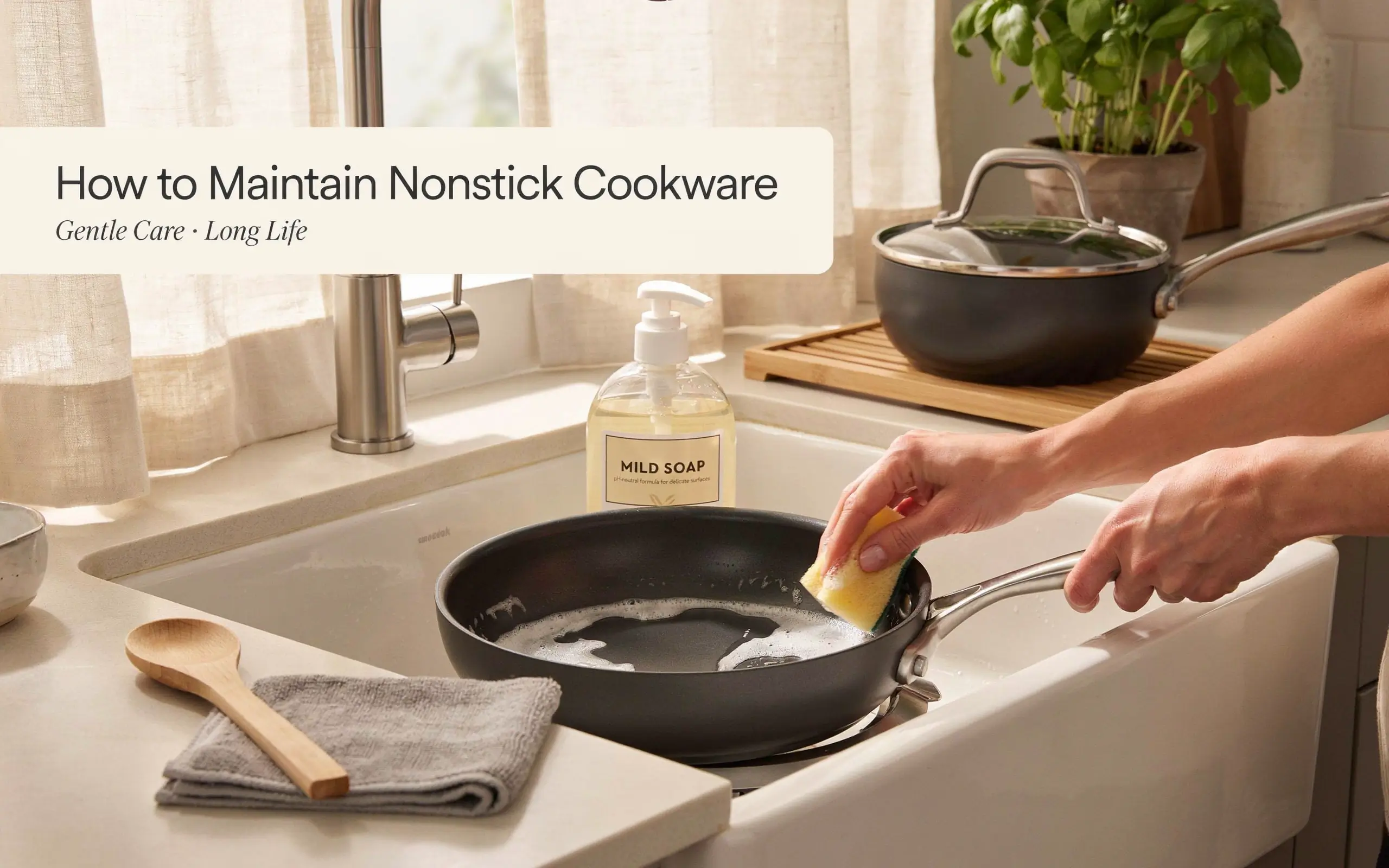
Maintaining nonstick cookware is key to ensuring it cooks food evenly and releases it easily for years to come. The primary goal is to protect the delicate nonstick coating from damage that can lead to sticking, scratching, and reduced performance.
To properly maintain your nonstick cookware, focus on gentle cleaning, controlled cooking temperatures, and the right tools. Avoid high heat, abrasive materials, and metal utensils, as these are the most common culprits for damaging the nonstick surface.
Safety checks
- Always use low to medium heat for cooking with nonstick pans.
- Avoid metal utensils; opt for silicone, wood, or heat-resistant plastic.
- Wash nonstick cookware by hand with a soft sponge and mild soap.
- Never use abrasive cleaners or steel wool on nonstick surfaces.
- Allow cookware to cool before washing to prevent thermal shock.
| Topic | When it helps | What to keep in mind |
|---|---|---|
| Step 1 | Daily cleaning of all nonstick cookware. | Dishwashers can be too harsh due to high heat, strong detergents, and abrasive cycles, which can degrade the nonstick surface over time. |
| Step 2 | All cooking methods, especially frying, sautéing, and searing. | Never preheat an empty nonstick pan on high heat, as this can quickly damage the surface before you even add food. |
| Step 3 | Stirring, flipping, and serving food while cooking. | Even seemingly minor scratches from metal utensils can create weak points in the coating, leading to future sticking. |
| Step 4 | Organizing and protecting cookware when not in use. | Nesting pans without protection can lead to significant surface damage over time, even if they fit snugly. |
This article will cover proper
Step 1. Gentle Cleaning is Key
How to Maintain Nonstick Cookware. Always wash nonstick cookware by hand using a soft sponge or cloth with mild dish soap and warm water. This prevents scratching and preserves the coating.
- Daily cleaning of all nonstick cookware.
- Dishwashers can be too harsh due to high heat, strong detergents, and abrasive cycles, which can degrade the nonstick surface over time.
- Rinse the pan immediately after use and wash it once it has cooled slightly to make food residue easier to remove.
Step 2. Control Your Heat
How to Maintain Nonstick Cookware. Nonstick coatings are sensitive to high temperatures. Stick to low to medium heat for most cooking tasks.
- All cooking methods, especially frying, sautéing, and searing.
- Never preheat an empty nonstick pan on high heat, as this can quickly damage the surface before you even add food.
- If a recipe calls for high heat, consider using a different type of pan, like cast iron or stainless steel.
Step 3. Use the Right Utensils
Avoid using metal utensils, as they can easily scratch and gouge the nonstick surface. Opt for silicone, nylon, wood, or bamboo utensils that are designed to be safe for nonstick cookware.
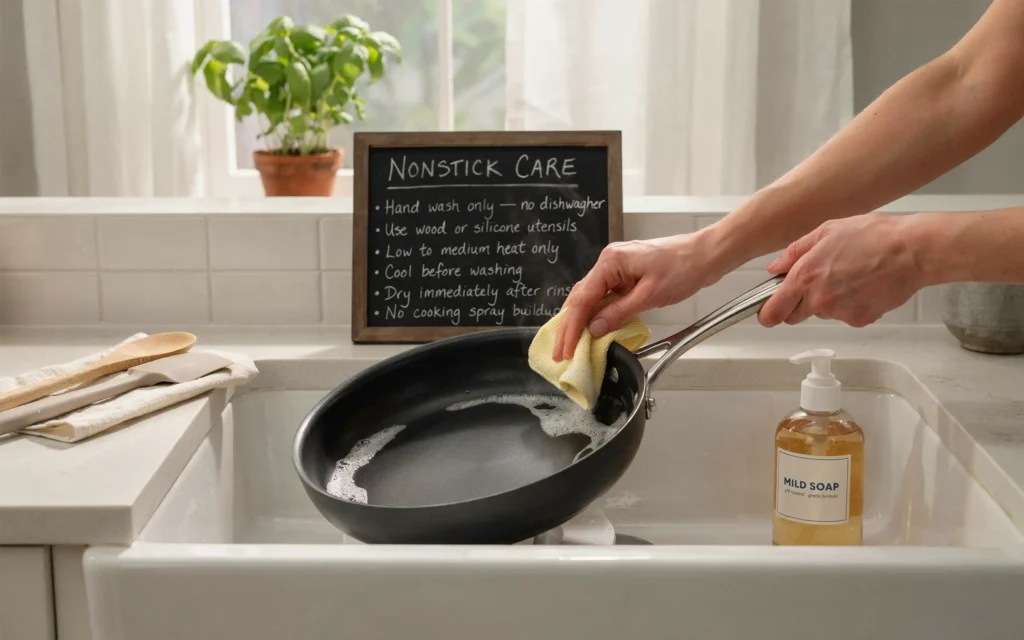
- Stirring, flipping, and serving food while cooking.
- Even seemingly minor scratches from metal utensils can create weak points in the coating, leading to future sticking.
- Keep a dedicated set of non-metal utensils for your nonstick pans to ensure their longevity.
Step 4. Proper Storage Prevents Damage
Store nonstick pans carefully to avoid scratches. Place a soft cloth, paper towel, or pan protector between stacked pans.
- Organizing and protecting cookware when not in use.
- Nesting pans without protection can lead to significant surface damage over time, even if they fit snugly.
- Consider using a pot rack or wall-mounted storage if you have limited cabinet space to keep pans separate.
The Art of Gentle Cleaning
How to Maintain Nonstick Cookware. The most crucial aspect of maintaining nonstick cookware is how you clean it. Harsh scrubbing or abrasive cleaners can strip away the delicate nonstick layer, rendering your pans useless.
Hand-washing with warm water and a mild dish soap is the gold standard. Use a soft sponge, microfiber cloth, or a non-abrasive nylon scrubber.
Avoid using scouring pads, steel wool, or abrasive cleaning powders. These tools are designed to remove tough grime but will inevitably scratch and damage the nonstick surface.
Instead of scrubbing a pan with steel wool after a sticky omelet, soak it in warm, soapy water for 15-20 minutes, then gently wipe with a soft sponge.
Putting nonstick pans in the dishwasher.
- Use mild dish soap.
- Employ soft sponges or cloths.
- Soak stubborn residue before scrubbing.
- Rinse thoroughly after washing.
Cooking with Care: Heat and Utensils
The way you cook significantly impacts your nonstick cookware’s longevity. High heat is the enemy of most nonstick coatings.
How to Maintain Nonstick Cookware. Overheating can cause the nonstick polymers to degrade, leading to a loss of effectiveness and potentially releasing unpleasant fumes. Always preheat your pan gently over low or medium heat before adding oil and food.
Your choice of cooking utensils is equally important. Metal utensils, even those with rounded edges, can scratch the nonstick surface.
When searing a steak, a cast iron skillet is a better choice than a nonstick pan, as it can handle the high temperatures required without damage.
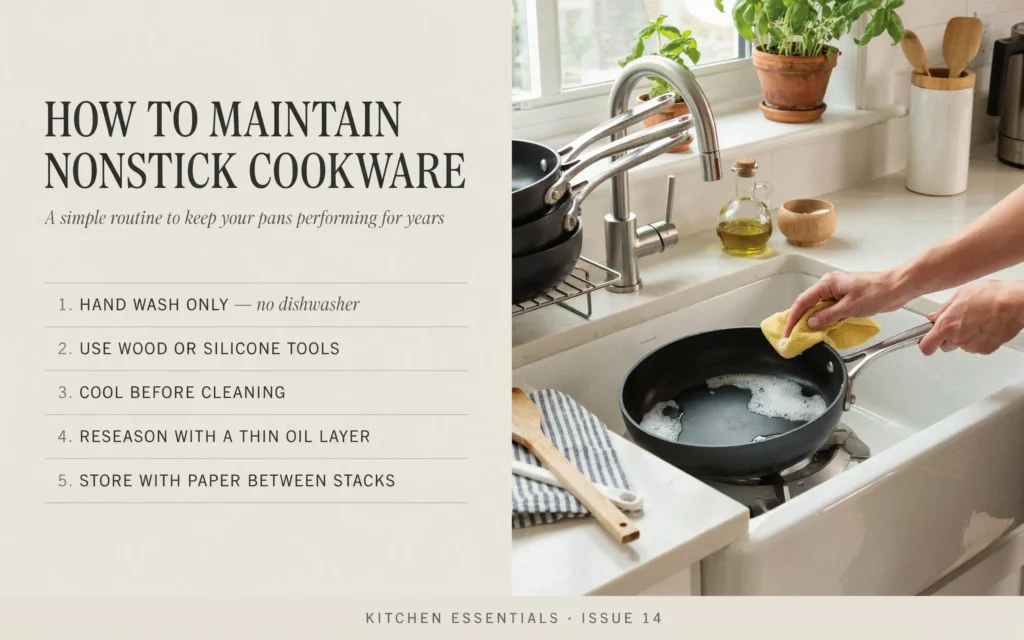
Using metal spatulas or forks to flip food.
- Limit cooking to low or medium heat.
- Never preheat an empty nonstick pan on high.
- Use silicone, wood, or plastic utensils.
- Avoid metal spatulas, whisks, and knives.
Smart Storage and Handling
Proper storage is often overlooked but plays a vital role in maintaining nonstick cookware. Even with careful cooking and cleaning, improper storage can lead to scratches and dents that shorten the lifespan of your pans.
When stacking nonstick cookware, always use a protective barrier. This can be a soft cloth, a felt pan protector, or even a folded paper towel.
Avoid cramming your nonstick pans into a crowded cabinet or drawer. If possible, store them separately or in a way that allows them to sit without being pressed against other hard objects.
How to Maintain Nonstick Cookware. If you have a set of nonstick frying pans, place a felt protector or a folded paper towel on top of each pan before stacking them to prevent the bottom of one from scratching the surface of the one below.
Stacking nonstick pans directly on top of each other without any protective layer.
- Use pan protectors or cloths when stacking.
- Avoid overcrowding cabinets.
- Consider pot racks or wall storage.
- Handle pans by their handles to avoid dropping.
When It’s Time for a Replacement
Even with the best care, nonstick cookware has a finite lifespan. Recognizing when it’s time to replace your pans is crucial for both cooking performance and safety.
Look for visible signs of wear. This includes deep scratches, chips, peeling, or bubbling of the nonstick surface.
Functionality is another key indicator. If food starts sticking to the pan regularly, despite following all maintenance guidelines, the nonstick properties are likely compromised.
If food consistently sticks to the pan even after proper cleaning and cooking, and you can see visible wear or peeling of the coating, it’s likely time to replace the pan.
Continuing to use heavily scratched or peeling nonstick cookware.
- Visible scratches, chips, or peeling.
- Dull, discolored, or worn-smooth surface.
- Consistent food sticking, even with proper use.
- Loss of overall nonstick performance.
FAQs
Can I use cooking spray on my nonstick pans?
It’s generally best to avoid cooking sprays. The propellants and emulsifiers in many sprays can build up on the nonstick surface over time, creating a sticky residue that is difficult to remove and can damage the coating.
How often should I replace my nonstick cookware?
The lifespan of nonstick cookware varies greatly depending on the quality of the pan and how it’s cared for. High-quality pans used and maintained properly can last 3-5 years or more, while lower-quality ones might only last 1-2 years.
Is it safe to use a nonstick pan if the coating is slightly scratched?
While minor, superficial scratches might not immediately impact performance, it’s generally not recommended to use heavily scratched nonstick pans. The compromised coating can lead to sticking and potentially release small particles into your food.
Can I use my nonstick pans on an induction cooktop?
Some nonstick pans are induction-compatible, but not all. Check the manufacturer’s specifications.
What is the best way to remove burnt-on food from a nonstick pan?
For burnt-on food, try simmering water in the pan for a few minutes to loosen the residue. Then, let it cool slightly and gently scrub with a soft sponge and mild soap.
Conclusion
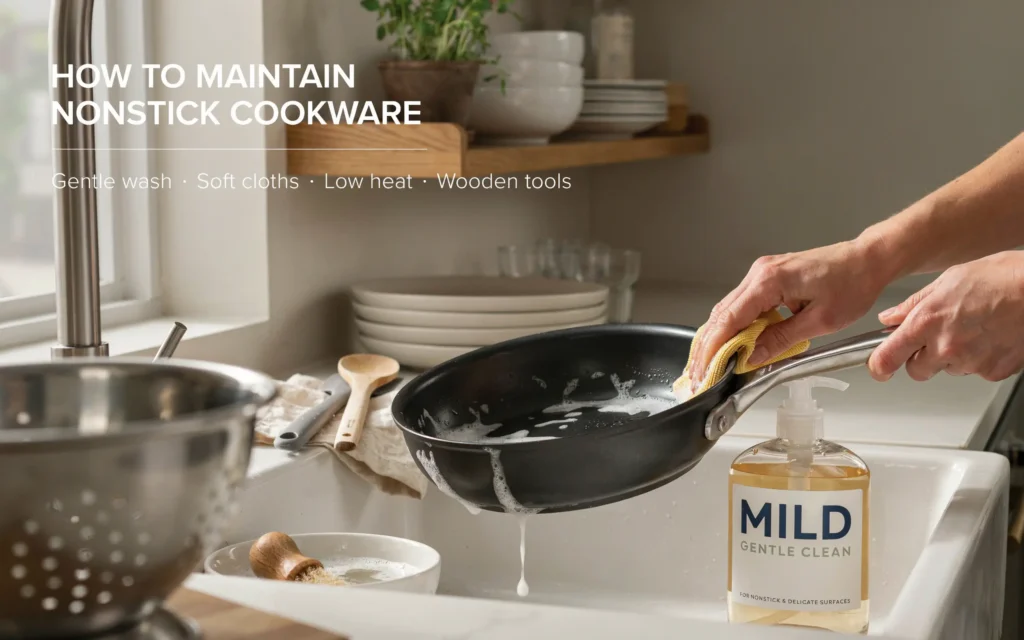
How to Maintain Nonstick Cookware. Maintaining your nonstick cookware is a straightforward process focused on gentle care and mindful usage. By adhering to simple guidelines for cleaning, cooking temperatures, and utensil selection, you can significantly prolong the life of your pans.
Remember that the goal is to protect the delicate nonstick surface. Treat your cookware with care, avoid harsh methods, and pay attention to the signs that indicate it’s time for a replacement.
Related posts
 How to Strengthen Weak Nails: A Practical Guide to Daily Care
Learn how to strengthen weak nails with simple daily habits, protective care, and targeted hydration. Restore your natural nail strength today. Weak, peeling, or brittle nails…
 What Sounds Do Cats Dislike? 7 Noises That Stress Your Pet
Discover what sounds do cats dislike and why. Learn how to protect your cat’s sensitive hearing from stressful household noises and high-frequency hums. Cats dislike sounds…
 Restoring Faded Black Clothing: Practical Methods and Reality Checks
Can you restore faded black clothing? Learn the difference between temporary color revival and permanent redyeing, plus how to prevent future fading. You can restore the…