
How to Fix Brittle Nails: A Practical Daily Care Routine
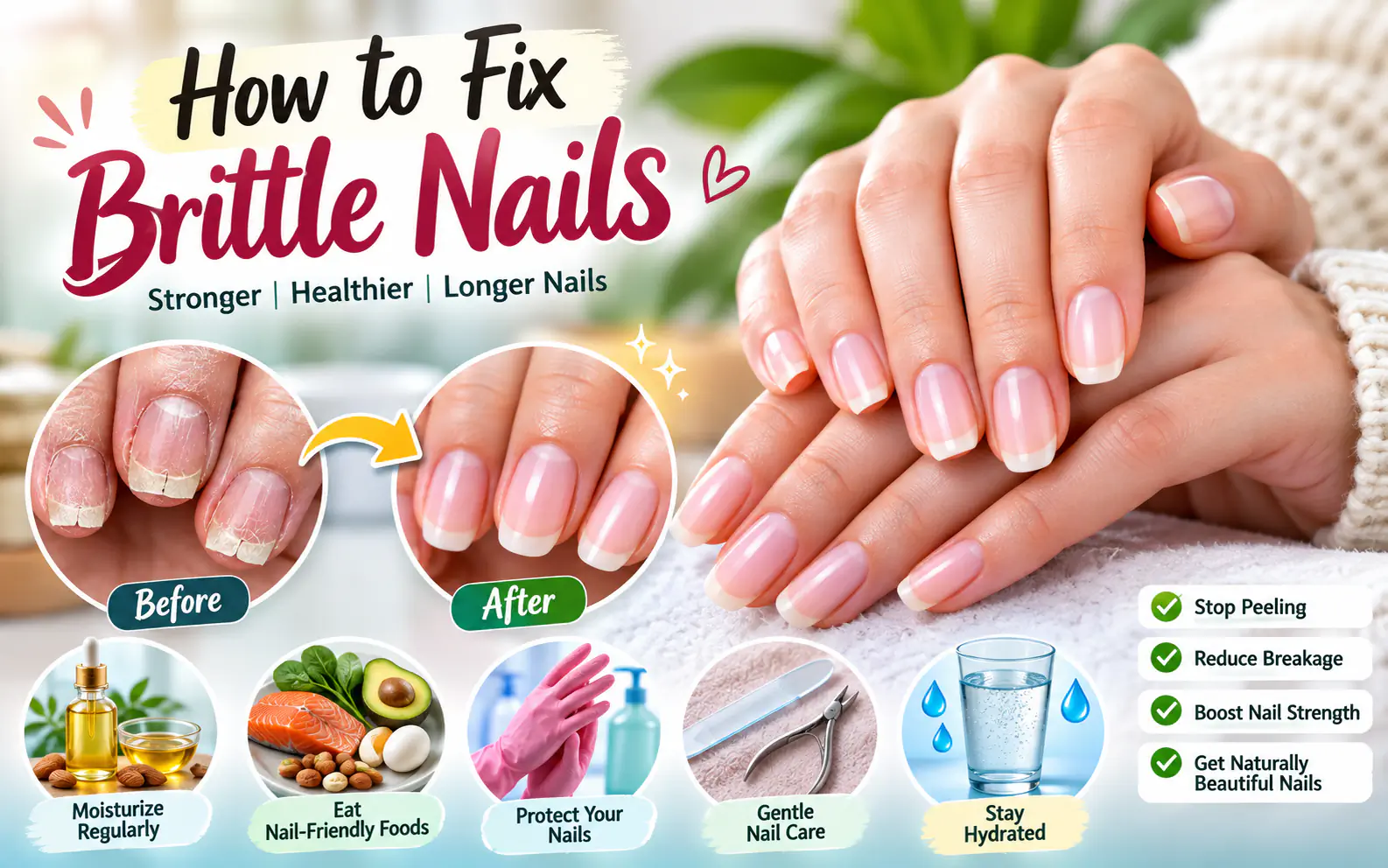
Brittle nails are usually the result of repeated cycles of wetting and drying, which strips the nail plate of its natural oils. To fix brittle nails, you must shift your focus from ‘strengthening’ with hardeners to ‘flexibility’ through consistent hydration and physical protection.
The most effective way to restore your nails is to create a moisture-locking routine. By applying oils and creams immediately after hand washing and wearing gloves during household chores, you can prevent the moisture loss that leads to splitting and peeling.
Hydration techniques
- Moisture is the primary fix for brittle nails
- Consistency in daily oil application is more important than expensive treatments
- Physical protection from chemicals and water is essential
- Proper filing prevents micro-tears that lead to splitting
| Topic | When it helps | What to keep in mind |
|---|---|---|
| Step 1 | Everyone with dry or brittle nails. | Do not use lotions with high alcohol content, as these can dry out the nail further. |
| Step 2 | Preventing micro-tears at the nail edge. | Avoid metal files, which are often too abrasive and cause jagged edges. |
| Step 3 | Protecting nails from harsh detergents. | Ensure your gloves are dry inside; moisture trapped in gloves can soften nails too much. |
| Step 4 | Nails that are peeling or thin. | Avoid ‘strengthening’ polishes that contain formaldehyde, as these can make nails too rigid and prone to snapping. |
Focus on external care hydration
Step 1. The Post-Wash Moisture Lock
Apply a high-quality hand cream or cuticle oil within three minutes of washing your hands or showering to trap existing moisture.
- Everyone with dry or brittle nails.
- Do not use lotions with high alcohol content, as these can dry out the nail further.
- Keep a small tube of cream at every sink in your home to ensure you never miss the three-minute window.
- Frequency – Every time hands get wet
- Key Ingredient – Jojoba or almond oil
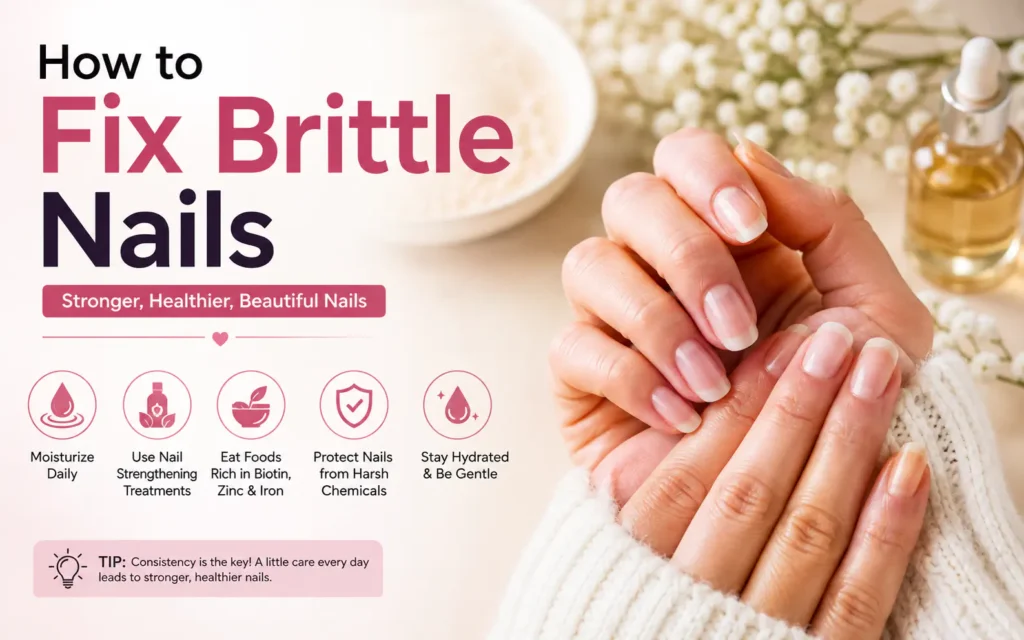
Step 2. Gentle Filing Technique
Use a fine-grit glass or crystal nail file and move in one direction only, rather than sawing back and forth.
- Preventing micro-tears at the nail edge.
- Avoid metal files, which are often too abrasive and cause jagged edges.
- File your nails when they are completely dry to prevent the nail layers from separating.
- Tool Type – Glass or crystal file
- Motion – One-way strokes
Step 3. The Glove Barrier Method
Wear rubber or nitrile gloves whenever you handle cleaning chemicals, dish soap, or spend extended time in water.
- Protecting nails from harsh detergents.
- Ensure your gloves are dry inside; moisture trapped in gloves can soften nails too much.
- Keep a pair of gloves under the kitchen sink so they are always within reach.
- Material – Nitrile or rubber
- Usage – Cleaning and dishwashing
Step 4. Nail Polish Breaks
Limit the use of long-wear polishes and harsh acetone-based removers to give the nail plate time to breathe and recover.
- Nails that are peeling or thin.
- Avoid ‘strengthening’ polishes that contain formaldehyde, as these can make nails too rigid and prone to snapping.
- If you must wear polish, use an acetone-free remover to minimize damage.
- Frequency – 1 week off per 2 weeks on
- Remover Type – Acetone-free
Building a Protective Daily Routine
Consistency is the most important factor in fixing brittle nails. Your nails grow slowly, so it can take several weeks of dedicated care to see the new, healthier nail growth reach the free edge.
Focus on creating a ‘barrier’ for your nails. This means protecting them from the environment, whether that is cold winter air or the drying effects of household cleaning products.
Instead of a complex weekly ritual, focus on the ‘bedtime soak’ where you apply a thick layer of oil and wear cotton gloves to sleep.
Using your nails as tools to open packages or scrape labels, which causes immediate structural damage.
- Apply cuticle oil at least twice daily.
- Keep nails trimmed short to reduce the surface area prone to snagging.
- Use a non-drying hand soap in the bathroom.
- Avoid picking at nail polish or hangnails.
| Habit | Impact on Nails |
|---|---|
| Frequent Hand Washing | Dries out the nail plate |
| Using Gloves | Prevents chemical damage |
| Glass Filing | Seals the nail edge |
| Daily Oil Use | Increases flexibility |
Common Mistakes That Prevent Healing
It is easy to fall into habits that seem helpful but actually contribute to brittleness. Understanding these mistakes is just as important as knowing what to do.
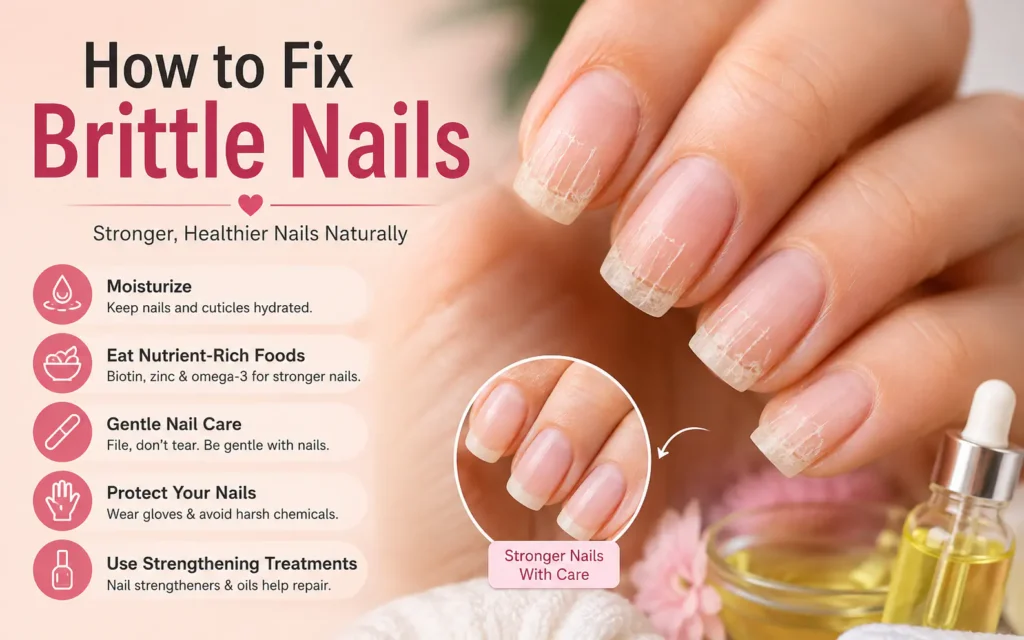
The goal is to move away from harsh treatments and toward a gentle, supportive environment for your nails.
Many people use ‘nail hardeners‘ thinking they need to make the nail tougher, but if the nail is brittle, it needs flexibility, not rigidity.
Filing nails immediately after a shower when they are soft and prone to splitting.
- Over-filing the sides of the nails, which weakens the structure.
- Using metal clippers that crush the nail rather than cutting it cleanly.
- Ignoring the cuticles, which are the protective seal for the nail matrix.
- Over-exposure to water without immediate re-hydration.
FAQs
How long does it take to fix brittle nails?
Because fingernails grow slowly, it typically takes about three to six months to see a complete replacement of the damaged nail with healthier growth.
What do brittle nails indicate about my health?
While often caused by external factors like water and chemicals, brittle nails can sometimes be linked to nutritional deficiencies or thyroid issues. If you maintain a good routine and see no improvement, consult a healthcare provider.
Should I take biotin for my nails?
Some people find biotin helpful, but it is best to focus on a balanced diet first. Always consult with a doctor before starting any new supplement regimen.
Is it better to cut or file my nails?
Filing is generally safer as it allows for more control. If you must use clippers, ensure they are sharp and use them on dry nails to prevent splitting.
Conclusion
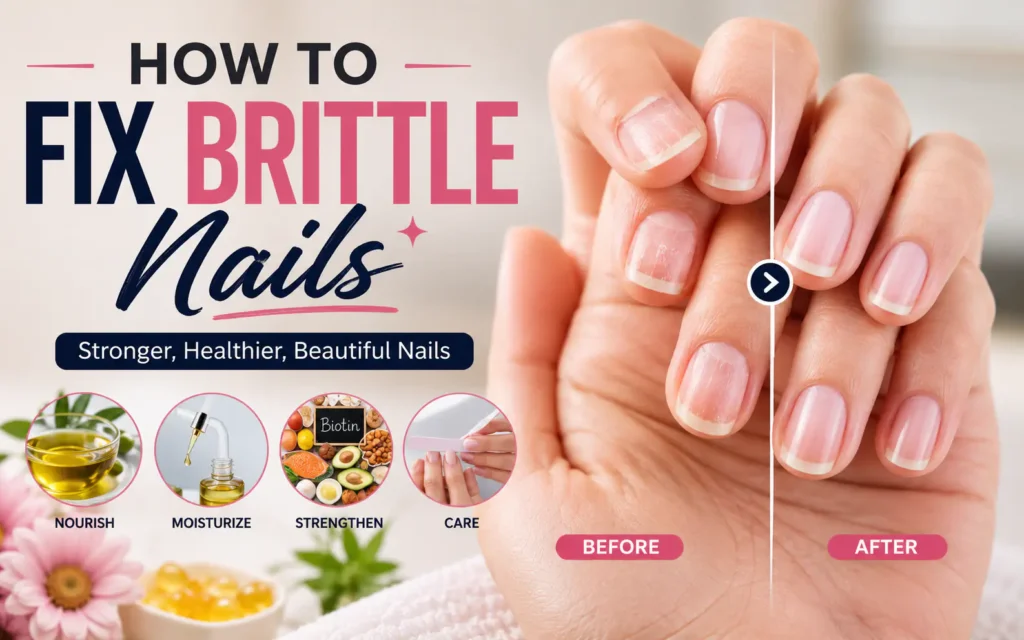
Fixing brittle nails is less about finding a miracle product and more about changing how you interact with your hands daily. By prioritizing moisture and physical protection, you allow your nails to regain their natural flexibility and strength.
Start by implementing the moisture-lock routine today. Even small, consistent changes will lead to healthier, more resilient nails over the coming months.
Related posts
 How to Test Car Wiring for Continuity Using a Multimeter
Learn how to test car wiring for continuity safely. Find broken automotive wires, check connector ports, and diagnose electrical issues with a multimeter. Testing car wiring…
 Why Organizing Space Reduces Stress: The Mental Clarity Connection
Discover why organizing space reduces stress. Learn how a tidy environment lowers cortisol, improves focus, and creates a sense of calm in your daily life. Organizing…
 Why Fresh Air Is Important in Your Home: Health and Comfort Benefits
Discover why fresh air is important in your home. Learn how proper ventilation dilutes indoor pollutants, controls humidity, and improves your daily health. Bringing fresh outdoor…