
How To Deep Clean Kitchen Step By Step
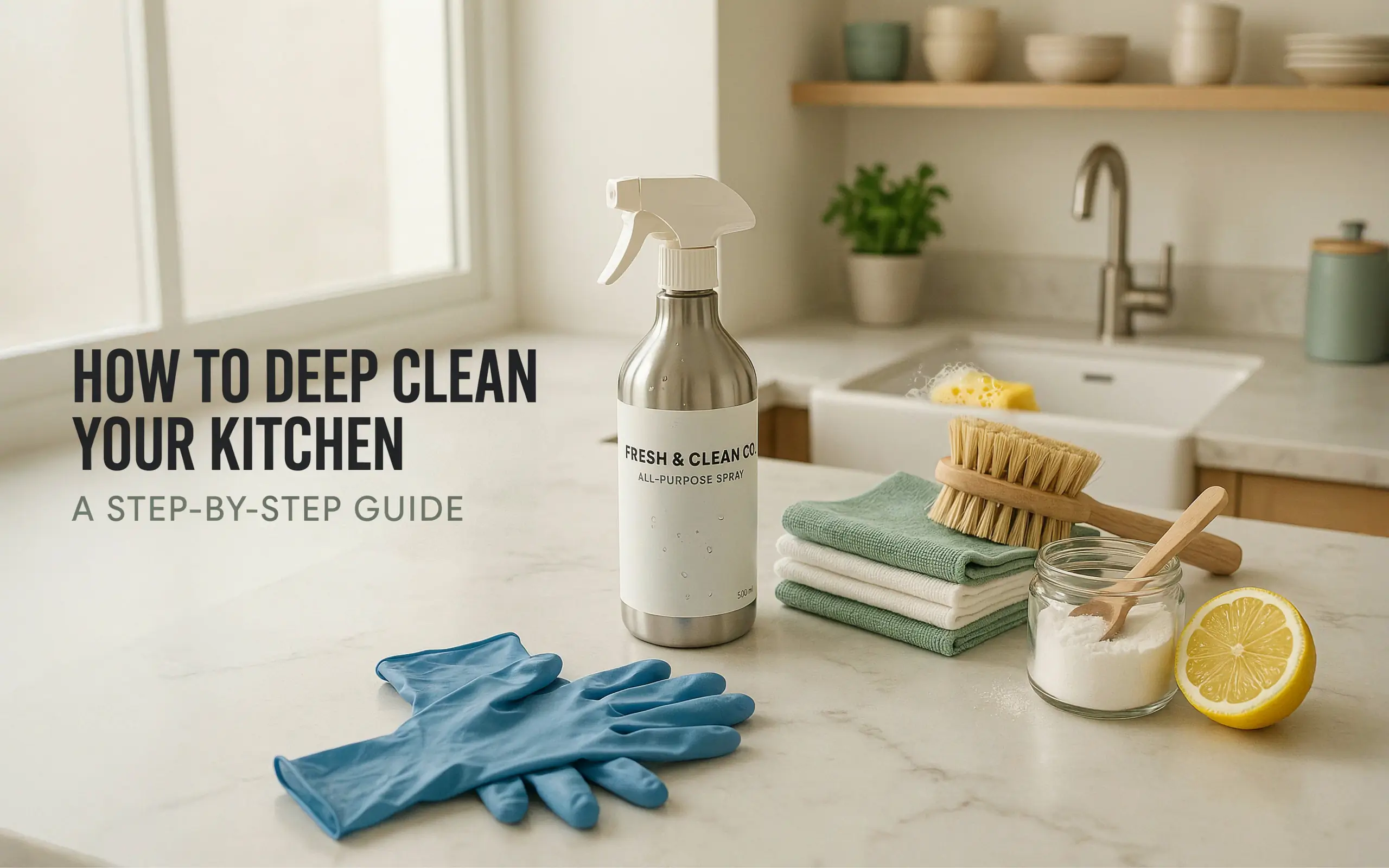
Learn exactly how to deep clean kitchen step by step with this complete guide. From appliances to cabinets, we cover every area so your kitchen feels fresh, sanitary, and organized.
Your kitchen works hard every single day. You cook meals, pack lunches, brew coffee, and gather with family around the counter. With all that activity, grime builds up in places you cannot see. Grease coats the tops of cabinets. Crumbs hide behind the fridge. Bacteria grows in the sink drain.
Daily wiping helps with surface messes, but it does not reach the hidden corners. A proper deep clean kitchen step by step approach removes the buildup that regular cleaning leaves behind. Industry experts recommend a full deep clean every three to six months to keep your kitchen safe and your appliances running well.
This guide walks you through the entire process. You will learn exactly how to deep clean kitchen step by step, from the ceiling to the floor. No fancy tools required. Just simple supplies, a bit of time, and a clear plan. Let us get started.
What You Need Before You Start
Gathering your supplies first saves time and frustration. You do not want to stop mid-clean to hunt for a sponge or run to the store for more vinegar.
Essential Cleaning Supplies
| Item | Purpose |
|---|---|
| Microfiber cloths | Wiping surfaces without streaks |
| Sponges and scrub brushes | Scrubbing tough grime |
| Baking soda | Natural scrubbing and deodorizing |
| White vinegar | Cutting grease and disinfecting |
| All-purpose cleaner or degreaser | General surface cleaning |
| Dish soap | Soaking parts and general cleaning |
| Vacuum with hose attachment | Removing dust and crumbs |
| Mop and bucket | Floor cleaning |
| Rubber gloves | Protecting your hands |
| Old toothbrush | Reaching small crevices |
Having everything ready makes the whole process smoother. Keep your supplies in a bucket or caddy so you can carry them from one area to the next. A key prep step is having your favorite cleaning products and tools on hand before you begin.

“The supplies you use will make a significant difference. Come prepared with multiple cloths for each area of the kitchen.” – Alicia Sokolowski, President and CEO of AspenClean
Step 1: Clear and Declutter the Space
You cannot clean effectively with clutter in the way. Start by removing everything from your counters. Move small appliances like toasters, coffee makers, and knife blocks to a separate table. Take items off the counters that do not belong there, like mail, keys, or random papers.
Empty your sink completely. Wash any dirty dishes or load them into the dishwasher. An empty sink gives you a place to soak appliance parts while you clean other areas.
Take everything out of your cabinets and drawers. Check expiration dates on canned goods, spices, and packaged foods. Throw away anything old or expired. This decluttering step makes the actual cleaning much easier and gives you a chance to organize your pantry.
Step 2: Start from the Top and Work Down
This rule is the golden standard for any deep clean. Start at the highest point in your kitchen and move downward. If you clean the floors first, dust and debris from ceiling fans and light fixtures will fall and undo your work.
Ceiling, Fans, and Light Fixtures
Kitchen dust mixes with cooking oils to form a sticky film on ceiling fans and light fixtures. Use a vacuum with a hose attachment or a long-handled duster to remove cobwebs and dust from ceiling corners. Wipe down fan blades and light fixtures with a microfiber cloth and mild cleaner. Glass light shades can often go in the dishwasher.
Walls and Backsplash
Kitchen walls develop a thin layer of grease over time. You cannot always see it, but you can feel it. Wipe down walls, switch plates, and backsplashes with warm water and a mild degreaser. Pay extra attention to the area behind your stove where grease splatters accumulate. For tile backsplashes, use an old toothbrush to scrub grout lines. Clean grout makes the whole kitchen look brighter.
Tops of Cabinets
The space above your kitchen cabinets collects dust and grease. Clean this area thoroughly. Some professionals suggest lining the tops of cabinets with wax paper after cleaning. During your next deep clean, you can simply remove and replace the paper.
Step 3: Deep Clean the Refrigerator and Freezer
Your fridge works hard to keep food fresh, but it also collects spills, odors, and bacteria. Here is how to deep clean kitchen step by step for this important appliance.
Empty the refrigerator completely. Throw away expired items, old leftovers, and anything that looks questionable. Remove all shelves and drawers. Wash them in hot, soapy water. Do not use hot water on cold glass shelves, as sudden temperature changes can cause them to break.
Wipe the interior walls with a mixture of warm water and baking soda, or use a vinegar and water solution for a natural clean. Let everything air dry before putting shelves and food back.
Do not forget the freezer. Defrost if needed, remove old items, and wipe down the interior. Clean the exterior, paying attention to handles and door seals. Pull the fridge away from the wall and vacuum the condenser coils at the back. Clean coils help your fridge run more efficiently and save energy.
Step 4: Clean the Oven and Stovetop
The stove and oven take the most punishment in any kitchen. Burnt food, spilled sauces, and baked-on grease need serious attention.
Stovetop
For gas stoves, remove the grates, burner caps, and knobs. Soak them in hot, soapy water while you clean the rest of the stovetop. Scrub the main surface with a non-abrasive pad and degreaser.
For glass or ceramic cooktops, sprinkle baking soda on the surface, spray with vinegar, and let it bubble for five to ten minutes. Wipe clean with a damp cloth. Use a cooktop scraper for stubborn burnt-on spots.
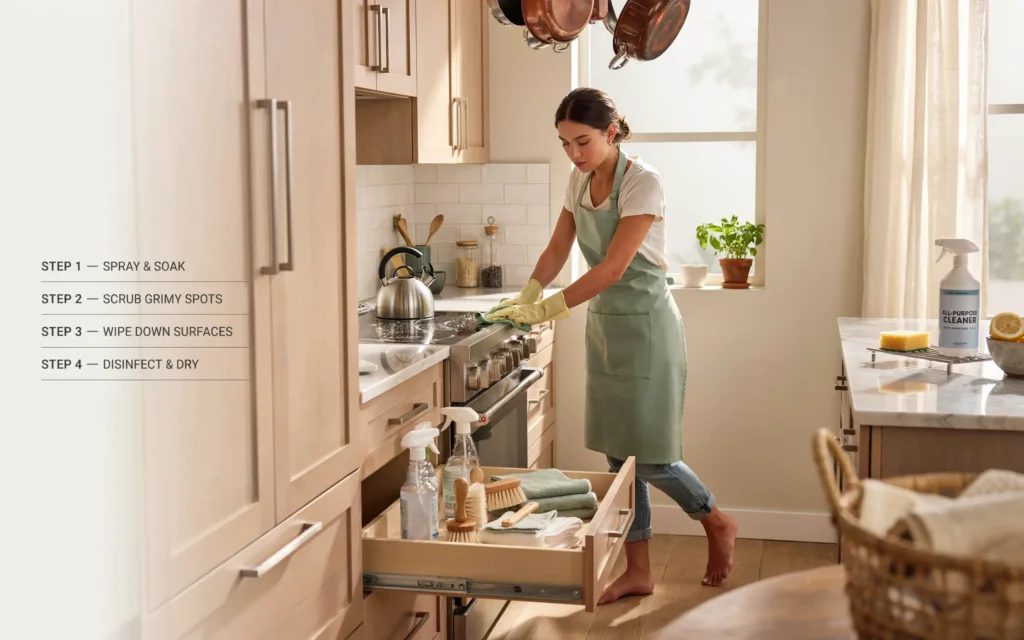
Oven
For manual cleaning, make a paste with baking soda and water. Spread it over the interior surfaces, avoiding the heating elements. Let it sit overnight. The next day, spray vinegar over the paste and wipe clean with a damp cloth. This method works well for removing baked-on grease without harsh chemicals.
If your oven has a self-cleaning mode, follow the manufacturer instructions. Remove oven racks and soak them in hot, soapy water while you clean the interior. Clean the oven door glass carefully. Avoid using scourers that can scratch the glass.
Do not forget the range hood. Remove metal filters and soak them in hot water with dish soap. Grease accumulates here quickly, so regular cleaning is important.
Step 5: Clean the Microwave
Microwaves collect food splatters that harden over time. Here is an easy method.
Fill a microwave-safe bowl with water and a few tablespoons of vinegar or lemon juice. Heat on high for a few minutes until steam fills the inside. Leave the bowl inside for a few more minutes to let the steam loosen the grime. Carefully remove the bowl, then wipe the interior clean with a damp sponge.
Remove the turntable plate and wash it in warm, soapy water. Wipe the exterior and control panel with a damp cloth. Do not spray cleaner directly onto the control panel.
Step 6: Degrease Cabinets and Drawers
Cabinets collect grease, fingerprints, and food residue over time. A thorough clean makes a huge difference in how your kitchen looks and feels.
Start by removing everything from your cabinets and drawers. Wipe the insides with warm, soapy water. For greasy buildup, use a degreaser or a baking soda paste. Pay attention to corners and edges.
Clean the exterior surfaces, including doors, handles, and hinges. Use an old toothbrush to clean around hardware. For wood cabinets, use a cleaner that is safe for the finish. Dry everything thoroughly before putting items back.
Organize as you return items to their places. Group similar items together. This is a good time to line shelves with fresh shelf paper if you use it.
“Think of it as you would making sure you have everything ready to go to prepare a recipe. It saves time to have everything on hand before you start.” – Mary Gagliardi, In-house Scientist at Clorox
Step 7: Sanitize the Sink and Faucet
Your kitchen sink is one of the dirtiest spots in the house. Bacteria thrive in damp, food-filled environments.
Sprinkle baking soda in the sink and scrub with a sponge. Rinse with white vinegar. This combination disinfects and removes buildup. Use lemon slices to scrub the faucet and remove hard water stains, then polish with a dry cloth.
For clogged drains, pour half a cup of baking soda followed by half a cup of vinegar down the drain. Cover and let it fizz for fifteen minutes, then flush with boiling water. Clean around the drain opening with an old toothbrush.
Step 8: Clean Small Appliances and Countertops
Move to the smaller appliances you use every day. Coffee makers, toasters, blenders, and mixers all need attention.
Wipe down the exterior of each appliance. For coffee makers, run a cycle with equal parts water and vinegar to descale. For toasters, unplug and shake out crumbs from the bottom tray. Clean blender bases and food processor parts thoroughly.
Now clean your countertops. Use a cleaner that is safe for your counter material. Avoid vinegar on granite or marble, as it can damage the surface. For these surfaces, use warm water with a few drops of mild dish soap or coconut oil. Wipe down the entire surface, including edges and the area under small appliances.
Step 9: Clean the Dishwasher
Your dishwasher cleans your dishes, but it needs cleaning too.
Remove the bottom rack and the filter. The filter is usually located at the bottom of the dishwasher. Scrub it with warm, soapy water and an old toothbrush to remove food particles and grease.
Wipe down the door seals and gaskets with a vinegar-dampened cloth. Run an empty hot-water cycle with a cup of white vinegar on the top rack. This removes buildup and odors.
Step 10: Sweep, Vacuum, and Mop the Floor
Save the floors for last. Your floors collect dust and debris that falls during the cleaning process.
Sweep or vacuum the floor thoroughly to remove crumbs, dust, and dirt. Pay attention to corners and under appliances. Then mop the floor with a suitable cleaner for your floor type. Work your way backward toward the exit so you do not step on wet floors.
Let the floor dry completely before moving furniture and appliances back into place.
Step 11: Final Touches
Return all items to their proper places. Wipe down cabinet hardware and light switches one more time. Replace trash bags and recycling bins.
Take a step back and admire your work. Your kitchen now feels fresh, clean, and inviting.
How Often Should You Deep Clean Your Kitchen?
Most kitchens benefit from a deep clean every three to six months. Households that cook daily may need a deep clean every three months. Some areas need attention more often:
| Area | Cleaning Frequency |
|---|---|
| Countertops and sink | Daily wipe-down |
| Stovetop | Weekly |
| Refrigerator shelves | Monthly |
| Oven interior | Every 3 to 6 months |
| Cabinet tops | Every 3 to 6 months |
| Pantry | Twice a year |
| Behind appliances | Annually |
A regular cleaning schedule keeps your kitchen manageable between deep cleans.
Natural Cleaning Alternatives
You do not need harsh chemicals for a deep clean. Many common kitchen ingredients work just as well.
Baking soda scrubs away stains and absorbs odors. Vinegar cuts through grease and disinfects. Lemon juice adds antibacterial power and a fresh scent. For a pleasant aroma and extra antibacterial properties, add a few drops of tea tree or eucalyptus essential oil.
Mix equal parts white vinegar and water in a spray bottle for an all-purpose cleaner. Make a paste with baking soda and water for tough stains. These natural solutions save money and are safer for your family.

“Natural cleaning products like vinegar and baking soda are great for removing tough stains and grease in your kitchen, while lemon juice is a natural antibacterial agent that will also leave your home smelling fresh.” – Moneycontrol.com
Frequently Asked Questions
How long does a kitchen deep clean take?
The time depends on your kitchen size and how dirty it is. A focused one-hour clean can cover the basics. A full deep clean of every area may take three to four hours or more. Breaking the tasks into sections across a weekend makes the job less tiring.
What is the best order to deep clean a kitchen?
Work from top to bottom. Start with ceilings, fans, and light fixtures. Move to cabinets and walls. Clean appliances. Finish with counters, sink, and floors. This order prevents dust and debris from falling onto areas you already cleaned.
Can I use vinegar on all kitchen surfaces?
No. Avoid vinegar on granite, marble, and natural stone surfaces. The acid can etch and damage these materials. Use warm water with mild dish soap or coconut oil instead.
How do I clean a really greasy kitchen?
Use a degreaser or a mixture of baking soda and vinegar for tough grease. Let the cleaner sit for a few minutes before scrubbing. For range hood filters, soak them in hot water with dish soap. Microfiber cloths work better than paper towels for removing grease without streaks.
Should I clean inside my cabinets during a deep clean?
Yes. Remove everything from cabinets and drawers. Wipe the insides with warm, soapy water. This removes crumbs, dust, and any food residue. It is also a good time to check expiration dates and organize your pantry.
How do I clean refrigerator coils?
Pull the fridge away from the wall. Unplug it. Use a vacuum with a hose attachment to remove dust from the coils. Clean coils help your refrigerator run efficiently and lower your energy bills.
What natural products work best for deep cleaning?
Baking soda, white vinegar, lemon juice, and dish soap cover most cleaning needs. Baking soda scrubs and deodorizes. Vinegar cuts grease and disinfects. Lemon juice adds antibacterial power. These ingredients are safe, inexpensive, and effective.
Conclusion
Learning how to deep clean kitchen step by step takes a bit of effort, but the results are worth it. A clean kitchen feels better to cook in, looks more inviting, and keeps your family healthier.
Start with a clear plan. Gather your supplies. Work from top to bottom. Clean each area thoroughly before moving to the next. Take breaks if you need them. The process does not have to happen all in one day.
Break the tasks into manageable chunks. Clean the fridge one day. Tackle the oven the next. Finish with cabinets and floors over the weekend. Whatever schedule works for you, the important thing is to do it regularly.
Your kitchen works hard for you every single day. Give it the deep clean it deserves. You will notice the difference in how it looks, smells, and feels. And the next time you cook a meal or gather with family, you will enjoy your kitchen even more.
Related posts
 Best Under Sink Organizers Kitchen 2026: Practical Storage Solutions
Find the best under sink organizers kitchen in 2026. Compare top-rated pull-out bins, L-shaped racks, and protective mats to maximize your cabinet space. The space under…
 Best Kitchen Cabinet Storage Solutions for 2026
Organize your kitchen efficiently with our Best Kitchen Cabinet Storage Solutions. Compare the best organizers for lids, pans, and spices to maximize your space. A cluttered…
 Top Rated Kitchen Shelf Organizers for 2026
Discover the top rated kitchen shelf organizers for 2026. Compare durable racks, magnetic shelves, and tiered storage to maximize your pantry and counter space. A cluttered…