
How Long Does Fat Loss Take
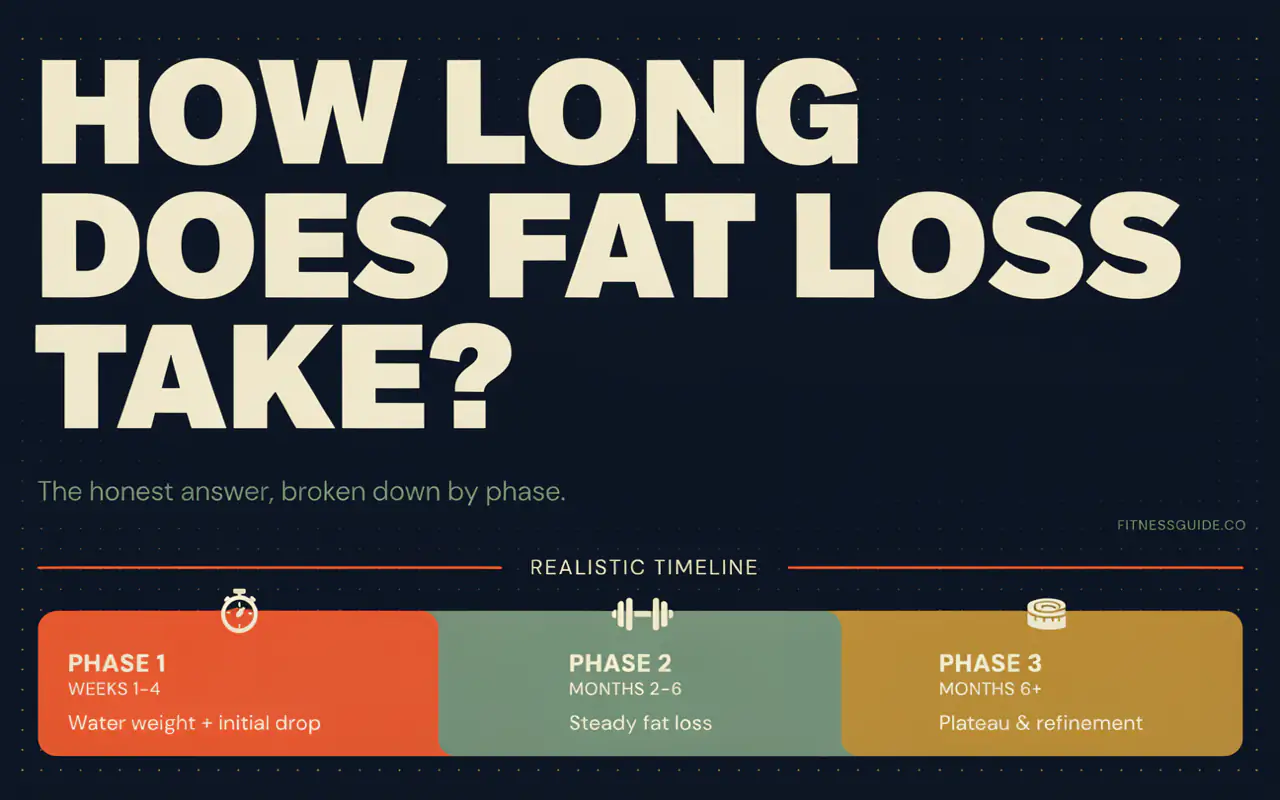
If you are asking how long does fat loss take, the honest answer is that it depends on many factors. Generally, you can expect to lose 1 to 2 pounds per week. This guide explains the realistic fat loss timeline, what affects your speed, and how to stay on track for good.
Have you ever started a new diet or exercise plan and wondered, “How long does fat loss take?” You are not alone. This is one of the most common questions people ask when they decide to get healthier. The answer is not a simple number. Fat loss is a personal process. It depends on your body, your habits, and your goals.
This guide will give you a clear and honest look at the fat loss timeline. We will cover what to expect in the first week, the first month, and beyond. We will also look at the factors that speed up or slow down your progress. By the end, you will have a realistic plan and the patience to see it through.
What Exactly Is Fat Loss?
Before we talk about time, let us understand what fat loss really means. Fat loss is the process of your body using stored fat for energy. This happens when you consume fewer calories than your body burns. This state is called a calorie deficit.
When you are in a calorie deficit, your body breaks down fat cells. The fat is released into your bloodstream and used as fuel. The byproducts of this process leave your body through your breath, urine, and sweat. This is how you lose fat.
It is important to know that fat loss is not the same as weight loss. Weight loss includes water, muscle, and fat. Fat loss specifically targets the stored fat. Your goal should be to lose fat while keeping your muscle.
The Basic Answer: How Long Does Fat Loss Take?
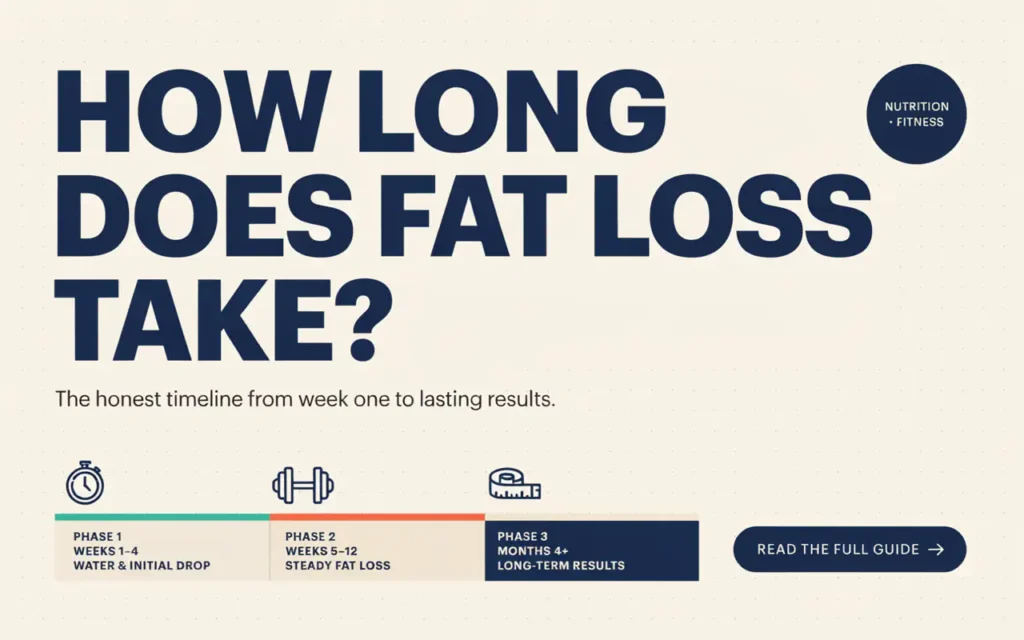
So, how long does fat loss take for the average person? Health experts agree that a safe and sustainable rate is 1 to 2 pounds per week. This translates to about 4 to 8 pounds per month.
According to the Centers for Disease Control and Prevention (CDC), this pace is recommended because it is more likely to lead to long-term success. Losing weight too fast often leads to muscle loss and weight regain.
This basic rule gives you a starting point. If you want to lose 20 pounds, you can expect it to take roughly 10 to 20 weeks at this pace. That is about 2.5 to 5 months. This is how long fat loss takes when you do it the right way.
The Early Stages: What Happens in the First Month?
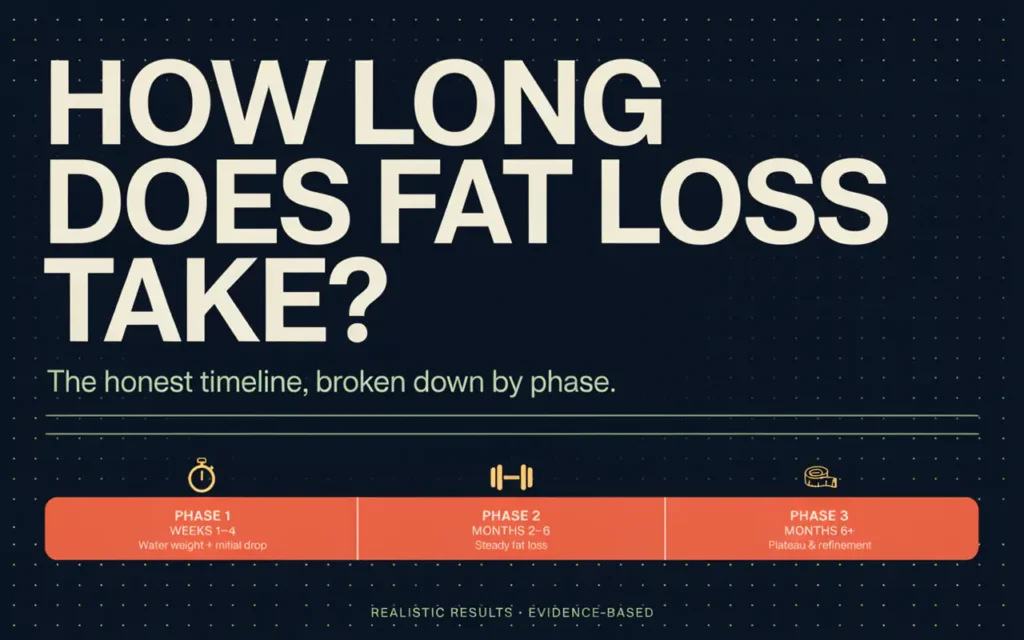
Many people get excited when they see the scale drop quickly in the first week. This initial drop is often water weight. When you reduce your calorie intake, your body uses up its glycogen stores. Glycogen holds water. As you use the glycogen, you lose that water.
This early water loss can make it seem like how long does fat loss take is very short. However, true fat loss takes more time. After the first week or two, the rate of loss usually slows down. This is when you start losing actual body fat.
A Typical First Month Timeline
| Week | What to Expect |
|---|---|
| Week 1 | Rapid drop on the scale. This is mostly water weight. You may feel less bloated. |
| Week 2 | The scale may slow down. Your body is adjusting to the new calorie level. |
| Week 3 | Fat loss begins to show. You might notice your clothes feel looser. |
| Week 4 | You could lose 4 to 8 pounds total. Some of this is fat, some is water. |
During this first month, it is common to feel more energy as your body adapts. You might also feel hungrier as your body signals for more food. It is important to stick with your plan and not get discouraged if the scale does not move every single day.
The Three-Month Mark: Visible Changes
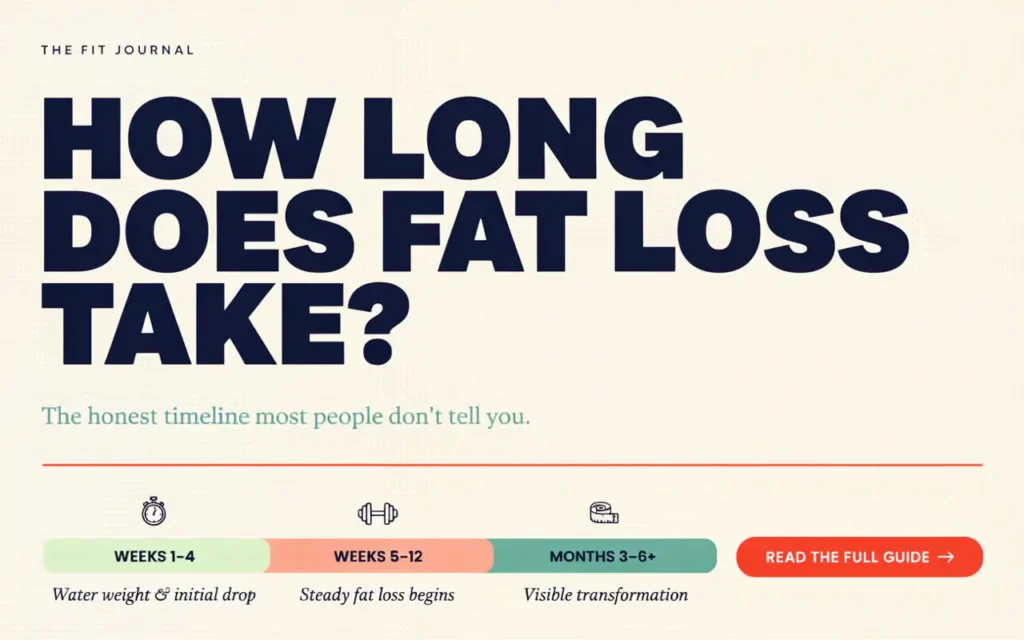
If you stay consistent, how long does fat loss take to become visible? For most people, significant changes become noticeable around the 8 to 12 week mark. This is about three months.
At this point, you have likely lost a noticeable amount of fat. Your clothes will fit differently. You may see changes in your face, waist, and other areas. Research shows that 6 to 8 weeks of consistent training with a calorie deficit can produce an average fat loss of 4 to 8 pounds and measurable changes in body circumference.
By the three-month point, your new habits are starting to feel normal. This is a critical time. How long does fat loss take to become permanent? It takes this long for your body and mind to adapt to your new lifestyle.
Factors That Affect How Long Fat Loss Takes
Many things influence your personal timeline. Understanding these factors will help you set realistic expectations.
1. Your Starting Point
People with more weight to lose often see faster results in the beginning. This is because a larger body burns more calories at rest. As you lose weight, your calorie needs decrease. This is why the rate of loss often slows down as you get closer to your goal.
If you are close to your ideal weight, how long does fat loss take? It will likely take longer. The last few pounds are often the hardest to lose.
2. Your Diet Quality
Not all calories are the same. A diet rich in protein, fiber, and whole foods supports fat loss better than a diet of processed foods. Protein is especially important because it helps preserve muscle mass and keeps you feeling full.
3. Your Exercise Routine
Exercise is a powerful tool. It helps you burn more calories and build muscle. Muscle is metabolically active, meaning it burns calories even when you are resting. Combining cardio with strength training is the most effective approach.
4. Your Sleep and Stress Levels
Sleep and stress play a big role in hormone regulation. Lack of sleep disrupts hormones that control hunger, leading to cravings. High stress raises cortisol levels, which can increase fat storage, especially around the belly. Managing these factors is key to speeding up how long does fat loss take.
5. Your Gender and Age
Men typically lose fat faster than women. This is due to differences in muscle mass and hormones. Age also plays a role. As we get older, we lose muscle mass and our metabolism slows down. This means it can take longer to lose fat as we age.
6. Genetics and Medical Conditions
Your genetics influence where your body stores fat and how easily you lose it. Certain medical conditions and medications can also make fat loss more difficult. It is always a good idea to talk to your doctor if you are concerned.
Summary Table of Key Factors
| Factor | How It Affects Your Timeline |
|---|---|
| Starting Weight | Heavier individuals may lose more initially. |
| Diet | High-protein, whole-food diets support faster fat loss. |
| Exercise | Combining cardio and strength training is most effective. |
| Sleep & Stress | Poor sleep and high stress slow down fat loss. |
| Gender & Age | Men and younger people often lose fat faster. |
| Genetics | Plays a role in fat storage and loss patterns. |
The Fat Loss Timeline by Body Fat Percentage
Another way to look at how long does fat loss take is by body fat percentage. A general recommendation is to aim for 0.5% to 1% body fat loss per week.
For example, if your body fat is 30% and you want to reduce it to 20%, you need to lose 10% of your body fat. At a rate of 0.5% to 1% per week, this could take 10 to 20 weeks.
What to Expect at Different Body Fat Levels
- Above 30% Body Fat: You may see results more quickly in the beginning. Changes in diet and exercise can have a big impact.
- 25% to 30% Body Fat: Aiming to drop to 15% could take around 10 weeks. This requires a consistent effort.
- 15% to 20% Body Fat: Fat loss becomes slower and more stubborn. You need to be very precise with your diet and training.
Reaching a very low body fat percentage takes time and dedication. For most people, getting to 10-15% body fat is a months-long process.
Common Stages and Plateaus in Fat Loss
Weight loss is rarely a straight line. You will likely experience stages and plateaus. This is a normal part of the process. Understanding this will help you stay motivated.
The Initial Drop
As mentioned, you will see a quick drop in the first week or two due to water loss.
The Steady Phase
After the initial drop, you will enter a phase of steady fat loss. This is where you lose 1 to 2 pounds per week. This phase can last for several weeks or months.
The Plateau
A plateau is when your weight stays the same for a few weeks despite your efforts. This happens because your body adapts to your new calorie intake and activity level. Your metabolism may slow down slightly.
When you hit a plateau, do not panic. It does not mean you have failed. It is a sign that you may need to make a small adjustment. You could increase your exercise intensity, slightly lower your calories, or change your workout routine.
The Final Stretch
As you get close to your goal, fat loss will slow down again. The last few pounds are often the most stubborn. How long does fat loss take in this final stage? It can take twice as long to lose the last 5 pounds as it did to lose the first 10. Patience is crucial here.
Realistic Goals for Different Timeframes
Setting realistic goals is essential for success. Here is what you can expect over different periods.
1 Month (4 Weeks)
- Goal: Lose 4 to 8 pounds.
- What to expect: You will see some changes in how your clothes fit. You will feel more energetic. The scale will show progress, but much of it will be water weight.
3 Months (12 Weeks)
- Goal: Lose 12 to 24 pounds.
- What to expect: This is when significant changes become visible. You will likely drop a clothing size. Your fitness level will improve noticeably. This is a major milestone in how long does fat loss take.
6 Months (24 Weeks)
- Goal: Lose 24 to 48 pounds.
- What to expect: Major transformation. People will start to notice the changes. Your habits will be well-established. You will be much closer to your goal weight.
1 Year (52 Weeks)
- Goal: Lose 52 to 104 pounds.
- What to expect: Complete lifestyle change. You can achieve a dramatic and sustainable transformation. This is the ultimate proof of how long does fat loss take for lasting results.
How to Speed Up Your Fat Loss Safely
While you cannot rush the process without risks, you can optimize it. Here are some safe ways to make progress.
1. Create a Moderate Calorie Deficit
Aim to cut about 500 calories from your daily diet. This will help you lose about 1 pound per week. Avoid cutting too many calories, as this can lead to muscle loss and a slower metabolism.
2. Prioritize Protein
Make sure you are eating enough protein. Protein helps you feel full and preserves muscle mass. Aim for a source of protein at every meal.
3. Lift Weights
Strength training is crucial. It helps you build and maintain muscle. More muscle means a higher metabolism, which helps you burn more fat.
4. Move More Throughout the Day
In addition to your workouts, try to increase your daily activity. Take the stairs, go for a walk during your lunch break, or do some stretching. These small actions add up.
5. Get Enough Sleep
Aim for 7 to 9 hours of quality sleep per night. Good sleep helps regulate your hormones and keeps your cravings in check.
6. Manage Stress
Find healthy ways to manage stress. This could be through meditation, yoga, reading, or spending time in nature. Lower stress means lower cortisol, which helps prevent fat storage.
What to Do When You Feel Discouraged
It is normal to feel discouraged at times. Fat loss is a long process. Here are some tips to stay on track.
Focus on Non-Scale Victories
The scale is not the only measure of success. Pay attention to how your clothes fit. Notice how much energy you have. See how your strength has improved. These are all signs of progress.
Look at the Big Picture
Do not get hung up on daily fluctuations. Weight can go up and down due to water retention, hormones, and other factors. Look at the overall trend over a few weeks. This gives you a much clearer picture.
Be Kind to Yourself
Remember that this is a journey. There will be good days and bad days. Do not let one bad day derail your entire effort. Get back on track the next day.
“Practice patience. Weight loss will vary from week to week. Initially it will be higher because there’s some water weight loss. And eventually it’s going to plateau.” – Tara M. Schmidt, M.Ed., RDN, LD, a dietitian at Mayo Clinic
“Weight loss is rarely a linear process.” – Jared Meacham, PhD., RD, CSCS, a registered dietitian
“Most people lose a modest amount of weight and generally regain the weight back shortly after. Physical obstacles, like chronic pain or injuries, can make it difficult to be active.” – Daniela D. Hurtado Andrade, M.D., Ph.D., an endocrinologist
Frequently Asked Questions
1. How long does fat loss take to see results in the mirror?
Most people start to see visible changes in the mirror after about 8 to 12 weeks of consistent effort. However, you may notice your clothes fitting better sooner, within 4 to 6 weeks.
2. How long does fat loss take if I exercise every day?
Exercise speeds up the process, but how long does fat loss take still depends on your diet. If you exercise daily and maintain a calorie deficit, you can expect to lose 1 to 2 pounds per week.
3. Why does fat loss take so long?
Fat loss takes time because it is a biological process. Your body is designed to hold onto energy stores. Losing fat too quickly can lead to muscle loss and a slower metabolism. A slow and steady approach is healthier and more sustainable.
4. How long does fat loss take for belly fat specifically?
You cannot target belly fat specifically. However, as you lose overall body fat, your belly will shrink. At a rate of 0.5 to 1 pound per week, most people notice a flatter midsection within 4 to 8 weeks, with more obvious changes by 12 weeks.
5. How long does fat loss take on a keto diet?
On a keto diet, you may see a quick drop in water weight in the first week. True fat adaptation and fat loss begin after about 7 to 10 days. After that, the rate of fat loss is similar to other diets, about 1 to 2 pounds per week.
6. How long does fat loss take after a workout?
Fat loss does not happen immediately after a workout. The calorie burn from exercise contributes to your overall daily deficit. Over time, this deficit leads to fat loss. You may not see results on the scale right away, but you are making progress.
7. How long does fat loss take to become permanent?
Fat loss becomes permanent when you adopt sustainable lifestyle habits. This usually takes at least 3 to 6 months of consistent effort. The key is to continue these habits even after you reach your goal.
8. How long does fat loss take if I am close to my goal weight?
If you are close to your goal weight, fat loss will be slower. Your body has less fat to lose, and it will hold onto it more stubbornly. You may need to be more precise with your diet and exercise.
9. How long does fat loss take for women compared to men?
Men generally lose fat faster than women due to higher muscle mass and different hormone levels. Women may find that fat loss takes a little longer, especially around the hips and thighs.
10. How long does fat loss take before I need to change my plan?
If you have not seen any progress in 4 to 6 weeks, it may be time to reevaluate your plan. You might need to adjust your calorie intake, change your exercise routine, or look at your sleep and stress levels.
Conclusion
So, how long does fat loss take? The honest answer is that it depends. For most people, a safe and sustainable rate is 1 to 2 pounds per week. This means you can expect to lose 4 to 8 pounds per month. Visible changes often appear around the 8 to 12 week mark.
Remember that fat loss is not a race. It is a journey. Focus on building healthy habits that you can maintain for life. Be patient with yourself. Celebrate your non-scale victories. And do not get discouraged by plateaus. They are a normal part of the process.
The best way to succeed is to be consistent. Stick with your healthy eating plan. Keep moving your body. Get enough sleep. Manage your stress. Over time, these small actions will add up to big results. How long does fat loss take? It takes as long as it needs to. But with patience and consistency, you will get there.
Related posts
 How to Strengthen Weak Nails: A Practical Guide to Daily Care
Learn how to strengthen weak nails with simple daily habits, protective care, and targeted hydration. Restore your natural nail strength today. Weak, peeling, or brittle nails…
 What Sounds Do Cats Dislike? 7 Noises That Stress Your Pet
Discover what sounds do cats dislike and why. Learn how to protect your cat’s sensitive hearing from stressful household noises and high-frequency hums. Cats dislike sounds…
 Restoring Faded Black Clothing: Practical Methods and Reality Checks
Can you restore faded black clothing? Learn the difference between temporary color revival and permanent redyeing, plus how to prevent future fading. You can restore the…