
What Is A Fuel Pressure Tester
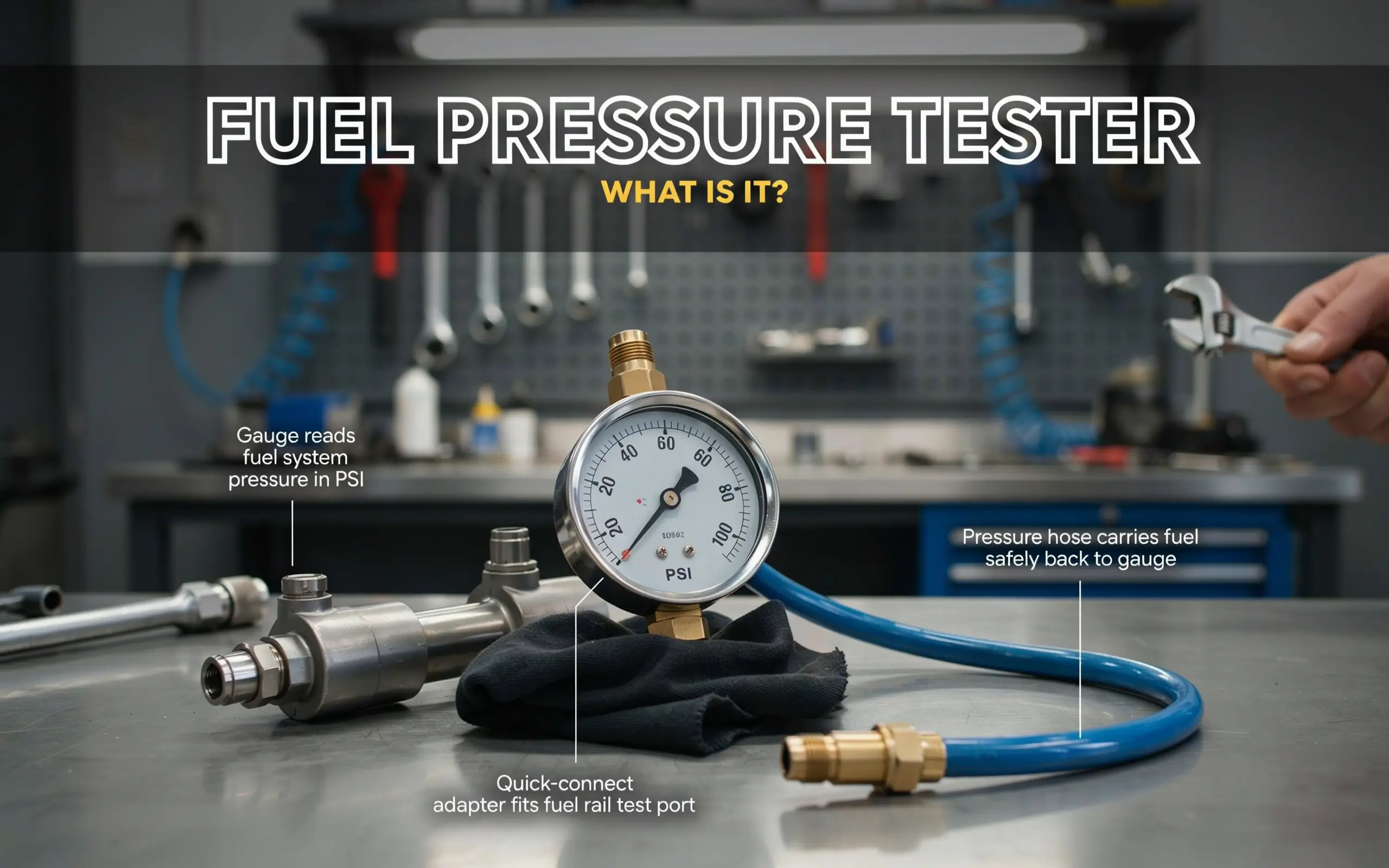
Learn what a fuel pressure tester is and how it checks your car’s fuel system. A fuel pressure tester helps find bad pumps, leaks, or clogged filters fast.
If your car sputters, hesitates, or just won’t start, the fuel system might be the culprit. You do not need to be a professional mechanic to figure this out. A simple tool called a fuel pressure tester can save you hours of guesswork and expensive shop visits.
So, what is a fuel pressure tester? It is a hand-held gauge that connects to your engine’s fuel system. It reads the pressure of the fuel moving toward the injectors. Think of it like a blood pressure cuff for your car. Instead of checking your health, it checks the health of the fuel pump and related parts.
In this guide, I will explain everything you need to know. You will learn how this tool works, when to use it, and why every DIY car person should own one. Let us get started.
Table of Contents (for easy reading)
- What Does a Fuel Pressure Tester Actually Do?
- Why Fuel Pressure Matters for Your Engine
- Main Parts of a Fuel Pressure Tester
- When to Use a Fuel Pressure Tester (Key Symptoms)
- How to Use a Fuel Pressure Tester Step by Step
- Reading the Results: What the Numbers Mean
- Safety Tips Before You Test
- Types of Fuel Pressure Testers
- Benefits of Owning Your Own Tester
- Frequently Asked Questions
- Conclusion
What Does a Fuel Pressure Tester Actually Do?
A fuel pressure tester measures the force of fuel inside the fuel rail or fuel line. That force is measured in pounds per square inch (PSI). Most cars need a specific PSI to run smoothly. Too low, and the engine starves. Too high, and the engine floods.
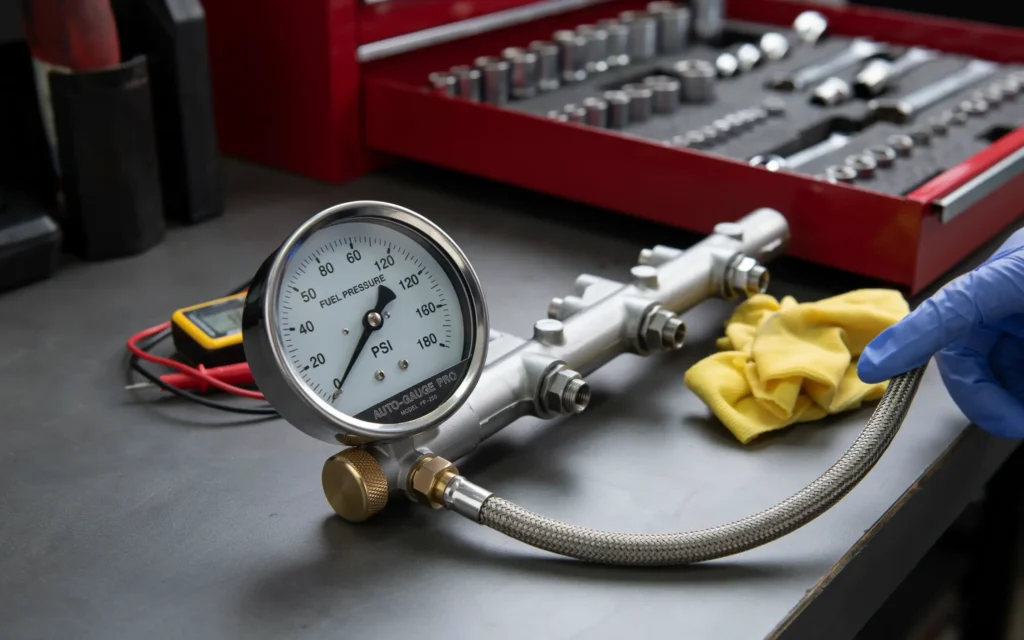
This tool connects to a test port on the fuel system. Many cars have a Schrader valve, just like a tire valve. You attach the tester, turn the key or start the engine, and read the gauge.
“A fuel pressure test is the fastest way to separate fuel problems from ignition problems. It gives you a clear yes or no answer.”
— Jerry Thompson, ASE Certified Master Technician
The tester does not fix anything by itself. But it gives you the truth. You will know if the fuel pump is weak, if the pressure regulator is broken, or if there is a leak somewhere.
Why Fuel Pressure Matters for Your Engine
Your engine needs three things to run: air, fuel, and spark. But fuel must arrive at the right pressure. Think of a garden hose. If the water pressure is too low, the spray is weak. If too high, the hose might burst.
The same idea applies to your car’s fuel injectors. They need a steady, exact pressure to spray a fine mist of fuel. That mist mixes with air and burns cleanly. Wrong pressure causes poor burning, wasted gas, and even engine damage.
What Happens When Pressure Is Too Low?
Low pressure means the pump is not pushing enough fuel. The engine gets less fuel than it needs. Common signs include:
- Slow acceleration
- Engine stalling when you stop
- Trouble starting, especially when hot
- Sputtering at high speeds
A fuel pressure tester will show low PSI numbers. That tells you to check the pump, filter, or fuel line for clogs or breaks.
What Happens When Pressure Is Too High?
High pressure is less common but still bad. It forces too much fuel into the engine. This makes the air-fuel mixture too rich. Signs include:
- Black smoke from the exhaust
- Strong smell of gasoline
- Poor fuel economy
- Check engine light with rich code
High readings on your tester point to a bad fuel pressure regulator or a blocked return line.
Main Parts of a Fuel Pressure Tester
A basic fuel pressure tester kit has several pieces. Here is a simple table to help you understand each part.
| Part | What It Does |
|---|---|
| Pressure Gauge | Shows the PSI reading. Often has a clear dial or digital screen. |
| Hose | Flexible tube that connects the gauge to the engine. Usually 12 to 24 inches long. |
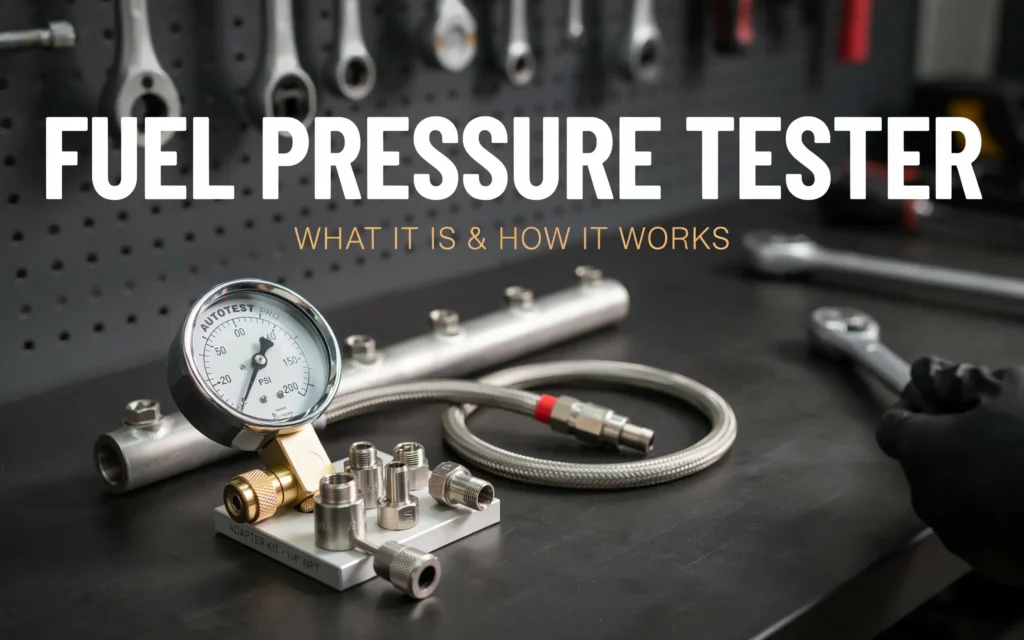
| Adapters | Small fittings to match different car brands. Includes Ford, GM, Toyota, Honda, and more. |
| Relief Valve | A button that releases pressure safely before you disconnect the tool. |
| Bleed Hose | A small tube attached to the relief valve. Directs fuel into a container. |
Some testers also come with a case and a T‑fitting for older cars without a test port. Always check your vehicle’s fuel system type before buying a kit.
When to Use a Fuel Pressure Tester (Key Symptoms)
You do not need to guess why your car is acting up. Let the tool tell you. Use a fuel pressure tester when you notice any of these five problems.
| Symptom | Likely Fuel Pressure Issue |
|---|---|
| Hard starting, long crank | Low residual pressure (leaky injector or bad check valve) |
| Engine dies at idle | Very low pressure at idle speed |
| Hesitation on acceleration | Pressure drops when throttle opens |
| Rough idle, misfires | Unstable or fluctuating pressure |
| No start, but engine cranks | Zero pressure (dead pump or clogged filter) |
If your check engine light is on with codes like P0087 (fuel rail pressure too low) or P0191 (fuel pressure sensor range), a tester confirms the problem before you buy any parts.
“I have seen people replace two fuel pumps before realizing the filter was just clogged. A $30 pressure tester would have shown the issue in five minutes.”
— Maria Flores, Shop Owner and Mechanic for 18 years
How to Use a Fuel Pressure Tester Step by Step
Using a fuel pressure tester is not hard. Follow these steps carefully. Work in a well-ventilated area. Keep a fire extinguisher nearby. No smoking.
Step 1 – Find the Test Port
Look on the fuel rail (metal tube on top of the engine). Find a small valve that looks like a tire valve. That is the Schrader valve. Some cars do not have one. You may need an adapter or a T‑fitting for those.
Step 2 – Relieve Fuel System Pressure
You must release pressure before connecting the tester. Pull the fuel pump fuse or relay. Start the engine and let it run until it dies. Then crank it two more times. This removes almost all pressure.
Step 3 – Attach the Tester
Pick the correct adapter for your car. Screw it onto the test port. Then connect the hose and gauge. Tighten by hand only. Do not over tighten.
Step 4 – Turn the Key to ON (Do Not Start)
Turn the ignition to the ON position. The fuel pump will run for 2‑3 seconds. Watch the gauge. It should jump to the specified PSI for your car. Write down that number.
Step 5 – Start the Engine
Now start the engine. Read the gauge at idle. Then rev the engine gently. Pressure should stay steady or rise slightly. If it drops a lot, your pump or filter is weak.
Step 6 – Perform a Leak Down Test
Turn off the engine. Watch the gauge for 10 minutes. Good pressure holds steady or drops very slowly (less than 5 PSI). A fast drop means a leaky injector, bad check valve, or external leak.
Step 7 – Relieve Pressure and Remove
Push the relief valve button on the tester. Catch any fuel in a container. Then unscrew the adapter. Put the valve cap back on the test port.
Reading the Results: What the Numbers Mean
Every car has a factory pressure specification. Most cars run between 35 and 65 PSI at idle. European cars may run higher, up to 80 PSI. Direct injection engines can run over 2,000 PSI, but those need a special high-pressure tester.
Here is a quick guide to interpret your gauge reading.
- Zero PSI with key ON – Dead pump, blown fuse, bad relay, or no power to pump.
- Low PSI (e.g., 20 instead of 45) – Weak pump, clogged filter, or pinched line.
- High PSI (e.g., 70 instead of 45) – Stuck fuel pressure regulator or blocked return line.
- Fluctuating needle – Pump is failing internally or the regulator is dirty.
- Good PSI at key ON but drops fast after off – Leaky injector, bad pump check valve, or external leak.
“Do not just look for a number. Watch how the needle moves. A slow drop after shutoff tells you more than a static reading ever will.”
— Dave Chen, Automotive Instructor and Writer
Safety Tips Before You Test
Gasoline is dangerous. Treat it with respect. Here are simple rules to stay safe.
- Work outside or with garage door wide open.
- No sparks, no flames, no phone chargers near the engine.
- Wear safety glasses and gloves.
- Keep a fire extinguisher rated for fuel fires (Class B) within reach.
- Do not smoke anywhere near the vehicle.
- Let the engine cool if you just drove it. Hot fuel lines can burn you.
- Catch every drop of fuel that comes out of the relief valve. Dispose of it properly.
A fuel pressure tester is safe when you follow these rules. Rushing or skipping steps causes accidents.
Types of Fuel Pressure Testers
Not all testers are the same. You have three main choices. Pick the one that fits your skill level and budget.
Analog Gauge Tester
This is the most common type. It has a round dial with a needle. No batteries needed. Very durable. Prices range from $25 to $80. Great for home mechanics.
Digital Gauge Tester
This uses an electronic screen. It gives very precise numbers. Some models record min and max pressure. Costs more, around $80 to $200. Good for professional use.
Full Kit with Multiple Adapters
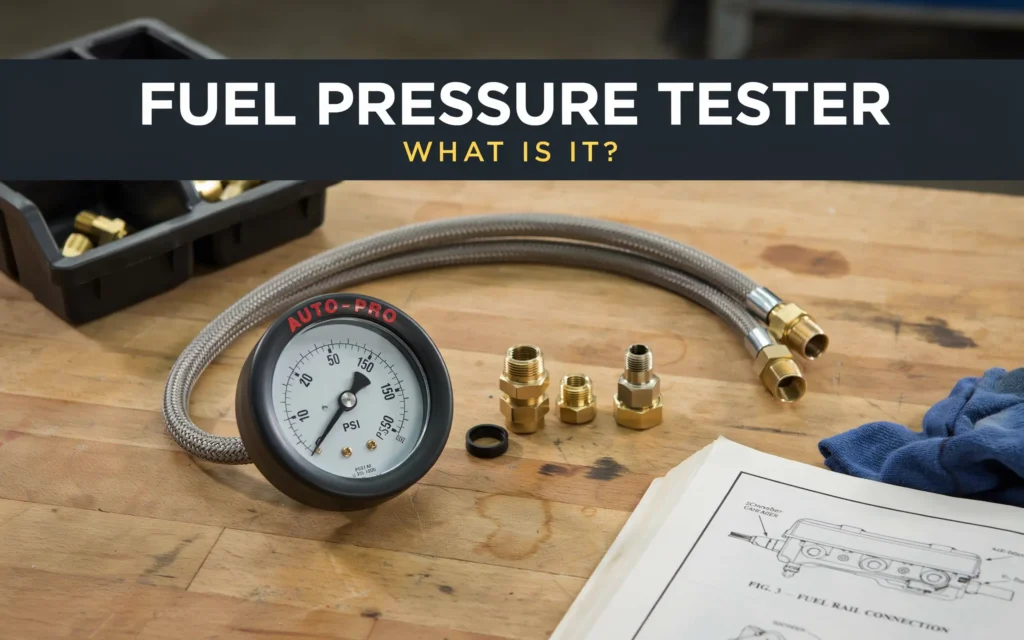
This includes a gauge, hoses, and dozens of adapters for American, Asian, and European cars. Prices from $50 to $150. This is the best value if you work on different cars.
Avoid the very cheapest $15 testers. They leak or break quickly. Spend at least $30 for a reliable one.
Benefits of Owning Your Own Tester
Why buy a fuel pressure tester instead of going to a shop? Here are real reasons.
- Save money on diagnosis – One shop visit for a fuel pressure test costs $80 to $120. A tester costs less than that.
- Avoid wrong part swaps – How many people replace a fuel pump that was actually fine? A lot. The tester stops that mistake.
- Fix problems faster – You test in 15 minutes and know exactly what to fix. No waiting for a mechanic appointment.
- Help friends and family – Once you own one, you can test three or four cars for free.
- Learn about your car – Using the tool teaches you how the fuel system works. That knowledge stays with you.
Think of it like a voltmeter for electricity. You would not guess if a battery is dead. You would test it. Same goes for fuel pressure.
Frequently Asked Questions
1. Can I use a fuel pressure tester on any car?
Most testers work on cars from the 1990s to today. But direct injection engines need a special high-pressure tester (up to 2,000+ PSI). Check your car’s fuel system type before buying.
2. How often should I test fuel pressure?
Only when you have symptoms. Fuel pressure does not need regular testing like oil changes. But if you buy a used car, a quick test is a smart idea.
3. Can a bad fuel pressure regulator cause no start?
Yes. If the regulator sticks open, pressure drops to zero. The engine may crank but never fire. A tester will show zero PSI at the rail.
4. What is a normal fuel pressure reading?
For most non‑direct injection cars, normal is 35‑65 PSI at idle. Check your vehicle repair manual or look online for the exact spec.
5. Will a fuel pressure tester work on a diesel engine?
No. Diesel fuel pressure is much higher (thousands of PSI). You need a special diesel compression tester. Do not use a gasoline tester on a diesel.
6. How do I know if my tester is accurate?
Test it on a known good car first. Or compare it with a friend’s tester. Some gauges can be off by 2‑3 PSI, but that is fine for diagnosing major problems.
7. Can I test fuel pressure while driving?
Some testers come with a long hose that lets you tape the gauge to the windshield. You drive and watch the pressure under load. This is advanced but very helpful.
8. What does a fuel pressure tester cost?
Basic analog testers start at $25. Good kits with adapters are $50‑$80. Professional digital testers go up to $200. For home use, a $50 kit is perfect.
9. Is it hard to relieve fuel pressure before testing?
No. Just pull the fuel pump fuse and run the engine until it dies. That is the safest method. Some cars have a fuel pump relay you can unplug.
10. Can a clogged fuel filter cause low pressure reading?
Yes. A very clogged filter restricts flow. The pump tries hard but pressure drops. Replacing the filter often fixes low pressure. Always test after changing the filter.
Conclusion
A fuel pressure tester is one of the most useful tools for any car owner. It takes the guesswork out of diagnosing fuel system problems. You do not need to be a mechanic to use one. With a few simple steps, you can know exactly if your fuel pump, filter, regulator, or injectors are working right.
The next time your car hesitates, stalls, or refuses to start, think about fuel pressure. Rent or buy a tester. Spend fifteen minutes checking. You might save yourself a tow truck bill and an unnecessary repair. More importantly, you will gain confidence in working on your own vehicle.
Keep the safety tips in mind. Practice on a healthy car first so you know how the gauge behaves. Then when a real problem shows up, you will be ready. A small investment in a tester pays back many times over in peace of mind and money saved.
Related posts
 2026 Torque Wrench Reviews: Choosing the Right Tool for Precision Fastening
Explore our 2026 torque wrench reviews to find the right tool for your automotive, bike, or gunsmithing projects. Compare top models for accuracy and value. Finding…
 Top Automotive Tools for Beginners: Essential Gear for 2026
Discover the top automotive tools for beginners in 2026. Compare essential pry kits, wrench sets, and repair gear to start your DIY car maintenance journey. Starting…
 Top Rated Mechanic Tool Brands for 2026
Explore top rated mechanic tool brands for 2026. Compare reliable socket sets and hand tools to find the right equipment for your home garage or auto…