
How Do You Clean Fuel Injectors Yourself
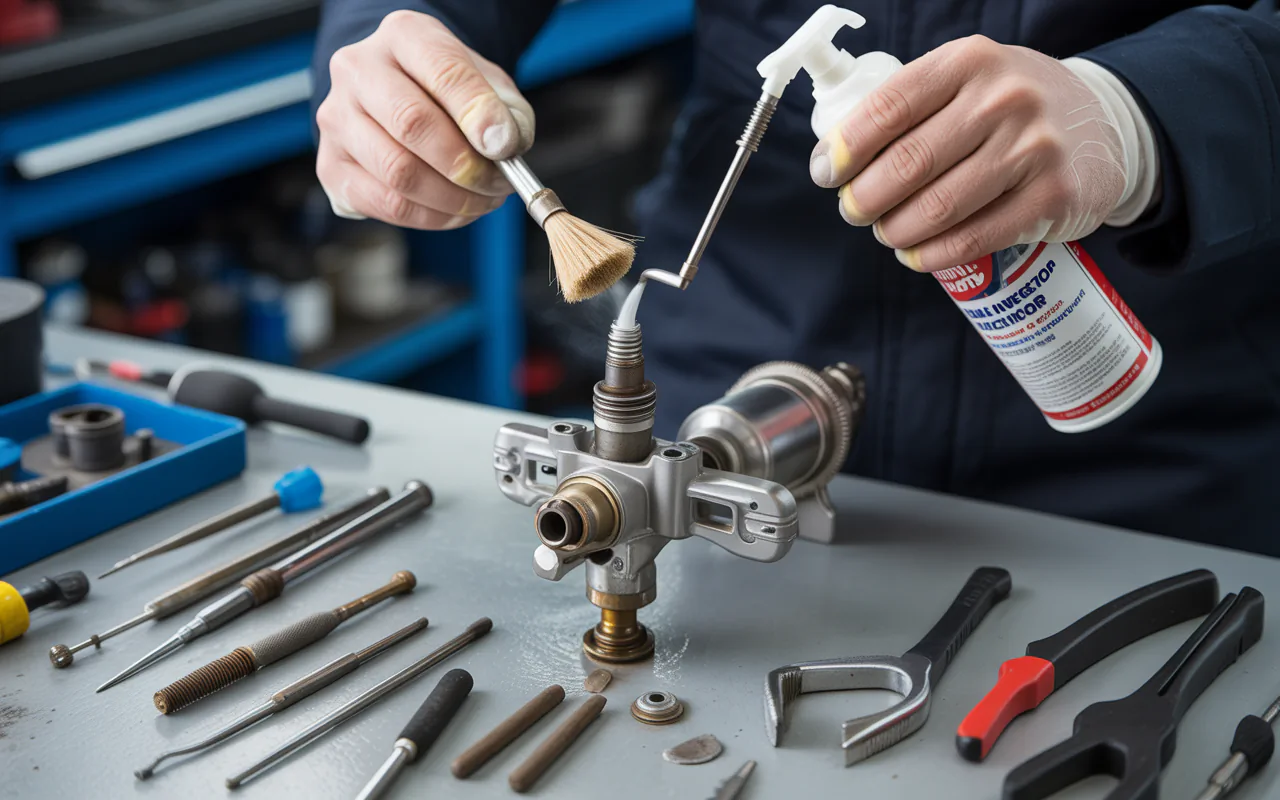
Want to clean fuel injectors yourself? It is easy. Use a cleaning kit or spray with simple steps. Save money and make your engine run better at home.
Your car feels slow. It uses more gas than before. The engine shakes when you stop at a red light. These issues often point to one thing. Dirty fuel injectors. The good news is you do not need a mechanic for this job. You can clean fuel injectors yourself with basic tools and a little time. This guide shows you exactly how. No fancy garage needed. No expensive shop bills. Just clear steps that work.
I remember my first time cleaning injectors. I was nervous. I thought I might break something. But after watching a few videos and reading some guides, I tried it. It worked. My car ran like new again. That feeling of fixing your own car is great. Plus, you save 100 to 300 dollars each time. Let me show you how.
Why Clean Your Fuel Injectors?
Fuel injectors spray a fine mist of gas into your engine. This mist must be just right for the engine to burn fuel well. Over time, small bits of carbon, dirt, and varnish build up on the injector tips. This blocks the spray. Then your engine gets less fuel or the wrong spray pattern. That leads to many problems.
Cleaning the injectors fixes the spray. It removes the gunk. Your engine gets the right amount of fuel again. You will notice better gas mileage, smoother idle, and more power. A clean set of injectors also lowers harmful exhaust fumes. So it is good for your car and good for the air.
“Most driveability problems I see come from dirty fuel injectors. A simple cleaning solves 8 out of 10 cases.” — Mark Reynolds, ASE Certified Mechanic
Signs Your Injectors Need Cleaning
How do you know it is time to act? Look for these signs. They are easy to spot.
| Sign | What You Feel |
|---|---|
| Rough idle | The car shakes when stopped but parked. |
| Hard starting | You crank the engine longer than normal. |
| Poor acceleration | The car feels weak when you press the gas. |
| Lower MPG | You fill up more often than before. |
| Check engine light | Codes like P0171 or P0300 appear. |
| Fuel smell | You notice gas odor near the engine. |
If you see two or more of these signs, your injectors likely need cleaning. Do not wait. Dirty injectors can lead to bigger engine problems later.
Safety First: What You Need
Before you clean fuel injectors yourself, get the right gear. Safety is the most important step. Fuel is flammable. You need to work in a safe way.
Tools and supplies:
- Fuel injector cleaning kit (about 40 to 80 dollars)
- Cleaning solution made for injectors
- Basic hand tools (wrenches, screwdrivers)
- Safety glasses and gloves
- Rags or shop towels
- A fire extinguisher (just in case)
Where do you buy these items? Any auto parts store sells them. Online shops like Amazon also have good kits. Read reviews before you buy. Look for a kit that includes adapters for your car model.
Safety rules to follow:
- Work outside or in a well aired garage.
- No smoking or open flames near the car.
- Disconnect the battery before you start.
- Relieve fuel pressure first (many cars have a valve on the fuel rail).
- Keep a fire extinguisher close.
“I tell all my DIY customers the same thing. Relieve fuel pressure or you will get a gasoline shower. It is not fun.” — Lisa Wong, Auto Instructor
Method 1: Using a Fuel Injector Cleaning Kit
This is the best way to clean fuel injectors yourself without removing them from the engine. The kit connects to your fuel system. It runs cleaner through the injectors while the engine runs. Here is how.
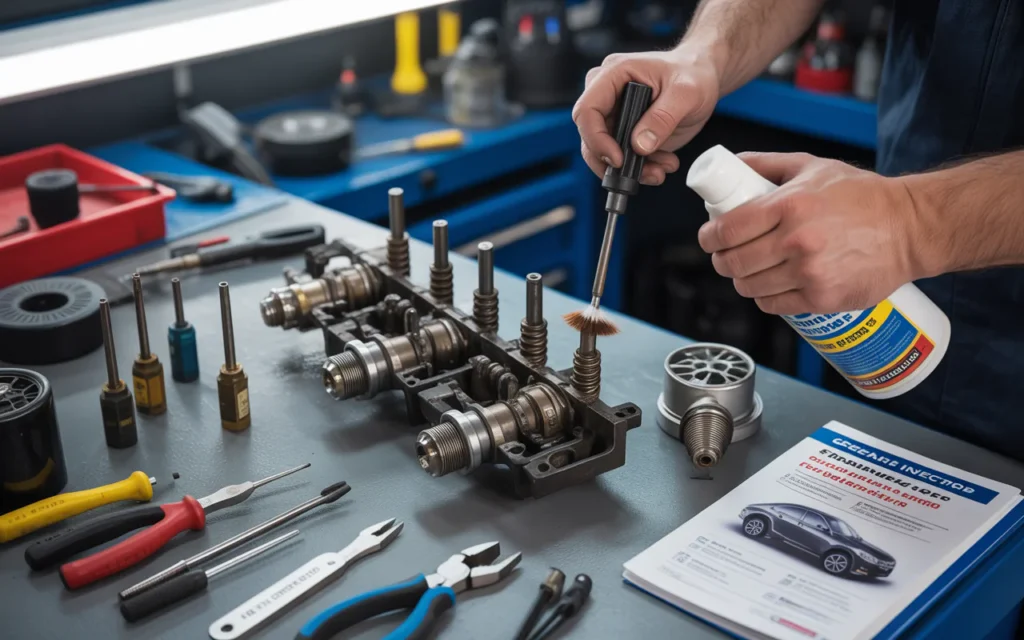
Step 1: Get the Right Kit
Buy a kit that matches your car. Most kits work with many cars. They include a canister, a hose, and adapters. Some kits use shop air. Others use the car’s own fuel pump. Read the instructions that come with your kit.
Step 2: Find the Fuel Rail
The fuel rail is a metal pipe that sits on top of your engine. It feeds gas to each injector. You need to disconnect the car’s fuel line from this rail. Then connect the cleaning kit’s hose to the rail.
Step 3: Add Cleaner to the Kit
Pour the injector cleaner into the kit’s canister. Most kits need about 16 to 20 ounces. Screw the lid on tight. Attach the air hose if your kit uses shop air. Set the air pressure to what the kit says (usually 40 to 60 PSI).
Step 4: Run the Engine
Start your car. Let it idle. Then open the valve on the cleaning kit. The engine will now run on the cleaner instead of gas from the tank. Let it run until the canister is empty. This takes about 15 to 20 minutes.
Step 5: Reconnect Everything
Turn off the engine. Disconnect the cleaning kit. Reconnect the car’s original fuel line. Check for leaks. Start the car again. Let it idle for a few minutes. Then take it for a short drive.
How well does this work? Very well for light to medium buildup. You will feel a difference right away. The idle will smooth out. Acceleration will feel sharper.
Method 2: The Spray Method (Quick and Easy)
This method is simpler. You do not need a full kit. You just buy a spray can of injector cleaner that hooks to the fuel rail. It costs less than 20 dollars. It takes about 30 minutes.
What You Need
- Aerosol fuel injector cleaner (brands like Gumout or CRC)
- Adapter hose (often comes with the can)
- Basic hand tools
Steps to Follow
- Relieve fuel pressure. Find the fuel pump fuse or relay. Pull it out. Start the car. It will run for a few seconds then die. This removes pressure from the lines.
- Disconnect the fuel line from the fuel rail. Attach the spray can’s adapter to the rail.
- Shake the can well. Screw it onto the adapter. Turn the can upside down so the cleaner flows into the rail.
- Start the engine. It may take a few tries. The engine will run on the cleaner spray. Let it idle for 10 to 15 minutes.
- Stop the engine. Remove the can and adapter. Reconnect the original fuel line. Put the fuel pump fuse back. Start the car to check for leaks.
This method works fast. It is good for regular maintenance every 10,000 to 15,000 miles. But for very dirty injectors, use the kit method instead.
Method 3: Remove and Clean (For Heavy Buildup)
Sometimes injectors are too gunked up to clean while on the car. You need to take them out. This is more work. But it gives the best results. You can clean fuel injectors yourself with a bench cleaning setup.
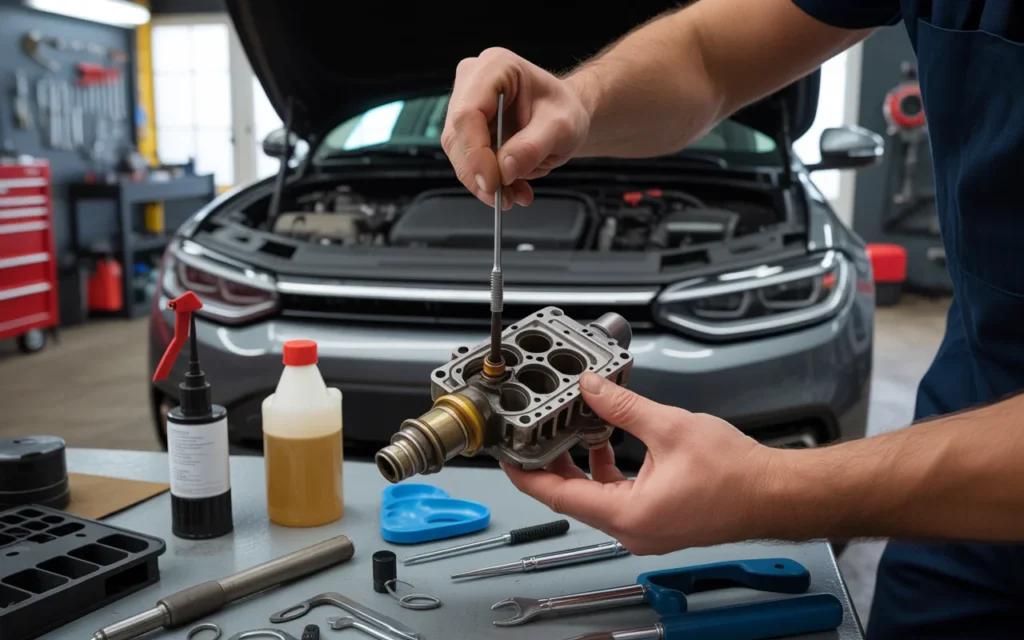
When to Use This Method
- The car runs very rough or stalls.
- You tried the kit method with no improvement.
- The injectors have over 100,000 miles without cleaning.
- One cylinder is misfiring (you can test with a multimeter).
Step by Step Removal
Step 1: Prepare the car. Disconnect the battery. Relieve fuel pressure. Remove any covers on top of the engine.
Step 2: Take off the fuel rail. Unbolt the fuel rail from the intake manifold. Carefully pull it up. The injectors will come with the rail. Some fuel may spill. Use rags.
Step 3: Remove each injector. Pull the clip that holds the injector to the rail. Then wiggle the injector out. Be gentle. Do not scratch the tip.
Step 4: Clean the outside. Use a soft brush and carb cleaner to wipe dirt off the injector body. Do not spray into the top or bottom holes yet.
Step 5: Use a bench cleaning tool. You can buy a small ultrasonic cleaner for injectors for about 40 dollars. Or use a 9-volt battery and a spray can with a special adapter. The battery opens the injector. The spray flushes out the dirt from inside.
Step 6: Check the spray pattern. Pulse the injector with the battery. Watch the spray. It should be a fine cone shape. If it drips or sprays uneven, clean again.
Step 7: Replace O-rings. Always put new O-rings on each injector. Old ones leak. A leak causes a fire hazard. O-rings cost a few dollars at any parts store.
Step 8: Reinstall. Put the injectors back in the rail. Push the rail onto the engine. Bolt it down. Reconnect everything. Check for leaks.
This method takes 2 to 3 hours for a first timer. But it is thorough. Your injectors will be like new.
“Taking injectors out sounds scary, but it is just nuts and bolts. The hardest part is not losing those tiny clips. Work over a clean table.” — Tom Harris, DIY Car Blogger
Which Method Is Best for You?
The table below helps you choose.
| Your Skill Level | Best Method | Time Needed | Cost |
|---|---|---|---|
| Beginner | Spray method | 30 minutes | $15-20 |
| Intermediate | Kit method | 1 hour | $40-80 |
| Advanced | Remove and clean | 2-3 hours | $60-120 (with tool) |
If you have never worked on a car before, start with the spray method. It is safe and easy. If you feel handy with tools, buy a kit. That gives better results. Only remove injectors if you are confident and have a free weekend.
Tips to Keep Injectors Clean Longer
Once you clean fuel injectors yourself, you want them to stay clean. Follow these simple habits.
Use Top Tier Gas
Not all gas is the same. Top Tier brands add extra detergents. These detergents clean your injectors as you drive. Look for the Top Tier logo at the pump. Brands like Chevron, Shell, Exxon, and Costco sell it. It costs a few cents more per gallon. That small cost saves you from future cleanings.
Add a Bottle of Cleaner Every Oil Change
Pour a bottle of fuel injector cleaner into your gas tank every 5,000 miles. Products like Techron or Red Line work well. They slowly dissolve carbon. This is cheap insurance. A bottle costs 8 to 12 dollars.
Change Your Fuel Filter
A dirty fuel filter lets dirt reach your injectors. Change the filter every 30,000 miles. This is an easy job. The filter is usually along the fuel line under the car or near the engine.
Do Not Let the Car Sit for Months
Old gas turns into varnish. Varnish sticks to injectors and clogs them. If you store your car for winter, add a fuel stabilizer. Run the engine for 10 minutes to circulate it. Then park the car.
Drive the Car Hard Sometimes
Gentle driving does not heat up the injectors enough to burn off light carbon. Once a week, get on a highway onramp and push the gas pedal hard. Go from 0 to 60 quickly. This high fuel flow cleans the tips naturally.
Frequently Asked Questions
How often should I clean fuel injectors?
Every 30,000 to 50,000 miles for most cars. If you use low quality gas, do it every 20,000 miles. Watch for the signs we listed. Clean when you notice rough idle or lower MPG.
Can I just add a bottle of cleaner to the gas tank?
That helps prevent buildup. But it cannot remove heavy clogs. Think of it like brushing your teeth. Daily brushing prevents cavities. But once you have a cavity, you need a dentist. Tank cleaners are your toothbrush. A direct cleaning is the dentist.
Is it safe to clean fuel injectors yourself?
Yes, if you follow safety steps. Work outside. Disconnect the battery. Relieve fuel pressure. Wear glasses. Keep a fire extinguisher near. Thousands of people do this every weekend without any issues.
What happens if I do not clean them?
Dirty injectors cause many problems. Your engine will idle rough. You will use more gas. The car may fail an emissions test. Over time, unburnt fuel can wash oil off cylinder walls. That damages piston rings. A simple 40 dollar cleaning prevents a 2,000 dollar engine repair.
Do diesel injectors need a different method?
Yes. Diesel fuel pressure is much higher. The cleaning tools are different. For a diesel car, it is safer to take the injectors to a shop. They have special machines. Do not use gas injector cleaners in a diesel.
How do I know if an injector is bad versus just dirty?
A bad injector has an electrical or mechanical failure. You can test resistance with a multimeter. A good injector shows 12 to 16 ohms. If it shows open (infinite) or zero, it is bad and needs replacement. Also, a bad injector may leak fuel when off. That causes long cranking. If cleaning does not fix it, replace it.
What tools do I already need at home?
Basic socket set, screwdrivers, pliers, and a rag. The cleaning kit includes special adapters. You might also need a fuel line disconnect tool. That costs 10 dollars. Check your car model online to see if you need one.
Conclusion
You now know three ways to clean fuel injectors yourself. Start with the easiest method. The spray can method works for most people. It is cheap and fast. If you want deeper cleaning, buy a kit that hooks to the fuel rail. That method cleans without removing parts. For the worst clogs, take injectors out and bench clean them.
Do not let dirty injectors ruin your driving experience. The job is not hard. You do not need a fancy garage or years of training. You just need 30 minutes, a few basic tools, and the confidence to try. I have done this on four different cars. Each time, the car ran smoother and used less gas. My neighbor saved 200 dollars by cleaning his own injectors instead of paying a shop. You can do the same.
Remember the safety steps. Work in fresh air. Keep a fire extinguisher close. Take your time. Watch a YouTube video for your specific car model if you get stuck. The first time might take two hours. The second time takes 45 minutes. By the third time, you will do it with your eyes closed.
Your engine will thank you. Your wallet will thank you. And you will feel proud every time you turn the key and hear that smooth idle. Now go get that cleaning kit and get to work. You have got this.
Related posts
 Best Wire Crimping Tool for Automotive Wiring in 2026
Find the best wire crimping tool for automotive wiring. We compare five top-rated hand tools to help you choose the right fit for your vehicle projects.…
 Best Budget Automotive Tools for 2026 DIY Maintenance
Discover the best budget automotive tools for 2026. We compare essential diagnostic scanners, trim kits, and pliers to help you save on car repairs. Maintaining your…
 Best Automotive Work Light Options for 2026
Find the best automotive work light for your garage or roadside repairs. We compare top-rated hands-free, magnetic, and heavy-duty lighting solutions for 2026. Finding the best…