
Is Satin Difficult to Care For? Real Maintenance Rules for Your Fabrics
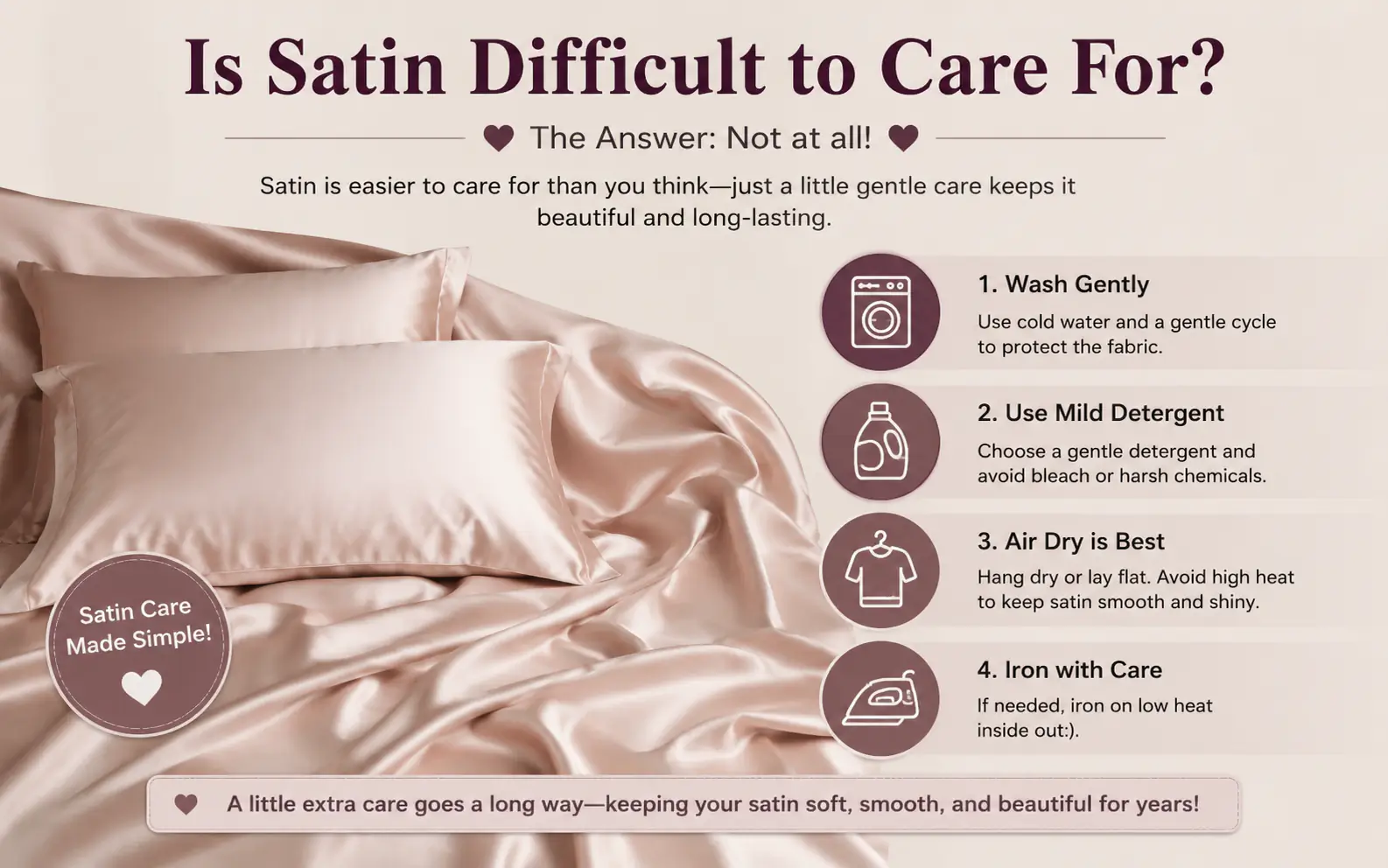
The short answer is: it depends entirely on what the fabric is made of. Because satin refers to the way a fabric is woven rather than the raw material itself, its care difficulty is determined by the underlying fiber. If your satin sheets, pillowcases, or pajamas are made of synthetic polyester, they are surprisingly easy to maintain. If they are made of pure silk, they require a gentle hand and specific washing steps to prevent damage.
To keep your satin looking smooth and glossy, you do not need a professional laundry service. By understanding the difference between synthetic and natural fibers, using the right water temperature, and avoiding high heat, you can easily maintain your satin items at home without losing their signature luster.
Direct answer to whether satin
- Polyester satin is highly durable and machine-washable, making it very easy to care for.
- Silk satin is delicate and usually requires hand-washing or professional dry cleaning.
- Always wash satin inside out and use a mesh laundry bag to prevent snags.
- Never use high heat, bleach, or fabric softeners on satin fabrics.
- Avoid spraying water on satin while ironing, as it causes permanent water spots.
| Topic | When it helps | What to keep in mind |
|---|---|---|
| Polyester Satin | Everyday bedding, pillowcases, and casual wear. | Can trap heat and is prone to static cling. |
| Silk Satin | High-end sleepwear, luxury sheets, and formal wear. | Easily ruined by harsh detergents, hot water, and direct sunlight. |
| Acetate or Rayon Satin | Linings of jackets, formal gowns, and drapery. | Extremely prone to water spotting and shrinkage. |
Focus strictly on washing drying
Polyester Satin. Synthetic Polyester Satin
Is Satin Difficult to Care For. The most common and affordable type of satin. It is highly durable, resists wrinkling, and can safely go into a standard washing machine on a gentle cycle.
- Everyday bedding, pillowcases, and casual wear.
- Can trap heat and is prone to static cling.
- Look at the care label; if it says 100% polyester, you can wash it at home with minimal stress.
- Care Difficulty – Low
- Washing Method – Machine wash cold
- Durability – High
Silk Satin. Natural Silk Satin
A luxurious, breathable fabric made from natural silk fibers. It is highly delicate, sensitive to temperature changes, and easily damaged by rough friction.
- High-end sleepwear, luxury sheets, and formal wear.
- Easily ruined by harsh detergents, hot water, and direct sunlight.
- Hand wash in cold water with a pH-neutral detergent, or take it to a professional dry cleaner.
- Care Difficulty – High
- Washing Method – Hand wash or dry clean
- Durability – Delicate
Acetate or Rayon Satin. Semi-Synthetic Satin
Made from plant-based cellulose fibers. This type of satin has a beautiful drape but loses its strength when wet, making it prone to shrinking or stretching out of shape.
- Linings of jackets, formal gowns, and drapery.
- Extremely prone to water spotting and shrinkage.
- Dry cleaning is almost always recommended for acetate blends to preserve the garment’s structure.
- Care Difficulty – Medium to High
- Washing Method – Dry clean preferred
- Durability – Moderate
The Fiber Factor: Polyester vs. Silk Satin
Before you begin cleaning, you must check the fabric content label. Because satin is a weaving technique that creates a smooth, lustrous surface on one side and a dull matte finish on the other, it can be woven from almost any yarn. The fiber content dictates how the fabric reacts to water, heat, and detergent.
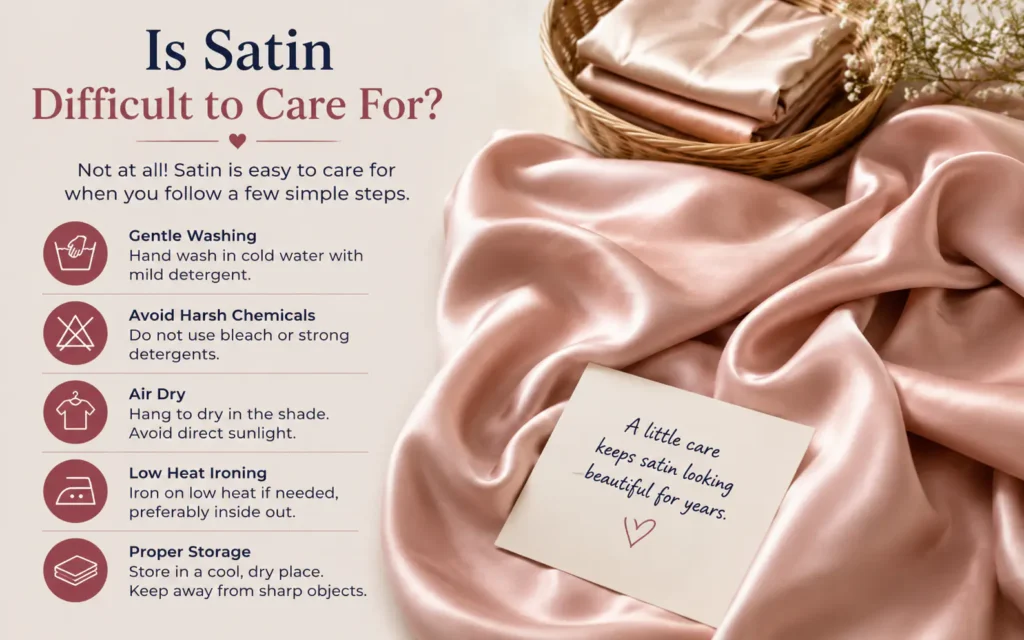
Synthetic satin is incredibly resilient. It handles regular agitation well and does not degrade easily when wet. Natural silk satin, however, is made of protein fibers that weaken in water, meaning rough handling can permanently distort the weave and ruin the smooth texture.
Checking the small white care tag on a satin pillowcase to confirm if it is 100% polyester before tossing it into the washing machine.
Assuming all satin is dry-clean-only, which leads to unnecessary spending on professional cleaning for basic polyester items.
- Polyester satin resists shrinking and stretching.
- Silk satin is highly breathable but sensitive to chemicals.
- Acetate satin blends offer great drape but poor wet strength.
| Satin Type | Washing Method | Drying Method | Ironing Safety |
|---|---|---|---|
| Polyester | Machine wash cold (gentle) | Tumble dry low or air dry | Low heat, inside out |
| Silk | Hand wash cold | Air dry flat, avoid sun | Very low heat, press cloth |
| Acetate | Dry clean recommended | Air dry flat | Cool iron only, no steam |
How to Wash Satin Safely
If your care label permits machine washing, always opt for the gentle or delicate cycle. Use cold water to protect the fibers and preserve the fabric’s natural sheen. Hot water can shrink satin and break down synthetic fibers over time.
For hand-washing delicate silk or acetate satin, fill a clean basin with cold water and add a few drops of mild, pH-neutral liquid detergent. Gently submerge the item and swirl it through the soapy water. Avoid scrubbing or rubbing the fabric against itself, as this causes pilling.
Placing a delicate satin camisole inside a zippered mesh laundry bag to keep it from wrapping around the washing machine agitator.
Washing satin garments alongside heavy items like denim jeans, metal zippers, or velcro, which will snag the delicate satin threads.
- Always turn satin garments inside out before washing to protect the shiny outer surface.
- Use a mild liquid detergent formulated for delicates; avoid powder detergents which can be abrasive.
- Never use chlorine bleach, which eats away at natural silk fibers and discolors synthetics.
- Rinse thoroughly in cold water until all soap residue is gone.
Drying and Ironing Satin Without Ruining the Shine
Heat is the ultimate enemy of satin. High temperatures in a clothes dryer can melt polyester fibers, shrink silk, and dull the reflective surface that makes satin so appealing. Air drying is always the safest method for any type of satin.
If you must iron your satin, do so on the lowest heat setting and always iron on the dull, matte underside of the fabric. To prevent the iron from leaving shiny marks or scorch lines, place a thin cotton pressing cloth between the iron and the satin.
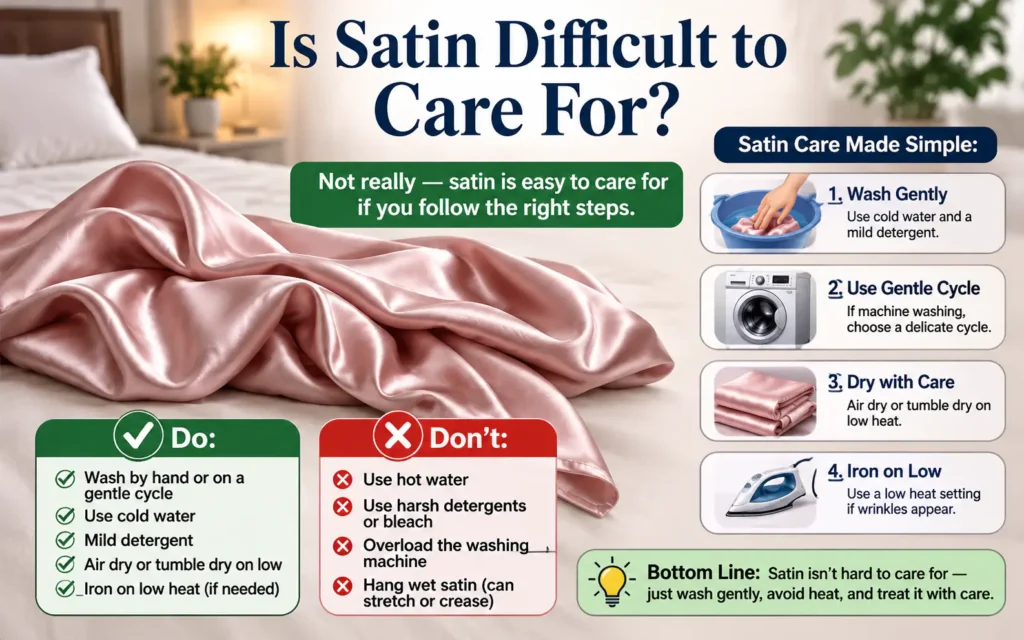
Laying a wet satin pillowcase flat on a clean, dry towel, rolling the towel up gently to absorb excess water, and then laying it flat to finish drying.
Wringing out wet satin like a sponge, which twists and breaks the delicate woven threads, leaving permanent wrinkles.
- Never wring or twist satin; press the water out gently instead.
- Do not use the steam setting on your iron, as water droplets can leave permanent water spots.
- Keep satin out of direct sunlight while air drying, as UV rays can fade colors and weaken fibers.
- Hang garments on smooth padded hangers to prevent shoulder bumps and snags.
FAQs
What are the downsides of satin fabric?
Satin is prone to snagging on rough skin, jewelry, or sharp objects due to its long floating threads. Additionally, synthetic polyester satin can trap body heat and moisture, making it less breathable than natural cotton or pure silk.
Is satin ruined if it gets wet?
No, but uneven wetting can cause temporary or permanent water spots, especially on silk or acetate satin. To prevent this, always submerge the entire item when washing rather than spot-cleaning with water, and avoid spraying water while ironing.
Can you put satin in the dryer?
Polyester satin can occasionally handle a tumble dryer on the lowest heat setting, but air drying is highly recommended. Never put silk or acetate satin in the dryer, as the high heat and tumbling action will shrink and ruin the fabric.
How do you get oil stains out of satin?
Sprinkle a small amount of cornstarch or baby powder onto the oil stain and let it sit for several hours to absorb the oil. Gently brush it away, then apply a drop of mild dish soap to the area and wash the item in cold water according to its care label.
Conclusion
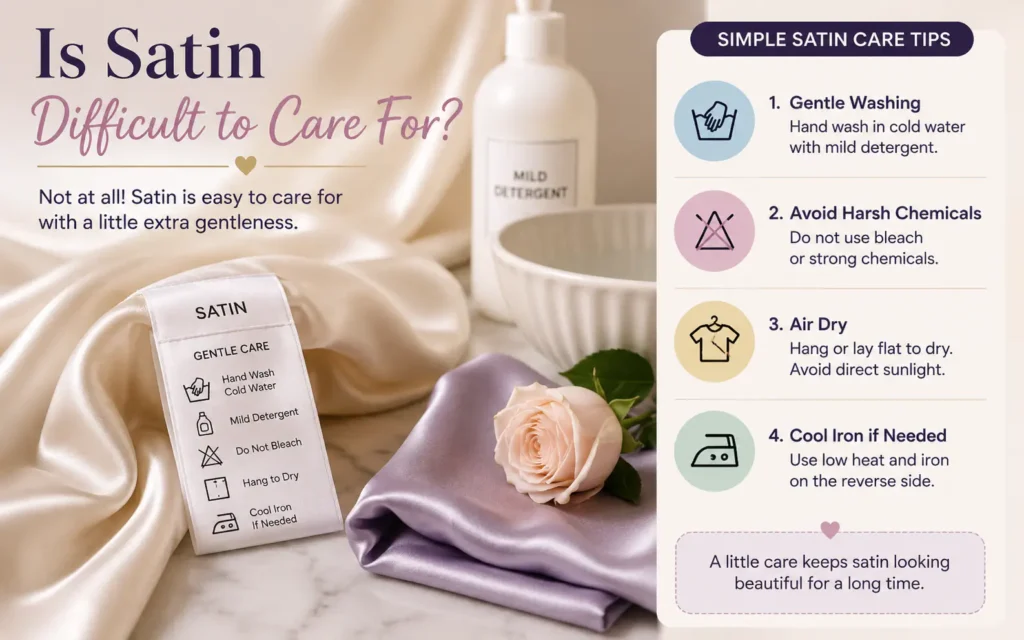
Caring for satin does not have to be a stressful chore. Once you identify whether your item is made of durable polyester or delicate natural silk, you can tailor your cleaning routine accordingly. By keeping heat low, avoiding harsh chemicals, and protecting the fabric from friction, your satin will maintain its beautiful, glossy finish for years to come.
When in doubt, always default to cold water, a gentle liquid soap, and air drying. Taking these simple precautions ensures your favorite satin sheets, pillowcases, and garments remain soft, smooth, and luxurious.
Related posts
 How to Strengthen Weak Nails: A Practical Guide to Daily Care
Learn how to strengthen weak nails with simple daily habits, protective care, and targeted hydration. Restore your natural nail strength today. Weak, peeling, or brittle nails…
 What Sounds Do Cats Dislike? 7 Noises That Stress Your Pet
Discover what sounds do cats dislike and why. Learn how to protect your cat’s sensitive hearing from stressful household noises and high-frequency hums. Cats dislike sounds…
 Restoring Faded Black Clothing: Practical Methods and Reality Checks
Can you restore faded black clothing? Learn the difference between temporary color revival and permanent redyeing, plus how to prevent future fading. You can restore the…