
Why Do Dogs Stare at Walls? Common Causes and When to Worry
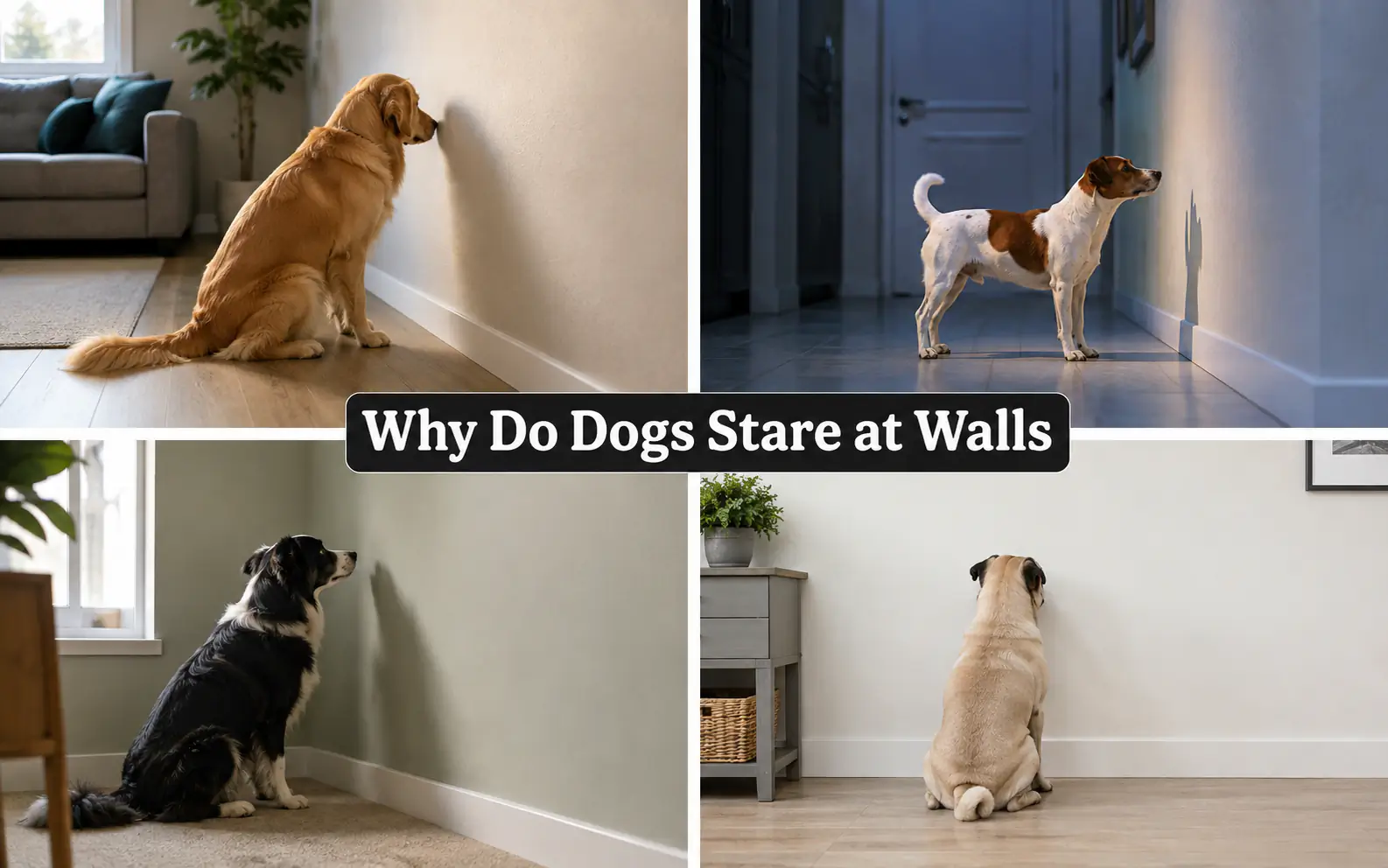
When you notice your dog staring blankly at a wall, it can be both puzzling and concerning. In many cases, the explanation is simple: your dog’s highly sensitive senses are picking up something you cannot perceive.
However, persistent wall-staring can also point to underlying medical or behavioral issues. In senior dogs, it is a common symptom of cognitive decline, similar to dementia in humans.
| Topic | When it helps | What to keep in mind |
|---|---|---|
| Sensory Detection | Active dogs of any age who focus on a specific spot, tilt their ears, or sniff the baseboards. | If the staring is accompanied by whining, scratching at the wall, or sudden barking, there is a high likelihood of pests. |
| Cognitive Decline | Senior dogs, typically ages nine and older. | Look for other signs of cognitive decline, such as pacing at night, house-soiling accidents, or changes in sleep patterns. |
| Neurological Issues | Dogs of any age showing sudden, repetitive episodes of unresponsiveness. | The dog will usually not respond to their name or touch during the episode, and may seem dazed afterward. |
| Behavioral Needs | Under-stimulated dogs or breeds that require high levels of mental and physical exercise. | Ensure your dog is not using this behavior as a coping mechanism for separation anxiety. |
Sensory vs. Medical: How to Tell the Difference
Distinguishing between a dog that is simply curious and one that is experiencing a medical issue comes down to responsiveness and body language. When a dog is tracking a sound or smell, their body is usually tense, alert, and dynamic.
In contrast, medical staring often looks vacant or glassy. The dog may seem ‘locked in’ and fail to acknowledge your voice, touch, or movements.
Imagine your dog staring at a spot on the kitchen wall.
Do not assume a senior dog staring at a wall is just ‘getting old’ and ignore it; early intervention for cognitive issues can greatly improve their quality of life.
- Sensory staring is usually active: ears move, tail may wag, dog sniffs the area.
- Medical staring is typically passive: eyes appear glazed, posture is stiff, dog is unresponsive.
- Sensory focus changes as the target moves; medical staring often remains fixed on one blank.
- Behavioral staring often stops when you leave the room or ignore the dog.
| Feature | Sensory Tracking | Medical / Neurological Issue |
|---|---|---|
| Responsiveness. | Breaks gaze immediately when called or offered food. | Difficult or impossible to distract during the episode. |
| Body Language. | Alert, ears forward, sniffing, head tilting. | Glassy eyes, vacant expression, stiff or droopy posture. |
| Associated Signs. | May scratch at the wall or whine. | May pace, wander aimlessly, or show confusion afterward. |
| Age Group. | Common in dogs of all ages. | More common in senior dogs (CCD) or specific breeds (seizures). |
The Critical Warning Sign: Head Pressing vs. Staring
There is a vital distinction between a dog staring at a wall and a dog pressing its head against a wall. Head pressing is the compulsive act of pressing the head against a wall, corner, or other hard surface for no apparent reason.
Head pressing can be caused by toxic exposure (such as lead poisoning), liver disease (hepatic encephalopathy), brain tumors, stroke, or severe head trauma. If you observe your dog actively pressing their forehead against a flat surface, do not wait to see if it stops.
Never assume head pressing is a funny quirk or a sign of a guilty dog ‘taking a timeout.’ It is a neurological emergency.
A dog standing with its forehead firmly pushed against the living room wall, refusing to move and appearing lethargic, is exhibiting head pressing.
- Head pressing involves physical contact with the wall; staring does not.
- It is often accompanied by compulsive pacing, circling, or changes in vision.
- The dog may appear disoriented, weak, or exhibit abnormal vocalizations.
- This symptom requires immediate diagnostic testing, including blood work and potentially brain imaging.
What to Do: A Step-by-Step Guide for Owners
If you suspect your dog’s wall-staring is due to a medical issue, your primary goal should be gathering clear information for your veterinarian. Because these episodes can be intermittent, your vet will rely heavily on your observations to form a diagnostic plan.

Start by keeping a detailed log of the behavior. Note when the staring occurs, how long it lasts, what the dog was doing right before it started, and how they behave immediately afterward.
When your dog begins staring, pull out your phone and record a horizontal video that captures their face, eyes, and body posture.
Do not try to physically shake or startle a dog out of a suspected seizure, as this can cause stress or accidental biting.
- Record a video of the episode to show your veterinarian exactly what the behavior looks.
- Test your dog’s responsiveness during the episode by calling their name or offering a treat.
- Check the environment for potential triggers, such as new household appliances making high-frequency hums.
- Schedule a comprehensive veterinary exam, including blood tests to rule out metabolic issues like liver.
Safety checks
- Dogs have superior hearing and smell, often detecting pests, insects, or pipes inside the wall.
- Staring blankly can be an early sign of Canine Cognitive Dysfunction (dog dementia) in aging pets.
- Focal seizures can cause a dog to temporarily freeze and stare into space.
- Head pressing-where a dog actively pushes its head against a flat surface-is a medical emergency.
Sensory reasons (hearing pests) behavioral
Sensory Detection. Detecting Pests, Moisture, or Sounds Inside the Wall
Dogs have an extraordinary sense of hearing and smell. They can easily detect the tiny scratching sounds of mice, termites, or squirrels nesting inside your walls, or even the faint vibration of water pipes.
- Active dogs of any age who focus on a specific spot, tilt their ears, or sniff the baseboards.
- If the staring is accompanied by whining, scratching at the wall, or sudden barking, there is a high likelihood of pests.
- Listen closely to the wall yourself or check for signs of pests in the home before assuming it is a medical issue.
- Primary Trigger – Insects, rodents, or plumbing.
- Dog Body Language – Alert, ears forward, sniffing.
Cognitive Decline. Canine Cognitive Dysfunction (CCD)
Often referred to as dog dementia, Canine Cognitive Dysfunction affects senior dogs and alters their spatial awareness, memory, and behavior. A dog with CCD may wander into a corner or face a wall and seem to forget how to turn around, or simply stare into space due to confusion.
- Senior dogs, typically ages nine and older.
- Look for other signs of cognitive decline, such as pacing at night, house-soiling accidents, or changes in sleep patterns.
- Consult your veterinarian to discuss supportive therapies, dietary changes, or medications that can slow the progression of CCD.
- Primary Trigger – Brain aging and cognitive decline.
- Dog Body Language – Confused, vacant expression, pacing.
Neurological Issues. Focal Seizures
Unlike grand mal seizures that cause convulsions, focal seizures (or partial seizures) affect only a specific part of the brain. During a focal seizure, a dog may remain standing but appear completely unresponsive, staring blankly at a wall or into space for a few seconds or minutes.
- Dogs of any age showing sudden, repetitive episodes of unresponsiveness.
- The dog will usually not respond to their name or touch during the episode, and may seem dazed afterward.
- Try to gently call your dog or wave a treat in front of their face.
- Primary Trigger – Abnormal electrical activity in the brain.
- Dog Body Language – Glassy eyes, unresponsive, rigid posture.
Behavioral Needs. Boredom, Anxiety, or Attention-Seeking
Sometimes, dogs learn that unusual behaviors get a reaction from their owners. If your dog stared at a wall once and you rushed over to comfort them or offer treats, they may repeat the behavior to get your attention.
- Under-stimulated dogs or breeds that require high levels of mental and physical exercise.
- Ensure your dog is not using this behavior as a coping mechanism for separation anxiety.
- Increase daily exercise and introduce puzzle toys.
- Primary Trigger – Lack of stimulation or learned behavior.
- Dog Body Language – Relaxed, occasionally looking back at you.
FAQs
Why do dogs with dementia stare at walls?
Dogs with Canine Cognitive Dysfunction (CCD) experience physical changes in the brain similar to Alzheimer’s disease in humans. This leads to disorientation, memory loss, and spatial confusion.
Why do dogs stare at walls and bark?
If your dog is staring at the wall and barking, growling, or whining, they are almost certainly reacting to a sensory stimulus. They likely hear or smell pests (like mice, squirrels, or insects) nesting.
Why is my senior dog staring into space suddenly?
A sudden onset of staring into space in a senior dog should be evaluated by a vet. While it can be a gradual sign of cognitive decline, sudden changes can also indicate focal seizures.
Can vision loss cause a dog to stare at walls?
As dogs lose their sight due to cataracts, glaucoma, or retinal degeneration, they may stare at walls or into blank space. This is often because they are trying to navigate using their remaining peripheral.
How do vets diagnose the cause of wall staring?
Veterinarians typically start with a physical and neurological exam, followed by routine blood work and urinalysis to rule out systemic illnesses like liver disease or infections. If a neurological issue like seizures or a.

Conclusion
While a dog staring at a wall can sometimes be attributed to a passing insect or a curious sound, persistent or unresponsive staring should never be ignored. By paying close attention to your dog’s body language, age, and overall responsiveness, you can quickly determine whether.
If you notice any signs of disorientation, unresponsiveness, or the dangerous behavior of head pressing, seek professional veterinary care immediately. Keeping a detailed log and taking video recordings of these episodes will give your vet the tools they need to keep your companion healthy, comfortable.
Related posts
 How to Strengthen Weak Nails: A Practical Guide to Daily Care
Learn how to strengthen weak nails with simple daily habits, protective care, and targeted hydration. Restore your natural nail strength today. Weak, peeling, or brittle nails…
 What Sounds Do Cats Dislike? 7 Noises That Stress Your Pet
Discover what sounds do cats dislike and why. Learn how to protect your cat’s sensitive hearing from stressful household noises and high-frequency hums. Cats dislike sounds…
 Restoring Faded Black Clothing: Practical Methods and Reality Checks
Can you restore faded black clothing? Learn the difference between temporary color revival and permanent redyeing, plus how to prevent future fading. You can restore the…