
How to Strengthen Weak Nails: A Practical Guide to Daily Care
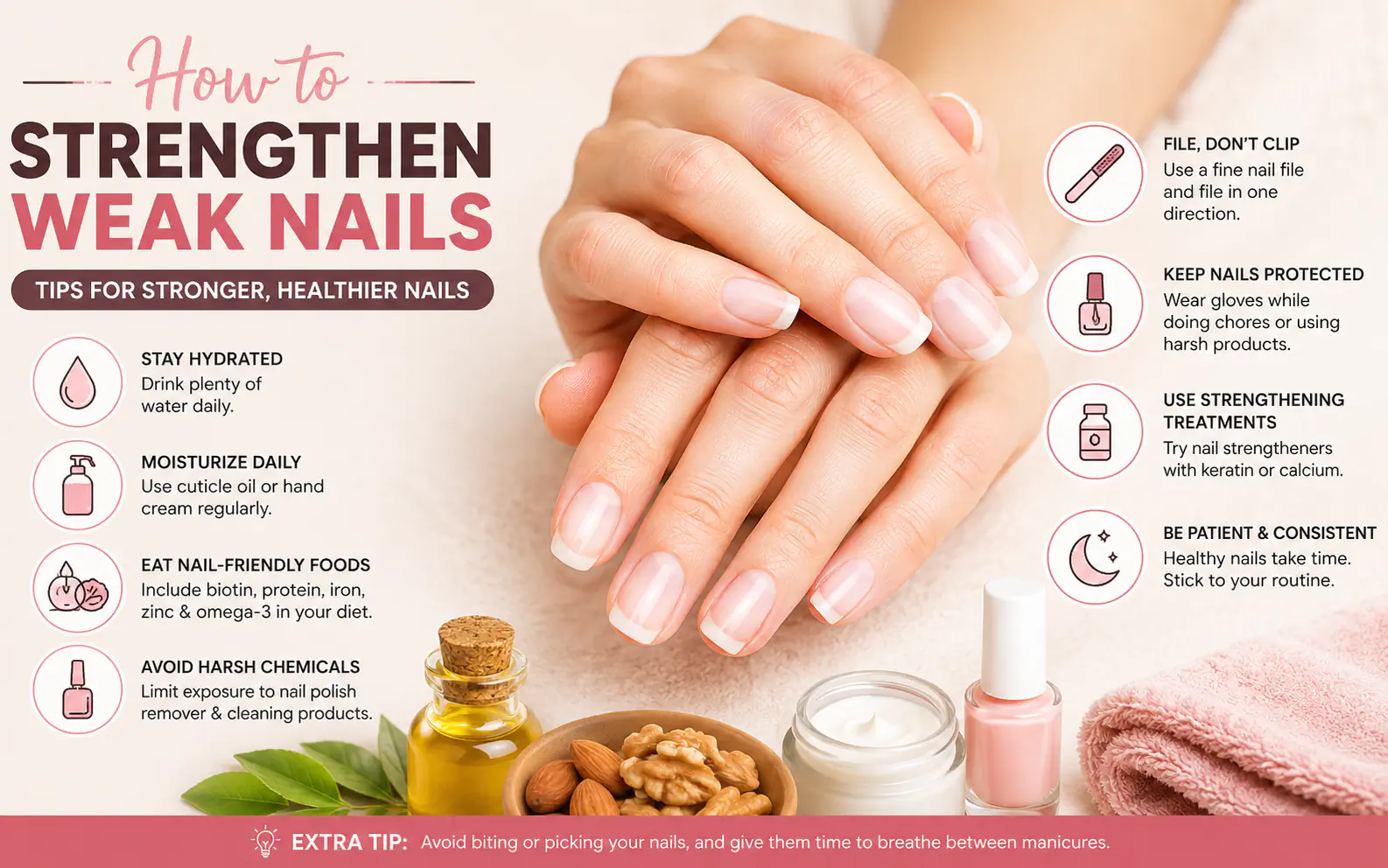
Weak, peeling, or brittle nails are incredibly common, but they are rarely a permanent condition. In most cases, nail weakness is caused by external factors like frequent exposure to water, harsh cleaning chemicals, or improper manicure removal. To strengthen weak nails, you must focus on two core principles: restoring moisture and protecting the nail plate from physical and chemical damage.
By adopting a gentle grooming routine and shielding your hands during daily tasks, you can significantly improve your nail strength. Because nails grow slowly, consistency is your most powerful tool. Expect to see noticeable improvements within a few weeks, with complete nail renewal taking roughly three to six months.
Hydration and cuticle oil benefits
- Moisture is the foundation of nail flexibility and strength.
- Water exposure is one of the most common causes of weak, peeling nails.
- Gentle grooming habits prevent micro-tears that lead to major splits.
- Patience is key, as fingernails take several months to fully grow out.
| Topic | When it helps | What to keep in mind |
|---|---|---|
| Step 1 | Dry, peeling, or splitting nails that break easily when bent. | Avoid oils with heavy synthetic fragrances if you have sensitive skin. |
| Step 2 | Anyone who washes dishes, cleans, or gardens regularly. | Ensure the inside of your gloves stays dry, as trapped moisture can also weaken nails. |
| Step 3 | Shaping thin, delicate nails without causing splits. | Glass files can break if dropped on hard surfaces, so store them in a protective case. |
| Step 4 | Nails that feel paper-thin or bendy after salon manicures. | Do not peel or pick off remaining gel polish, as this tears away healthy nail cells. |
Focus on natural nail care
Step 1. Apply Cuticle Oil Daily
Nails need a balance of moisture and oil to remain flexible. When nails lack oil, they become dry and snap easily under pressure. Applying a high-quality cuticle oil containing jojoba or sweet almond oil twice a day penetrates the nail plate and keeps the keratin layers bonded together.
- Dry, peeling, or splitting nails that break easily when bent.
- Avoid oils with heavy synthetic fragrances if you have sensitive skin.
- Keep a bottle of cuticle oil at your desk and another on your nightstand to make application a seamless part of your daily routine.
- Frequency – Twice daily
- Key Ingredient – Jojoba oil
- Primary Benefit – Flexibility
Step 2. Wear Gloves for Wet Work
Water is actually one of the worst enemies of weak nails. When your hands are submerged, your nails absorb water and expand. As they dry, they contract. This constant expansion and contraction weakens the bonds between nail cells, leading to peeling and splitting.
- Anyone who washes dishes, cleans, or gardens regularly.
- Ensure the inside of your gloves stays dry, as trapped moisture can also weaken nails.
- Choose lined rubber gloves to provide a comfortable barrier against hot water and harsh detergents.
- Frequency – Every time you clean
- Material – Lined rubber or latex
- Primary Benefit – Prevents peeling
Step 3. Switch to a Glass Nail File
Traditional emery boards and metal files create microscopic tears along the edge of the nail, which eventually turn into splits and snags. A high-quality glass or crystal file seals the keratin layers together as you file, leaving a perfectly smooth edge.
- Shaping thin, delicate nails without causing splits.
- Glass files can break if dropped on hard surfaces, so store them in a protective case.
- Always file in one direction rather than sawing back and forth to minimize friction and heat.
- Frequency – Once or twice weekly
- Tool Type – Glass or crystal
- Primary Benefit – Seals nail edges
Step 4. Take a Break from Gel and Acrylics
While gel and acrylic manicures make nails feel strong temporarily, the aggressive removal process often strips away the top layers of the natural nail. Taking a break for a few weeks allows your natural nail plate to recover and regrow without chemical stress.
- Nails that feel paper-thin or bendy after salon manicures.
- Do not peel or pick off remaining gel polish, as this tears away healthy nail cells.
- During your break, focus entirely on hydration and protective topcoats rather than color polish.
- Frequency – Every 6 to 8 weeks
- Duration – 2 to 4 weeks
- Primary Benefit – Allows recovery
Why Nails Lose Their Strength
Your fingernails are made of layers of a protective protein called keratin. Healthy nails are both hard and flexible, allowing them to withstand daily impacts without breaking. When the balance of moisture and oils within these keratin layers is disrupted, the nail plate becomes compromised.
Environmental factors are the most frequent culprits. Frequent handwashing, exposure to cleaning chemicals, and dry winter air strip the natural oils from your hands. Conversely, keeping your hands wet for prolonged periods can soften the nails excessively, making them highly susceptible to tearing.
If your nails peel at the tips, think about how often you wash dishes without gloves. The water swells the nail plate, and the soap strips away the natural lipids holding the layers together.
Do not assume your nails are weak solely due to a vitamin deficiency. External wear and tear is far more common.
- Frequent water exposure swells and weakens the nail structure.
- Harsh chemicals in household cleaners strip protective lipids.
- Physical trauma, like using your nails to scrape labels or open cans, causes micro-fractures.
- Acetone-based polish removers dry out the nail plate rapidly.
| Damaging Habit | Healthy Alternative | Impact on Nails |
|---|---|---|
| Washing dishes barehanded | Wearing lined rubber gloves | Prevents waterlogging and chemical stripping |
| Peeling off gel polish | Safe soaking or professional removal | Preserves the delicate top layers of keratin |
| Using metal or rough emery files | Using a fine-grit glass file | Prevents microscopic fraying at the tips |
| Using nails as tools to pry open items | Using actual tools or scissors | Eliminates physical stress and bending |
A Simple Weekly Maintenance Routine
Consistency is the secret to transforming weak nails. A simple weekly routine focused on gentle shaping and intense hydration will yield better results than occasional, expensive salon treatments. Keep your nails trimmed relatively short while they are recovering, as shorter nails are less likely to snag or bend.
When shaping your nails, aim for a rounded or squoval shape. Sharp corners tend to catch on fabric, leading to tears. Always file from the outer edge toward the center of the nail in smooth, fluid strokes rather than a sawing motion.
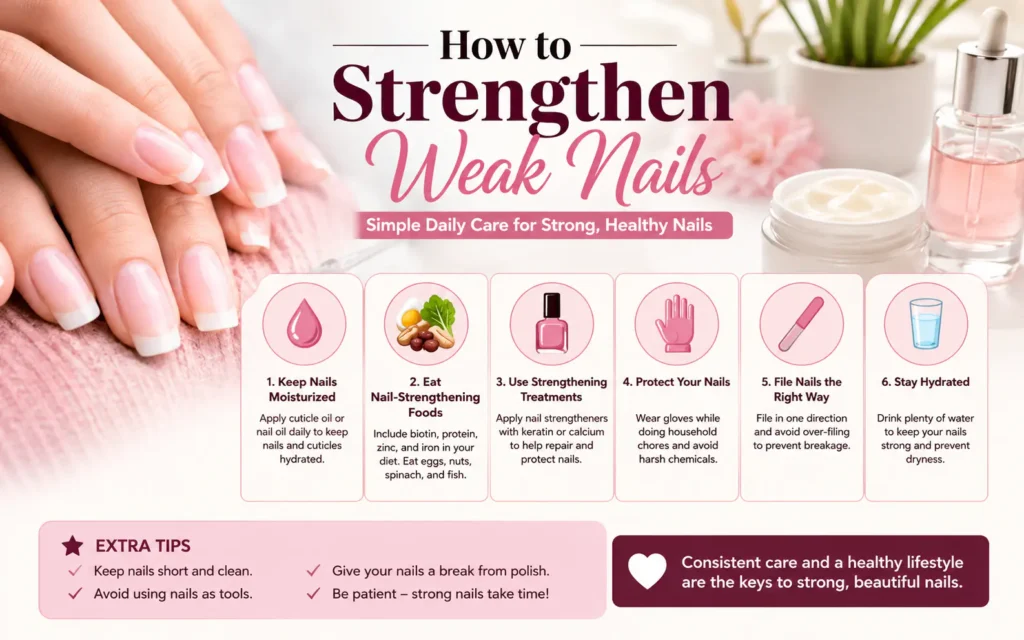
Set aside Sunday evening to trim your nails straight across, file the edges into a soft curve with a glass file, and apply a generous layer of thick hand cream.
Avoid cutting your cuticles. The cuticle is a natural seal that protects the nail matrix from infection. Instead, gently push them back after a shower.
- Trim nails regularly to prevent them from reaching a length where they easily bend.
- Gently push back cuticles using a soft washcloth or an orangewood stick.
- Apply a thick, emollient hand cream immediately after washing your hands.
- Massage oil into your cuticles and nail beds right before going to sleep.
Mistakes That Keep Your Nails Weak
Many people try to fix weak nails by applying layers of chemical nail hardeners. While these products can help temporarily, they often contain ingredients that cross-link the protein chains too tightly. This makes the nail extremely hard but completely inflexible. A healthy nail needs to bend slightly when bumped; otherwise, it simply snaps.
Another common mistake is ignoring the ingredients in your nail polish remover. Acetone is highly effective at removing polish, but it is incredibly drying. If you must use acetone, immediately wash your hands and apply a rich moisturizer to counteract the drying effects.
Peeling off a corner of chipped nail polish might feel satisfying, but it peels away the top layer of your nail plate, leaving a rough, thin spot that will eventually split.
Do not use nail hardeners indefinitely. Overuse can make nails too rigid, causing them to shatter rather than bend under pressure.
FAQs
What vitamin am I lacking if my nails are weak?
While severe nutritional deficiencies can affect your nails, most weak nails are caused by external wear and tear. However, some research suggests that a lack of biotin (a B vitamin) can contribute to brittle nails. If you suspect a dietary gap, focus on eating a balanced diet rich in protein, iron, and healthy fats before turning to supplements.
Can thin nails become thick again?
Yes, thin nails can regain their natural thickness and strength. Because the visible nail is made of dead cells, you cannot change the thickness of the existing nail plate. However, by protecting the nail matrix (where new nail cells are formed) and keeping the area hydrated, the new nail growing in will be healthier and stronger.
What is the strongest thing to put on your nails?
The most effective product for long-term strength is a high-quality cuticle oil containing jojoba oil. Jojoba oil has a molecular structure small enough to penetrate the nail plate, carrying moisture deep into the keratin layers. For temporary physical protection, a simple clear fortifying topcoat can shield weak nails from daily friction.
How long does it take to see results when strengthening nails?
Fingernails grow at an average rate of three millimeters per month. You will likely notice improved flexibility and less peeling within two to four weeks of consistent moisturizing and protection. To grow out a completely new, strong nail from base to tip, it typically takes about six months.
Conclusion
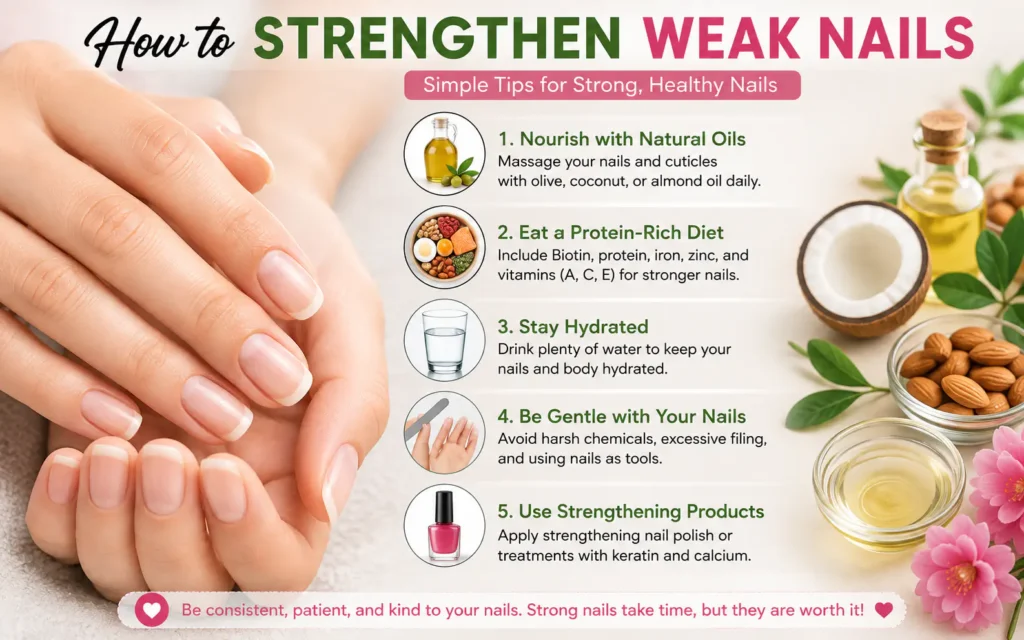
Strengthening weak nails does not require expensive salon treatments or complicated regimens. By focusing on consistent hydration and protecting your hands from excessive water and harsh chemicals, you give your nails the ideal environment to rebuild their natural strength.
Be patient with the process. As you replace damaging habits with gentle grooming techniques, the new nail growth will gradually emerge stronger, smoother, and much more resilient. Start with simple changes today, and your hands will thank you in the months to come.
Related posts
 What Sounds Do Cats Dislike? 7 Noises That Stress Your Pet
Discover what sounds do cats dislike and why. Learn how to protect your cat’s sensitive hearing from stressful household noises and high-frequency hums. Cats dislike sounds…
 Restoring Faded Black Clothing: Practical Methods and Reality Checks
Can you restore faded black clothing? Learn the difference between temporary color revival and permanent redyeing, plus how to prevent future fading. You can restore the…
 Can Dogs Understand Human Emotions? The Science Behind Your Pet’s Empathy
Discover can dogs understand human emotions through facial expressions, vocal tones, and scent. Learn how your mood directly shapes your dog’s behavior. Yes, dogs can understand…