
What Causes Nail Discoloration: Identifying Common Reasons
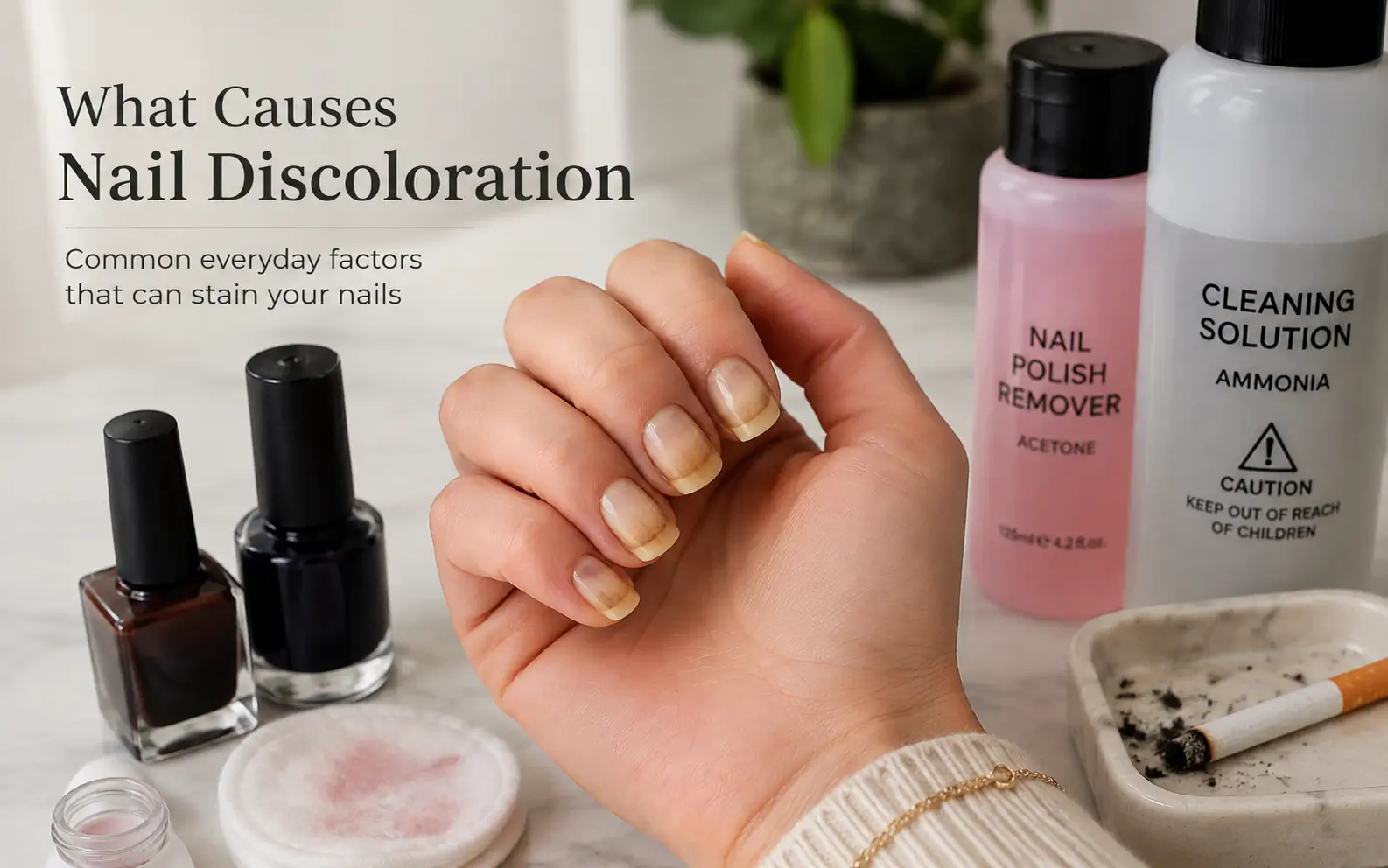
Nail discoloration, whether on your fingernails or toenails, can be a surprising and sometimes concerning change. It occurs when the natural color of the nail plate, nail bed, or surrounding skin changes, leading to shades of.
The causes behind these color shifts are diverse. Some are harmless, like a simple stain from nail polish or a minor injury.
| Topic | When it helps | What to keep in mind |
|---|---|---|
| Cause 1 | Identifying yellow, brown, or white, thickened, brittle nails, especially if accompanied by a foul odor. | Untreated fungal infections can worsen, become painful, and potentially spread to other nails or skin. |
| Cause 2 | Explaining sudden dark discoloration after a specific incident (e.g., dropping something on your toe, stubbing. | While most trauma-related discoloration is harmless and grows out with the nail, a dark streak. |
| Cause 3 | Identifying discoloration that is superficial, affects multiple nails, and is often linked to cosmetic habits. | Ensure the discoloration is truly superficial. |
| Cause 4 | Recognizing green or greenish-black discoloration, especially if accompanied by inflammation or tenderness. | Bacterial infections can be painful and may require antibiotics. |
| Cause 5 | Considering discoloration that appears after starting a new medication or undergoing specific medical treatments. | Never stop prescribed medication due to nail changes without consulting your doctor. |
| Cause 6 | Considering discoloration that is persistent, affects multiple nails, or is accompanied by other body symptoms. | Do not ignore persistent or unexplained nail discoloration, especially if it’s new, worsening, or accompanied. |
Decoding Nail Color Changes: What Different Hues Might Mean
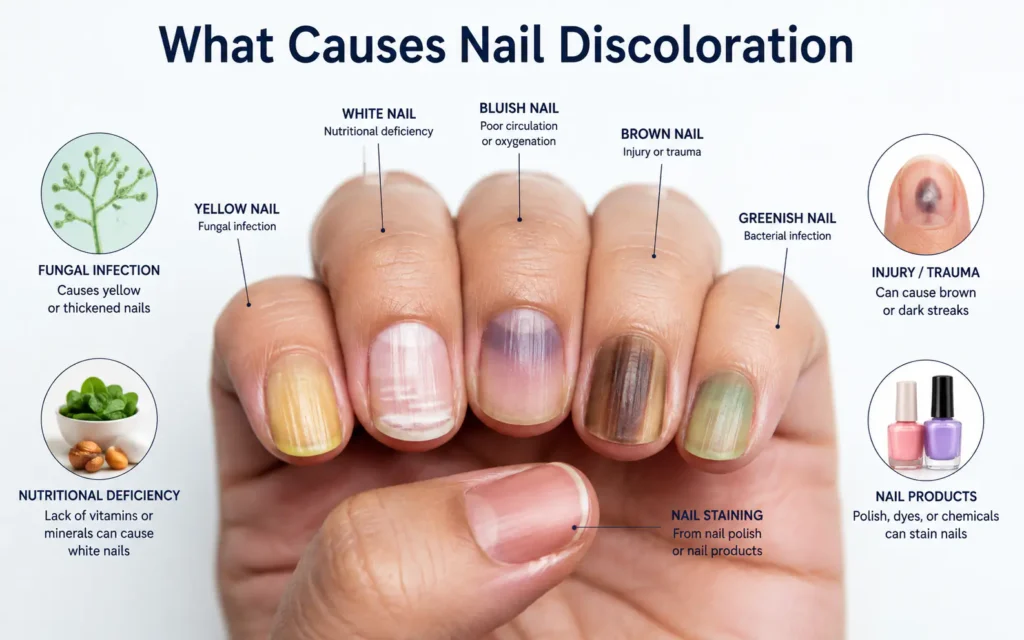
What Causes Nail Discoloration. The color your nails turn can often provide valuable clues about the underlying cause of discoloration. While not definitive, certain hues are more commonly associated with particular issues.
If your toenail is turning green, consider a bacterial infection, especially if it’s also swollen.
Don’t assume a specific color always means the same thing; context (e.g., recent injury, new medication) is crucial.
| Nail Color | Common Causes | Potential Concerns |
|---|---|---|
| Yellow. | Fungal infection, nail polish stain, smoking, aging, psoriasis, diabetes. | Persistent infection, underlying health issue. |
| Green. | Bacterial infection (Pseudomonas), fungal infection. | Spreading infection, pain, swelling. |
When to Seek Professional Advice for Discolored Nails
While many causes of nail discoloration are benign, some changes warrant a professional medical evaluation. Knowing when to consult a doctor or dermatologist is crucial for early diagnosis and effective treatment, especially for conditions that could impact your overall health.
Do not delay seeking medical attention for persistent, worsening, or painful discoloration, or for any dark streaks that are new.
If your nail discoloration is accompanied by pain, swelling, or pus, or if a dark streak appears without any injury.
- The discoloration is persistent and doesn’t improve over several weeks or months.
- You experience pain, swelling, redness, or pus around the nail.
Tips for Preventing Nail Discoloration
Preventing nail discoloration often comes down to good hygiene, proper nail care, and protecting your nails from trauma and harsh chemicals. Simple habits can go a long way in keeping your nails healthy and clear.
Always wear a base coat before applying dark nail polish to prevent staining, and keep your feet dry to deter.
Neglecting basic nail hygiene or ignoring early signs of infection can lead to more severe and persistent discoloration.
- Practice good nail hygiene: Keep nails clean and dry. Trim them regularly.
- Protect your nails: Wear gloves when doing dishes, gardening, or handling harsh.
Fungal infections (onychomycosis)
- Nail discoloration has many causes, from harmless external factors to serious health conditions.
- The specific color of your nail can offer clues about the underlying cause.
- Persistent or worsening discoloration, especially with pain or other symptoms, warrants medical attention.
The article must cover common
Cause 1. Fungal Infections (Onychomycosis)
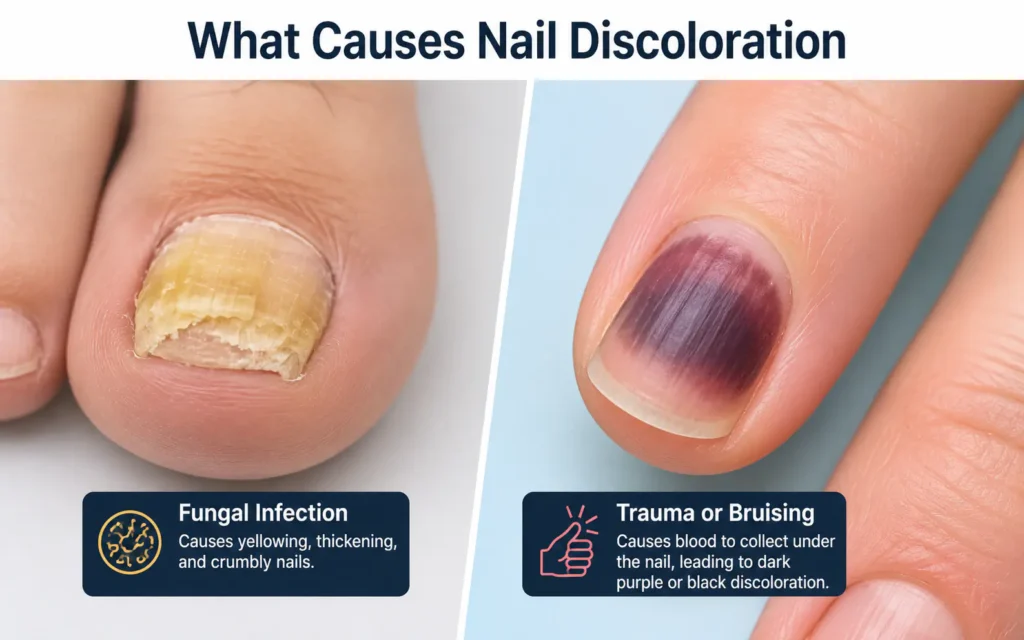
Fungal infections are a very common cause of nail discoloration, particularly in toenails. The nail often turns yellow, brown, or white, becoming thick, brittle, and sometimes crumbly.
- Identifying yellow, brown, or white, thickened, brittle nails, especially if accompanied by a foul odor.
- Untreated fungal infections can worsen, become painful, and potentially spread to other nails or skin.
- If you suspect a fungal infection, over-the-counter antifungal treatments might help mild cases, but persistent.
- Typical Color – Yellow, brown, white.
Cause 2. Trauma and Injury
Direct injury to the nail or nail bed can cause discoloration. A common example is a subungual hematoma, where blood pools under the nail after an impact, turning the nail black, dark blue, or.
- Explaining sudden dark discoloration after a specific incident (e.g., dropping something on your toe, stubbing.
- While most trauma-related discoloration is harmless and grows out with the nail, a dark streak.
- If it’s from trauma, it should slowly grow out with the nail.
- Typical Color – Black, dark blue, purple.
Cause 3. External Stains and Products
Many external factors can stain nails. Dark nail polishes, especially without a base coat, can leave a yellow tint.
- Identifying discoloration that is superficial, affects multiple nails, and is often linked to cosmetic habits.
- Ensure the discoloration is truly superficial.
- Try removing the staining agent (e.g., nail polish) and gently cleaning the nail.
- Typical Color – Yellow, brown, orange.
Cause 4. Bacterial Infections
Bacterial infections, often caused by Pseudomonas bacteria, can lead to a distinct green or greenish-black discoloration. These infections thrive in moist environments, often under a nail that has lifted from its bed or in.
- Recognizing green or greenish-black discoloration, especially if accompanied by inflammation or tenderness.
- Bacterial infections can be painful and may require antibiotics.
- If you notice a green tint, especially with pain or swelling, keep the area clean.
- Typical Color – Green, greenish-black.
Cause 5. Medications and Treatments
Certain medications can cause nail discoloration as a side effect. Chemotherapy drugs are well-known for causing dark bands or overall darkening of the nails.
- Considering discoloration that appears after starting a new medication or undergoing specific medical treatments.
- Never stop prescribed medication due to nail changes without consulting your doctor.
- Review your current medications with your doctor if you notice new nail discoloration.
- Typical Color – Varied (dark bands, blue, brown, yellow).
Cause 6. Systemic Health Conditions
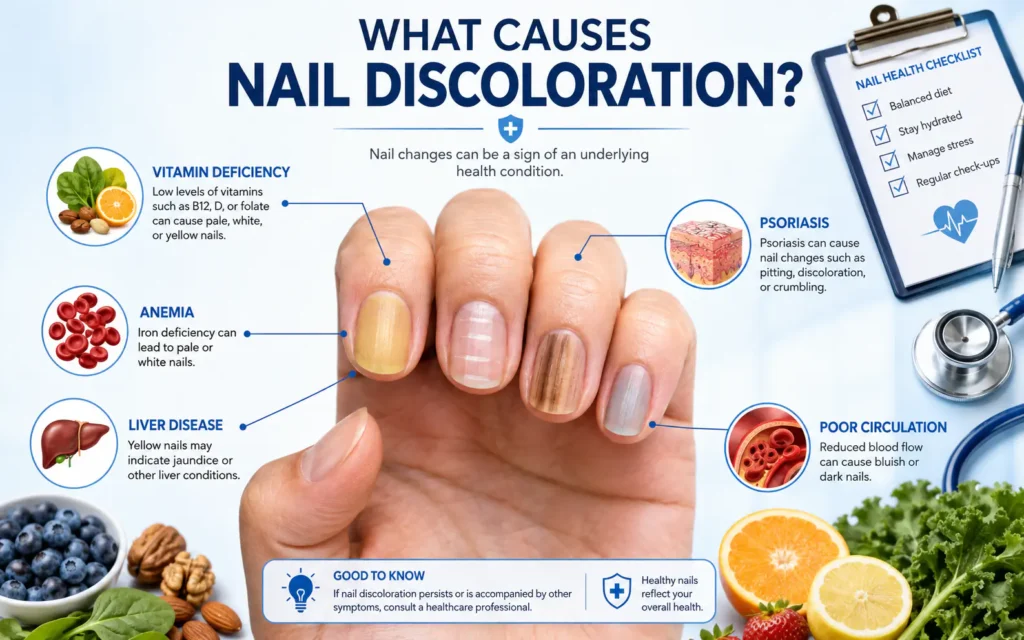
Nails can act as windows to your overall health, and discoloration can sometimes be a sign of an underlying systemic disease. Conditions like liver disease (often leading to ‘Terry’s nails’ – white nails with.
- Considering discoloration that is persistent, affects multiple nails, or is accompanied by other body symptoms.
- Do not ignore persistent or unexplained nail discoloration, especially if it’s new, worsening, or accompanied.
- If you have unexplained or persistent nail discoloration, particularly if it’s a dark streak without.
- Typical Color – White, blue, yellow, dark streaks.
FAQs
What does it mean if my nails are discolored but don’t hurt?
Nail discoloration without pain can still indicate an issue. It might be a harmless external stain, a mild fungal infection, a side effect of.
Can vitamin deficiencies cause nail discoloration?
Yes, certain vitamin and mineral deficiencies can sometimes contribute to nail changes, including discoloration. For example, iron deficiency (anemia) can lead to pale or.
What do liver disease nails look like?
Nails affected by liver disease often appear as ‘Terry’s nails.’ This condition is characterized by nails that are mostly white, with a narrow pink.
Conclusion
Nail discoloration is a common concern with a wide spectrum of potential causes, ranging from the entirely harmless to indicators of more significant health issues. By understanding the common culprits-from fungal infections and physical trauma.
Related posts
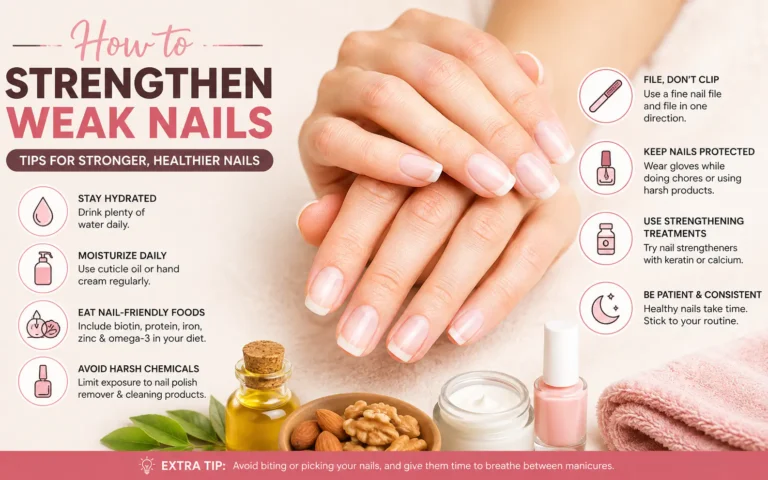 How to Strengthen Weak Nails: A Practical Guide to Daily Care
Learn how to strengthen weak nails with simple daily habits, protective care, and targeted hydration. Restore your natural nail strength today. Weak, peeling, or brittle nails…
 What Sounds Do Cats Dislike? 7 Noises That Stress Your Pet
Discover what sounds do cats dislike and why. Learn how to protect your cat’s sensitive hearing from stressful household noises and high-frequency hums. Cats dislike sounds…
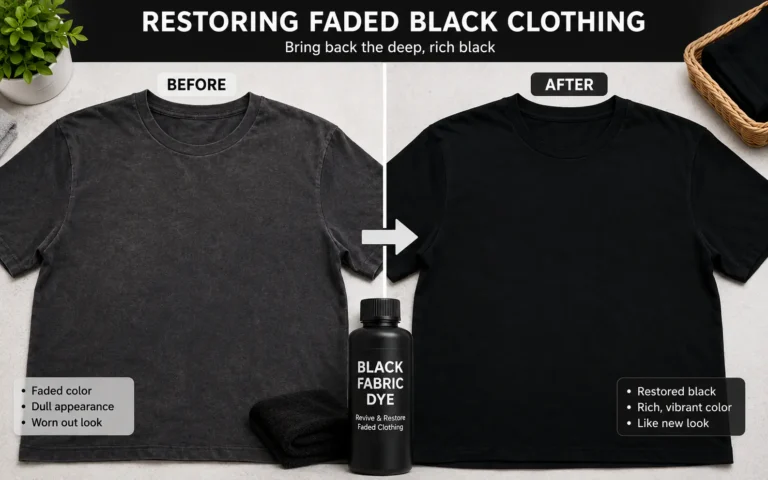 Restoring Faded Black Clothing: Practical Methods and Reality Checks
Can you restore faded black clothing? Learn the difference between temporary color revival and permanent redyeing, plus how to prevent future fading. You can restore the…