
How to Train Without Hurting Joints: Safe Exercise Methods
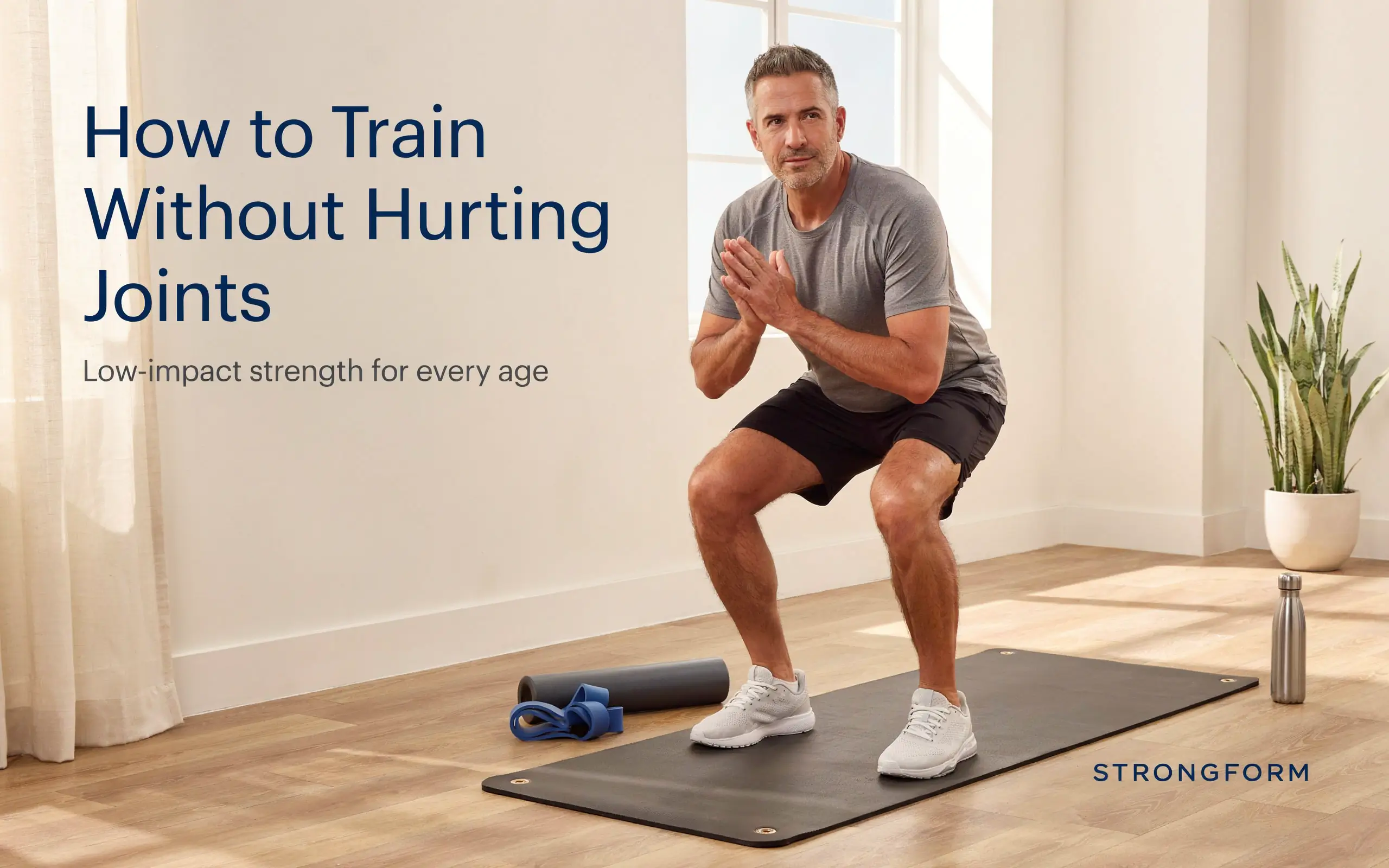
Training without hurting your joints means adopting a mindful approach to exercise that prioritizes joint health through smart choices and proper technique. It’s about finding ways to stay active and build strength without placing excessive stress or impact on your knees, hips, shoulders, and other joints.
The key is to focus on low-impact activities, master correct form for every movement, and build strength in the muscles that support your joints. This approach helps you maintain fitness, improve overall health, and prevent the kind of wear and tear that can lead to pain or injury over time.
Safety checks
- Prioritize low-impact activities to reduce joint stress.
- Mastering proper form is crucial for preventing injury.
- Strengthen muscles surrounding joints for better support.
- Always warm up and cool down to prepare and recover your body.
| Topic | When it helps | What to keep in mind |
|---|---|---|
| Step 1 | Individuals with existing joint pain, beginners, those recovering from injury, or anyone looking for a sustainable long-term fitness routine. | Even low-impact activities require proper form. |
| Step 2 | Everyone, regardless of fitness level. | Rushing through repetitions or lifting too heavy too soon are common mistakes that compromise form and increase injury risk. |
| Step 3 | All types of workouts, from light cardio to intense strength training. | Static stretching before a workout can sometimes be counterproductive; dynamic stretches are generally better for warm-ups. |
| Step 4 | Anyone looking to build resilience and long-term joint health. | Neglecting opposing muscle groups can lead to imbalances, increasing joint strain. |
| Step 5 | Improving movement quality, reducing stiffness, and enhancing recovery. | Overstretching or forcing a range of motion can be harmful. |
| Step 6 | Preventing acute injury and managing chronic conditions. | Pushing through joint pain can lead to more severe injury and prolonged recovery. |
The article must cover fundamental
Step 1. Choose Low-Impact Activities
How to Train Without Hurting Joints. Opt for exercises that minimize jarring forces on your joints. Low-impact activities allow you to get a great workout without the repetitive stress associated with high-impact movements like running or jumping.
- Individuals with existing joint pain, beginners, those recovering from injury, or anyone looking for a sustainable long-term fitness routine.
- Even low-impact activities require proper form.
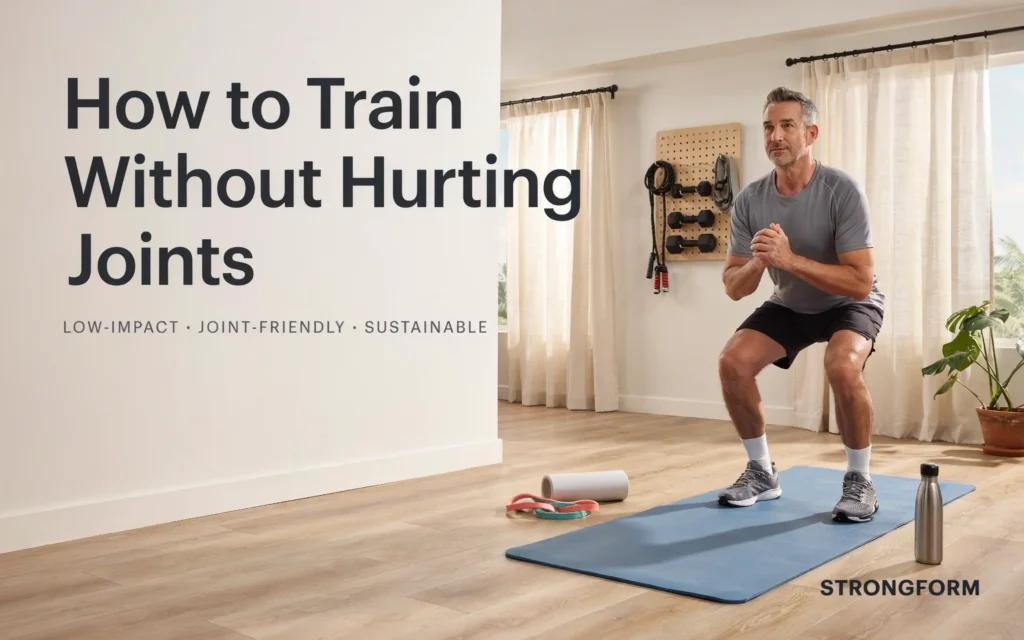
- Experiment with different low-impact options like swimming, cycling, elliptical training, or brisk walking to find what you enjoy most and what feels.
- Impact Level – Low.
- Joint Stress – Minimal.
Step 2. Master Proper Form and Technique
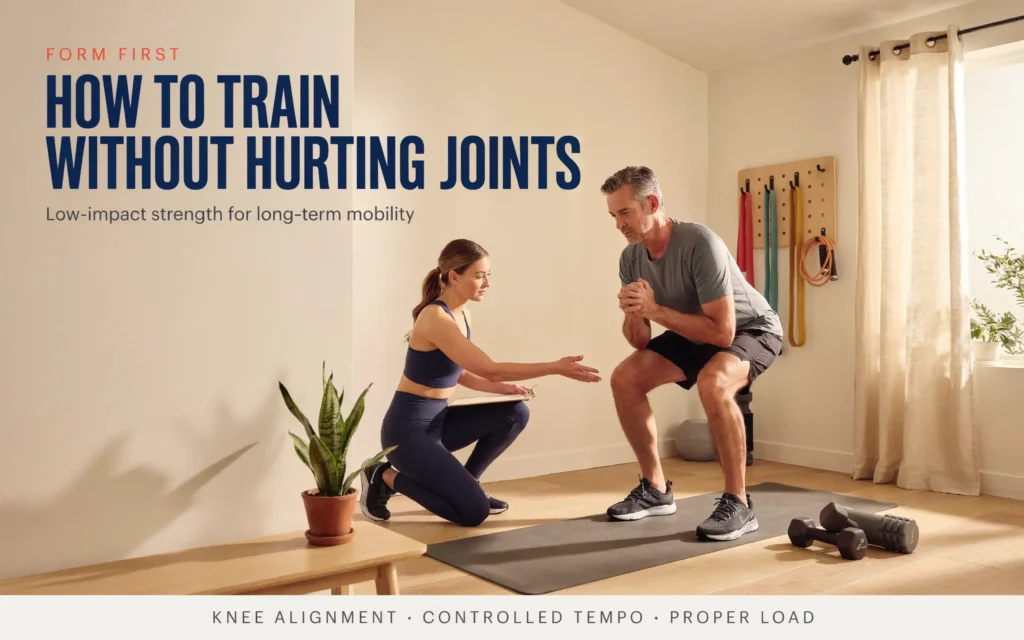
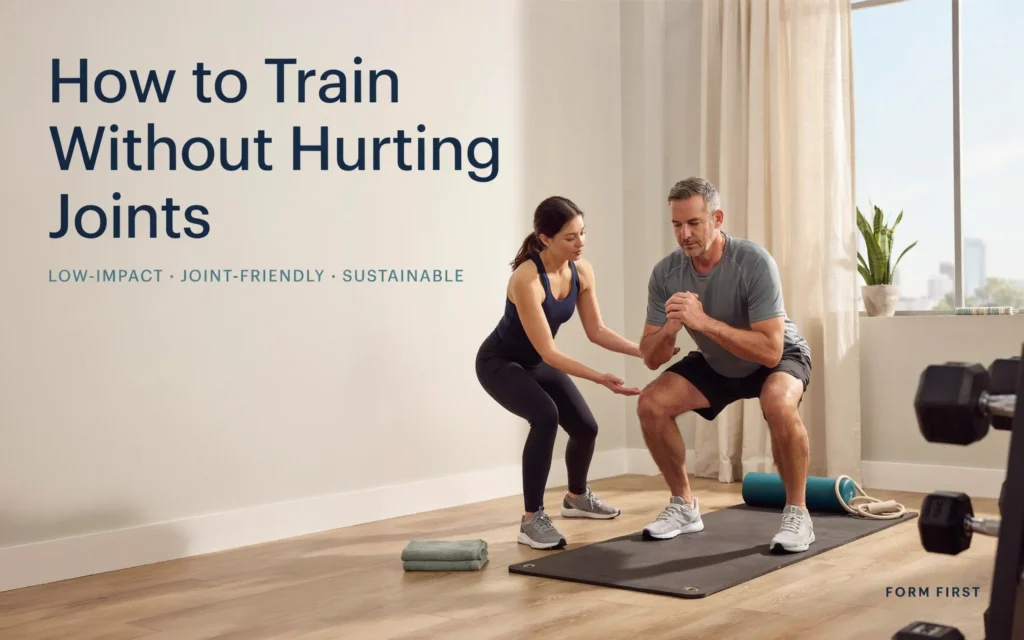
Correct form is the single most important factor in preventing joint injury during any exercise. Performing movements with poor technique can place unnatural stress on joints, leading to pain and long-term damage.
- Everyone, regardless of fitness level.
- Rushing through repetitions or lifting too heavy too soon are common mistakes that compromise form and increase injury risk.
- Start with lighter weights or bodyweight exercises to perfect your form before increasing intensity.
- Injury Prevention – High.
- Effectiveness – Optimized.
Step 3. Prioritize Warm-Up and Cool-Down
A proper warm-up prepares your joints and muscles for activity by increasing blood flow and flexibility, reducing stiffness. A cool-down helps your body gradually return to a resting state, aiding recovery and preventing muscle soreness.
- All types of workouts, from light cardio to intense strength training.
- Static stretching before a workout can sometimes be counterproductive; dynamic stretches are generally better for warm-ups.
- Dedicate 5-10 minutes to dynamic movements like arm circles, leg swings, and light cardio before your main workout, and 5-10 minutes to.
- Joint Preparation – Essential.
- Recovery Aid – Significant.
Step 4. Strengthen Supporting Muscles
Strong muscles surrounding your joints act as natural shock absorbers and stabilizers, reducing the load directly on the joint itself. For example, strong quadriceps and hamstrings protect the knee, while a strong core supports the spine and hips.
- Anyone looking to build resilience and long-term joint health.
- Neglecting opposing muscle groups can lead to imbalances, increasing joint strain.
- Include compound exercises (like squats, lunges, rows) that work multiple muscle groups, and isolation exercises (like leg extensions, bicep curls) to target.
- Joint Stability – Improved.
- Load Reduction – Achieved.
Step 5. Incorporate Mobility and Flexibility
Maintaining a good range of motion in your joints is vital for preventing stiffness and allowing muscles to work efficiently. Mobility exercises focus on active movement through a joint’s full range, while flexibility (stretching) aims to lengthen muscles.
- Improving movement quality, reducing stiffness, and enhancing recovery.
- Overstretching or forcing a range of motion can be harmful.
- Dedicate 10-15 minutes a few times a week to mobility drills for hips, shoulders, and spine, and gentle static stretches for major.
- Range of Motion – Enhanced.
- Stiffness Reduction – Effective.
Step 6. Listen to Your Body and Adapt
Pay close attention to how your body feels during and after exercise. Distinguish between muscle fatigue (a good sign of a challenging workout) and joint pain (a warning sign).
- Preventing acute injury and managing chronic conditions.
- Pushing through joint pain can lead to more severe injury and prolonged recovery.
- If a specific exercise causes joint pain, try modifying it (e.g., shallower squat, lighter weight) or replacing it with an alternative.
- Injury Prevention – Immediate.
- Self-Care – Empowered.
The Foundation of Joint-Friendly Training
Building a training routine that respects your joints starts with a solid foundation. This isn’t just about choosing the right exercises, but also about how you approach every single movement.
Think of your joints as finely tuned hinges that need careful maintenance. Just as you wouldn’t force a stiff door, you shouldn’t force your joints through movements they’re not ready for.
Before starting a weightlifting session, perform dynamic stretches like leg swings and arm circles for 5 minutes, then do a few sets with very light weights to activate muscles and warm up joints, rather.
Skipping warm-ups or cool-downs, or using static stretches as a warm-up, which can reduce power and potentially increase injury risk before activity.
Why Form Matters More Than Weight
Many people focus on lifting heavier weights or performing more repetitions, but true progress and safety come from mastering the movement itself. Proper form ensures that the stress of an exercise is distributed correctly across your muscles, rather than being absorbed by vulnerable joints or.
Smart Exercise Choices for Joint Health
The types of exercises you choose play a significant role in how your joints fare over time. While all movement is generally good, some activities place less stress on your joints than others.
This involves understanding the difference between high-impact and low-impact activities, and how to modify exercises to suit your body’s needs. It also means recognizing that strength training, when done correctly, is a powerful tool for joint protection, not a threat.
Instead of high-impact plyometrics like box jumps, try step-ups onto a low bench, focusing on controlled movement and landing softly.
Assuming all strength training is inherently bad for joints, or conversely, pushing through pain in high-impact activities because they are ‘traditional’ forms of exercise.
| Exercise Type | Joint Impact Level | Benefits for Joints | Example Activities |
|---|---|---|---|
| High-Impact. | High. | Can lead to wear and tear over time, higher risk of acute injury if. | Running, jumping, plyometrics, high-intensity aerobics. |
| Low-Impact. | Low. | Minimizes stress on cartilage and ligaments, allows for longer, more consistent training. | Swimming, cycling, elliptical, walking, rowing, yoga, Pilates. |
| Strength Training. | Variable (can be low to moderate). | Builds supporting muscles, improves stability, can reduce joint pain. | Weightlifting (with proper form), bodyweight exercises, resistance bands. |
Low-Impact Cardio Options
Cardiovascular exercise is crucial for heart health, but it doesn’t have to involve pounding the pavement. Low-impact cardio options provide excellent aerobic benefits without the repetitive shock to your joints.
Beyond the Workout: Recovery and Prevention
Effective training for joint health doesn’t end when your workout does. What you do before, during, and especially after your exercise sessions significantly impacts your joints’ ability to recover and adapt.
This includes practices that enhance joint mobility, allow for tissue repair, and teach you to distinguish between healthy muscle fatigue and potentially harmful joint pain. Prioritizing these elements ensures your body remains resilient and ready for future activity.
After a leg workout, spend 10 minutes foam rolling your quads, hamstrings, and glutes, followed by gentle hip flexor stretches.
Ignoring persistent aches or stiffness, or believing that ‘no pain, no gain’ applies to joint discomfort.
The Role of Mobility and Flexibility
While often used interchangeably, mobility and flexibility have distinct roles in joint health. Flexibility refers to the length of your muscles, while mobility is the ability of a joint to move actively through its full range of motion.
FAQs
What is the 3-3-3 rule for exercise, and is it good for joints?
The ‘3-3-3 rule’ often refers to a simple fitness guideline: 30 minutes of exercise, 3 times a week, with 3 liters of water daily. While the exercise frequency and hydration are generally beneficial for.
How can I build muscle without straining my joints?
To build muscle without straining joints, focus on proper form, controlled movements, and progressive overload that doesn’t compromise technique. Prioritize compound exercises with a full, comfortable range of motion.
Why do my joints hurt when I work out, and when should I worry?
Joint pain during a workout can be due to poor form, overtraining, insufficient warm-up, or pre-existing conditions. You should worry if the pain is sharp, persistent, localized directly in the joint, causes swelling, or.
Are supplements helpful for joint health during training?
Some supplements, like glucosamine and chondroitin, are popular for joint health, but scientific evidence on their effectiveness for preventing or treating joint pain in active individuals is mixed and often inconclusive. Omega-3 fatty acids.
How often should I rest my joints when training?
Rest is crucial for joint recovery and repair. Aim for at least one full rest day per week, and avoid training the same major muscle groups or joints on consecutive days.
Conclusion
Training without hurting your joints is an achievable goal that requires a thoughtful and consistent approach. By prioritizing low-impact activities, mastering proper form, and diligently warming up and cooling down, you create a protective environment for your joints during exercise.
Remember that strengthening the muscles around your joints, incorporating mobility work, and most importantly, listening to your body’s signals are vital for long-term joint health. These practices allow you to stay active, build strength, and enjoy the many benefits of exercise without unnecessary pain or.
Related posts
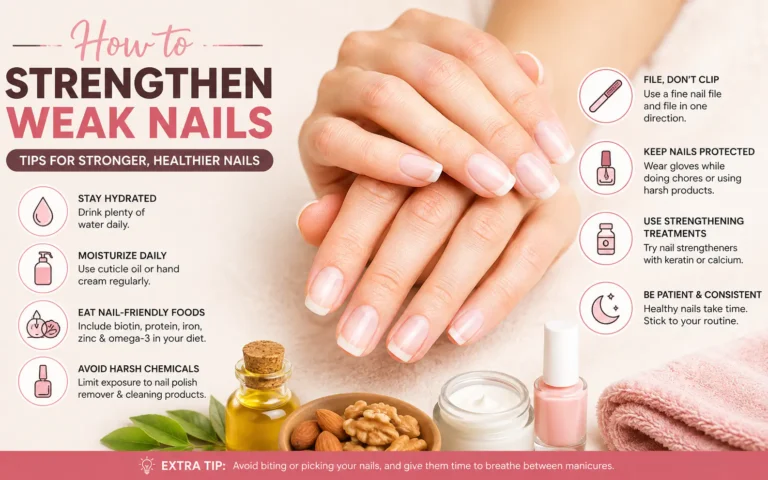 How to Strengthen Weak Nails: A Practical Guide to Daily Care
Learn how to strengthen weak nails with simple daily habits, protective care, and targeted hydration. Restore your natural nail strength today. Weak, peeling, or brittle nails…
 What Sounds Do Cats Dislike? 7 Noises That Stress Your Pet
Discover what sounds do cats dislike and why. Learn how to protect your cat’s sensitive hearing from stressful household noises and high-frequency hums. Cats dislike sounds…
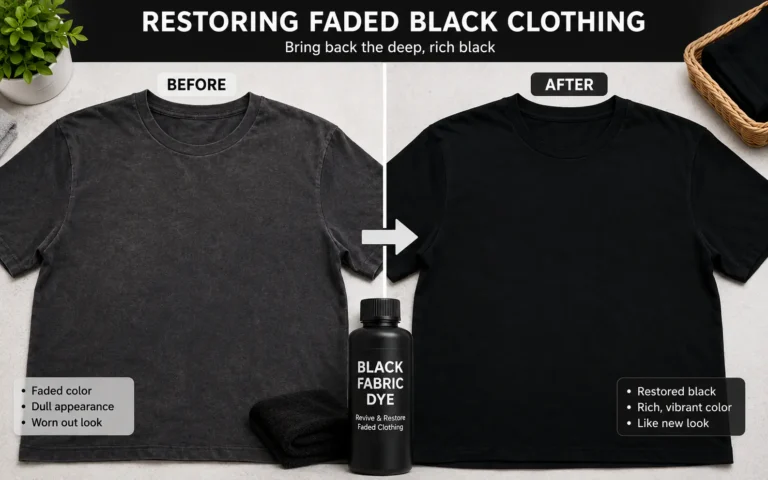 Restoring Faded Black Clothing: Practical Methods and Reality Checks
Can you restore faded black clothing? Learn the difference between temporary color revival and permanent redyeing, plus how to prevent future fading. You can restore the…