
Why Is Gel Polish Damaging
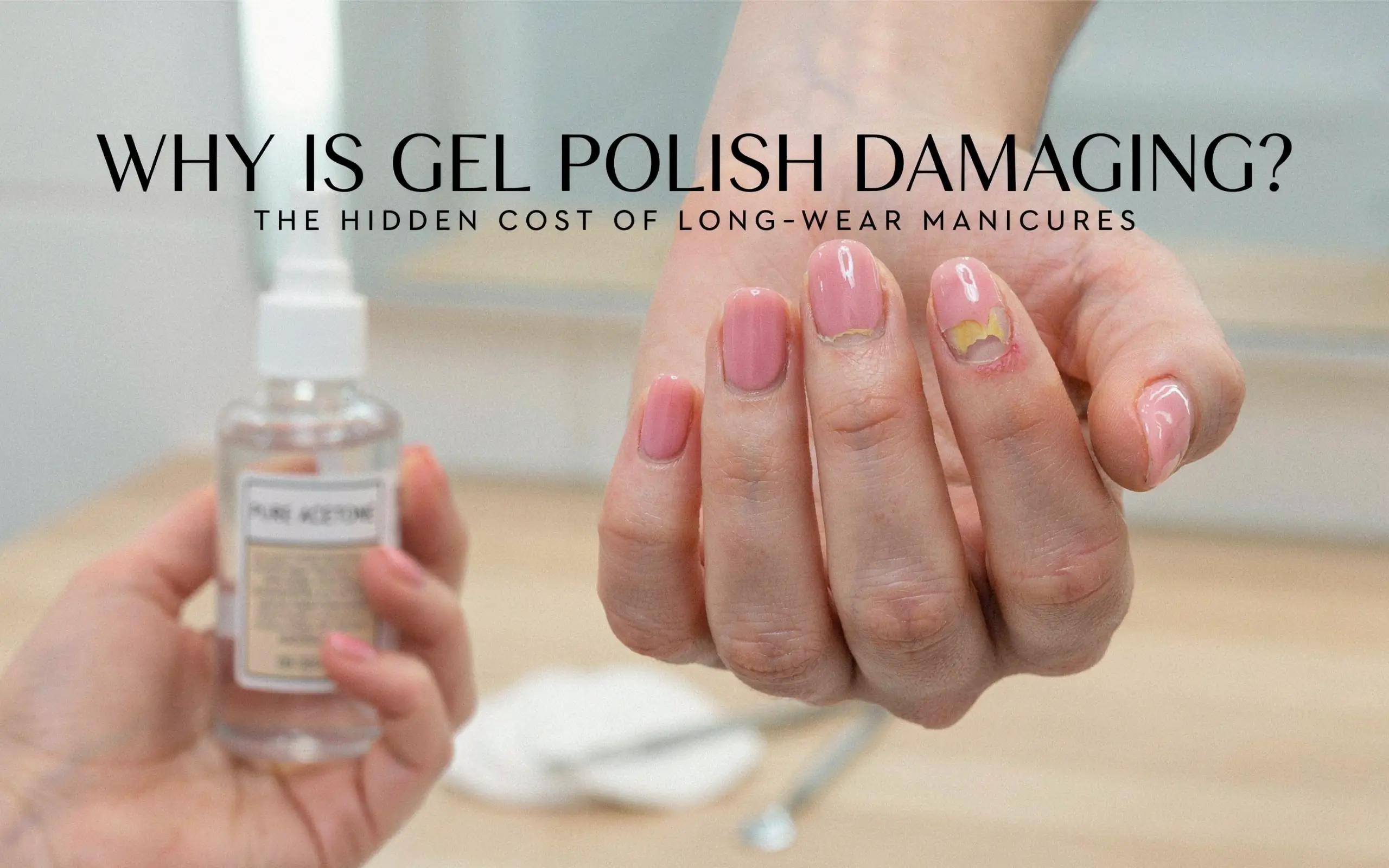
If you have ever asked yourself why is gel polish damaging your nails, you are not alone. The answer involves harsh removal methods, strong chemicals, and UV light exposure that can leave nails thin, brittle, and weak over time.
We all love that fresh-from-the-salon feeling. A glossy, chip-free manicure that lasts two weeks without a single flaw? Yes, please. Gel polish has become the go-to choice for anyone who wants beautiful nails without the constant touch-ups. But after a few months of regular gel manicures, you might start noticing something troubling. Your natural nails feel paper-thin. They bend easily. They peel, split, or break at the slightest pressure.
So, what is really going on? Why is gel polish damaging your nails even though it looks so perfect while it is on? Let us break it down in plain, honest terms. No scare tactics, just the facts you need to make better choices for your nail health.
What Makes Gel Polish Different from Regular Polish?
Before we get into the damage, let us look at what gel polish actually is. Regular nail polish air-dries. The solvents evaporate, and the polish hardens over time. Gel polish, however, is a different animal entirely.
Gel polish contains special chemicals called acrylates and methacrylates. These are the building blocks that create that hard, glossy finish. But here is the catch: these chemicals do not dry on their own. They need a UV or LED lamp to cure and harden. That light triggers a chemical reaction called polymerization. The liquid gel turns into a solid, durable layer that sticks to your nail plate.
This is why gel polish lasts so long. It bonds to your nail in a way that regular polish simply cannot. But this very bonding process is also the root of the problem. The same properties that make gel polish so durable are the same ones that make it so tough on your natural nails.
The Real Reasons Why Gel Polish Is Damaging
Many people assume the polish itself is the culprit. But the truth is more layered. The damage comes from a combination of factors, from the way the polish is applied to the way it is taken off. Let us explore each one.
1. The Removal Process Is the Biggest Offender
If you ask any dermatologist or nail technician why gel polish is damaging, most will point straight to the removal process. A study from the Miami School of Medicine found that gel manicures cause nail thinning from both the chemical composition of the polish and the acetone soaking process during removal.
Here is what happens. To remove gel polish, you have to soak your nails in 100% acetone for about 15 minutes. Acetone is a powerful solvent. It breaks down the chemical bonds in the gel so it can be scraped off. But acetone does not discriminate. It also strips your natural nails of their moisture and oils.
Then comes the scraping. The nail technician uses a metal tool or wooden stick to push the softened gel off your nail plate. This physical scraping can remove thin layers of your actual nail along with the polish.
But here is where most of the damage happens at home. Many people get impatient and peel or pick the gel polish off themselves. This is a disaster for your nails. Peeling off gel polish pulls away the top layers of your natural nail plate. This leaves your nails thin, weak, and prone to splitting.
Dr. Dana, a dermatologist, explains it this way: “My opinion is that the removal process is what causes the nail damage”. She is absolutely right. The polish itself is not the main villain. The way we take it off is.
2. The Filing and Buffing Before Application Thins Your Nails
Before any gel polish goes on, your nail technician will usually buff the surface of your natural nails. They do this to create a rough texture so the gel has something to grip onto.
This makes sense from a practical standpoint. Smooth nails do not hold gel well. But here is the problem. Every time you buff your nails, you are removing a microscopic layer of keratin from the nail plate. Do this once a month, and it adds up. Over time, repeated buffing can significantly thin your nails.
Dr. Chey Ranasinghe, a dermatologist at Cleveland Clinic, notes that cracking and peeling are the most common issues people face with gel manicures. These problems often start with that initial buffing that weakens the nail structure from the very beginning.
3. The Chemicals in Gel Polish Can Cause Allergic Reactions
Gel polish contains acrylates and methacrylates. These chemicals are known allergens. When they come into contact with your skin, they can trigger an immune response.
The risk goes up significantly when the polish is not properly cured. If the gel is still tacky or under-cured, those chemicals can leak into your skin. This can cause contact dermatitis, which shows up as red, itchy, and sometimes blistered skin around your nails.
A systematic review of gel polish side effects found that allergic contact dermatitis was the most common complication, accounting for 70.5% of reported cases. The average time for this allergy to develop was about 30 months after starting gel manicures.
Dr. Brian Morrison, a dermatologist at the University of Miami Health System, warns that gel polish “contains a chemical called methacrylate, a common allergen that can cause contact dermatitis and subsequent lifting of the nail off the nail bed”.
The frequency of diagnosed acrylate sensitivity has tripled in recent years. This means more and more people are developing allergies to the very products they use to beautify their nails.
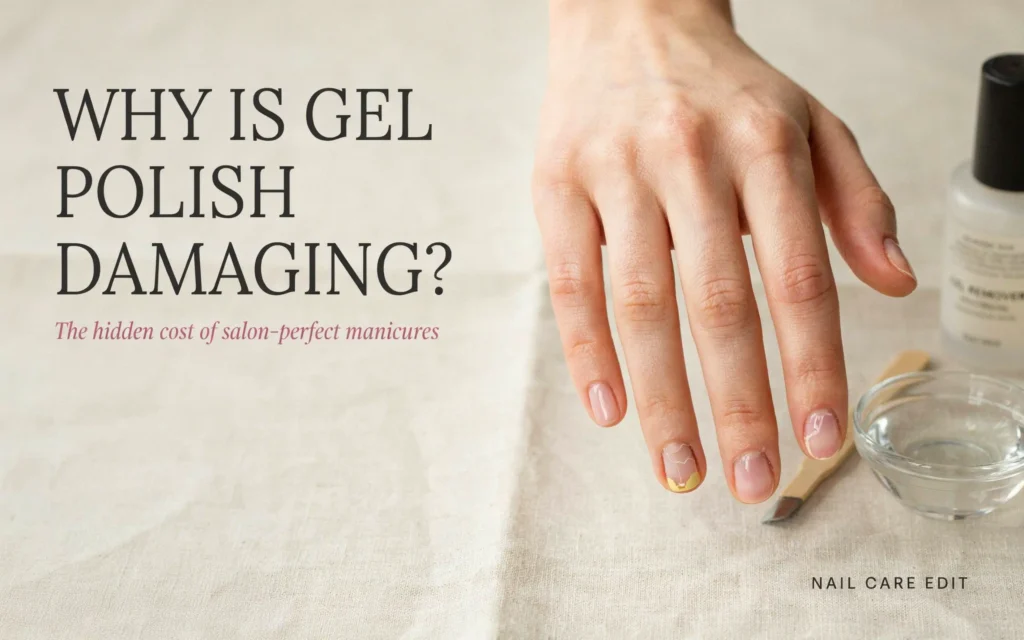
4. UV Light Exposure Comes with Its Own Risks
We cannot talk about why gel polish is damaging without mentioning the UV lamps. Every time you cure your gel polish, you expose your hands to ultraviolet radiation.
The lamps used in salons emit UVA rays. These are the same type of rays that come from the sun and tanning beds. UVA rays penetrate deep into the skin and can cause DNA damage that leads to skin aging and, in some cases, cancer.
Now, the exposure time for each manicure is relatively short, usually around 60 to 90 seconds per coat. But if you get gel manicures regularly, that exposure adds up over the years. The systematic review mentioned earlier reported three cases of squamous cell carcinoma linked to UV exposure from nail lamps. The delay between UV exposure and diagnosis ranged from 11 to 15 years.
Dr. Ranasinghe puts it bluntly: “Just like there’s no such thing as a risk-free tanning bed… there’s no such thing as a risk-free nail lamp”.
5. Gel Polish Prevents Your Nails from Flexing Naturally
This is a point that does not get enough attention. Your natural nails are designed to be flexible. They bend slightly when you use your hands. This flexibility helps them absorb shock and resist breaking.
Gel polish, on the other hand, is rigid and inflexible. When you have a thick layer of hard gel on your nails, they cannot flex the way they are supposed to. This puts stress on the nail plate. Over time, this can lead to cracks, splits, and even the nail separating from the nail bed.
When the nail separates from the nail bed, it is called onycholysis. This condition can be painful and creates an opening for infections to develop.
The Damage You Can See: Signs Your Nails Are Suffering
So, what does gel polish damage actually look like? Here are the most common signs:
| Additional Symptoms | What They Mean |
|---|---|
| Redness or Itching | Possible allergic reaction to chemicals |
| Pain or Burning | Could indicate over-curing or heat spikes |
| Nail Lifting | The nail separates from the bed, risking infection |
The damage is not always immediate. Some people can get gel manicures for years without noticeable problems. But eventually, the cumulative effect catches up. As Dr. Jacqueline Watchmaker puts it, “Over time, repeated gel manicures change even the thickest nails and strongest skin”.
Can You Still Enjoy Gel Manicures Safely?
Yes, you can. The goal is not to scare you away from gel polish forever. The goal is to help you use it in a way that minimizes harm. Here is how.
Give Your Nails a Break
This is the single most important thing you can do. Dermatologists recommend keeping your nails bare for at least one to two weeks between gel manicures. This gives your nails time to strengthen, repair, and rehydrate.
Think of it like this. Your nails need to breathe and recover. Constant coating and removal without a break is what causes the most damage. Schedule “nail holidays” into your routine.
Never Peel or Pick Off Gel Polish
I know it is tempting. The polish starts to lift at the edge, and you just want to pull it off. But please, do not do this. Peeling off gel polish strips layers of your natural nail with it.
Always have your gel polish removed professionally. Or, if you do it at home, soak your nails properly in acetone and let the polish dissolve on its own. Do not force it.
Protect Your Skin from UV Light
Wear sunscreen on your hands before you go under the UV lamp. The American Academy of Dermatology recommends sunscreen with SPF 30 or higher. You can also wear opaque gloves with the fingertips cut out to protect the rest of your hands.
Choose a Salon That Prioritizes Nail Health
Not all salons are created equal. Look for a technician who is gentle during removal. They should soak your nails properly and avoid aggressive scraping. Ask about their sanitation practices. Make sure tools are properly cleaned between clients.
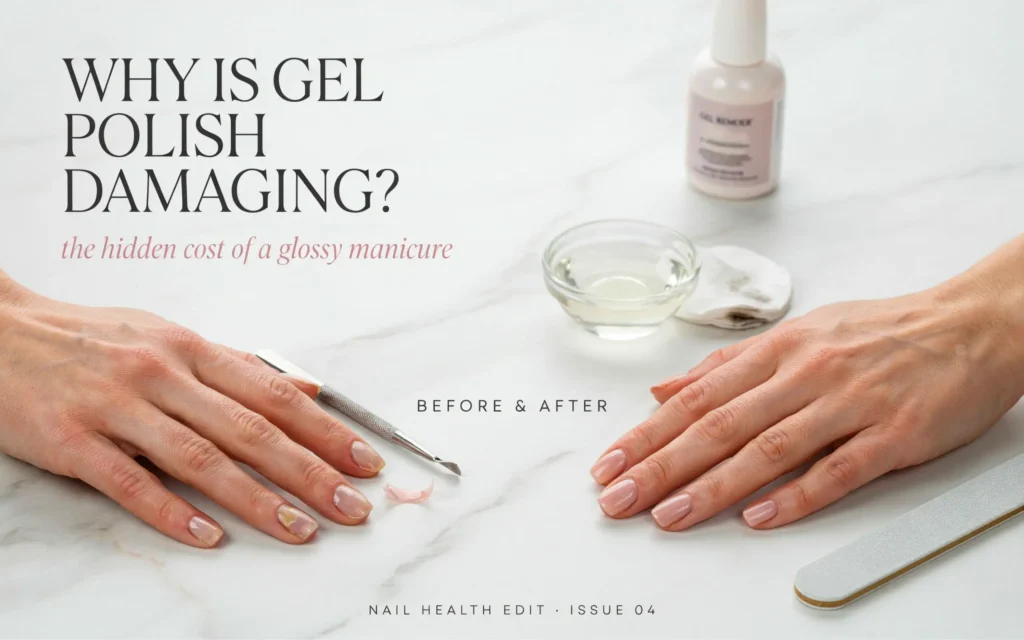
Keep Your Nails and Cuticles Hydrated
Moisturizing is non-negotiable. Apply cuticle oil at least once or twice daily. This helps counteract the drying effects of acetone and keeps your nails flexible. Healthy, hydrated nails are less likely to crack and peel.
Dr. Dana advises that you should not put pressure on the nail at all during removal. A good technician will make the process feel effortless, not painful.
Safe Removal vs. Damaging Removal
| Safe Removal | Damaging Removal |
|---|---|
| Soak nails in acetone for 10-15 minutes | Peel or pick the polish off with fingers |
| Let the gel dissolve and lift naturally | Scrape aggressively with metal tools |
| Use gentle pushing motions with a wooden stick | Rush the process and force the polish off |
| Moisturize nails immediately after | Forget to hydrate after removal |
| Take breaks between manicures | Get gel manicures back-to-back without rest |
What to Do If Your Nails Are Already Damaged
If your nails are already thin, peeling, or brittle, do not panic. Nails grow back. They just need time and care.
First, stop getting gel manicures for a while. Give your nails at least a month of bare time. Use this period to focus on nail health.
Second, keep your nails short. Longer nails are more prone to breaking when they are weak. Trim them down and file them gently to prevent snagging.
Third, moisturize like your nails depend on it. Use cuticle oil and hand cream multiple times a day. This will help restore moisture and flexibility.
Fourth, consider using a nail strengthener. But be careful. Dr. Morrison warns that some nail hardeners can actually make things worse, especially if they contain formaldehyde. Choose a formaldehyde-free option and use it sparingly.
Final Thoughts on Gel Polish Damage
So, why is gel polish damaging? It is not one single thing. It is the combination of harsh removal methods, chemical exposure, UV radiation, and the loss of natural nail flexibility. Each factor on its own might not be a big deal. But put them together over months and years, and the damage adds up.
The good news is that you do not have to give up gel polish forever. You just have to be smart about it. Take breaks. Remove it gently. Protect your skin from UV light. Keep your nails hydrated. Choose a salon that cares about nail health as much as you do.
As Dr. Brian Morrison wisely says, “As long as gel polish is used, the problem will persist. Avoiding gel manicures and getting treated by a dermatologist helps the nails improve quicker”. He is not saying you can never use gel again. He is saying you need to be aware of the risks and take action to protect yourself.
Your nails are part of your body. They deserve the same care and attention you give to your skin and hair. Gel polish can be a fun, beautiful choice for special occasions. Just do not let it become a habit that compromises your nail health in the long run.
Take care of your nails, and they will take care of you.
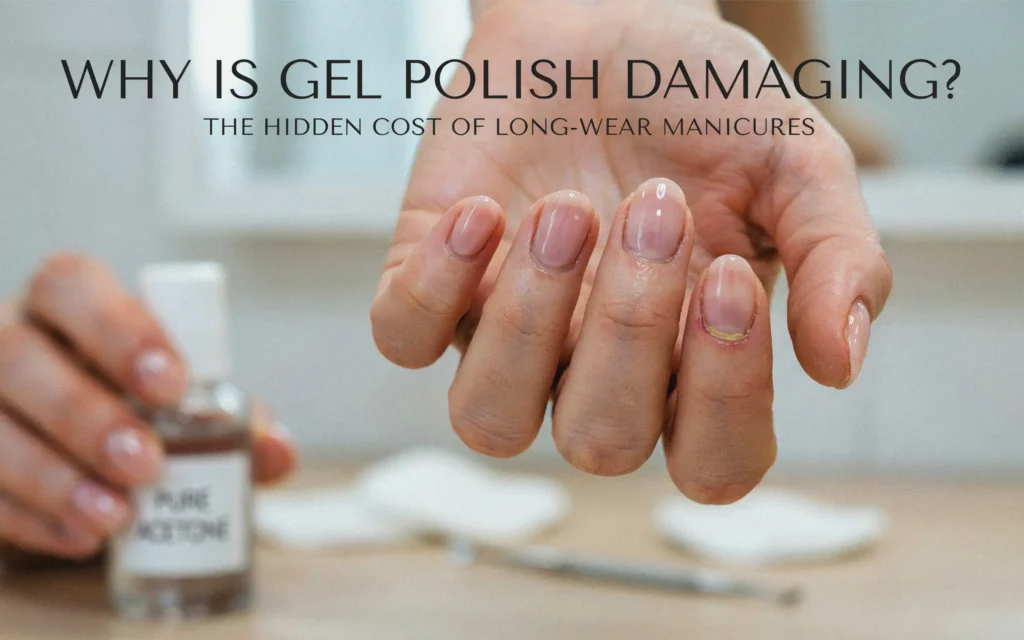
Frequently Asked Questions
1. Is gel polish always damaging?
Not always. The damage depends on how often you get gel manicures, how they are applied, and how they are removed. Occasional use with proper removal and nail care is much less harmful than back-to-back manicures without breaks.
2. How long should I wait between gel manicures?
Dermatologists recommend waiting at least one to two weeks between gel manicures. This gives your nails time to recover, rehydrate, and strengthen.
3. Can I remove gel polish at home safely?
Yes, but you need to do it correctly. Soak your nails in 100% acetone for about 15 minutes. Let the polish dissolve naturally. Do not scrape or peel it off. Always moisturize afterward.
4. What are the signs of an allergic reaction to gel polish?
Redness, itching, burning, or blistered skin around the nails are common signs. In some cases, the nail may lift from the nail bed. If you notice these symptoms, stop using gel polish and see a dermatologist.
5. Are LED lamps safer than UV lamps?
LED lamps still emit UV radiation. They may cure the polish faster, which means less exposure time, but they are not risk-free. Always protect your skin with sunscreen or UV-blocking gloves.
6. Can damaged nails grow back healthy?
Yes. Nails grow back over time. With proper care, hydration, and a break from gel polish, your nails can return to their natural strength and thickness.
7. Is there a safer alternative to gel polish?
Regular nail polish is generally less damaging because it does not require UV curing or acetone soaking for removal. Dip powder nails have their own set of risks. If you want long-lasting color, consider press-on nails or nail wraps as gentler options.
8. How can I strengthen my nails after gel damage?
Keep them moisturized with cuticle oil. Use a formaldehyde-free nail strengthener. Keep nails short to prevent breakage. Eat a balanced diet with enough protein and biotin. Most importantly, give your nails time to grow out the damaged areas.
Related posts
 How to Strengthen Weak Nails: A Practical Guide to Daily Care
Learn how to strengthen weak nails with simple daily habits, protective care, and targeted hydration. Restore your natural nail strength today. Weak, peeling, or brittle nails…
 What Sounds Do Cats Dislike? 7 Noises That Stress Your Pet
Discover what sounds do cats dislike and why. Learn how to protect your cat’s sensitive hearing from stressful household noises and high-frequency hums. Cats dislike sounds…
 Restoring Faded Black Clothing: Practical Methods and Reality Checks
Can you restore faded black clothing? Learn the difference between temporary color revival and permanent redyeing, plus how to prevent future fading. You can restore the…