
What Human Foods Are Toxic To Dogs
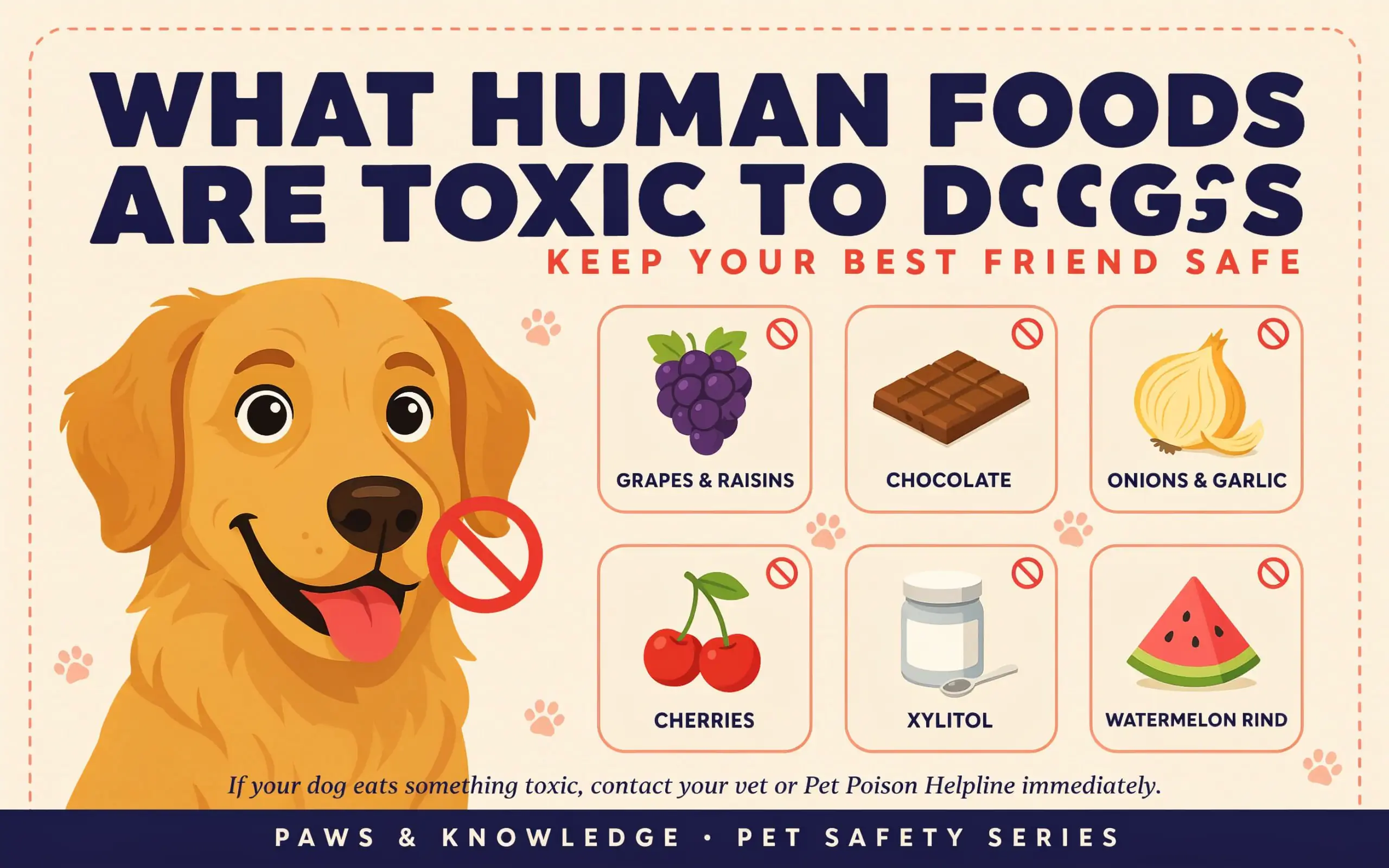
Wondering which human foods are toxic to dogs? This guide covers chocolate, grapes, xylitol, onions, and more. Learn the symptoms, emergency steps, and safe alternatives to protect your furry friend.
We all love our dogs. They are family. And like family, we want to share everything with them, including our food. Those big puppy eyes staring up at you during dinner can be hard to resist. But here is the hard truth: many common human foods are toxic to dogs. What is safe for you can be dangerous, even deadly, for your furry companion.
Every year, thousands of dogs end up at emergency vets because they ate something from the kitchen table or the pantry. The good news is that most of these accidents can be prevented. By knowing which foods are risky and keeping them out of reach, you can keep your dog safe and healthy.
This guide will walk you through the most dangerous human foods for dogs. You will learn what symptoms to watch for, what to do in an emergency, and which people foods are actually safe to share. Let us get started.
Why Some Human Foods Are Toxic to Dogs
Dogs are not small humans. Their bodies process food differently. A dog’s digestive system lacks certain enzymes that help break down specific compounds found in human food. Some substances that are harmless to us can cause serious damage to a dog’s organs, blood cells, or nervous system.
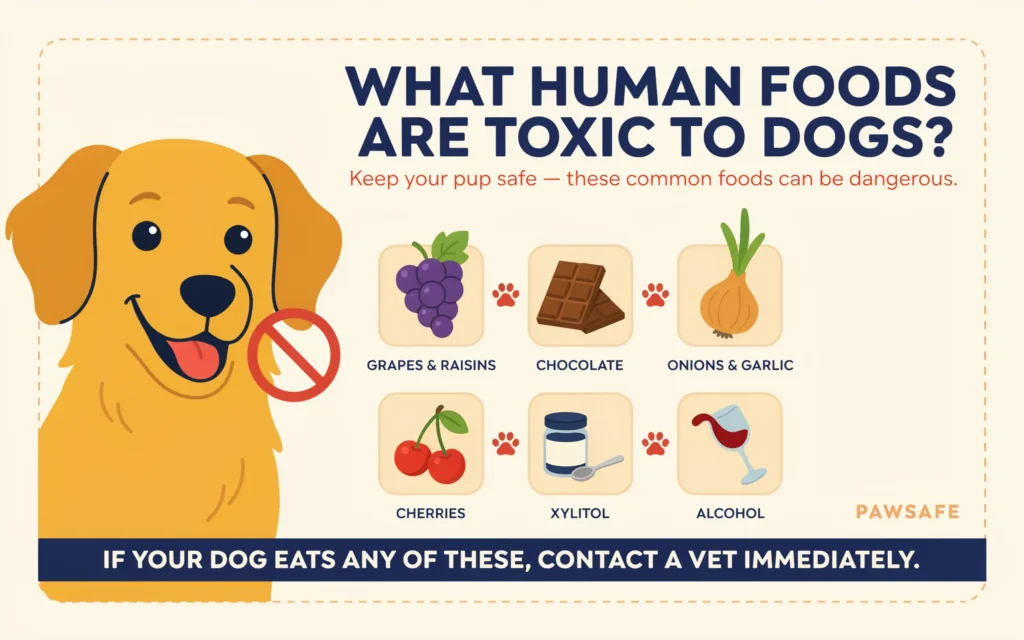
For example, dogs cannot metabolize theobromine found in chocolate as quickly as humans can. This causes the compound to build up to toxic levels in their system. Similarly, compounds in onions and garlic damage a dog’s red blood cells, leading to anemia. Even small amounts of certain foods can trigger a severe reaction.
As Dr. Jerry Klein, Chief Veterinary Officer for the American Kennel Club, explains, “Many of the foods that are perfectly safe for humans can be very dangerous for dogs. It is important for pet owners to know which foods to avoid sharing with their pets.
Let us look at the most common and dangerous culprits.
The Most Dangerous Human Foods Toxic to Dogs
Chocolate: The Classic Danger
Chocolate is probably the most well-known food that is toxic to dogs. But many people do not realize just how dangerous it can be. Chocolate contains two substances that are toxic to dogs: theobromine and caffeine. Both belong to a group of compounds called methylxanthines.
Dogs cannot break down these compounds quickly. The toxins build up in their system and affect their heart, nervous system, and kidneys. Dark chocolate and baking chocolate are the most dangerous because they contain higher levels of theobromine. White chocolate has the lowest amount but can still cause stomach upset due to its fat and sugar content.
Even a small piece of dark chocolate can make a small dog very sick. Symptoms include vomiting, diarrhea, restlessness, increased thirst, and a racing heart. In severe cases, dogs may experience tremors, seizures, and even death.
Grapes and Raisins: Small but Deadly
Grapes and raisins are another common food that is highly toxic to dogs. The strange thing is that scientists still do not know exactly why. Recent research suggests that tartaric acid may be the culprit, but the exact mechanism remains unclear.
What we do know is that even a single grape or raisin can cause sudden kidney failure in some dogs. Other dogs may eat a handful and show no symptoms at all. There is no way to predict which dogs will be affected, which makes any exposure risky.
Symptoms usually appear within 12 to 24 hours and include vomiting, diarrhea, loss of appetite, and lethargy. More severe signs like decreased urination and abdominal pain appear as kidney damage progresses.
“Some dogs can eat a bag of raisins or a handful of grapes and be fine,” warns Dr. Maren Krafchik, a veterinarian at the Animal Allergy Hospital. “But others can develop kidney failure from just a small amount. The risk is not worth taking.”
Xylitol: The Hidden Threat
Xylitol is an artificial sweetener used in many sugar-free products. It is found in chewing gum, mints, toothpaste, baked goods, and some peanut butters. For humans, it is a safe low-calorie sweetener. For dogs, it is one of the most dangerous substances they can eat.
When a dog eats xylitol, their body mistakes it for real sugar and releases a large amount of insulin. This causes their blood sugar to drop dangerously low within 30 to 60 minutes. Symptoms include vomiting, weakness, lethargy, and loss of coordination. In severe cases, dogs may have seizures, suffer liver failure, or die.
Some experts say xylitol is even more toxic to dogs than chocolate. Even a tiny amount can be life-threatening. Always check ingredient labels carefully. Products labeled “sugar-free” or “no sugar added” often contain xylitol.
Onions, Garlic, and the Allium Family
Onions, garlic, leeks, chives, and shallots all belong to the Allium family. All of them are toxic to dogs. This includes raw, cooked, dried, or powdered forms. Even onion powder in your spice rack is dangerous.
These foods contain compounds that damage a dog’s red blood cells. The damage leads to a condition called hemolytic anemia, where red blood cells are destroyed faster than the body can replace them. Symptoms may not appear for several days after ingestion, which makes this poison tricky to spot.
Early signs include vomiting and diarrhea. Later, you might notice pale gums, weakness, lethargy, and dark-colored urine. In severe cases, dogs may need blood transfusions.
As Dr. Lucas White, a veterinarian with Sunset Veterinary Clinic, puts it: “Garlic and onions are toxic to dogs and cause damage to their red blood cells, which leads to anemia.”
Macadamia Nuts
Macadamia nuts are another food that dogs should never eat. The exact toxin is unknown, but even a small number of these nuts can make a dog very sick. Symptoms usually appear within 3 to 12 hours and include weakness, especially in the hind legs, vomiting, tremors, and fever.
Most dogs recover with supportive care, but the experience is frightening and uncomfortable for both the dog and the owner. Macadamia nuts are often found in cookies, cakes, and trail mixes, so be careful with baked goods and snack mixes.
Alcohol and Yeast Dough
Alcohol is dangerous for dogs. Even a small amount can cause vomiting, diarrhea, lack of coordination, and breathing problems. In severe cases, alcohol poisoning can lead to coma and death.
Yeast dough is also risky. When a dog eats raw bread dough, the dough continues to rise in their warm stomach. This can cause painful bloating and even a twisted stomach, which is a life-threatening emergency. The yeast also produces alcohol as it ferments, adding alcohol poisoning to the problem.
Caffeine
Coffee, tea, energy drinks, and some sodas contain caffeine. Caffeine is a stimulant that affects a dog’s nervous system and heart. Dogs are much more sensitive to caffeine than humans. Symptoms include restlessness, rapid breathing, heart palpitations, and tremors. In large amounts, caffeine can be fatal.
Salt
Too much salt is bad for dogs, just as it is for humans. But dogs are more sensitive to sodium overload. Eating large amounts of salty foods like chips, pretzels, or salted nuts can cause excessive thirst, frequent urination, and even sodium ion poisoning. Symptoms include vomiting, diarrhea, tremors, and seizures.
Fatty Foods
Foods high in fat, like bacon, sausage, and butter, can cause a serious condition called pancreatitis in dogs. Pancreatitis is an inflammation of the pancreas that causes severe abdominal pain, vomiting, and diarrhea. Some cases are mild, but others can be life-threatening and require hospitalization.
Bones
Cooked bones are dangerous for dogs. They can splinter and cause choking, blockages, or tears in the digestive tract. Raw bones carry bacteria like Salmonella and E. coli, which can make both you and your dog sick.
Quick Reference Table: Human Foods Toxic to Dogs
| Food | Toxic Component | Main Risk |
|---|---|---|
| Chocolate | Theobromine, Caffeine | Heart problems, seizures, death |
| Grapes & Raisins | Unknown (possibly tartaric acid) | Kidney failure |
| Xylitol | Artificial sweetener | Blood sugar crash, liver failure |
| Onions & Garlic | Sulfoxides and disulfides | Anemia, red blood cell damage |
| Macadamia Nuts | Unknown | Weakness, vomiting, tremors |
| Alcohol | Ethanol | Vomiting, coma, death |
| Caffeine | Caffeine | Heart palpitations, seizures |
| Salt | Sodium | Dehydration, sodium poisoning |
| Raw Yeast Dough | Yeast | Bloat, alcohol poisoning |
Signs Your Dog Ate Something Toxic
Knowing the signs of food poisoning can save your dog’s life. Symptoms vary depending on what your dog ate, but common warning signs include:
- Vomiting or diarrhea
- Excessive drooling
- Lethargy or weakness
- Loss of appetite
- Tremors or seizures
- Difficulty breathing
- Pale or yellow gums
- Increased thirst or urination
- Lack of coordination
- Unusual behavior or agitation
Some symptoms appear within minutes, while others take hours or even days to show. For example, xylitol poisoning causes symptoms within 30 to 60 minutes. Onion poisoning may not show signs until several days later.
If you notice any of these signs and suspect your dog ate something they should not have, do not wait. Call your vet immediately.
What to Do in an Emergency
If you think your dog has eaten a toxic food, stay calm and act quickly. Here is what to do:
Step 1: Remove any remaining food from your dog’s reach.
Step 2: Identify what they ate and try to estimate how much. Save the packaging if possible.
Step 3: Call your veterinarian or an animal poison control center right away. In the United States, you can call the ASPCA Animal Poison Control Center at (888) 426-4435.
Step 4: Follow their instructions. Do not try to make your dog vomit unless a professional tells you to. Inducing vomiting can be dangerous in some cases, especially if your dog is unconscious or has eaten something caustic.
Step 5: Get to the vet. If your vet tells you to bring your dog in, go immediately. Time is critical in poisoning cases.
Treatment may include inducing vomiting, giving activated charcoal to absorb toxins, intravenous fluids, and other supportive care. The sooner your dog receives treatment, the better their chances of recovery.
Pet trainer Ethan from HalloPet Behavior Training Center emphasizes: “The most important thing is to keep human food properly stored and out of your dog’s reach. Prevention is always better than dealing with an emergency.”
Human Foods That Are Safe for Dogs
Not all human foods are bad for dogs. In fact, many common foods make healthy, tasty treats when given in moderation. Here are some safe options:
- Lean meats: Plain, cooked chicken, turkey, or beef without salt or seasoning
- Fish: Cooked salmon or white fish, bones removed
- Vegetables: Carrots, green beans, cucumber, and pumpkin (plain, not spiced)
- Fruits: Apples (without seeds), bananas, blueberries, and watermelon (without seeds or rind)
- Grains: Plain cooked rice and oatmeal
- Dairy: Plain yogurt and small amounts of cheese (if your dog is not lactose intolerant)
Always introduce new foods slowly and in small amounts. Too much of even a safe food can cause stomach upset. And remember, treats should make up no more than 10 percent of your dog’s daily calorie intake.
Quick Reference Table: Safe Human Foods for Dogs
| Safe Food | How to Serve | Benefits |
|---|---|---|
| Chicken (plain, cooked) | Boneless, skinless, unseasoned | Lean protein |
| Carrots | Raw or cooked | Vitamins, dental health |
| Apples | Remove seeds and core | Fiber, vitamins |
| Pumpkin | Plain, cooked or canned | Digestive health |
| Rice | Plain, cooked | Easy to digest |
| Blueberries | Fresh or frozen | Antioxidants |
How to Keep Your Dog Safe
Prevention is the best medicine. Here are simple steps to protect your dog from toxic foods:
Keep food out of reach. Store all human food in cabinets, pantries, or closed containers. Do not leave food unattended on counters or tables.
Watch what falls on the floor. Dropped food is a tempting treat for any dog. Clean up spills and crumbs right away.
Check ingredient labels. Many products contain hidden dangers like xylitol, onion powder, or garlic powder. Read labels carefully before sharing any food with your dog.
Educate your family and guests. Make sure everyone in your household knows which foods are off-limits. Ask visitors not to feed your dog table scraps.
Secure your trash. Dogs are experts at getting into garbage cans. Use a trash can with a secure lid or keep it behind a closed door.
Be careful with medications. Some human medications are also toxic to dogs. Keep all pills and supplements out of reach.
Frequently Asked Questions
What human foods are toxic to dogs?
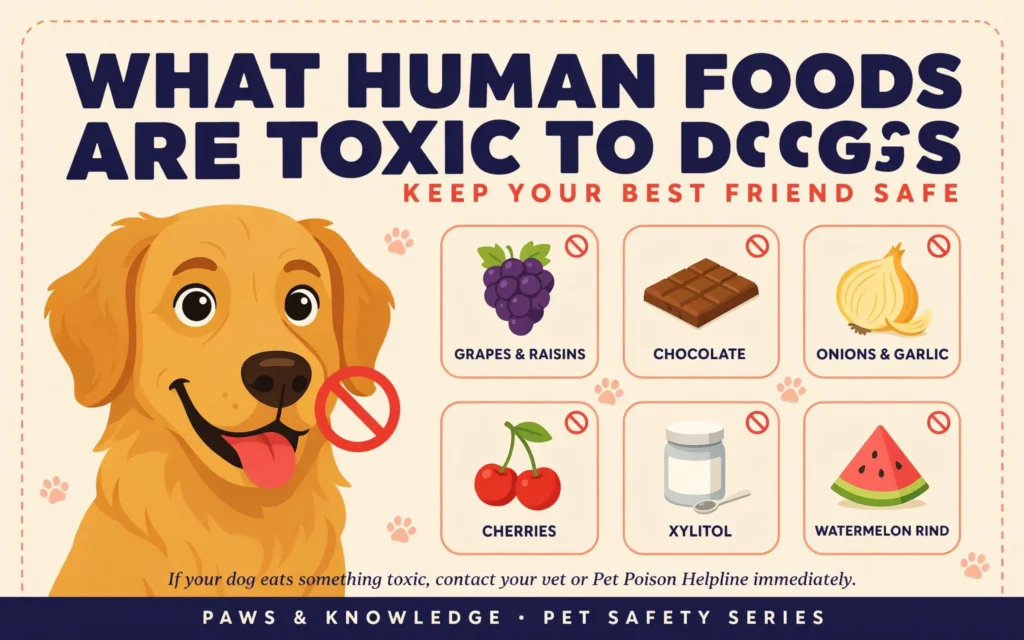
The most dangerous foods include chocolate, grapes, raisins, xylitol, onions, garlic, macadamia nuts, alcohol, caffeine, and raw yeast dough. Even small amounts of these can cause serious health problems.
How much chocolate is toxic to a dog?
It depends on the type of chocolate and the size of your dog. Dark chocolate and baking chocolate are the most dangerous. As little as 20 mg of theobromine per kilogram of body weight can cause symptoms. A small dog can get sick from just a few pieces of dark chocolate.
Can dogs eat grapes?
No. Grapes and raisins are highly toxic to dogs and can cause sudden kidney failure. There is no safe amount.
Is xylitol really that dangerous for dogs?
Yes. Xylitol is extremely toxic to dogs. Even a small amount can cause a dangerous drop in blood sugar and liver failure. It is found in many sugar-free products like gum, mints, and toothpaste.
What should I do if my dog eats something toxic?
Call your veterinarian or an animal poison control center immediately. Do not wait for symptoms to appear. Do not try to induce vomiting unless a professional tells you to.
How long does it take for a dog to show signs of poisoning?
It varies. Some toxins cause symptoms within 30 minutes, while others take days to show signs. Xylitol acts quickly, while onion poisoning may not show symptoms for several days.
Can dogs eat bananas?
Yes, bananas are safe for dogs in small amounts. They are a good source of potassium and fiber. Just remember to remove the peel first.
Are all nuts bad for dogs?
No. Some nuts like peanuts (unsalted) and cashews are safe in small amounts. But macadamia nuts are toxic, and walnuts and pecans can be risky, especially if they are moldy.
Can dogs eat peanut butter?
Yes, but check the label first. Some peanut butters contain xylitol, which is toxic to dogs. Choose natural peanut butter with no added sugar or artificial sweeteners.
Is it okay to give my dog table scraps?
It is best to avoid table scraps altogether. Many human foods contain salt, spices, or ingredients that are harmful to dogs. If you want to share, offer plain, dog-safe foods in small amounts.
Conclusion
Our dogs trust us to keep them safe. That includes being careful about what they eat. Many human foods are toxic to dogs, and the consequences can be severe. But with a little knowledge and some simple precautions, you can protect your furry friend from harm.
Remember the key dangers: chocolate, grapes and raisins, xylitol, onions and garlic, macadamia nuts, alcohol, caffeine, and salt. Keep these foods out of your dog’s reach. Check ingredient labels carefully. And if you ever suspect your dog has eaten something toxic, call your vet right away.
Sharing food with your dog is a way of showing love. But the best way to show love is to keep them healthy and safe. There are plenty of dog-safe treats and foods you can share. Stick with those, and both you and your dog will be happier for it.
Your dog depends on you to make good choices. By knowing which human foods are toxic to dogs and taking steps to prevent accidents, you are giving your furry friend the best gift of all: a long, healthy, and happy life by your side.
Disclaimer: This article is for informational purposes only and does not replace professional veterinary advice. If you suspect your dog has eaten something toxic, contact your veterinarian or a poison control center immediately.
Related posts
 Why Do Dogs Stare at Walls? Common Causes and When to Worry
Wondering why do dogs stare at walls? Discover the sensory, behavioral, and medical reasons behind this behavior, and learn when to contact your veterinarian. When you…
 How to Test Car Wiring for Continuity Using a Multimeter
Learn how to test car wiring for continuity safely. Find broken automotive wires, check connector ports, and diagnose electrical issues with a multimeter. Testing car wiring…
 Why Organizing Space Reduces Stress: The Mental Clarity Connection
Discover why organizing space reduces stress. Learn how a tidy environment lowers cortisol, improves focus, and creates a sense of calm in your daily life. Organizing…