
How To Maintain Automotive Tools
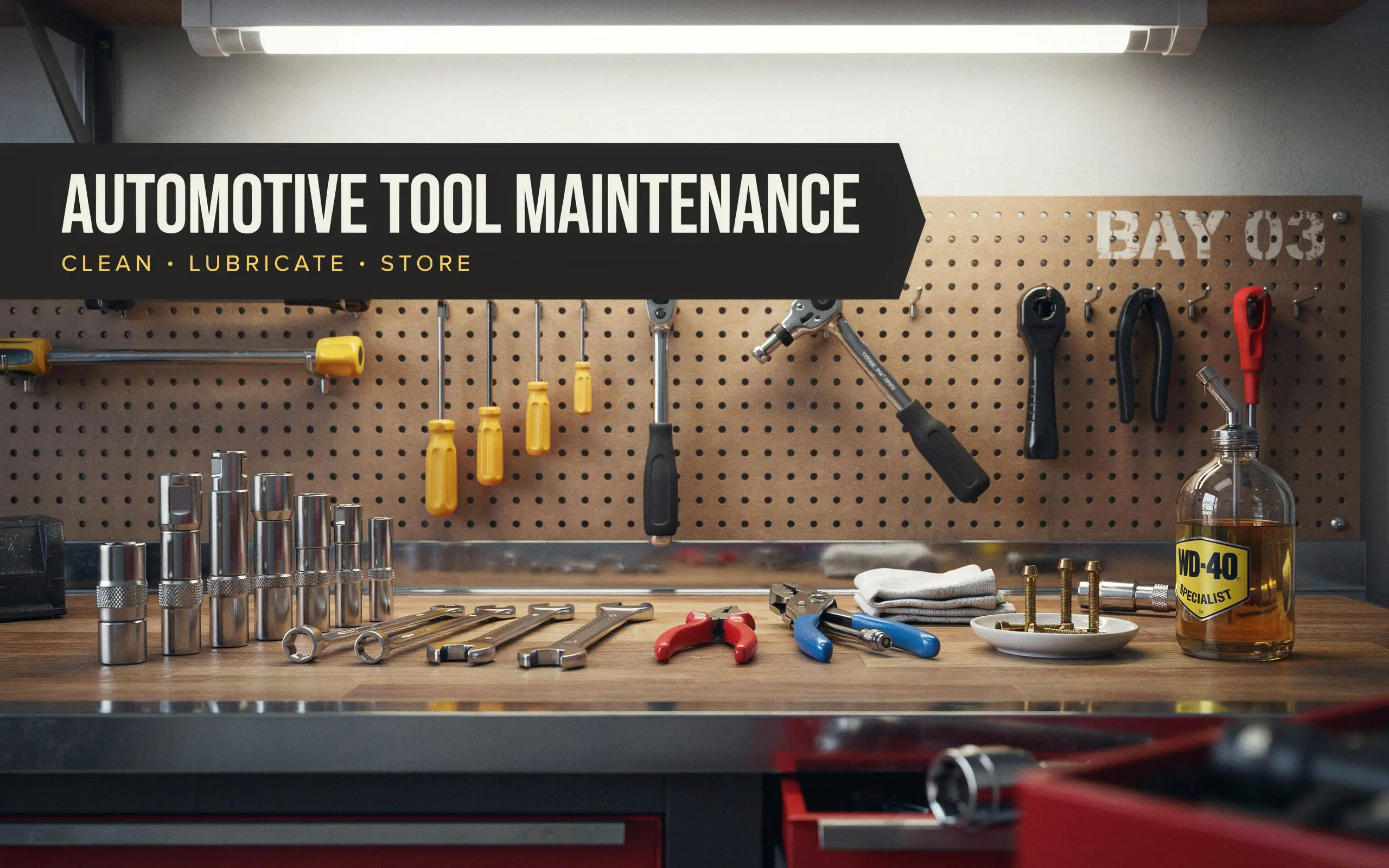
Learn the best ways to maintain automotive tools and keep them working like new. This complete guide covers cleaning, lubrication, rust prevention, storage, and inspections to extend tool life, save money, and ensure safety in your garage.
Your automotive tools are more than just metal objects sitting in a box. They are your partners in every repair, upgrade, and project you take on. Whether you are a professional mechanic working in a busy shop or a weekend DIYer fixing your own car, the condition of your tools directly affects the quality of your work.
But here is the thing. Tools do not stay in good shape on their own. They get dirty, they wear down, and they can rust if you ignore them. That is why you need to know how to maintain automotive tools properly. This is not just about making them look nice. It is about keeping them reliable, safe, and ready to perform when you need them most.
Taking care of your tools does not have to be complicated or time-consuming. With a few simple habits and some basic knowledge, you can keep your entire toolkit in excellent condition for years. In this guide, I will walk you through everything you need to know about tool maintenance. From daily cleaning to long-term storage, I will cover it all in plain, easy-to-follow language.
So let us get started. Your tools have been working hard for you. Now it is time to return the favor.
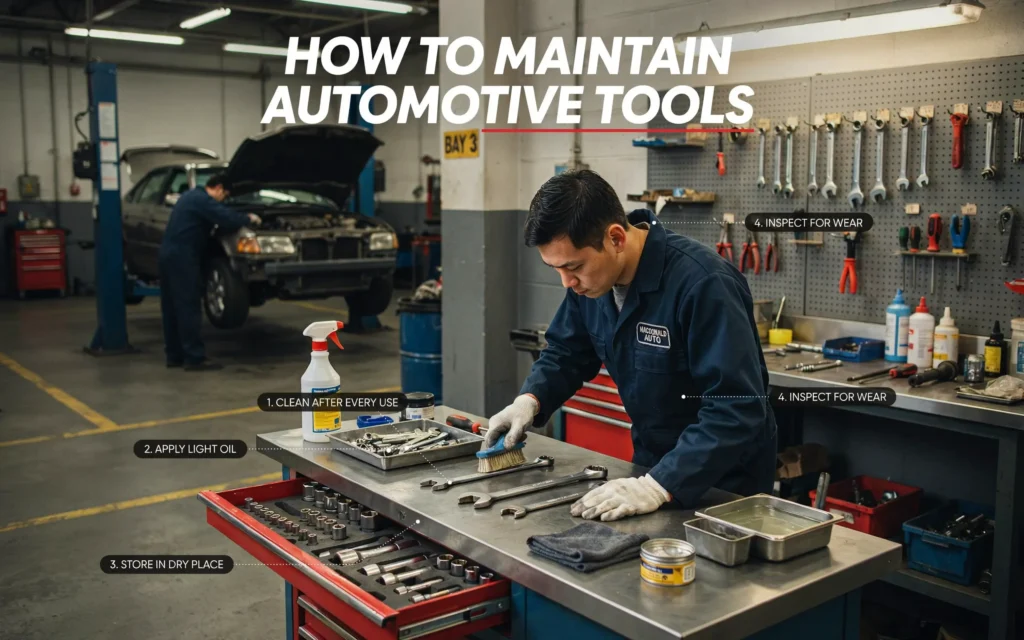
Why Proper Tool Maintenance Matters
Before we get into the how-to part, let us talk about why you should care about tool maintenance in the first place. Many people think tools are tough and can handle abuse. While it is true that quality tools are built to last, they are not indestructible. Neglect will catch up with them sooner or later.
Safety and Performance
The most important reason to maintain automotive tools is safety. A tool that is in poor condition can fail at a critical moment. Imagine you are under a car and your ratchet slips because the teeth are worn. That sudden movement could cause you to lose balance or hit your hand against a sharp edge. Worn spanners can slip off nuts and bolts, potentially stripping them or damaging the surrounding area. This not only increases repair time but also raises the risk of injury.
Dull cutting tools require more force to use, which can lead to them slipping out of your grip and causing accidents. Chipped blades or metal components could separate from the handle during use, resulting in a dangerous projectile. Dirty or rusty tools can also spread contaminants to your vehicle, causing issues and callbacks.
When you maintain automotive tools, you reduce these risks significantly. Clean, well-lubricated, and properly adjusted tools work the way they were designed to. They give you better control and more predictable results. That means fewer surprises and fewer trips to the emergency room.
Saving Money in the Long Run
Another big reason to maintain automotive tools is financial. Quality tools are an investment. If you have spent good money on a torque wrench or a set of impact sockets, you want them to last. Proper maintenance helps you avoid costly replacements.
Think about it this way. A torque wrench that is not calibrated correctly can give you inaccurate readings. That could lead to overtightening or undertightening bolts, which might damage engine components or cause parts to fail. Fixing that damage will cost you far more than a simple calibration would have.
Similarly, a ratchet that is never cleaned or lubricated will wear out faster. The internal mechanism will grind against dirt and debris, and the teeth will eventually strip. A rebuild kit is cheap, but a new ratchet is not. When you maintain automotive tools regularly, you catch small problems before they become big, expensive ones.
As the old saying goes, “Buy cheap, buy twice.” But even expensive tools can become cheap if you do not take care of them. Maintenance is the difference between a tool that lasts a decade and one that fails in a year.
Daily Habits to Maintain Automotive Tools
The best way to maintain automotive tools is to build good habits. You do not need to spend hours every day on maintenance. A few minutes of attention after each use can make a huge difference.
Clean Tools After Every Use
This is the single most important thing you can do. Automotive work exposes tools to grease, oil, dirt, metal shavings, and corrosive substances. If you leave these contaminants on your tools, they will cause damage over time. Dirt acts like sandpaper on moving parts. Oil and grease attract more dirt. Moisture leads to rust.
A regular cleaning regime for your tools is one of the best and simplest ways to ensure they are well maintained. Here is a simple cleaning routine you can follow.
Start by removing all visible debris with a stiff-bristled brush or compressed air. Then use a quality degreaser or mild detergent solution to break down oil and grease buildup. Pay special attention to moving parts, joints, and crevices where contaminants accumulate. Rinse thoroughly with clean water to remove all cleaning residue. Dry completely using clean rags or compressed air to prevent rust formation. For intricate tools like ratchets or precision instruments, use cotton swabs to reach tight spaces.
| Cleaning Supply | Purpose |
|---|---|
| Stiff-bristled brush | Remove loose dirt and debris |
| Degreaser or mild detergent | Break down oil and grease |
| Clean rags or shop towels | Wipe surfaces and dry tools |
| Compressed air | Blow dirt out of tight spaces |
| Cotton swabs | Clean intricate parts and crevices |
Remember, a quick wipe with a rag could be all a wrench needs after a light job. For heavier jobs, take the time to do a more thorough cleaning. Your tools will thank you.
Inspect Tools for Damage
Cleaning is also the perfect time to inspect your tools. Look for signs of wear, cracks, or damage. Check handles for splinters, cracks, or loose attachments that could impact your grip or cause injury.
Examine wrench jaws for wear or damage. A wrench with damaged or sprung jaws struggles to grip nuts and bolts securely, increasing the risk of slippage. If you notice any issues, replace the tool or repair it if possible.
Check the cutting edges of blades, shears, and drill bits. Dull tools demand more effort from you and the tool itself. A blunt drill bit forces you to work an electric drill harder, which could wear out both the bit and the drill quicker. Sharpening your tools now and then will reduce effort and frustration.
For power tools, inspect cords for fraying or damage. Check that guards and safety features are functioning properly. If something does not look right, do not use the tool until you have addressed the issue.
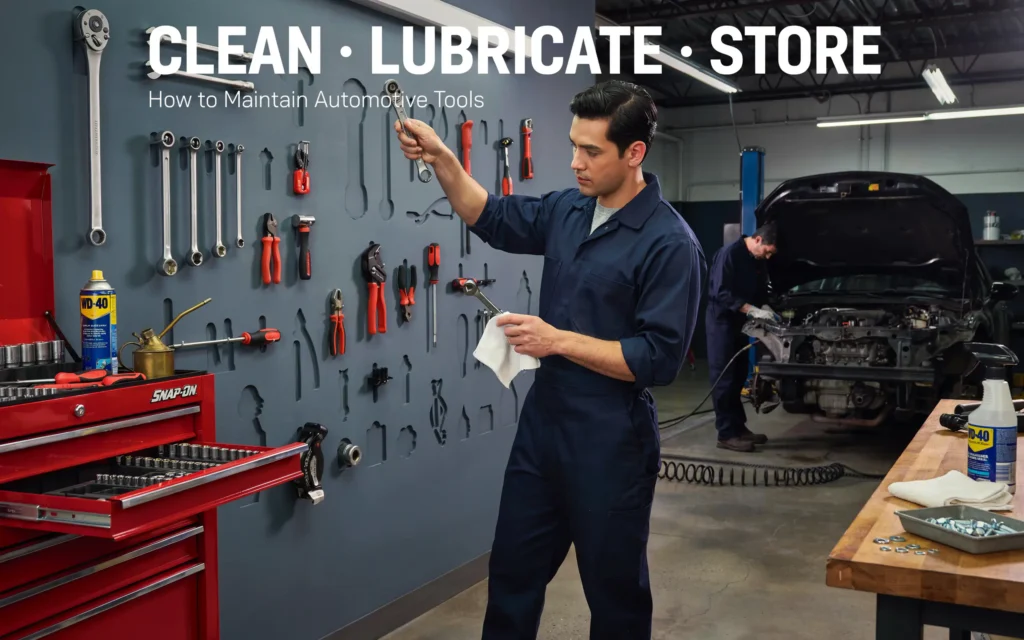
How to Maintain Automotive Tools for Longevity
Beyond daily cleaning and inspection, there are other important steps you can take to maintain automotive tools for the long haul. These practices will extend the life of your tools and keep them performing at their best.
Lubrication Tips for Moving Parts
Lubrication is essential for any tool with moving parts. Ratchets, pliers, shears, and power tools all need regular lubrication to reduce friction and prevent premature wear.
For ratchets, the internal mechanism needs fresh grease or oil from time to time. Just opening one up, cleaning everything, and reassembling with fresh grease or oil will make most ratchets work like new again. Rebuild kits can be purchased for most ratchets very affordably and will put all the teeth back in place.
When lubricating, use the right product for the job. Do not use WD-40 as a lubricant because it is not one. Use a light machine oil or similar, or apply grease where required. For power tools, apply a drop or two of oil to your power drills every few months, depending on how often you use them. This keeps the moving parts working smoothly.
Be careful not to apply too much lubricant. Excess oil can attract dirt and dust, which creates a grinding paste that damages your tools. A little goes a long way.
Rust Prevention Strategies
Rust is the enemy of metal tools. Once rust sets in, it can weaken the tool and make it unsafe to use. Preventing rust is much easier than removing it.
The first line of defense against rust is keeping your tools clean and dry. After cleaning, make sure tools are completely dry before you put them away. Apply a light layer of oil or lubricant to the surface of the tool. This helps prevent rust and corrosion from forming.
You can also slow rust by keeping metal clean and dry, applying a light coat of oil or rust inhibitor after use, and storing tools in well-ventilated, low-humidity spaces. Reapply oils, waxes, or rust-preventive sprays every few months.
If you live in a humid area, consider using silica gel packs in your toolbox to control moisture. These packets absorb excess humidity and help keep your tools dry.
| Storage Solution | Benefit |
|---|---|
| Tool chest with drawer liners | Protects tools from scratches and moisture |
| Climate-controlled area | Maintains stable temperature and humidity |
| Silica gel packs | Absorbs excess moisture in toolbox |
| Wall-mounted pegboards | Keeps tools off the ground and organized |
| Individual tool cases | Protects precision instruments |
Storage Solutions That Help Maintain Automotive Tools
How you store your tools is just as important as how you clean them. Good storage protects your tools from damage, rust, and loss. It also makes your work more efficient because you can find what you need quickly.
Choosing the Right Toolbox
A proper toolbox or tool chest is essential. It keeps your tools safe, dry, and organized. When choosing a toolbox, consider the size of your collection and the types of tools you have. You want something that can hold everything without overcrowding.
Never jam tools into overcrowded drawers where they can damage each other. Overcrowding leads to scratches, dents, and wear. It also makes it harder to find what you are looking for.
Tool chests with drawer liners are a good choice because they provide a soft surface that protects tools from scratches. Some liners even contain rust inhibitors for added protection.
Organizing Your Tools
Organization is not just about looking neat. It is about protecting your tools and making your work easier. When tools are organized, they are less likely to get damaged. They are also easier to find, which means you spend less time searching and more time working.
Use organizers to separate tools. Drawer organizers and trays keep sockets, wrenches, and specialty tools separated. Hooks or racks make larger tools easy to reach.
Labeling your drawers can also help. It reminds you where things go and makes it easier for helpers to assist with cleanup. If they know where things belong, they can put them back properly.
Having a proper place to store your car tool kit can make a big difference in how long it lasts. Dedicated places for your tools also make it easier to find what you need when you need it. And do not forget to put everything away when you have finished, so your tools do not go missing.
“Most tool care is simpler than the effort put into those projects, so it is absolutely worth setting aside a few hours every so often to go through your toolbox and do a little maintenance.” – Hagerty Media
Maintaining Power Tools and Precision Instruments
Power tools and precision instruments require special attention. They have more complex parts and are often more expensive to replace. Here is how to keep them in top shape.
Cordless Tool Battery Care
Batteries are expensive, so look after them. Whether they are standard disposables, rechargeables, or expensive bespoke units for cordless tools, proper care extends their life.
Store batteries in a warm, dry place. Cold and damp can significantly shorten a battery’s life. Pay particular attention to caring for expensive rechargeables. Check the manual for your tool and battery combination to see if there are storage or charging recommendations.
As a general rule, charge the batteries fully then take them off the charger. Use them regularly. Do not deplete them entirely. Handle them with care. These simple practices will help your batteries last longer and perform better.
Calibrating Torque Wrenches
Torque wrenches are indispensable tools, but regular calibration is essential to maintain accuracy. Without calibration, you could end up overtightening or undertightening fasteners, which can cause serious problems.
After use, always wind torque wrenches back to their minimum setting. This maintains their accuracy. Some wrenches can be home serviced, with guides available from the manufacturer.
Match the amount spent on maintaining your precision tools with the cost of the consequences if they are out of spec. Being 10% off on a wheel stud is often less consequential than having the same error on critical engine components. So take calibration seriously.
For micrometers and calipers, store them with the care their price tag deserves. Take the time to double-check with a 1-2-3 block or similar to ensure the tools you are trusting are actually still trustworthy. A good cleaning and light oiling will keep things in proper condition.
Common Mistakes to Avoid When You Maintain Automotive Tools
Even with good intentions, people make mistakes when caring for their tools. Here are some common pitfalls to watch out for.
Using the wrong tool for the job. This is one of the most common mistakes. Using a screwdriver as a pry bar, overtightening beyond manufacturer specifications, or using standard sockets with an impact gun can cause immediate damage. Always use the correct tool for the job. It saves time and money in the long run.
Skipping the manual. When you get any new tool, give it a proper going-over and make sure it is damage-free and works as it should. Read the manual to understand proper use and maintenance requirements. If there are any issues, you should be able to exchange the tool or get a refund.
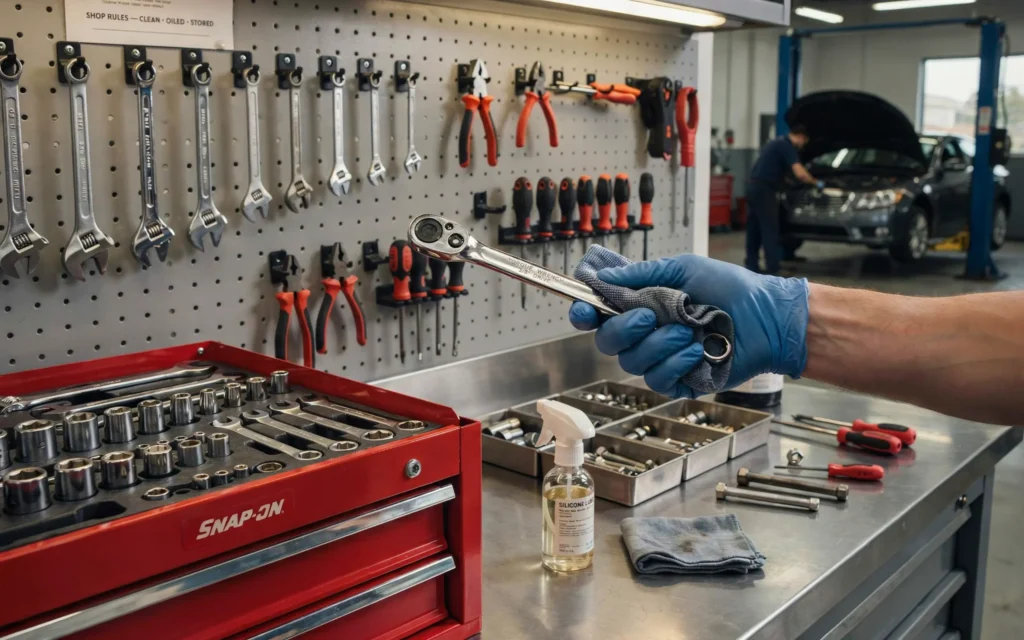
Using WD-40 as a lubricant. WD-40 is a solvent and water displacer, not a lubricant. Using it on moving parts can actually wash away the proper lubricant and leave parts dry. Use light machine oil or grease instead.
Ignoring small problems. A small chip in a blade or a slight wobble in a handle might not seem like a big deal. But these small issues can lead to bigger problems over time. Address them early to avoid costly repairs or replacements.
Storing tools in damp places. Unheated garages, vehicle trunks, and basements can be humid. Moisture leads to rust. Store your tools in a dry, climate-controlled area whenever possible.
Forgetting to put tools away. Leaving tools lying around exposes them to damage and loss. It also makes them harder to find when you need them. Make it a habit to put tools back in their designated spots after each use.
“A poor workman blames his tools” – But even skilled technicians can be hampered by poorly maintained equipment
Frequently Asked Questions
How often should I clean my automotive tools?
You should wipe down your tools after every use. For a deeper clean, do a thorough cleaning of your entire toolkit every few weeks or at least once a month, depending on how often you use them.
What is the best way to remove rust from tools?
For light rust, use a rust remover product or a mixture of vinegar and water. Soak the tool, then scrub with a wire brush or steel wool. For heavy rust, you may need a commercial rust remover. After removing rust, dry the tool completely and apply a light coat of oil to prevent future rust.
Can I use WD-40 to lubricate my tools?
No. WD-40 is not a lubricant. It is a solvent and water displacer. Use light machine oil, grease, or a dedicated tool lubricant instead.
How do I know if my torque wrench needs calibration?
If you drop your torque wrench or if it has been a year since the last calibration, it is time to check it. Some manufacturers recommend annual calibration. Always follow the guidelines in your owner’s manual.
What is the best way to store automotive tools?
Store tools in a dry, organized toolbox or tool chest. Use drawer liners to protect surfaces. Keep tools off the ground and away from moisture. Use silica gel packs to control humidity inside the toolbox.
How can I make my tools last longer?
Clean them after each use, lubricate moving parts regularly, store them properly, inspect them for damage, and use them correctly. Avoid using tools for jobs they were not designed for.
Conclusion
Learning how to maintain automotive tools is one of the best investments you can make in your work. It does not take much time or effort, but the rewards are significant. Your tools will last longer, perform better, and keep you safer.
Start with the basics. Clean your tools after every use. Inspect them for damage. Lubricate moving parts. Store them properly. These simple habits will make a world of difference.
Remember, your tools are not just objects. They are essential partners in everything you do. When you take care of them, they take care of you. A well-maintained toolkit is a sign of a professional who takes pride in their work.
So set aside a little time each week to maintain automotive tools. Go through your toolbox, clean what needs cleaning, lubricate what needs lubricating, and fix what needs fixing. Your future self will thank you when you reach for a tool and it works perfectly, every single time.
Now go ahead. Give your tools the care they deserve. They have earned it.
Related posts
 How to Strengthen Weak Nails: A Practical Guide to Daily Care
Learn how to strengthen weak nails with simple daily habits, protective care, and targeted hydration. Restore your natural nail strength today. Weak, peeling, or brittle nails…
 What Sounds Do Cats Dislike? 7 Noises That Stress Your Pet
Discover what sounds do cats dislike and why. Learn how to protect your cat’s sensitive hearing from stressful household noises and high-frequency hums. Cats dislike sounds…
 Restoring Faded Black Clothing: Practical Methods and Reality Checks
Can you restore faded black clothing? Learn the difference between temporary color revival and permanent redyeing, plus how to prevent future fading. You can restore the…